
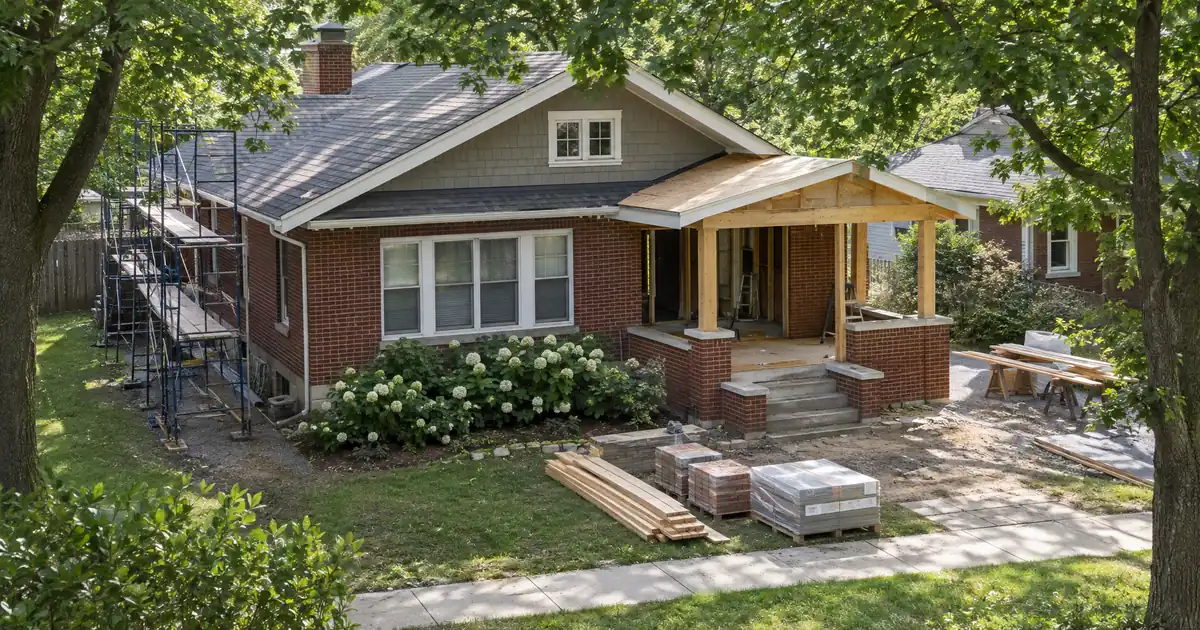
The Quick Read: Hard money lenders typically fund the purchase at closing and hold the rehab money in escrow, then reimburse the rehabber after completed work is inspected and documented. The borrower fronts early costs, and “100% of the rehab budget” describes a funding ceiling, not cash in hand on day one. Across the wholesale network, the loan agreement and approved budget set these rules. No regulator does.
- Draws pay for completed, verified work, not deposits on work not yet installed.
- Up to 100% of the rehab budget can fund in draws, though this varies by lender, property, and experience.
- Fix-and-flip leverage is tiered by completed projects and capped at 75% of after-repair value.
- Draw history and invoices become your cost-basis proof at a later DSCR refinance.
Who Pays First, and Why?
The rehabber pays first. Lenders want the improvement in the collateral before they release money, so the draw reimburses work that already exists.
What this loan actually costs to carry.
Hard money is sized against the project and priced by time. Enter the deal and see how much the program will lend, the cash required at closing, the carry while you hold it, and what is left at the exit.
Leverage tiers on the current program: 85% with fewer than 2, 90% with 2 or more, 93% with 5 or more completed projects — every tier capped at 75% of after-repair value. Loan amounts up to $5,000,000, larger by exception; terms of 6 to 18 months, interest-only, no prepayment penalty. The rehab portion funds in draws against completed work, not at closing.
Program parameters shown update from Lendmire’s centralized guideline source. Rate, points, and months are editable assumptions, not quoted terms.
Cost cap sets the loan · positive spread
Illustrative estimate only — not a quote, Loan Estimate, approval, or commitment to lend. Rate, points, and months are editable assumptions. Hard money is business-purpose financing for real estate investors, not a consumer mortgage. Leverage on the current program tops out at 93% of project cost for investors with a documented track record, capped at 75% of after-repair value, with rehab funding up to 100% of the documented budget released in draws; actual terms vary by lender, borrower experience, property, and exit. Lendmire is a mortgage broker, not a lender.
A “100% rehab financed” label is technically accurate. It still doesn’t mean the lender fronts the first phase. On files we place, the rehab budget sits in escrow and comes out against verified progress. The last draw is effectively the investor getting their own money back.
Here is where new rehabbers get hurt. They read the leverage tier, assume the lender funds the contractor, and then the first deposit comes due. Nothing is wrong with the loan. The investor just never modeled the float.
How Hard Money Leverage Fits Around the Draws
Most hard money files across the network are sized on loan-to-cost, tiered by documented completed projects. Fix-and-flip leverage runs 93% of project cost at 5+ completed projects, 90% of project cost at 2+, and 85% of project cost with fewer than 2. Every tier is capped at 75% of after-repair value. Bridge purchases without rehab go up to 80% of purchase price. Up to 100% of the rehab budget funds in draws against completed work. That is a rehab-budget figure, never a purchase LTV. There is no true 100% purchase program.
Loan amounts run up to $5,000,000, larger by exception. Terms are 6 to 18 months, interest-only, no prepayment penalty. Credit starts at a 620 minimum, with additional conditions below 660. All of this varies by lender, property, and experience, and nothing here is a commitment to lend.
The Draw Cycle, Step by Step
The cycle is the same on most files, with lender-specific wrinkles.
1. Budget and schedule are set at closing. Line items and the draw schedule are agreed up front. Lenders and investors work out the number and size of draws in advance, usually tied to milestones.
2. Initial float. Some lenders advance a slice at closing. Others want the investor to start with their own cash. Neither is a universal standard, so ask before you sign.
3. Work is completed for a stage. Lenders pay for completed work. Many pay partial completion pro rata, so a half-built line item can draw half. A deposit on cabinets not yet installed generally doesn’t fund until the work is in place.
4. Draw request and documentation. The borrower submits a request with invoices and photos. Detail requirements vary, from very granular cost reports to general summaries.
5. Lien waivers. Many lenders collect them with the pay request. Mastt’s lien waiver guide describes the common sequence: conditional waivers with the pay request, unconditional waivers after payment clears. Waivers aren’t required by law everywhere, but DocJoist notes that some states mandate specific forms.
6. Inspection. An inspector verifies completion. The borrower typically pays the inspection fee, and those fees add up across several draws.
7. Funds released from escrow. Timing is lender-specific, and the loan agreement controls.
What Goes in a Draw Package
| Item | Why the lender wants it | Common mistake |
|---|---|---|
| Invoices | Proof of cost | Missing line-item detail |
| Photos | Shows completion | Shots that don’t match the budget line |
| Lien waivers | Protects the collateral | Signing before payment clears |
| Budget match | Confirms approved scope | Work outside the approved budget |
How Much Cash Do You Need to Front?
Your peak float is the largest gap between what you’ve spent and what’s been reimbursed. Size it before closing, not after.
Run it as a modeled assumption. Picture a rehabber with a three-phase budget. Phase one is demo and deposits, which the contractor wants paid before work starts. The investor funds that phase from cash, requests a draw after completion, and waits through inspection and review. Phase two is then already underway on the investor’s money. So the float is not just phase one. It is phase one plus whatever phase two costs before the first reimbursement lands.
Three variables drive the peak:
- Draw count. Fewer draws mean fewer inspection fees but bigger gaps between payments.
- Contractor terms. Net-30 billing can shrink the gap, because “reimbursement” doesn’t always mean you paid first.
- Review lag. A slow draw turnaround delays contractors and raises holding costs.
Line-item slicing helps. Smaller, granular budget lines let the lender credit finished work sooner, which shortens the lag.
Where the General Rule Breaks
Draw rules are private contract terms, so exceptions are common. These are the ones that matter.
Advanced draws. Some lenders advance a portion at closing for experienced borrowers. Experience matters here, and the tiers above reward completed projects. No standard threshold exists, so treat it as lender-specific.
Net-30 billing. A contractor who bills net 30 can let a draw arrive before your cash goes out. That isn’t a lender feature. It is a contractor negotiation.
Interest on undrawn funds. Practices differ. Some lenders charge interest on the full loan balance from closing, and others only on deployed funds. Read the clause.
Fee shortfalls. Draw-fee budgets can be capped, and extra inspections may be deducted from a draw.
Light rehabs. Fewer draws, bigger float between them.
Overlapping projects. Two rehabs at once means fronting contractors on both sites while draws lag the work.
Why Draws Get Reduced, Delayed, or Denied
| Cause | What the lender sees | Prevention |
|---|---|---|
| Work not complete | Nothing to verify | Request after the stage is done |
| Out-of-budget item | Scope mismatch | Get pre-approval for changes |
| Paperwork gaps | Missing invoice or waiver | Submit one complete package |
| Deposit on uninstalled work | No collateral value yet | Time deposits to progress |
Change orders deserve their own habit. Any change to scope or budget needs lender pre-approval before the money is spent. Spend first and ask later, and that line may simply not fund.
The Lien Waiver Trap
An unconditional waiver takes effect when signed, even if the money never arrives. Built’s explanation of conditional and unconditional waivers says a conditional waiver takes effect only once payment clears. For a rehabber paying contractors ahead of reimbursement, that distinction decides who holds leverage if a payment bounces. Never sign an unconditional release before funds clear.
Final Draw and the DSCR Exit
The final draw is the last of your own money coming back. Expect inspection and sign-off before it releases.
Then the paper trail matters. Many investors refinance out of hard money into long-term DSCR investor loans once the property is stabilized, and Lendmire brokers that path. Draw history, contractor invoices, permits, the lease, insurance, and the payoff statement are the file. Inside the seasoning window, lenders often size on cost basis, meaning purchase plus documented rehab. Fronted costs you can’t document may not count. Seasoning clocks usually start at deed recording, not rehab completion. A hard money purchase also generally fails the cash-purchase test used for delayed financing.
Select programs in the network commonly want about 6 months of seasoning on a cash-out, with leverage topping out around 75% on standard rentals. DSCR compares rent to PITIA only, so clearing 1.00 isn’t the same as positive cash flow. Repairs, vacancy, and management sit outside the calculation. For the clock and sizing, see the brokerage’s DSCR seasoning rules for a BRRRR rehabber, and the complete DSCR loans guide for program structure.
Key Terms Defined
Draw: A release of escrowed rehab funds after a stage of work is verified.
Holdback: Rehab money the lender keeps in escrow until work is done.
Scope of work: The line-item budget the lender approved.
Lien waiver: A contractor’s written release of lien rights, conditional or unconditional.
Change order: A change to scope or budget that needs lender approval.
Float: The cash you carry between spending on work and being reimbursed.
Questions to Ask Before You Sign
- Does any money advance at closing, or do I start with my own cash?
- Do you pay partial completion on a line item?
- Which documents and lien waivers does each draw require?
- Who pays inspection fees, and are they capped or deducted from draws?
- Is interest charged on the full balance or only on funds drawn?
- What happens to unused holdback at payoff?
Frequently Asked Questions
Does a hard money lender pay my contractor before the work is done?
Usually not. Most lenders reimburse completed, inspected work, so the borrower fronts early costs. Some advance a portion at closing, and that varies by lender and borrower experience.
Can a deposit be reimbursed at the next draw?
Generally only once the work is in place. Completion-based standards don’t typically fund deposits for materials not yet installed, so time deposits to physical progress.
What does “100% of rehab” actually mean?
It means up to 100% of the rehab budget can fund through draws against completed work. It is not a purchase LTV and not an upfront advance. Fix-and-flip leverage on the purchase side is tiered by project cost and capped at 75% of after-repair value.
Do draw rules differ between lenders?
Yes. Upfront money, inspection practice, documentation, lien releases, fees, and interest on undrawn funds all vary. The loan agreement controls, which is why the pre-signing questions matter.
How do draws affect my later DSCR refinance?
Your draw history and invoices document cost basis. Inside the seasoning window, lenders often size on cost basis, so undocumented fronted costs may not count. Qualification is subject to lender guidelines.
If you are buying, rehabbing or refinancing an investment property on a short timeline and want to see how the numbers work, Lendmire can help you compare hard money options based on the project, the exit plan, leverage, and your goals. Tax treatment varies; consult a qualified professional.
About Lendmire
As a non-QM mortgage broker (NMLS# 2371349), Lendmire facilitates DSCR investor loans across 41 markets, including Washington, D.C. DSCR eligibility is generally reviewed around property-level rental income instead of personal income documentation, subject to lender guidelines, serving LLC-structured portfolios and self-employed borrowers who don’t fit conventional boxes. A two-time Scotsman Guide Top Mortgage Workplace (2025, 2026).
Get Started
Ready to find the right loan for you?
In about 30 seconds you can review financing options available for your investment property. No commitment required.
Informational only. Not a Loan Estimate, approval, or commitment to lend. Program availability and eligibility are subject to lender guidelines, credit approval, property review, and underwriting.
References
2. DocJoist – Lien waiver guide
3. Built – Conditional vs unconditional lien waivers
This article is part of Lendmire’s hard money loan program — full qualification details, guidelines, and scenarios live on the program page.
Related reading: Cash vs Gap Loan vs Hard Money Modification for a Rehabber Fronting Draws · Can You Get Hard Money to Buy at Auction With an Inherited Tenant? · Conventional Loan vs Hard Money Loan for a High-Debt Investor
Brandon Miller
Founder & CEO, Mortgage Loan Originator, Lendmire LLC
- Mortgage Loan Originator · NMLS# 1129696 · Verify on NMLS Consumer Access
- North Carolina Real Estate Broker · License# 343312 · Verify on NCREC
- North Carolina Insurance Producer · License# 19053198 · Property, Casualty, Life, Health · Verify on NAIC SBS
- Lendmire LLC · Firm NMLS# 2371349 · Verify firm licensure
Important disclosures. Lendmire (NMLS# 2371349) is a licensed mortgage brokerage. Lendmire is not a direct lender, depository institution, or financial advisor. All loan inquiries are subject to lender underwriting; this article does not constitute a commitment to lend. Rates, terms, and program guidelines are subject to change without notice and vary by borrower profile, property type, and state. Information in this article is general in nature and is not financial, legal, or tax advice. Equal Housing Opportunity. NMLS Consumer Access: nmlsconsumeraccess.org.