
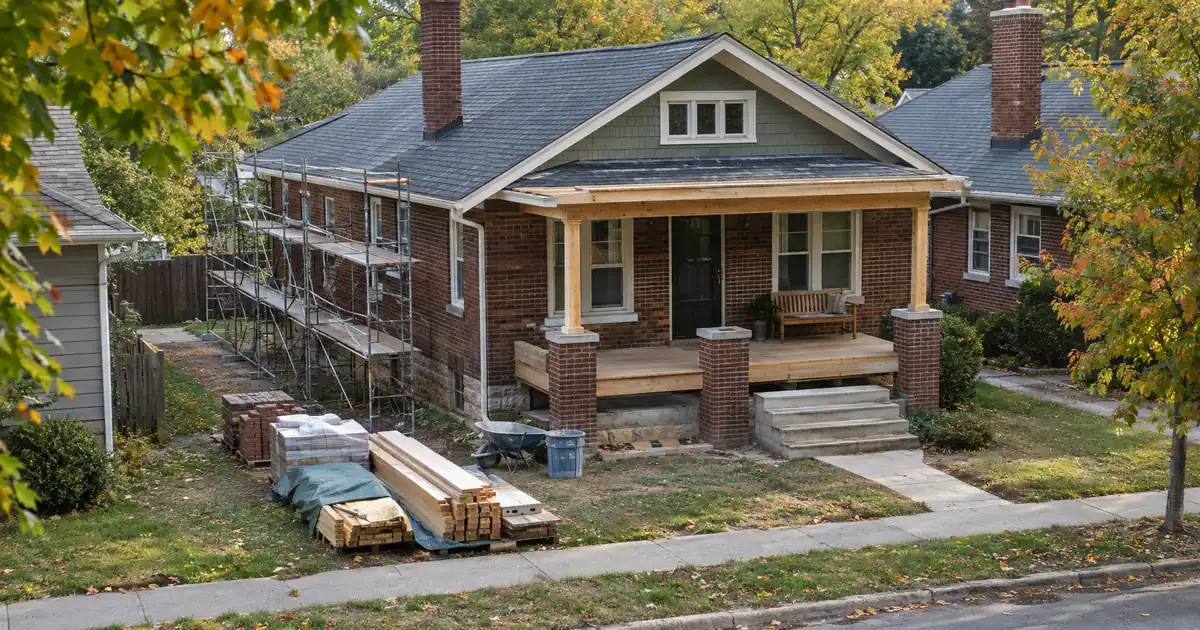
The Quick Read: Hard money draw release requirements are the conditions a lender sets before it reimburses you for rehab work that is finished, documented and verified. Those conditions live in your loan agreement and draw policy, not in any regulation, so they differ by lender. Most files follow the same basic pattern.
- Draws are reimbursements for verified, paid-for work, not advances.
- A draw package usually holds an invoice set, percent-complete budget, dated photos, lien waivers and permits.
- An inspection confirms work exists and matches the budget. It is not a code sign-off.
- Plan on funding each phase yourself before money comes back.
- Get the inspection method, fees and holdback terms in writing before you sign.
Hard money terms vary by lender, property, and experience, and nothing here is a commitment to lend.
What this loan actually costs to carry.
Hard money is sized against the project and priced by time. Enter the deal and see how much the program will lend, the cash required at closing, the carry while you hold it, and what is left at the exit.
Leverage tiers on the current program: 85% with fewer than 2, 90% with 2 or more, 93% with 5 or more completed projects — every tier capped at 75% of after-repair value. Loan amounts up to $5,000,000, larger by exception; terms of 6 to 18 months, interest-only, no prepayment penalty. The rehab portion funds in draws against completed work, not at closing.
Program parameters shown update from Lendmire’s centralized guideline source. Rate, points, and months are editable assumptions, not quoted terms.
Cost cap sets the loan · positive spread
Illustrative estimate only — not a quote, Loan Estimate, approval, or commitment to lend. Rate, points, and months are editable assumptions. Hard money is business-purpose financing for real estate investors, not a consumer mortgage. Leverage on the current program tops out at 93% of project cost for investors with a documented track record, capped at 75% of after-repair value, with rehab funding up to 100% of the documented budget released in draws; actual terms vary by lender, borrower experience, property, and exit. Lendmire is a mortgage broker, not a lender.
What Are Draw Release Requirements?
Draw release requirements are the checkpoints between “the work is done” and “the lender wires the money.” No regulator sets them for private hard money. The loan agreement, the approved rehab budget and the lender’s draw policy do.
On the Lendmire platform, hard money runs 6-18 months, interest-only, with up to 100% of the rehab budget funded in draws against completed work. Leverage on fix-and-flip files runs 85% to 93% of project cost depending on completed projects, capped at 75% of after-repair value. That “100% of the rehab budget” is a budget figure, not a purchase LTV. It is paid out as work gets verified, subject to lender guidelines.
For a formal template, look at the FHA 203(k) program. It is an owner-occupant product, not hard money, but it publishes draw mechanics. HUD Handbook 4240.4 REV-2, Chapter 5 allows partial release by percent complete on each line item, holds back 10% on intermediate draws, and has lenders collect lien waivers at each disbursement. Hard money lenders borrow pieces of that logic. They are not bound by it.
The Draw Cycle, Step by Step
Here is the typical sequence. Individual lenders change the order and the details.
1. Budget approval. The scope of work is split into line items at underwriting. Smaller line items draw cleaner. Plumbing rough-in and plumbing fixtures should be separate lines. What stalls it: vague, lump-sum line items.
2. You fund the phase. The contractor works, and you pay. Draws reimburse finished work. What stalls it: thin working capital.
3. Draw request. You submit the amount claimed and the evidence (see the checklist below). What stalls it: a missing waiver or an undated photo.
4. Verification. An inspector visits, or the lender reviews photos or video, or both. What stalls it: a no-show inspector or a mismatch between request and site.
5. Review and release. The lender releases the verified amount, less any holdback. What stalls it: disputed percent complete.
6. Final draw and closeout. The last release usually waits for completed work, a final inspection and clean lien status. HUD’s 203(k) form logic works the same way: holdback comes out only when all work is done and no mechanic’s liens sit on the property.
A common source of friction in the draw process is not the lender. It is a draw package that doesn’t match the budget line it claims against.
What Goes in the Draw Request Package
| Item | What it proves | Common rejection reason |
|---|---|---|
| Draw amount and line items | What you claim | Doesn’t tie to approved budget |
| Percent-complete budget | Progress per line | Percentages not supportable |
| Invoices and receipts | Work was bought | Missing or unsigned |
| Dated, labeled photos | Work is physically there | Undated or wrong angle |
| Lien waivers | Contractor is paid or paid-conditionally | Wrong type or unsigned |
| Approved change orders | Scope changes are authorized | Verbal only |
| Permit copies | Permitted work is permitted | Permit not yet issued |
HUD’s 203(k) handbook goes further and says the first draw should not be scheduled until building permits have been issued. Many hard money lenders ask for the same, though policies differ.
What a Draw Inspection Is (and Isn’t)
A draw inspection confirms that the work claimed is physically in place and that the percent complete in your request is reasonable. That is the whole job.
It is not a code inspection. It is not a permit sign-off. It is not an appraisal. A passed draw inspection does not tell you the city will pass the work. Treat municipal inspections as a separate track that may gate certain phases.
| Item | Draw inspection | Code/permit inspection | Appraisal |
|---|---|---|---|
| Who orders it | Lender | City or county | Lender |
| What it checks | Work done vs. request | Code compliance | Value |
| What it unlocks | A draw | Permit sign-off | Loan sizing |
Verification method varies. Some lenders send a third-party inspector each time. Others accept photos or a livestreamed walkthrough. Some do a hybrid. Ask which one applies to you, and get it in writing. An inspector who was promised and never shows is a delay you can prevent by documenting the method upfront.
Inspection Checklist by Phase
| Phase | Inspector confirms | Have ready | Typical failure point |
|---|---|---|---|
| Demo and structural | Demo complete, framing/repairs in place | Photos, permits, invoices | Permit not posted |
| Rough mechanicals | Plumbing, electrical, HVAC rough-in present | Trade invoices, municipal rough sign-off if required | Rough-in done but not inspected by city |
| Insulation and drywall | Installed, not just delivered | Dated photos, invoices | Materials on site, not installed |
| Finishes | Cabinets, flooring, fixtures, paint in place | Photos per room, change orders | Work doesn’t match approved scope |
| Final and punch list | All scope complete | Final waivers, final permits, photos | Open punch items |
One rule shows up in HUD’s draw form: stored materials are not credited. Only work that is acceptably installed gets paid. Some hard money lenders follow the same rule, and some are looser. Never assume a delivery of lumber counts.
Also keep the percent-complete honest. Claiming 80% on a line that is 50% done is how a partial draw happens.
Lien Waivers and Title Checks
Lien waivers are usually required by contract or by the lender as a condition of release, not by statute. Corpay’s overview of construction lien waivers lays out four types.
| Waiver type | Takes effect | Use |
|---|---|---|
| Conditional progress | When payment clears | Sign before payment |
| Unconditional progress | When signed | Sign only after payment clears |
| Conditional final | When final payment clears | Sign before final payment |
| Unconditional final | When signed | Sign after final payment clears |
The practitioner rule is simple. Conditional waivers go out before payment. Unconditional waivers come only after the money has cleared. An unconditional waiver protects you as owner but exposes the contractor, who loses lien rights on money never received. So if your contractor balks at an unconditional waiver on day one, that is a reasonable position, not a red flag.
Ground-up files tend to add a title date-down before larger draws. That is a title company step, so ask your lender whether it applies.
A Worked Draw Sequence
Take a hypothetical rehab with a budget split into five phases, and assume your lender holds back a share of each draw. These are modeled assumptions, not market data.
You pay for demo and structural work from your own funds. You submit the package. After verification, the lender reimburses the verified amount, less holdback. While you wait, the contractor starts rough mechanicals, and you front that too. At any moment you are carrying one full phase of cost plus the held-back portion from earlier phases.
That is the real capital exposure. It is bigger than the down payment alone suggests. The exposure peaks mid-project, when the holdback pile is large and the next phase is under way.
Run it as a timeline before you commit. Count what you pay out, what comes back, and what stays held until final.
When an Inspection Fails or a Draw Is Partial
Most partials come from the same few causes.
- Percent complete overstated.
- Work that doesn’t match the approved scope.
- Missing waivers or invoices.
- Materials delivered but not installed.
- Repairs discovered after underwriting that were never added to the budget.
The cure is plain. Fix the gap, update the budget sheet, add the missing paper, and resubmit. Ask in advance whether a re-inspection carries a fee. Some borrowers report per-draw inspection fees in the low hundreds of dollars, which is an investor-reported figure and not a standard. Under the HUD form, extra compliance inspections are the borrower’s cost when work stalls or deviates from plans. Hard money lenders commonly do the same.
Change Orders, Stored Materials and Reallocation
Change orders should be written and approved before the work happens. A verbal “go ahead” will not support a draw.
Moving money between line items is usually allowed if the lender approves it and the total budget stays the same. Savings are a separate question. Under 203(k), savings on a line item must go to more improvements, other overruns, or prepaying principal. Hard money terms differ, so check yours.
Deposits and stored materials are where files go sideways. Treat them as unfunded until your lender says otherwise in writing.
Final Draw Closeout Checklist
- Punch list closed out.
- Final lien waivers collected.
- Permits closed and final municipal sign-off in hand where required.
- Final inspection or final photo set accepted.
- Draw history, invoices, waivers and photos assembled in one folder.
That last item pays off later. Many investors refinance out of hard money into long-term DSCR financing once the property is stabilized, and Lendmire brokers that path. A DSCR exit generally reads invoices, proof of payment, the appraisal and the ownership timeline rather than the draw schedule. A clean closeout file keeps those pieces easy to produce. Lendmire’s complete DSCR loans guide covers how that stage works.
Remote and Out-of-State Borrowers
If you can’t be on site, the lender’s verification method matters more. A third-party inspection firm, local contractor reporting and dated photo discipline are the substitutes for your presence. Lendmire’s piece How to Vet a Hard Money Lender’s Draw Process From Out of State goes deeper on that. Also expect a lender to ask about experience. A borrower whose past rehabs were far smaller than the current job may be asked to bring in an experienced partner.
Questions to Ask Any Lender Before Signing
- How many draws are allowed, and is there a minimum request size?
- Who inspects, how often, and who pays?
- Is interest charged on the full loan balance or only drawn funds?
- What holdback applies, and when is it released?
- How are partial approvals and re-inspections handled?
- Are stored materials ever credited?
- Which lien waiver types are required?
The honest answer to most of these is “it varies by lender, property, and experience.” That is why they go in writing.
Key Terms Defined
Draw: A release of held-back rehab funds after verified work.
Holdback (retainage): The portion of funds the lender keeps until work is complete.
Lien waiver: A signed document in which a contractor gives up lien rights for a stated payment.
Percent complete: The share of a budget line that is physically finished.
Change order: A written, approved change to the scope or cost of work.
Frequently Asked Questions
Are hard money draws advances or reimbursements?
Reimbursements, in most cases. You fund the work, the lender verifies it, and then funds are released from the held-back rehab budget. Some lenders front a small share at the start. Confirm which applies to your loan.
Does the draw inspector check code compliance?
Generally no. The inspector confirms that claimed work exists and fits the budget. Permits and municipal inspections are a separate track, so don’t treat a passed draw inspection as city approval.
Can photos replace an in-person inspection?
Sometimes. Some lenders accept dated photos or a livestreamed walkthrough, while others send a third-party inspector every time. Get the method written into the agreement.
What happens if my draw is denied or reduced?
Usually the lender names the gap: overstated progress, missing paperwork or off-scope work. You fix it and resubmit. Ask upfront whether re-inspections cost extra.
What do I need for the final draw?
Completed scope, final lien waivers, closed permits where applicable and a final inspection or final photo set. Lenders vary, and the final holdback typically waits until all of it is in.
If you are buying, rehabbing or refinancing an investment property on a short timeline and want to see how the numbers work, Lendmire can help you compare hard money options based on the project, the exit plan, leverage, and your goals. Reach the team at 828-256-2183 or request a quote.
About Lendmire
Lendmire (NMLS# 2371349), a non-QM mortgage broker serving investors in 41 markets including Washington, D.C., helps structure DSCR scenarios commonly evaluated around a property’s rental income rather than personal income paperwork, subject to lender guidelines. A Scotsman Guide Top Mortgage Workplace in 2025 and 2026, Lendmire places loans through wholesale investor lenders and is not a direct lender.
Get Started
Ready to find the right loan for you?
In about 30 seconds you can review financing options available for your investment property. No commitment required.
Informational only. Not a Loan Estimate, approval, or commitment to lend. Program availability and eligibility are subject to lender guidelines, credit approval, property review, and underwriting.
References
1. HUD Handbook 4240.4 REV-2, Chapter 5
3. Corpay: Construction Lien Waivers
This article is part of Lendmire’s hard money loan program — full qualification details, guidelines, and scenarios live on the program page.
Related reading: How to Meet Hard Money Requirements on Your First Fix-and-Flip · How to Compare Hard Money Draw Terms Across Multiple Projects · Hard Money Bridge Down Payment Requirements for Out-of-State Investors
Brandon Miller
Founder & CEO, Mortgage Loan Originator, Lendmire LLC
- Mortgage Loan Originator · NMLS# 1129696 · Verify on NMLS Consumer Access
- North Carolina Real Estate Broker · License# 343312 · Verify on NCREC
- North Carolina Insurance Producer · License# 19053198 · Property, Casualty, Life, Health · Verify on NAIC SBS
- Lendmire LLC · Firm NMLS# 2371349 · Verify firm licensure
Important disclosures. Lendmire (NMLS# 2371349) is a licensed mortgage brokerage. Lendmire is not a direct lender, depository institution, or financial advisor. All loan inquiries are subject to lender underwriting; this article does not constitute a commitment to lend. Rates, terms, and program guidelines are subject to change without notice and vary by borrower profile, property type, and state. Information in this article is general in nature and is not financial, legal, or tax advice. Equal Housing Opportunity. NMLS Consumer Access: nmlsconsumeraccess.org.