
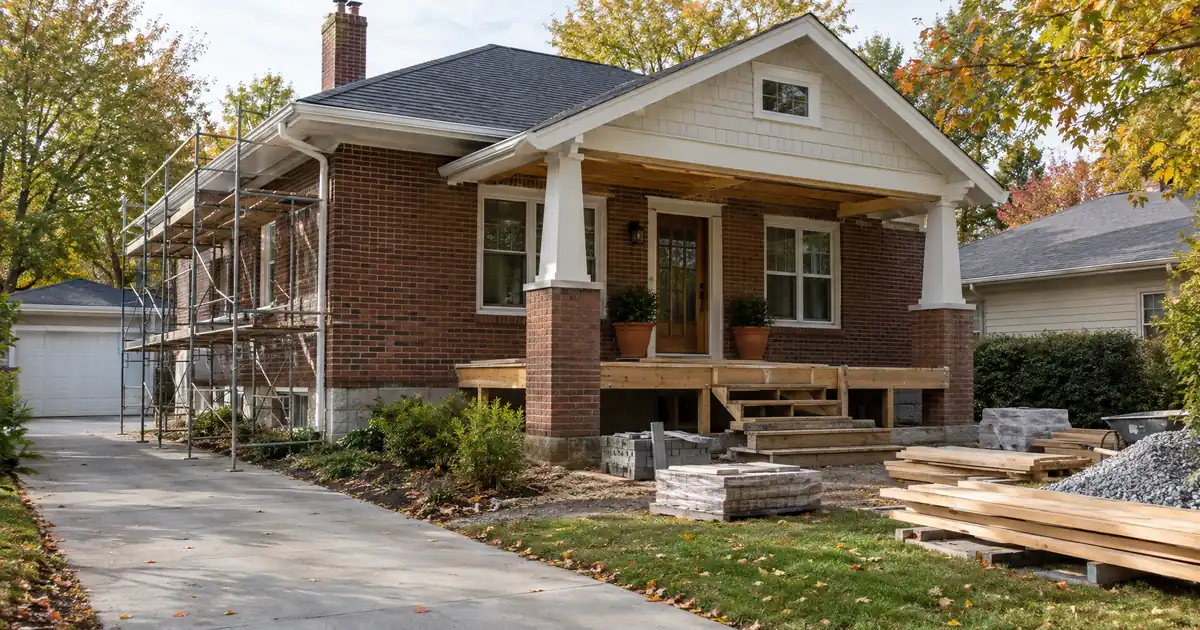
The Quick Read: A hard money fix-and-flip file is underwritten on the deal first, so the paperwork is heavy on the property, the budget, and the exit, and lighter on personal income. Across the wholesale network, the same documents decide whether a file moves cleanly or gets sent back for more.
- Executed purchase contract, plus entity documents and ID.
- A line-item rehab budget with a contingency line, not a lump sum.
- ARV support built from sold comps, plus proof of funds.
- A track record or experience sheet, even a short one.
- A draw packet plan and an exit plan before the file goes in.
Every lender writes its own conditions, and no regulator owns a master list. Treat this checklist as typical and lender-dependent. Programs vary by lender, property, and experience, and nothing here is a commitment to lend.
What this loan actually costs to carry.
Hard money is sized against the project and priced by time. Enter the deal and see how much the program will lend, the cash required at closing, the carry while you hold it, and what is left at the exit.
Leverage tiers on the current program: 85% with fewer than 2, 90% with 2 or more, 93% with 5 or more completed projects — every tier capped at 75% of after-repair value. Loan amounts up to $5,000,000, larger by exception; terms of 6 to 18 months, interest-only, no prepayment penalty. The rehab portion funds in draws against completed work, not at closing.
Program parameters shown update from Lendmire’s centralized guideline source. Rate, points, and months are editable assumptions, not quoted terms.
Cost cap sets the loan · positive spread
Illustrative estimate only — not a quote, Loan Estimate, approval, or commitment to lend. Rate, points, and months are editable assumptions. Hard money is business-purpose financing for real estate investors, not a consumer mortgage. Leverage on the current program tops out at 93% of project cost for investors with a documented track record, capped at 75% of after-repair value, with rehab funding up to 100% of the documented budget released in draws; actual terms vary by lender, borrower experience, property, and exit. Lendmire is a mortgage broker, not a lender.
What Is the File Actually Built Around?
The file is built around the property and the plan. The lender wants to know what the house is worth as-is, what it will be worth after the work, and whether the budget gets it there. Personal income is secondary.
That matches how yieldstack.ai describes these loans: the lender reviews the property’s rental income rather than the borrower’s income, and sizes the loan against purchase price, renovation budget, and after-repair value (ARV). Underwriting stays asset-based: the property, the plan, and the exit.
Light on income does not mean light on paper. The common misconception is “no income documents means no documents.” The project file is where the work is.
Key Terms Defined
Scope of work: The written list of every repair and upgrade, line by line, with the trade and the cost attached.
ARV (after-repair value): The estimated market value once the rehab is finished, supported by sold comps.
Holdback: Rehab money the lender keeps under its control and releases as work is completed.
Draw: A release of held-back rehab funds after a phase of work is done and verified.
Contingency line: A budget row set aside for overruns, so the budget does not read as perfect.
Cost basis: Purchase price plus documented rehab spend, which matters again at the exit.
The Master Checklist, in the Order a Lender Reads It
Assemble the file in this order.
| Group | Document | Complete version looks like |
|---|---|---|
| Property | Executed purchase contract | All addenda, signed by both sides |
| Property | Photos and condition notes | Dated, every room, exterior, systems |
| Budget | Line-item rehab budget | Trade, cost, contingency row |
| Budget | Scope of work | Matches budget line for line |
| Value | ARV comps | Sold comps, similar size and condition |
| Entity | Formation filing, operating agreement, EIN letter | Names match the contract |
| Borrower | ID and guarantor details | Legible, current |
| Funds | Proof of funds | Covers down payment and costs you front |
| Experience | Track record sheet | Address, dates, purchase, sale |
| Exit | Sale or refinance plan | Stated target and fallback |
Some lenders also ask for a personal financial statement, and some ask for bank statements. Ask early which overlays apply, because that is where files differ.
Property documents
Start with the executed contract, not a draft. Add the property address, photos, and any condition notes. If the lender orders a broker price opinion or an appraisal, give access to the property without delay. Locked doors and missing utilities are preventable gaps.
Entity and borrower documents
Entity paperwork is the quiet friction point. The LLC filing, operating agreement, and EIN letter should show the same name that appears on the purchase contract and the proof of funds. A mismatch triggers a stop. Entity-titled files are subject to lender program eligibility, so confirm the structure before you sign the contract.
Proof of funds
Show money for two things: the down payment and the rehab costs you must front. Many first-time flippers forget the second one. Rehab money is held back, so you usually pay for each phase first and get reimbursed after the work is verified.
How Is the Budget Reviewed?
The lender tests whether the budget is realistic for the property’s condition. A vague budget is a common reason a file stalls.
If the lender provides a budget template, use it. If not, build a line-item budget by trade: demolition, framing, roofing, plumbing, electrical, HVAC, flooring, kitchen, bath, paint, exterior, permits, and a contingency row.
Three habits keep a budget from getting flagged:
1. Make the scope of work and the budget match line for line. A scope item with no cost, or a cost with no scope item, reads as a gap.
2. Never use “miscellaneous” as a category. Break it out or fold it into contingency.
3. Include contractor bids that back the numbers, not just your own estimates.
A budget that looks too light for the property’s condition gets flagged in the other direction. If photos show a roof, a kitchen, and a foundation issue and the budget shows paint and carpet, the lender sees it.
ARV Comps That Hold Up
The comps have to support the number. Pull sold properties, not listings, in the same area, with similar size, bed and bath count, and finished condition. Show the grid: address, sale date, square footage, condition, and sale price.
The lender’s own valuation sets the as-is and ARV opinion. Yours is a planning number. If the lender’s value comes in short, a well-organized packet of better comps and rehab documentation gives the underwriter something to review.
Leverage: What the Documents Are Supporting
The leverage tiers reward track record, so the experience sheet is not a formality. Across the wholesale network, fix-and-flip leverage runs 93% of project cost at 5+ completed projects, 90% of project cost at 2+ completed projects, and 85% of project cost with fewer than 2. Every tier is capped at 75% of after-repair value. Up to 100% of the rehab budget funds in draws against completed work. That is a rehab-budget figure, not a purchase LTV, and the top tier is reserved for experienced investors.
Other structures sit beside it. Bridge purchases without rehab go up to 80% of purchase price. Cash-out and rate-and-term refinances go up to 65% of value. Loan amounts run up to $5,000,000, larger by exception, and smaller balances vary by lender. Terms run 6 to 18 months, interest-only, with no prepayment penalty. A 620 minimum score applies, with additional conditions below 660, and first-time investors qualify at the lower leverage tiers. All of it varies by lender, property, and experience.
Collateral is non-owner-occupied residential property, 1-4 units. Business-purpose framing applies throughout.
Closing and the Rehab Holdback
At closing the lender funds the purchase advance and holds back the rehab money. The agreed budget is all the lender will release, so overruns come out of pocket.
yieldstack.ai explains that holdback money sits under lender control, not in the borrower’s account. That changes cash planning. Your cash to close covers the down payment and closing costs, and your cash on hand has to carry each phase of work until the next draw lands.
The Draw Packet
Every draw follows the same sequence: you complete and usually pay for a phase, submit a request with support, an inspector verifies the work, and the lender releases funds for approved work. The packet is where drawn funds get delayed.
Per the same yieldstack.ai explainer, a complete packet has:
- A scope of work matching the underwriting line items.
- A draw request showing, per line, budget, percent complete, prior draws, and the amount requested.
- Dated photos.
- Lien waivers.
The same piece says lenders commonly cut draws for materials delivered but not installed, work done under an unapproved change order, and line items missing a required lien waiver. Build the habit early: photograph before, during, and after, get the waiver when you pay the sub, and get the change order approved in writing before the work starts.
A model for how a draw packet is structured
HUD’s 203(k) program is an FHA owner-occupant product, not a hard money or business-purpose investor product. It is useful only as a model of a draw packet. HUD’s borrower acknowledgment states there is a 10 percent holdback on each draw request for workmanship and lien protection, and that no draws can be made until required permits are issued. Do not carry the 10% figure over to a hard money file. Hard money lenders set their own holdback, inspection, and lien-waiver rules.
Still, the permit point is worth copying. Draws can stall until permits are in place, so show permits as pulled before the first draw request.
Where the General Rule Breaks
The checklist above is the typical case. These edge cases change it.
Light cosmetic or purchase-only deals. With no real scope of work, there may be no draw schedule or rehab inspection to document. The file shrinks to the contract, the value support, funds, and the entity.
Heavy rehab. Some lenders also set a minimum initial disbursement. If your budget is large, expect questions on who is doing the work and what they have done before.
First-time flippers. Expect more documentation: contractor details, a fuller budget, and an experience narrative. Leverage tiers are lower with fewer than 2 completed projects, so the file may carry a larger down payment. A short sample deal or a partner with a documented track record can strengthen a thin experience sheet, subject to lender guidelines.
Interest on undrawn funds. Whether interest accrues on rehab money you have not drawn drives real carry cost. yieldstack.ai flags this as the Dutch versus non-Dutch question. Ask before you sign.
Cash-flow squeeze. You front the cost and get reimbursed after inspection. Some lenders disburse per line item, others by overall percent complete. Know which before you schedule your contractors’ payments.
New LLC. A newly formed entity is common, but every document has to match. Have the operating agreement, EIN letter, and good-standing evidence ready before the lender asks.
Mid-rehab changes. If scope or budget shifts, document it before the work happens. Savings on one line item generally get reallocated rather than kept, so show where the money moved.
When Does Each Document Come In?
Pages that list everything in one block hide the sequence. Stage by stage:
| Stage | What the lender needs |
|---|---|
| Before you contact a lender | Entity, ID, experience sheet, funds |
| Under contract | Executed contract, photos, scope, budget |
| Underwriting | ARV comps, valuation access, bids, insurance |
| Closing | Title items, final budget, cash to close |
| Each draw | Request, dated photos, lien waivers, permits |
| Payoff | Sale contract or refinance package |
Prepare before you go under contract. The entity, the experience sheet, and the budget template do not depend on a specific deal.
Exit Documents
The exit is a sale or a refinance. A sale needs the contract and payoff. A refinance into long-term rental financing needs more, and many investors move out of hard money into long-term DSCR financing once the property is stabilized. Lendmire brokers that path, and the complete DSCR loans guide covers the structure.
For that refinance, plan to hold the lease, proof of collected rent, entity documents, reserves documentation, and the rehab invoices that document cost basis. The lender orders its own appraisal with a rent schedule, and your ARV is a planning figure only. DSCR compares rent to PITIA only, so clearing 1.00 is not the same as positive cash flow. Repairs, vacancy, management, and capex sit outside the calculation.
Seasoning is lender policy, not law, and it usually starts when the deed records, not when the rehab ends. Cost basis can govern sizing inside the seasoning window, which makes proof of payment part of the exit file. Keep the paper trail: budget, invoices, proof of payment, lien waivers, photos, and permits. It is also the evidence you put forward if an appraisal comes in short.
Size the bridge backward from the exit. The payoff grows with interest and fees, so a bridge that is too large can break the refinance.
What Gets Files Sent Back
These are the preventable gaps:
- A budget with a lump sum, “miscellaneous,” or no contingency row.
- Entity names that do not match the contract or the proof of funds.
- Bank statements with pages missing.
- ARV comps that are listings, not sales.
- No permits shown when the scope needs them.
- Draw requests with no lien waivers or no dated photos.
- An exit plan with no fallback.
Total cost also exceeds the stated coupon. yieldstack.ai breaks cost into points, interest, draw and inspection fees, and extension fees. Ask for every fee in writing so you compare lenders on total cost, not one number.
Self-Audit Before You Submit
Run this check before the file goes in:
1. Entity documents match the contract name.
2. Budget is line-item, with a contingency row and bids behind it.
3. Scope of work matches the budget.
4. ARV comps are sold, recent, and similar.
5. Proof of funds covers the down payment and the costs you front.
6. Experience sheet is current, even if short.
7. Permits are identified for the scope.
8. Draw documents are ready: photo routine, lien waiver template.
9. Exit plan has a sale path and a refinance fallback.
If you are buying, rehabbing, or refinancing an investment property on a short timeline and want to see how the numbers work, Lendmire can help you compare hard money options based on the project, the exit plan, leverage, and your goals. The file is built from this checklist either way. Short-term rental rules can vary by city, county, HOA, and property type, so confirm local rules before relying on projected rental income at the exit. Tax treatment varies; consult a qualified professional.
Frequently Asked Questions
Do I need traditional personal-income documentation for a hard money fix-and-flip loan?
It depends on the lender. These loans are underwritten primarily on the property, the plan, and the exit, so personal income documentation is usually lighter than on a standard mortgage. Some lenders still ask for bank statements or a personal financial statement. Confirm each lender’s overlays before you submit.
Can a first-time flipper get approved?
Often yes at the lower leverage tiers, subject to lender guidelines. Across the network, leverage is 85% of project cost with fewer than 2 completed projects, versus 90% at 2+ and 93% at 5+. Expect more documentation: a fuller budget, contractor details, and an experience narrative.
When should I start gathering documents?
Before you go under contract. The entity, EIN letter, experience sheet, proof of funds, and budget template do not depend on a specific property. Starting early removes the common gaps that delay a file.
Who holds the rehab money, and how do I get paid?
The lender holds the rehab budget as a holdback. You complete a phase, usually pay for it, submit a draw request with photos and lien waivers, and an inspector verifies the work before funds release. Up to 100% of the rehab budget funds in draws against completed work, varying by lender, property, and experience.
What if the budget changes mid-rehab?
Document the change before the work starts and get it approved. Draws get cut for work done under an unapproved change order. Savings on one line should be reallocated and shown, not absorbed.
About Lendmire
Lendmire, NMLS# 2371349, is a mortgage brokerage focused on investor financing, arranging DSCR loans in 40 states plus Washington, D.C. — 41 markets total. Qualification is based on the property’s income rather than personal income documentation, subject to lender guidelines, making it a fit for LLC-held rentals and scaling portfolios. Scotsman Guide named Lendmire a Top Mortgage Workplace in both 2025 and 2026.
Short-term financing tends to work best when the long-term plan is decided early – see the hard money loan overview.
Get Started
Ready to find the right loan for you?
In about 30 seconds you can review financing options available for your investment property. No commitment required.
Informational only. Not a Loan Estimate, approval, or commitment to lend. Program availability and eligibility are subject to lender guidelines, credit approval, property review, and underwriting.
References
1. yieldstack.ai – How Fix-and-Flip Loans Work and What They Cost
2. yieldstack.ai – Fix-and-Flip Loan Draw Schedules
3. HUD – 203(k). Borrower’s Acknowledgement
This article is part of Lendmire’s hard money loan program — full qualification details, guidelines, and scenarios live on the program page.
Related reading: Can You Buy a Flip in an LLC With a Hard Money Loan? · Can an Investor Find a Hard Money Lender for a Fix and Flip? · Can You Roll Closing Costs Into Hard Money on a Flip?
Brandon Miller
Founder & CEO, Mortgage Loan Originator, Lendmire LLC
- Mortgage Loan Originator · NMLS# 1129696 · Verify on NMLS Consumer Access
- North Carolina Real Estate Broker · License# 343312 · Verify on NCREC
- North Carolina Insurance Producer · License# 19053198 · Property, Casualty, Life, Health · Verify on NAIC SBS
- Lendmire LLC · Firm NMLS# 2371349 · Verify firm licensure
Legal disclosures. Lendmire (NMLS# 2371349) is a state-licensed mortgage brokerage that arranges financing through wholesale lender relationships. Lendmire is not a direct lender, depository institution, or registered financial advisor. The discussion above is general informational content about real estate financing — it is not financial, legal, or tax advice, and readers should consult licensed professionals for guidance on their individual circumstances. Loan inquiries are subject to lender underwriting; this article does not represent a commitment to lend. Loan terms, rates, and qualification standards vary by borrower, property, and state, and are subject to change at any time. Equal Housing Opportunity. NMLS Consumer Access: nmlsconsumeraccess.org.