
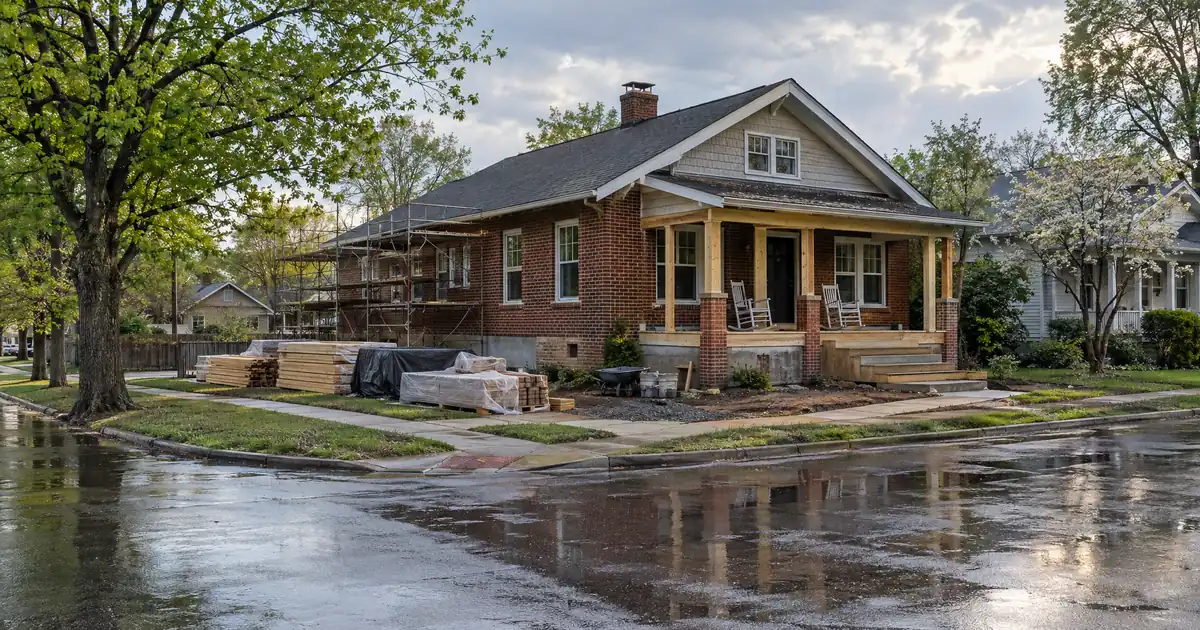
The Quick Read: A hard money flip file is light on personal income paperwork and heavy on entity, property, rehab and liquidity paperwork, and an out-of-state borrower adds one more layer: proof the entity can legally hold and transact on property in the state where it sits.
- Income documents are usually not the focus. The property, the plan and the exit are.
- Entity papers matter more out of state: formation documents, operating agreement, good standing, and possibly a foreign registration.
- The scope of work needs line-item detail, because it drives the draw schedule.
- Proof of funds covers the down payment, closing costs and an overrun cushion.
- Every figure below varies by lender, property, and experience, and nothing here is a commitment to lend.
Most flip files that stall do not stall on credit. They stall on a missing operating agreement, a lump-sum rehab budget, or an entity that is not registered where the house sits. This piece walks through each document, what it proves to the lender, and where distance changes the file. It sits alongside Lendmire’s complete DSCR loans guide, which covers the long-term rental side of the same investor’s playbook.
What this loan actually costs to carry.
Hard money is sized against the project and priced by time. Enter the deal and see how much the program will lend, the cash required at closing, the carry while you hold it, and what is left at the exit.
Leverage tiers on the current program: 85% with fewer than 2, 90% with 2 or more, 93% with 5 or more completed projects — every tier capped at 75% of after-repair value. Loan amounts up to $5,000,000, larger by exception; terms of 6 to 18 months, interest-only, no prepayment penalty. The rehab portion funds in draws against completed work, not at closing.
Program parameters shown update from Lendmire’s centralized guideline source. Rate, points, and months are editable assumptions, not quoted terms.
Cost cap sets the loan · positive spread
Illustrative estimate only — not a quote, Loan Estimate, approval, or commitment to lend. Rate, points, and months are editable assumptions. Hard money is business-purpose financing for real estate investors, not a consumer mortgage. Leverage on the current program tops out at 93% of project cost for investors with a documented track record, capped at 75% of after-repair value, with rehab funding up to 100% of the documented budget released in draws; actual terms vary by lender, borrower experience, property, and exit. Lendmire is a mortgage broker, not a lender.
What Do Lenders Actually Document on a Flip?
Lenders document the deal more than the borrower. A flip loan is short-term, interest-only bridge money secured by non-owner-occupied residential property of one to four units. The lender is asking three questions. Is the collateral worth what the borrower says? Is the rehab budget realistic? Can the borrower exit by selling or refinancing?
Every document in the file answers one of those questions. Income and employment paperwork is usually light or absent, which is why the file feels thin next to a conventional mortgage. Thin is not empty. Credit is still reviewed (a 620 minimum score applies across the program, with added conditions below 660), and the property, entity, scope and liquidity items are heavy.
The Core Document Package
| Document | What it proves | Universal or lender-dependent |
|---|---|---|
| Government photo ID, SSN or ITIN | Who the borrower is | Universal |
| Entity documents | The borrower can legally hold title | Universal if borrowing in an LLC |
| Executed purchase contract | Price, parties, terms | Universal on a purchase |
| Scope of work and rehab budget | Plan is real and priced | Required when rehab is funded |
| Valuation (BPO or appraisal) | As-is and after-repair value | Universal; form varies |
| Proof of funds | Cash for down payment, costs, overruns | Universal |
| Experience schedule | Track record | Lender-dependent; sets the leverage tier |
| Insurance | Collateral is protected | Universal before funding |
| Personal guarantee | Borrower stands behind the entity | Typical |
Across the lenders in Lendmire’s wholesale network, the experience schedule matters more than most first-time flippers expect. Fix-and-flip leverage is tiered by documented completed projects: up to 93% of project cost at 5 or more completed projects, up to 90% at 2 or more, and up to 85% below that, with every tier capped at 75% of after-repair value. Up to 100% of the rehab budget can fund in draws against completed work. That is a rehab-budget figure, not a purchase LTV, and there is no true 100% purchase program. Leverage varies by lender, property, and experience.
Entity Documents When the Property Is Out of State
This is the section most checklists skip. An LLC is “domestic” only in the state where it was formed. Everywhere else it is a foreign LLC, per Wolters Kluwer. Doing business in another state typically means filing a certificate of authority and naming a registered agent, and that filing generally requires a good standing certificate from the home state, according to FindLaw.
What lands in the file:
1. Articles of organization.
2. A signed operating agreement that names the members and who can sign.
3. The EIN letter.
4. A current certificate of good standing from the formation state.
5. A foreign registration or certificate of authority where the property sits, if that state requires one.
Whether a single flip triggers registration is a state-by-state question. Texas, for example, requires an out-of-state entity to register before transacting business, per the Texas Secretary of State. Other states carve out activities that do not count as transacting business. Confirm with counsel and the title company before contract, not at the closing table.
One more trap: forming in Delaware or Wyoming does not exempt an investor from registering where the work actually happens, per LegalZoom. The name on the contract, the loan and the deed must also match the entity’s exact legal name. A missing “LLC” or a mismatched suffix is a common reason title kicks a file back.
Some investors use one LLC per property. Others use a single foreign-qualified LLC. The better structure depends on how many properties are planned and what counsel advises.
Property-Side Paperwork
The purchase contract, seller details and the title or escrow contact start the file. Photos matter more than they seem. When interior photos are missing, a valuation reviewer may have to assume poor condition, which pulls value down. For an absentee buyer, get a local agent or contractor to shoot a full walkthrough before the file goes in.
Valuation comes next. Lenders order a broker price opinion or appraisal for the as-is value and the after-repair value, then check whether the scope and budget fit that number. Comps that support the after-repair value help. An optimistic ARV with no sales behind it is the fastest way to a reduced loan amount. Insurance, including builder’s risk or similar coverage during the rehab, is generally needed before funding, and a flood policy may apply where the zone requires it.
The Scope of Work and Budget
Itemize it. Most lenders supply their own template, laid out by area and trade. The reason is the draw process: rehab funds are held back and released as work is finished, and a lump line like Interior gives the inspector nothing to verify. Contractor bids and a timeline are commonly requested, and a contingency line shows the lender the budget was thought through.
A simple budget can pass with some private lenders or a strong track record. Larger loans and formal draw processes want line-item detail. For an out-of-state borrower, add the contractor’s license information and the local permit plan. The lender is underwriting a project it cannot see, so the paper has to show it.
Proof of Funds and Reserves
Expect bank statements or a proof-of-funds letter covering the down payment, closing costs and a cushion for overruns. Large recent deposits need a source. A wire from a sold property or a transfer between the borrower’s own accounts is easy to document. An unexplained deposit slows the file.
The cushion is more than a formality. “Up to 100% of the rehab” funds as reimbursement against completed work, so the borrower usually floats the first stage before the first draw comes back. A contractor who wants a deposit up front makes that gap bigger. Plan the cash for it.
How the Property’s State Changes the File
| If your situation is… | The likely route |
|---|---|
| Property state requires foreign registration for your activity | Register, then add the certificate to the file |
| Property is in an attorney-closing state | Local counsel handles title and signing |
| You cannot travel to the closing | Ask title early about remote online notarization, a hybrid signing, or a mobile notary |
| Someone else will sign for you | Ask title and the lender before relying on a power of attorney |
Signing rules are set by the property’s state, the notary’s state, the county and the title insurer, not by the lender alone. Remote notarization is not available everywhere, and a power of attorney is not universally accepted. Some lenders and title companies want it authenticated or approved in advance. Raise the signing route at contract, since it can decide the closing logistics.
Lender licensing also differs by state, and it changes who can lend on a business-purpose flip in a given place. That is one more reason to work through a broker that sees many lenders. Lendmire’s network spans 41 markets, including Washington, D.C., and is not available in Louisiana, Minnesota, North Dakota, South Dakota, Baltimore, Chicago or Detroit.
Where the Rule Breaks: Edge Cases
Business-purpose treatment is the reason these loans carry an entity borrower and a business-purpose certification. Credit extended primarily for business purposes, or to a borrower who is not a natural person, is exempt from the consumer lending rules, per the OCC Comptroller’s Handbook on TILA. Credit to buy or improve non-owner-occupied rental property is generally treated as business-purpose, per the Federal Reserve. The test looks at the purpose of the loan, not only the property type. The Compliance Alliance notes that owner-occupied rental property follows different unit thresholds.
The practical takeaway is narrow. A checked business-purpose box with no supporting use of proceeds can be thin evidence, and a consumer-purpose use of funds, such as cash-out to cover personal expenses, can change the analysis. Keep the use of proceeds documented and consistent with a flip. The program covers non-owner-occupied one-to-four-unit residential, with ground-up construction up to 10 units. Commercial, land and owner-occupied properties are not offered.
Other edge cases: a guarantor in a community property state may need to supply spousal consent. A newly formed entity gets a closer look at the guarantor behind it. A first-time investor can qualify at the lower leverage tiers, with a lighter experience schedule.
Draw-Phase Paperwork for an Absentee Borrower
Closing is not the end of the paper. Each draw typically needs a request, invoices or receipts, and an inspection. A per-draw fee is common. Absentee borrowers lean on third-party inspections, dated photo and video, and a vetted general contractor, since the draw schedule is also how a borrower holds a contractor accountable. Draw turnaround differs by lender and no authoritative benchmark exists, so ask each one how it handles inspections and releases.
A Worked Example: Complete and Stalled
Picture two investors buying in the same state, both with a 700 score. Investor A is forming an LLC at home, has a good standing certificate, a signed operating agreement, a foreign registration, a line-item budget, bank statements covering cash to close, and a list of two completed projects. The file reads clean, and the leverage tier reflects the experience.
Investor B has the same deal but a lump-sum rehab figure, no registration where the property sits, and an LLC name on the contract that differs from the entity papers. The lender asks for an itemized scope, title asks for the certificate of authority, and the vesting has to be fixed. Same deal, three preventable conditions. The fix is to itemize the budget, confirm registration before contract, and match every name.
Common Delay and Denial Causes
- Rehab budget in lump lines rather than by trade.
- ARV not supported by comparable sales.
- Entity not in good standing, or not registered where the property sits.
- Name mismatch between contract, entity papers and loan.
- Unsourced large deposits in the bank statements.
- Missing interior photos.
- Insurance not bound before funding.
- No plan for signing from out of state.
Key Terms Defined
After-repair value (ARV): the estimated value of the property once the rehab is finished.
Scope of work: the itemized list of repairs, by area and trade, with costs.
Draw: a release of held-back rehab funds after work is completed and inspected.
Foreign LLC: an LLC doing business in a state other than the one where it was formed.
Vesting: the exact legal name in which title is held.
Proof of funds: documentation showing the borrower has cash for the down payment, costs and overruns.
What the Decision Looks Like in Practice
Assemble the entity package first, because it has the longest lead time. Then build the budget by trade, line up the valuation support, and pull the liquidity statements. Many investors later refinance out of hard money into long-term DSCR financing once the property is stabilized, and Lendmire brokers that path. Terms run 6 to 18 months, interest-only, with no prepayment penalty, and loan amounts reach up to $5,000,000, larger by exception, all subject to lender guidelines.
If you are buying, rehabbing or refinancing an investment property on a short timeline and want to see how the numbers work, Lendmire can help you compare hard money options based on the project, the exit plan, leverage, and your goals. Reach the team at 828-256-2183.
Frequently Asked Questions
Do I need traditional personal-income documentation for a hard money flip loan?
Usually the focus is the property, the plan and the exit, not personal income. Some programs are low-documentation on income, while others may ask for more, so it depends on the lender. Credit is still reviewed, and the 620 minimum score applies with added conditions below 660.
Do I need to register my LLC in the property’s state?
It depends on the state and on what activity counts as transacting business there. Some states require registration before an out-of-state entity operates, and others list safe-harbor activities. Ask counsel and the title company before contract. Tax treatment varies; consult a qualified professional.
Can I close without traveling?
Often there is a route, but it is set by the property’s state, the notary, the county and the title insurer. Remote online notarization, hybrid signing and mobile notaries each have limits. Raise it with title early.
Will a lender accept a power of attorney?
Sometimes. Lenders and title companies differ, and some want it reviewed or authenticated in advance. Do not assume it will be accepted.
Is 100% rehab financing paid up front?
No. It usually means funds are released as completed work is inspected, so the borrower often floats the first stage. There is no true 100% purchase program. Rehab funds reach up to 100% of the rehab budget in draws, varying by lender, property, and experience.
About Lendmire
Lendmire is a DSCR-focused mortgage brokerage, NMLS# 2371349, placing investor loans across 41 markets, including Washington, D.C. DSCR eligibility is generally reviewed by the lender around a property’s rental income rather than personal income documentation, which fits LLC-held rentals, self-employed investors, and portfolios scaling past conventional financed-property limits. Scotsman Guide named Lendmire a Top Mortgage Workplace in both 2025 and 2026.
Short-term financing tends to work best when the long-term plan is decided early – see the hard money loan overview.
Get Started
Ready to find the right loan for you?
In about 30 seconds you can review financing options available for your investment property. No commitment required.
Informational only. Not a Loan Estimate, approval, or commitment to lend. Program availability and eligibility are subject to lender guidelines, credit approval, property review, and underwriting.
References
1. Wolters Kluwer – Foreign qualification
3. Texas Secretary of State – Foreign entity FAQ
4. LegalZoom – Out-of-state LLC
5. OCC Comptroller’s Handbook – TILA
6. Federal Reserve – Reg Z background
7. Compliance Alliance – Reg Z and investment properties
This article is part of Lendmire’s hard money loan program — full qualification details, guidelines, and scenarios live on the program page.
Related reading: Can You Have More Than One Fix and Flip Hard Money Loan at Once? · Can You Use a Hard Money Loan to Buy and Flip a House? · Can an Investor Find a Hard Money Lender for a Fix and Flip?
Brandon Miller
Founder & CEO, Mortgage Loan Originator, Lendmire LLC
- Mortgage Loan Originator · NMLS# 1129696 · Verify on NMLS Consumer Access
- North Carolina Real Estate Broker · License# 343312 · Verify on NCREC
- North Carolina Insurance Producer · License# 19053198 · Property, Casualty, Life, Health · Verify on NAIC SBS
- Lendmire LLC · Firm NMLS# 2371349 · Verify firm licensure
Disclosures. The information presented in this article is general market commentary, not financial, legal, or tax advice. Lendmire is a mortgage brokerage (NMLS# 2371349) — not a direct lender or depository institution — and loan placement is subject to lender underwriting. Nothing in this content represents a commitment to lend. Loan terms, pricing, and program availability vary based on borrower qualifications, property characteristics, and state of subject property, and are subject to change at any time. Lendmire complies with Equal Housing Opportunity requirements. Consumer access: nmlsconsumeraccess.org.