
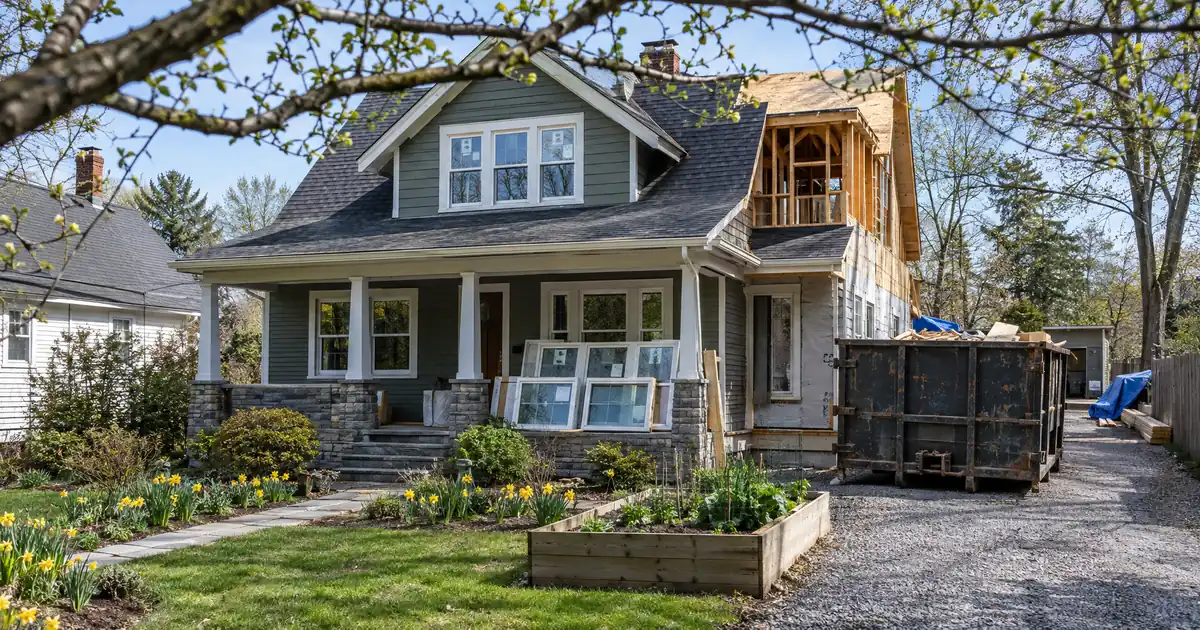
The Quick Read: A hard money flip loan is a short, interest-only bridge loan on a non-owner-occupied house, sized mainly on the property’s value after repairs and on the quality of your plan, not on your income. Credit, cash, and experience still matter, but they mostly shape how much the lender will lend.
- Credit: a 620 minimum score, with added conditions below 660. Varies by lender, property, and experience.
- Leverage: 85% of project cost with fewer than 2 completed projects, 90% at 2+, and 93% at 5+. Every tier is capped at 75% of after-repair value.
- Property: non-owner-occupied residential, 1-4 units. This article covers the single-family case.
- Term: 6-18 months, interest-only, no prepayment penalty.
- Your cash: you fund the gap between the loan and total cost, plus closing costs and reserves.
Everything below is a typical range from select wholesale-network guidelines. It is not a commitment to lend.
What this loan actually costs to carry.
Hard money is sized against the project and priced by time. Enter the deal and see how much the program will lend, the cash required at closing, the carry while you hold it, and what is left at the exit.
Leverage tiers on the current program: 85% with fewer than 2, 90% with 2 or more, 93% with 5 or more completed projects — every tier capped at 75% of after-repair value. Loan amounts up to $5,000,000, larger by exception; terms of 6 to 18 months, interest-only, no prepayment penalty. The rehab portion funds in draws against completed work, not at closing.
Program parameters shown update from Lendmire’s centralized guideline source. Rate, points, and months are editable assumptions, not quoted terms.
Cost cap sets the loan · positive spread
Illustrative estimate only — not a quote, Loan Estimate, approval, or commitment to lend. Rate, points, and months are editable assumptions. Hard money is business-purpose financing for real estate investors, not a consumer mortgage. Leverage on the current program tops out at 93% of project cost for investors with a documented track record, capped at 75% of after-repair value, with rehab funding up to 100% of the documented budget released in draws; actual terms vary by lender, borrower experience, property, and exit. Lendmire is a mortgage broker, not a lender.
How Does a Hard Money Flip Loan Actually Work?
It is a bridge loan. You buy a house that needs work, renovate it, then sell it or refinance it. The lender’s main collateral is the house and what it will be worth finished.
That changes what gets scrutinized. A bank mortgage asks whether you earn enough. A hard money lender asks whether the deal is sound, whether your numbers are realistic, and whether you have a clear way out. Your credit still gets pulled and your cash still gets verified. But the file is built around the property, the plan, and the exit.
These are business-purpose investor loans for non-owner-occupied properties, so they are reviewed differently from a standard owner-occupied mortgage. Commercial, industrial, land, hospitality, and owner-occupied properties are not offered on this program.
Key Terms Defined
ARV (after-repair value): what the house should sell for once the renovation is finished, based on comparable sales of renovated homes.
LTC (loan-to-cost): the loan divided by total project cost, meaning purchase price plus rehab budget.
LTARV (loan-to-ARV): the total loan divided by the after-repair value. This is the cap that most often limits a flip loan.
Holdback: the rehab money the lender keeps in escrow and releases as work is completed.
Draw: one release of holdback funds after a phase of work is done and checked.
Exit strategy: how the loan gets repaid, either by selling the house or refinancing it.
Proof of funds: bank or asset statements showing you have the cash for your down payment, closing costs, and reserves.
What Do Lenders Require at a Glance?
Here is the whole picture in one table. Each figure varies by lender, property, and experience.
| Requirement | What the program looks for | Why it matters |
|---|---|---|
| Credit | 620 minimum, extra conditions under 660 | Sets eligibility and terms |
| Leverage | 85-93% of project cost, max 75% of ARV | Decides your cash in the deal |
| Property | Non-owner-occupied, 1-4 units | Business-purpose collateral |
| Loan size | Up to $5,000,000, larger by exception | Smaller balances vary by lender |
| Term | 6-18 months, interest-only | Short runway to sell or refinance |
| Plan | Scope, budget, timeline, ARV comps | Shows the numbers can work |
| Exit | Written sale or refinance plan | Shows how the loan gets repaid |
How Is the Loan Sized?
Three ratios decide the loan. The lender runs all three and uses whichever gives the smallest answer.
First, loan-to-cost. On this program, leverage is tiered by documented completed projects. With fewer than 2, it runs up to 85% of project cost. With 2 or more, up to 90% of project cost. With 5 or more, up to 93% of project cost. Up to 100% of the rehab budget funds through draws against completed work. That is a rehab-budget figure, not a purchase LTV.
Second, the ARV cap. Every tier is capped at 75% of after-repair value, no matter how strong your experience is.
Third, a bridge purchase with no rehab runs up to 80% of purchase price. A cash-out or rate-and-term refinance runs up to 65% of value.
There is no true 100% purchase program. When you see 100% financing advertised, it usually means 100% of the repair budget, not of everything.
A hypothetical worked example
Run the numbers on a flip where purchase plus rehab equals 70% of ARV. These inputs are modeled assumptions, not market data.
A first-time investor at 85% of project cost borrows about 59.5% of ARV. That sits well under the 75% cap. The remaining roughly 10.5% of ARV is your own cash, before closing costs and reserves.
An investor with 5+ completed projects at 93% of project cost borrows about 65.1% of ARV. Their own cash in the deal drops to about 4.9% of ARV, plus fees.
Now tighten the deal. Say all-in cost is 90% of ARV. Even at 93% of cost, that implies a loan of about 83.7% of ARV. The 75% cap overrides it, and you cover the rest. This is why a thin margin between cost and ARV blocks full financing. The deal is not broken. It just needs more of your cash.
For a dollar view of your own deal, the site’s calculator gives an illustrative estimate. It is not a quote.
What Borrower Requirements Apply?
Credit. The program starts at a 620 minimum score, with additional conditions below 660. Underwriting stays asset-based, so the score is one input, not the whole story. A higher score can improve terms.
Experience. Experience mostly changes leverage, not eligibility. First-time investors qualify at the lower tiers. The top tier is reserved for investors with documented completed projects. Some lenders outside this network require a track record before they will talk to you at all, so the range is wide.
Cash and reserves. You bring the down payment, closing costs, and a cushion for carrying costs. Lenders ask for proof of funds covering all of it. Reserve expectations vary by lender, loan size, and experience, so ask for yours up front.
Entity. Many investors buy through an LLC. Entity documents are requested, subject to program eligibility. Expect a personal guarantee, which means you remain personally responsible for the loan even when an entity holds title.
What Single-Family Property Requirements Apply?
Single-family homes are the cleanest case. The property must be non-owner-occupied and residential. The program covers 1-4 units, so a single-family flip sits comfortably inside it.
Beyond type, lenders care about four things:
- Condition and scope. A dated house with a clear renovation plan is the typical fit. A structurally compromised property with unclear scope draws more questions.
- Value support. An independent appraisal usually sets the ARV from renovated comparable sales. Many appraisals report both an as-is value and a subject-to-completion value.
- Title and insurance. Expect a title review for liens. Lenders also want proper coverage on a property that sits vacant during construction.
- Location. The program runs in 41 markets, including Washington, D.C. A few areas are excluded, so confirm yours before you build a deal around it.
What Does the Deal and Renovation Plan Need?
This is where files are won or lost. A lender wants to see that your numbers are believable.
1. Scope of work. A line-item list of what you will fix, ideally backed by contractor bids.
2. Rehab budget. Include a contingency. Surprises are normal in older houses.
3. Timeline. It must fit inside the loan term of 6-18 months, with room to sell.
4. ARV comps. Recent sales of renovated, similar homes nearby. Do not stretch the radius or lean on the one outlier sale.
5. Exit strategy. Written down, with a backup.
Many investors who decide to keep a finished flip as a rental later refinance out of hard money into long-term DSCR financing once the property is stabilized. Lendmire brokers that path. The rental-income test applies at that point, and the complete DSCR loans guide explains how it works. Treat it as a plan B you set up at the start, not an afterthought.
How Do Draws Work?
The rehab money does not arrive at closing. It is held in escrow and released as work is completed and checked. Most investors or their contractors front each phase and are reimbursed afterward. That means you need a cash float on top of your down payment.
Draw rules differ by lender. Some inspect every draw, while others inspect once and accept photos. Some reimburse stored materials with proof, while others pay only after installation. Some charge interest on the full balance from closing, while others charge only on funds drawn. Ask which one you are getting before you sign.
A typical draw package includes invoices, an updated schedule of values, change orders, lien waivers, and progress photos. Keep these organized. Sloppy paperwork stalls reimbursements, and stalled reimbursements stall your contractor.
What Documents Should You Gather?
Have these ready before you apply:
- Deal: signed purchase contract, scope of work, line-item rehab budget, contractor bids, ARV comps, and a rehab timeline.
- Borrower: government ID, credit authorization, and proof of funds for down payment and reserves.
- Experience: a list of completed projects, if you have them.
- Entity: formation documents and operating agreement, subject to program eligibility.
- Exit: a written sale or refinance plan.
What Is the Process, Start to Finish?
1. Submit the deal. Send the address, price, ARV, rehab budget, and your background.
2. Sizing. The lender runs loan-to-cost and the ARV cap.
3. Appraisal and title. The ARV gets validated and liens get checked.
4. Closing. You bring your cash to close.
5. Renovate and draw. Work happens in phases, with inspections and reimbursements.
6. Exit. Sell the house or refinance, with no prepayment penalty on this program.
Where Does the General Rule Break?
Experienced investors with thin margins. Experience unlocks higher cost leverage, but the 75% ARV cap still binds. Experience does not override the cap.
First-timers with big scopes. Lenders tend to be warier when a first-timer’s rehab budget is large relative to the purchase price. Expect more questions about your contractor and your contingency.
Low credit with strong deals. A strong deal can offset some weakness, but scores under 660 trigger added conditions. Raising your score before applying is often a more affordable fix.
Equity in another property. Some lenders outside this program accept equity in a second property to cover a cash gap. Do not assume yours will.
Longer holds. The term caps at 18 months, and there are no multi-year options on this program. A project that might need longer than that belongs in a different loan, such as long-term rental financing.
Loan size. Balances run up to $5,000,000, larger by exception. Smaller balances vary by lender, so a very small flip may need a different fit.
Financing share and margins matter here too. ATTOM’s quarterly data put the typical flip’s gross profit at $60,526, a figure that excludes rehab, financing, taxes, insurance, and transaction costs. The median hold from purchase to resale stretched to 165 days in ATTOM’s first-quarter report, long enough for carrying costs to bite.
Why Do Applications Stall or Get Declined?
- ARV too optimistic. Comps that do not support your number cause the loan to be sized down. Fix: use conservative comps.
- Cost too close to ARV. When all-in cost approaches the cap, your required cash balloons. Fix: negotiate price or trim scope.
- Credit under the floor. Scores under 620 are out, and scores between 620 and 660 carry conditions. Fix: pay down balances before you apply.
- Thin liquidity. You cannot show cash for the down payment, closing costs, and reserves. Fix: line up documentation early.
- Vague scope. A one-line budget invites questions. Fix: itemize with bids.
- No exit. A lender wants to see how it gets repaid. Fix: write a sale plan and a backup.
Readiness Self-Check
Answer yes or no before you apply:
- Is my credit at or above 660, or do I understand the conditions below it?
- Does purchase plus rehab leave real room under 75% of ARV?
- Do I have cash for down payment, closing costs, reserves, and a draw float?
- Are my comps recent, local, and conservative?
- Does my renovation budget include a contingency?
- Does my timeline fit inside 18 months?
- Do I have a written exit and a backup?
Any “no” tells you where to work first. Tax treatment varies; consult a qualified professional.
Frequently Asked Questions
Can a first-time flipper qualify?
Yes, at the lower leverage tiers. With fewer than 2 completed projects, leverage runs up to 85% of project cost, still capped at 75% of ARV. Eligibility depends on credit, cash, and the deal. All of it varies by lender, property, and experience.
Do I need to show income?
Underwriting is asset-based, so the file centers on the property, the plan, and the exit. You still document credit, cash, and reserves. This is not a no-credit-check loan. Lenders review your score and your liquidity.
Does hard money cover the whole project?
No. Up to 100% of the rehab budget can fund in draws against completed work. That is a rehab figure, not a purchase LTV. You still bring cash for the gap between the loan and total cost.
How long is the term, and what if I need longer?
Terms run 6-18 months, interest-only, with no prepayment penalty. If you need longer, plan a refinance into long-term rental financing. Lenders will ask about your timeline at underwriting.
Do I need an LLC?
Not always. Many investors use one, subject to program eligibility. Whichever way you hold title, expect a personal guarantee and a request for entity documents when an LLC is involved.
If you are buying, rehabbing, or refinancing an investment property on a short timeline and want to see how the numbers work, Lendmire can help you compare hard money options based on the project, the exit plan, leverage, and your goals.
About Lendmire
A DSCR-focused mortgage broker, Lendmire (NMLS# 2371349) places investor financing across 41 markets — 40 states plus Washington, D.C. — with DSCR eligibility generally reviewed by the lender on property cash flow instead of tax returns, subject to lender guidelines. Scotsman Guide named Lendmire a Top Mortgage Workplace in 2025 and 2026.
Short-term financing tends to work best when the long-term plan is decided early – see the hard money loan overview.
Get Started
Ready to find the right loan for you?
In about 30 seconds you can review financing options available for your investment property. No commitment required.
Informational only. Not a Loan Estimate, approval, or commitment to lend. Program availability and eligibility are subject to lender guidelines, credit approval, property review, and underwriting.
References
1. WRE News on ATTOM’s home flipping returns
2. Inman on ATTOM’s home flipping trends
This article is part of Lendmire’s hard money loan program — full qualification details, guidelines, and scenarios live on the program page.
Related reading: Can You Have More Than One Fix and Flip Hard Money Loan at Once? · Can You Use a Hard Money Loan to Buy and Flip a House? · Can a Business Owner Qualify for a Larger Hard Money Flip Loan?
Brandon Miller
Founder & CEO, Mortgage Loan Originator, Lendmire LLC
- Mortgage Loan Originator · NMLS# 1129696 · Verify on NMLS Consumer Access
- North Carolina Real Estate Broker · License# 343312 · Verify on NCREC
- North Carolina Insurance Producer · License# 19053198 · Property, Casualty, Life, Health · Verify on NAIC SBS
- Lendmire LLC · Firm NMLS# 2371349 · Verify firm licensure
Disclosures. The information presented in this article is general market commentary, not financial, legal, or tax advice. Lendmire is a mortgage brokerage (NMLS# 2371349) — not a direct lender or depository institution — and loan placement is subject to lender underwriting. Nothing in this content represents a commitment to lend. Loan terms, pricing, and program availability vary based on borrower qualifications, property characteristics, and state of subject property, and are subject to change at any time. Lendmire complies with Equal Housing Opportunity requirements. Consumer access: nmlsconsumeraccess.org.