
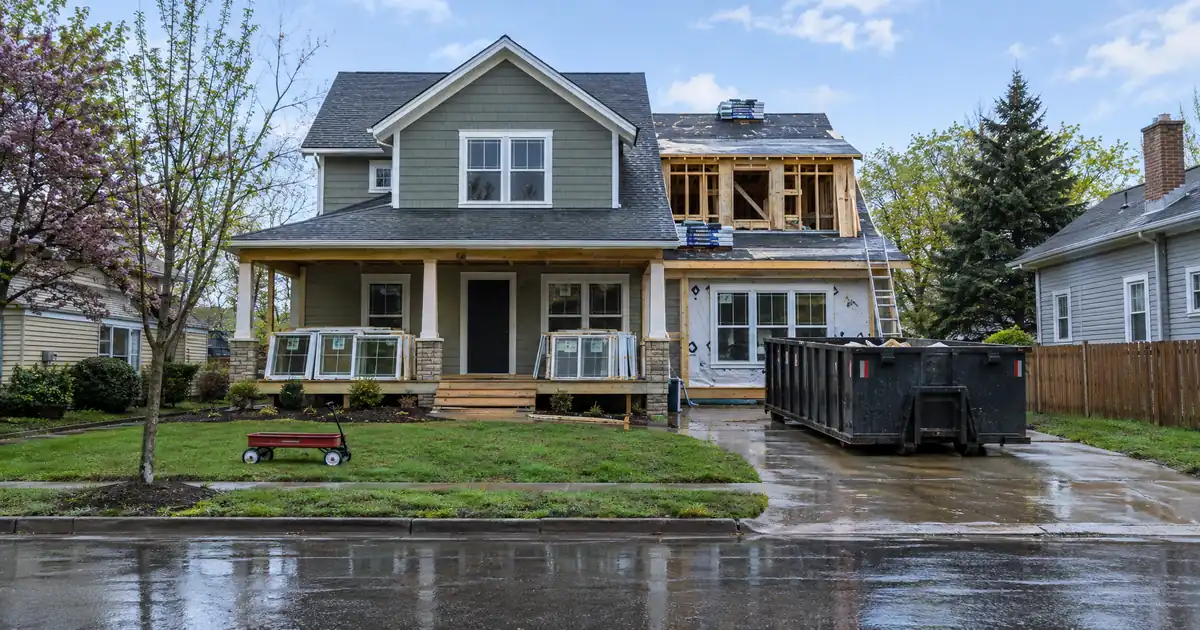
The Quick Read: A hard money flip lender reviews the project more than your paycheck, so the file has to prove three things: what the property is worth today, what it should be worth after repairs, and that you have the cash, entity, and plan to finish and exit. Complete, consistent uploads are what keep an online approval from stalling.
- Underwriting is asset-based. The lender looks at the property, the rehab plan, and the exit.
- The core file has five parts: borrower and entity papers, experience, the contract and property details, a line-item scope and budget, and proof of funds.
- Across most programs in the wholesale network, leverage is tied to project cost and capped against after-repair value (ARV). Leverage varies by lender, property, and experience.
- An online conditional approval is not a funding commitment. Appraisal, title, insurance, and conditions still have to clear.
- Rehab money releases in draws against completed work, so the budget and scope are loan documents, not formalities.
What Does the File Have to Prove?
The file has to prove two values and the plan that connects them. Those values are the “as is” value today and the ARV once the work is finished. Lenders in this space are usually conservative on both. Scotsman Guide’s tutorial on hard money loans describes lower leverage on the purchase price and a conservative ceiling based on ARV.
What this loan actually costs to carry.
Hard money is sized against the project and priced by time. Enter the deal and see how much the program will lend, the cash required at closing, the carry while you hold it, and what is left at the exit.
Leverage tiers on the current program: 85% with fewer than 2, 90% with 2 or more, 93% with 5 or more completed projects — every tier capped at 75% of after-repair value. Loan amounts up to $5,000,000, larger by exception; terms of 6 to 18 months, interest-only, no prepayment penalty. The rehab portion funds in draws against completed work, not at closing.
Program parameters shown update from Lendmire’s centralized guideline source. Rate, points, and months are editable assumptions, not quoted terms.
Cost cap sets the loan · positive spread
Illustrative estimate only — not a quote, Loan Estimate, approval, or commitment to lend. Rate, points, and months are editable assumptions. Hard money is business-purpose financing for real estate investors, not a consumer mortgage. Leverage on the current program tops out at 93% of project cost for investors with a documented track record, capped at 75% of after-repair value, with rehab funding up to 100% of the documented budget released in draws; actual terms vary by lender, borrower experience, property, and exit. Lendmire is a mortgage broker, not a lender.
That is why hard money paperwork looks different from a bank file. There is less of it, and it points at different things. A bank asks whether you can repay from income. A flip lender asks whether the project will finish, appraise, and sell or refinance.
Four questions drive most decisions:
1. How well is the ARV supported by comparable sales?
2. Does the budget actually fit the scope?
3. Does the borrower have liquid funds beyond the down payment?
4. Is the exit plan realistic, and has the borrower done this before?
Every document you upload answers one of those four. If a document answers none of them, it rarely matters. If a question has no document behind it, expect a condition request.
The Master Checklist
Most files need the same set of items. This table shows what each one proves and when it usually matters. Exact requirements vary by lender, property, and experience.
| Document | What it proves | Needed by | Common mistake |
|---|---|---|---|
| Government ID | Who the guarantor is | Application | Expired or cropped scan |
| Entity papers | The borrower exists and who signs | Application | Name differs from contract |
| Experience summary | Track record | Application | Vague, no addresses |
| Purchase contract | Price and property | Application | Missing addenda |
| Scope and budget | Plan matches numbers | Application | Lump-sum budget |
| Bank statements | Down payment and reserves | Underwriting | Missing pages |
| Insurance | Property is protected | Closing | Wrong named insured |
| Title commitment | Clean ownership path | Closing | Entity mismatch |
The “needed by” column is a sequence, not a schedule. Application items support the conditional approval. Underwriting items clear the conditions. Closing items finish the file.
Borrower and Entity Documents
The entity file is the first place online submissions go wrong. Most flip loans are made to an LLC, and the owner signs a personal guarantee. Lenders typically want ID for each guarantor, the articles of organization, the operating agreement, an EIN letter, and a good-standing certificate. The entity must be able to hold title and sign the loan, subject to lender program eligibility.
The key rule is name alignment. The entity name should be identical across the purchase contract, the operating agreement, the bank account, the insurance policy, and the title commitment. A missing comma or an “LLC” that became “L.L.C.” can trigger a request for corrections.
A newly formed LLC is fine in most cases. Lenders care less about the entity’s age than about the guarantor’s record and liquidity. A new entity does need its own EIN and, often, a bank account with some history. Moving funds into that account shortly before applying can raise questions about where the money came from, so keep the paper trail clean.
Credit is part of the file. Across the network, 620 is the usual minimum score, with additional conditions below 660. The loan is still asset-based, but the credit pull and background check are routine. A lender may also ask for a short explanation of any recent credit events.
Experience: First-Timer or Seasoned?
Experience does not usually decide whether a file is reviewed. It decides leverage. In the hard money program Lendmire places, fix-and-flip leverage is tiered by documented completed projects:
- 93% of project cost at 5 or more completed projects.
- 90% of project cost at 2 or more completed projects.
- 85% of project cost with fewer than 2 completed projects.
Every tier is capped at 75% of ARV. These are loan-to-cost figures, and they vary by lender, property, and experience. A first-time investor can qualify at the lower tier. The top tier is reserved for experienced investors.
Documenting experience means a short real estate schedule: property addresses, purchase and sale dates, purchase and sale prices, and your role. Settlement statements from past deals make the strongest backup. A vague list such as “flipped several houses” is the thin spot that costs experienced investors a tier. An investor who has completed projects but cannot document them is treated as a first-timer for leverage.
Scope of Work and Budget: The Document That Decides the File
The scope of work (SOW) and budget are the most important documents in a flip file. They connect the as-is value to the ARV, and they set the rehab funding schedule. Scotsman Guide advises that the borrower meet with the contractor to establish a full budget and detailed project plan before the appraisal is ordered, and that the SOW can be attached to the appraisal report for reference during the rehab.
The cost of skipping that step is real. Without a plan, the appraiser has nothing to credit, so the finished value barely moves. That is the publication’s example, not a market statistic.
A strong SOW is a line-item budget, not a total. It should list each trade and item, such as roof, kitchen, flooring, electrical, plumbing, and permits, with a cost for each. Contractor bids or a signed contractor agreement support the numbers. It should also include a contingency line, because lenders read a budget with no cushion as optimistic.
Scope size matters too. A heavy gut scope against a high ARV draws more scrutiny than a cosmetic refresh. If your plan is ambitious, explain it with comparable sales that already reflect that finish level.
ARV, Valuation, and the Appraisal
ARV is an appraiser’s estimate, built from the scope and comparable sales. It is not the price you hope to get. The lender orders its own valuation, and the as-is and as-completed values both feed the loan size. Some lenders use internal valuations in place of a full appraisal, which varies by lender.
You can help the appraiser by supplying your own comparable sales, photos of the finish level you plan, and the scope. Treat these as supporting material. The appraiser reaches an independent opinion.
If the value comes in low, the usual outcome is a resize. The loan gets smaller, or you bring more cash to closing. The deal does not necessarily end. This is also where the 75% of ARV cap matters. A low ARV can make the cap, rather than the cost tier, the binding limit.
A related guardrail applies to improvements in general. A well-planned renovation may support a higher appraised value, depending on comps and underwriter review, but the lender sizes the loan to the appraisal, not to your projection.
Funds, Insurance, and Title
Lenders typically ask for recent statements with every page included. If a large deposit appears, expect a request to document where it came from. A gift or a transfer between your own accounts can work when it is documented.
Insurance protects the lender’s collateral. For a property under renovation, lenders usually want a policy that fits a vacant or under-construction building, and the named insured and mortgagee clause must match the file. Ask your agent early, because standard landlord policies are not always written for properties mid-rehab.
Title is the third-party piece. A title company issues a commitment, and the vesting name has to match the entity on the contract. If the entity is wrong at this stage, it can mean an assignment or amended contract. These items are worked in parallel, which is why gathering the paper before you are under contract helps.
Income Documents: What Replaces Them?
A flip loan is underwritten on the asset, not on personal income. The property, the plan, and the exit carry the file. In place of income documentation, lenders look at liquidity (bank statements), the guarantor’s track record, and the credit report.
Requirements vary by lender, and a lender may still ask for certain borrower items case by case. Across the wholesale network, the file centers on the property, the plan, and the exit.
How Do You Submit Everything Online?
Online submission is mostly about file hygiene. The portal layer differs by lender, so the habits below matter more than the platform.
1. Send complete statements. Include every page, even blank ones. Missing pages are a common reason a funds item bounces.
2. Use text-readable PDFs. Scans should be flat, in color, and legible. Photos taken at an angle get rejected.
3. Name files clearly. Something like “entity-operating-agreement” beats “scan0042.” Reviewers work through folders, and clear names reduce mislabeled items.
4. Match every name. Check the entity, guarantor, and property address against each document before you upload.
5. Upload the budget as a spreadsheet or itemized PDF. A lump-sum figure invites a conditions request.
6. Read the status labels. Most portals show something like needed, under review, or approved. “Under review” means a person is looking at it. It does not mean the item is accepted.
An online conditional approval works like a pre-approval letter. It tells a seller you are serious, and many sellers want one before signing. It is not final. Conditions, the appraisal, insurance, and title still have to clear before funding.
Why You Sign a Business-Purpose Statement
Hard money flip loans are business-purpose investor loans, so they are reviewed differently from a standard owner-occupied mortgage. That is why the file includes a signed statement of purpose. Under the federal rule for business-purpose credit, a creditor determines in each case whether the transaction is primarily for an exempt purpose, and the CFPB’s Regulation Z commentary lists the borrower’s statement of purpose among the factors. The underlying exemption is in the eCFR text of 12 CFR 1026.3.
In practice, this means consumer mortgage disclosure forms do not frame the file, and the lender sets its own document requirements. It also means owner-occupied borrowing is not offered. The collateral is non-owner-occupied residential property of one to four units.
Why Files Get Sent Back
Most conditions come from a small set of avoidable problems. This table pairs each one with its fix.
| Problem | Why it happens | Fix |
|---|---|---|
| Entity name mismatch | Contract signed in personal name | Assign contract or amend before upload |
| Unexplained deposit | Recent transfer or gift | Add a short source letter and records |
| Missing statement pages | Partial downloads | Re-export all pages |
| Lump-sum budget | No contractor input | Itemize by trade |
| Thin experience list | No addresses or dates | Add settlement statements |
| Wrong insurance wording | Standard landlord policy | Ask agent for rehab-appropriate coverage |
Special Situations
First-time investor. The 85% of project cost tier still applies, capped at 75% of ARV, and a strong SOW matters even more. A first-timer who documents a contractor, a budget, and reserves often presents better than an experienced investor with a vague plan.
Purchase with no rehab. A bridge purchase without rehab is available up to 80% of purchase price, varying by lender and property. With no rehab there is no SOW, draw schedule, or inspection, so the file is shorter.
Refinance. Cash-out and rate-and-term refinances on a hard money program go up to 65% of value. The file leans on the as-is valuation and the exit plan.
Ground-up construction. Construction to 10 units can reach up to 90% of cost and 75% of completed value at 3 or more completed projects. Expect plans, permits, and a more detailed budget.
Renovation loans from other programs. FHA 203(k) is a consumer renovation loan with its own rules. It is not a flip loan and not what this article covers.
Unit count. Collateral is limited to one to four units on a flip or bridge file, and ground-up construction can run to 10 units. Anything larger, or any property that is commercial, land, or owner-occupied, is not offered on this program.
A Worked File, Document by Document
Say an investor has completed two prior flips and is buying a dated single-family house through an LLC. The plan is a moderate cosmetic rehab, and the investor expects to sell.
The file includes the LLC’s articles, operating agreement, EIN letter, and good-standing certificate. It adds ID for the guarantor and a real estate schedule with two completed projects, backed by settlement statements. The contract names the LLC exactly as it appears on the operating agreement. Bank statements, with all pages, show the down payment and reserves.
The budget lists each trade and item, with a contingency line and two contractor bids. The investor adds a handful of comparable sales at the planned finish level.
With two completed projects, the file sits in the 90% of project cost tier, subject to the 75% of ARV cap. If the appraisal supports the ARV, the cost tier governs. If it comes in low, the ARV cap governs and the loan resizes. The rehab portion funds in draws, up to 100% of the rehab budget, released against inspected, completed work. That is a rehab-budget figure, not a purchase loan-to-value.
Nothing in this file is exotic. It is complete, consistent, and itemized, which is the whole difference between a clean file and a conditions list.
Key Terms Defined
As-is value: What the property is worth today, before any repairs, as determined by the lender’s appraisal or valuation.
After-repair value (ARV): The appraiser’s estimate of what the property should be worth once the planned work is complete.
Loan-to-cost: The share of total project cost, meaning purchase price plus rehab, that a lender will fund.
Scope of work (SOW): The itemized plan for the renovation, listing each task, trade, and cost.
Draw: A release of held-back rehab funds after a lender inspects completed work.
Conditional approval: An early approval that depends on items such as the appraisal, title, insurance, and remaining documents.
What to Prepare Before You Are Under Contract
Build the borrower side of the file before you find the deal. The entity, bank statements, ID, and real estate schedule do not depend on a property. A folder with those ready lets you request a conditional approval as soon as an address and a budget exist.
Then add the deal-specific items: the contract, the SOW, comps, and the insurance quote. Keep a single folder with clear file names and a short cover note listing the entity name, guarantor, and property address, so every reviewer sees the same facts.
Many investors plan to refinance out of hard money into long-term rental financing once the property is stabilized, and Lendmire brokers that path. The complete DSCR loans guide explains how that exit works. It is one exit among several, and a straight sale is the other common one.
Frequently Asked Questions
Do I need traditional personal-income documentation for a hard money flip loan?
It depends on the lender. Underwriting centers on the property, the plan, and the exit, so personal income documentation is not usually the core of the file. Some lenders still ask for traditional personal-income documentation as a secondary item. Programs vary by lender, property, and experience, so ask for the full list at the start.
Can a first-time flipper qualify?
Yes, at the lower leverage tier. With fewer than 2 completed projects, leverage is typically 85% of project cost, capped at 75% of ARV. A 620 credit score is the usual minimum, with additional conditions below 660. A documented contractor, a line-item budget, and solid reserves strengthen a first-time file.
Do I need an LLC?
Many flip loans are made to an LLC with a personal guarantee, and this depends on program guidelines. If you borrow through an entity, the entity name has to match across the contract, bank account, insurance, and title. If you hold title personally, ask the lender what its program allows.
What happens if the appraisal comes in low?
The loan usually resizes. That means a smaller loan or more cash to close. Because every tier is capped at 75% of ARV, a lower ARV lowers the ceiling even if your cost tier would allow more.
Does the lender fund the whole rehab at closing?
No. Rehab money is held back and released in draws against inspected, completed work, up to 100% of the rehab budget. The draw process and inspections are part of the loan documents.
Next Step
If you are buying, rehabbing, or refinancing an investment property on a short timeline and want to see how the numbers work, Lendmire can help you compare hard money options based on the project, the exit plan, leverage, and your goals. Lendmire is a mortgage broker arranging financing through select lenders in its wholesale network across 41 markets, including Washington, D.C., and terms are subject to lender guidelines and are not a commitment to lend. The best file is the one built before the contract: the contractor’s numbers, the clean entity, and the clear exit are what turn a flip from a gamble into a plan.
For current guidelines and terms on your specific project, reach Lendmire at 828-256-2183 and ask for the hard money program sheet.
About Lendmire
Lendmire — NMLS# 2371349 — is a mortgage brokerage specializing in DSCR investor loans, helping arrange financing across 41 markets, including Washington, D.C., through wholesale and investor-lending channels. The model centers on property-level rental income reviewed by the lender rather than W-2 documentation, subject to lender guidelines, suiting entity-owned and multi-property investors. Lendmire holds Scotsman Guide Top Mortgage Workplace recognition for 2025 and 2026.
Get Started
Ready to find the right loan for you?
In about 30 seconds you can review financing options available for your investment property. No commitment required.
Informational only. Not a Loan Estimate, approval, or commitment to lend. Program availability and eligibility are subject to lender guidelines, credit approval, property review, and underwriting.
References
1. Scotsman Guide, Take a Tutorial on Hard Money Loans
2. CFPB, Regulation Z § 1026.3
This article is part of Lendmire’s hard money loan program — full qualification details, guidelines, and scenarios live on the program page.
Related reading: How to Get Rehab Draws Released on a Hard Money Loan · Hard Money Loan Preapproval Documents Before You Make Offers · Hard Money Flip Loan vs Private Money for a First-Time Investor
Brandon Miller
Founder & CEO, Mortgage Loan Originator, Lendmire LLC
- Mortgage Loan Originator · NMLS# 1129696 · Verify on NMLS Consumer Access
- North Carolina Real Estate Broker · License# 343312 · Verify on NCREC
- North Carolina Insurance Producer · License# 19053198 · Property, Casualty, Life, Health · Verify on NAIC SBS
- Lendmire LLC · Firm NMLS# 2371349 · Verify firm licensure
Legal disclosures. Lendmire (NMLS# 2371349) is a state-licensed mortgage brokerage that arranges financing through wholesale lender relationships. Lendmire is not a direct lender, depository institution, or registered financial advisor. The discussion above is general informational content about real estate financing — it is not financial, legal, or tax advice, and readers should consult licensed professionals for guidance on their individual circumstances. Loan inquiries are subject to lender underwriting; this article does not represent a commitment to lend. Loan terms, rates, and qualification standards vary by borrower, property, and state, and are subject to change at any time. Equal Housing Opportunity. NMLS Consumer Access: nmlsconsumeraccess.org.