
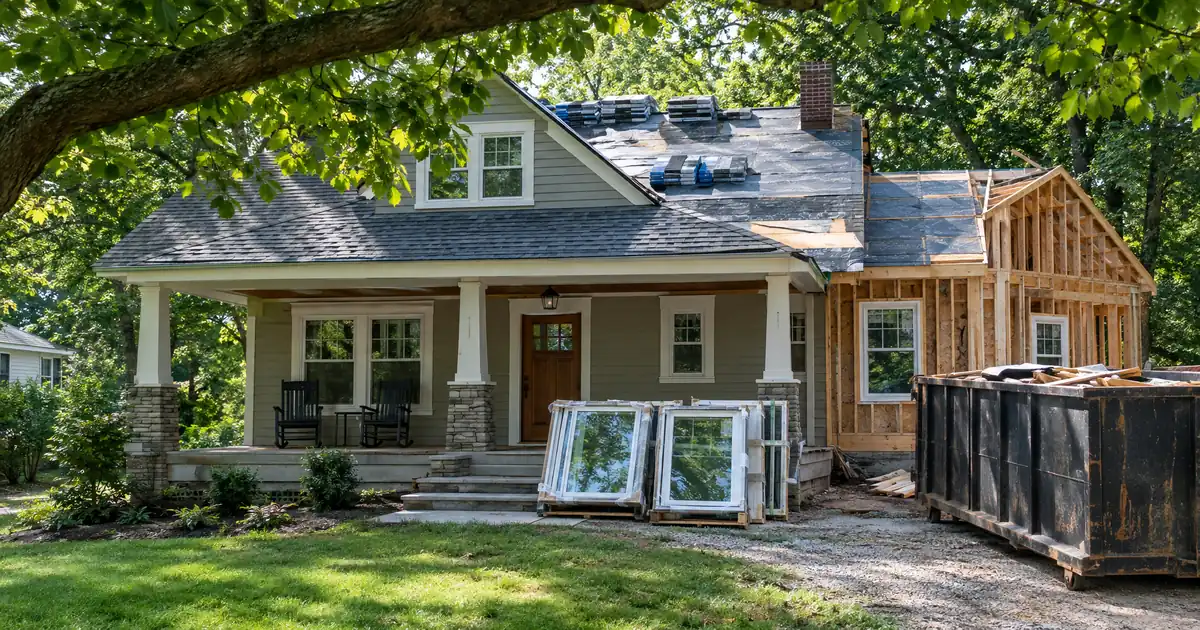
The Quick Read: When a long-term lender excludes or defers an empty house, you fund the purchase and any rehab with a short, interest-only hard money loan, lease the house or document its market rent, and then refinance into long-term DSCR financing once the house meets that lender’s rules.
- Hard money is underwritten on the property, the plan, and the exit, not on rent coverage.
- Typical terms run 6 to 18 months, interest-only, with no prepayment penalty, and every figure varies by lender, property, and experience.
- The long-term lender orders its own appraisal and ignores the after-repair value that sized your bridge.
- Insurance on an empty house is the gap most investors forget to price.
- Think of the hard money note as a deadline you have bought, and plan backward from it.
A vacancy carve-out at a long-term lender does not kill the deal. It changes which loan funds which phase of the deal. This guide walks through how that handoff works, step by step, from a broker who sees the long-term side of these files every day. Lendmire is a mortgage broker arranging DSCR investor financing through a wholesale network of select lenders across 41 markets, including Washington, D.C. For the full picture of how those loans work, see the complete DSCR loans guide.
Why Does a Portfolio Lender Carve Out Vacant Houses?
Long-term DSCR lenders need a rent figure they can trust, and a house with no tenant and no finished condition gives them a weak one. So many lenders exclude vacant or mid-rehab houses from a pool, or ask you to cure the problem first. The house is not unfinanceable. It is simply not ready for that loan yet.
Two words need unpacking. A DSCR loan (debt service coverage ratio) qualifies primarily on property-level rental income covering the payment, subject to lender guidelines. The lender divides monthly rent by PITIA, which is principal, interest, taxes, insurance, and any HOA dues. That is all the ratio measures. Repairs, vacancy, management, utilities, and capex sit outside it.
“Portfolio” also has two meanings. A portfolio DSCR loan is one note secured by several rentals, with coverage measured on the pooled rent against pooled debt service. A bank’s portfolio loan is a loan the bank keeps on its own books, which is a different thing. In both senses, a house with no lease and a half-finished kitchen is the first one a lender sets aside.
Three problems drive the carve-out:
- No lease. A vacant house has no signed rent. On a finished house, an appraiser’s market-rent opinion can stand in, and many files work that way. An unfinished house gives the appraiser little to measure.
- Condition. A house under renovation can also fail the lender’s property standards, so many pools leave it out until the work is done.
- Insurance. The collateral has to be insured, and empty houses are harder to insure. More on that below.
DSCR loans are designed for non-owner-occupied investment properties. Because they are business-purpose investor loans, they are reviewed differently from a standard owner-occupied mortgage.
What Hard Money Does for an Empty House
Hard money fits because it asks different questions. A hard money (bridge) lender underwrites the asset and your exit plan, not whether the rent covers a payment. That is why it can work on a vacant or unfinished property where a DSCR loan cannot yet test the rent.
Across the lenders Lendmire works with, the hard money program looks like this. Treat every number as a typical ceiling or floor that varies by lender, property, and experience, and as subject to lender guidelines. None of it is a commitment to lend.
- Collateral: non-owner-occupied residential property, one to four units.
- Terms: 6 to 18 months, interest-only, with no prepayment penalty.
- Loan size: up to $5,000,000, with larger balances by exception.
- Credit: a 620 minimum score, with added conditions below 660. First-time investors qualify at the lower leverage tiers.
- Fix-and-flip leverage: 93% of project cost at five or more completed projects, 90% of project cost at two or more, and 85% of project cost with fewer. Every tier is capped at 75% of after-repair value.
- Bridge purchase without rehab: up to 80% of the purchase price.
- Refinance, cash-out or rate-and-term: up to 65% of value.
- Rehab money: up to 100% of the rehab budget, released in draws as inspected work is completed. That is a rehab-budget figure, not a purchase LTV.
Read the leverage line carefully. There is no true 100% purchase program. The top cost tier is reserved for experienced investors, and the after-repair cap still binds the loan. Underwriting stays asset-based: the property, the plan, and the exit.
How the Handoff Works, Step by Step
The cleanest way to use a bridge is to start from the end. Here is the sequence.
1. Pick the exit before you close the bridge. The usual exits are a sale, a refinance, other funds, or an extension. For a rental, the refinance is typically a DSCR loan.
2. Fund the purchase and rehab with the bridge. Draws come as work is inspected and completed, so your cash outlay stays tied to progress.
3. Map the clocks backward from the maturity date. Rehab, lease-up, seasoning, appraisal, and underwriting each run on their own schedule. None of them speeds up because your note is about to mature.
4. Rent the house, or plan to rely on market rent. A signed lease removes your dependence on one appraiser’s opinion. A vacant, finished house can still qualify on the appraiser’s market rent.
5. Let the exit lender order its own appraisal. It sizes the new loan on that value, not on the after-repair value that sized the bridge. The appraiser’s rent opinion rides along with it.
6. Expect the lower rent to govern. Lenders typically credit the lower of the lease and the appraiser’s market rent. A lease signed well above market does not help.
7. Get the payoff in writing. The payoff letter includes drawn principal, accrued interest, extension fees, and any exit charge. It carries a per-day interest figure and an expiration date, so a slipped closing changes the number.
8. Assemble the closing file. That means a payoff letter for each note, settlement statements, rehab receipts and draw records, leases and deposit proof, and entity documents.
Two tests decide the outcome. The new loan is the lower of the value limit and the rent-coverage limit. The appraisal also has to land high enough to pay off the bridge. If either falls short, you bring cash, restructure, or extend.
The Insurance Gap Nobody Budgets
Insurance is the part of a vacant-house deal that has nothing to do with the loan and can still sink it. According to the Triple-I Insurance Industry Blog, most homeowners policies carry a vacancy clause that limits or excludes coverage after a stretch of consecutive vacant time, typically one to two months. Triple-I lists the hazards: undetected leaks, theft and vandalism, fire exposure, and liability. It adds that insurers sell vacancy endorsements or vacant-home policies to fill the gap.
A commercial insurance broker’s guide at Vantage Point Risk says these clauses typically suspend coverage for vandalism, malicious mischief, water damage, glass breakage, and theft. It also names the investor situations that trigger the clause: turnover that runs long, a unit being renovated, and a house bought empty and not yet rented. That describes most bridge deals.
Lenders care because the house is their collateral. Financial Samurai notes that vacancy clauses usually kick in around two months and sometimes at one, and that the lender requires insurance because it is protecting that collateral. So confirm vacancy coverage or an endorsement before you close the bridge, not after the first claim.
One related trap: if an owner tells an insurer the house is occupied when it is empty, the insurer may argue misrepresentation. Describe the property’s status accurately.
Utilities are the practical companion issue. An appraiser or inspector has to confirm that systems work, so plan to keep power and water on through the appraisal.
How the Funding Options Compare
The table puts the three paths side by side for a vacant house, using qualitative rows only.
| Factor | Bank-style loan | Hard money bridge | DSCR exit loan |
|---|---|---|---|
| Underwritten on | Borrower income | Asset and exit plan | Rent vs. PITIA |
| Vacant house | Often declined | Can work | Market rent or lease |
| Unfinished rehab | Rarely | Yes, with draws | Usually not yet |
| Term | Long | Short, interest-only | Long |
| Best role | Owner-occupied homes | Acquire and renovate | Hold and stabilize |
The table shows why the handoff works. Each loan does the job its underwriting is built for.
Structures and Variations Worth Knowing
Bridge purchase with no rehab. If the house is move-in ready but empty, the bridge covers the purchase at up to 80% of the purchase price, and you use the term to find a tenant. This is the simplest version.
Fix-and-flip structure with a hold. You use the cost-based tiers above to buy and renovate, then keep the house instead of selling. The after-repair cap still limits the bridge, so a heavy rehab on a thin-margin house can leave you with less leverage than the headline tier suggests.
Refinancing a house you already own. If you own the house free and clear or with a small balance and want to pull equity on a vacant property, hard money can refinance up to 65% of value. That is a lower ceiling than the DSCR cash-out numbers, and it is a different tool for a different job.
The long-term exit. Many investors refinance out of hard money into long-term DSCR financing once the property is stabilized, and Lendmire brokers that path. Across the network, DSCR purchase leverage on an investment property typically lands at 75% to 80% LTV, and a cash-out refinance tops out around 75% LTV on standard rentals. A cash-out on short-term-rental collateral runs closer to 70%. Most programs want a score around 660, and 700 or higher unlocks the strongest tiers. The common expectation is about six months of seasoning before a cash-out.
Coverage matters too. 1.00 is where many select programs start, and a stronger ratio opens better pricing and leverage. A separate select-lender path takes coverage below 1.00, with leverage and terms adjusted. Clearing 1.00 does not mean the house produces positive cash flow, because the ratio ignores repairs, vacancy, and management.
If the exit is a portfolio DSCR loan. The 30-year portfolio DSCR loan secures two to twenty rentals under one note, typically at up to 80% of value on a purchase or rate-and-term refinance, with a credit floor of 640 on the portfolio programs. Coverage is measured on the pool, so stronger houses can offset a weaker one. If a house with weak coverage sits in the pool, underwriting tests the pooled coverage, the leverage, and the terms. Every house still needs a lease or an appraiser-supported market rent.
If your bridge-financed houses refinance inside the first year, a second cap applies. Inside the first six months the loan is also capped at 90% of total cost (purchase price plus documented improvements), and at 100% of total cost from six to twelve months. The leverage ceiling still applies, and the loan is the lower of the two. After twelve months the appraised value alone is the basis. A rate-and-term refinance is not subject to the cost-basis cap.
Where the General Rule Breaks
The steps above describe the clean path. These are the places it fails.
A low appraisal. The exit lender’s number governs, no matter what you paid or spent. If it comes in short, you can bring cash, take a payoff-only loan, or ask the bridge lender for an extension.
The bridge matures before seasoning ends. The options are an extension, a payoff-only DSCR loan with no cash back, or a sale. Extensions typically carry a fee, so price that in. Also remember that any cash back to you turns the file into a cash-out, with its own seasoning and leverage rules.
Unfinished rehab. A DSCR lender will usually not take a house that still needs work. Stay in hard money, or extend, until the work is done.
Short-term-rental plans. The appraiser’s standard rent schedule does not capture short-term-rental income. A vacant house planned as an Airbnb needs a different income path, and a short-term-rental refinance generally looks for about 12 months of hosting history. Short-term rental rules can vary by city, county, HOA, and property type, so investors should confirm local rules before relying on projected rental income.
Delayed financing will not rescue you. That agency cash-out refinance route requires a cash purchase, and a bridge-financed deal is not one.
A weak house in a pooled closing. Each house is valued on its own, and a low appraisal on one shrinks the pool. The weakest house can delay or reshape the whole closing.
Entity names that do not match. Fix the paperwork before you apply, subject to lender program requirements.
Property types. Manufactured homes, log homes, and barndominiums are not offered in the network’s DSCR programs. Hard money collateral is limited to one-to-four-unit residential property. Land and lots are not on the sheet.
A house that is already stable. Putting a bridge on a finished, leased house just to refinance later is a mistake. You pay for a short loan you do not need.
Three Scenarios, Labeled by Situation
These are illustrative, built from ratios and percentages only.
Scenario one: the finished but empty house. Picture an investor buying a cosmetically clean single-family house that has sat unoccupied. The bridge covers the purchase at up to 80% of the purchase price. The investor lists it for rent, signs a lease, and then applies for a DSCR purchase-style refinance. With a lease at or near market, coverage clears roughly 1.2x, and the lower-of-lease-or-market-rent rule causes no trouble. The risk was the insurance gap in the first stretch of vacancy.
Scenario two: the heavy rehab. Say an experienced investor with five or more completed projects buys a dated duplex. The bridge funds the purchase at the top cost tier, capped at 75% of after-repair value, and releases rehab money in draws. The map of clocks matters here. Lease-up after rehab and seasoning both have to fit inside the 6-to-18-month term. If one slips, an extension is the planned fallback, not a surprise.
Scenario three: the thin coverage house. Consider a house where rent lands just under 1.00 coverage after renovation. A sub-1.00 path exists through select lenders in the network, with leverage and terms adjusted. A larger down payment can lift coverage by shrinking the monthly obligation, but it never erases credit floors, reserve rules, or property eligibility. The strongest files clear both tests: enough equity and enough rental coverage.
One pattern worth knowing: on files like these, the deal rarely fails on the bridge. It fails when the investor treats the exit as a formality. The investors who do best order a rent opinion early, keep utilities on, and confirm entity names match everywhere before the maturity date gets close.
Key Terms Defined
Hard money (bridge) loan: a short-term, interest-only loan secured by the property and underwritten on its value and your exit plan.
After-repair value (ARV): the estimated value of the house once renovation is finished, used to size the bridge.
Loan-to-cost: the loan amount as a share of your total project cost, including purchase and rehab.
Seasoning: the waiting period a lender wants between buying a property and refinancing it, commonly about six months before a cash-out.
Market rent: an appraiser’s opinion of what the house would rent for, used when no lease exists.
Payoff letter: the lender’s written statement of what it takes to retire a loan, including principal, interest, and fees.
Pooled coverage: rent from all houses in a portfolio loan measured against their combined debt service.
When Hard Money Fits and When It Does Not
Hard money fits a vacant house when three things are true. The house needs time, work, or a tenant before a long-term lender will test it. You have a believable exit. You can carry the cost of a short note plus insurance on an empty property.
It does not fit when the house is already leased and stable, when the margin is too thin to absorb extension fees, or when you have no plan for an appraisal that comes in low. The honest tradeoff is that a bridge swaps one deadline for another. You gain time to fix the house and give up time on the clock.
Run your own operating numbers before you borrow.
If a bridge is already on a house, Lendmire’s piece How to Use a DSCR Cash-Out to Clear a Hard Money Note and Rehab Cards picks up where this one ends.
Frequently Asked Questions
Can hard money finance a vacant house?
Yes, on non-owner-occupied one-to-four-unit residential property. A hard money lender underwrites the property, the plan, and the exit rather than rent coverage. Terms, leverage, and eligibility vary by lender, property, and experience, and nothing here is a commitment to lend.
Will the DSCR lender use my after-repair value?
No. The exit lender orders its own appraisal and sizes the loan on that value. The appraiser’s rent opinion comes with it. If the number lands below what the bridge needs, you bring cash, take a payoff-only loan, or extend.
Does a vacant house qualify for a DSCR loan at all?
Often yes, if it is finished. A market-rent opinion from the appraiser can substitute for a lease. A signed lease removes your reliance on a single opinion, and the lower of the lease and market rent typically governs.
What happens if my bridge matures before I can refinance?
The usual options are an extension, a payoff-only DSCR loan with no cash back, or a sale. Hard money terms run 6 to 18 months with no prepayment penalty, but extensions typically carry a fee. Map the rehab, lease-up, seasoning, and appraisal clocks early so the maturity date is never the first time you check them.
Does homeowners insurance cover an empty rental?
Often only for a limited time. Vacancy clauses in many policies reduce or suspend coverage after roughly one to two months, as the Triple-I Insurance Industry Blog explains. Ask about a vacancy endorsement or a vacant-home policy before you close.
Next Step
If you are buying, rehabbing, or refinancing an investment property on a short timeline and want to see how the numbers work, Lendmire can help you compare hard money options based on the project, the exit plan, leverage, and your goals. Reach the team at 828-256-2183 or request a quote.
About Lendmire
Lendmire is a DSCR-focused mortgage brokerage, NMLS# 2371349, placing investor loans across 41 markets, including Washington, D.C. DSCR eligibility is generally reviewed by the lender around a property’s rental income rather than personal income documentation, which fits LLC-held rentals, self-employed investors, and portfolios scaling past conventional financed-property limits. Scotsman Guide named Lendmire a Top Mortgage Workplace in both 2025 and 2026.
Get Started
Ready to find the right loan for you?
In about 30 seconds you can review financing options available for your investment property. No commitment required.
Informational only. Not a Loan Estimate, approval, or commitment to lend. Program availability and eligibility are subject to lender guidelines, credit approval, property review, and underwriting.
References
1. Triple-I Insurance Industry Blog — vacancy clauses and vacant-home coverage
2. Vantage Point Risk — the vacancy trap for empty rental coverage
3. Financial Samurai — vacancy clause and vacant home insurance
This article is part of Lendmire’s hard money loan program — full qualification details, guidelines, and scenarios live on the program page.
Related reading: Does a Portfolio DSCR Loan Save Money Over One Loan per Rental? · How a Portfolio DSCR Lender Reads a Silent Partner’s LLC · How a Portfolio DSCR Lender Underwrites a Small Partnership
Brandon Miller
Founder & CEO, Mortgage Loan Originator, Lendmire LLC
- Mortgage Loan Originator · NMLS# 1129696 · Verify on NMLS Consumer Access
- North Carolina Real Estate Broker · License# 343312 · Verify on NCREC
- North Carolina Insurance Producer · License# 19053198 · Property, Casualty, Life, Health · Verify on NAIC SBS
- Lendmire LLC · Firm NMLS# 2371349 · Verify firm licensure
Important disclosures. Lendmire (NMLS# 2371349) is a licensed mortgage brokerage. Lendmire is not a direct lender, depository institution, or financial advisor. All loan inquiries are subject to lender underwriting; this article does not constitute a commitment to lend. Rates, terms, and program guidelines are subject to change without notice and vary by borrower profile, property type, and state. Information in this article is general in nature and is not financial, legal, or tax advice. Equal Housing Opportunity. NMLS Consumer Access: nmlsconsumeraccess.org.