
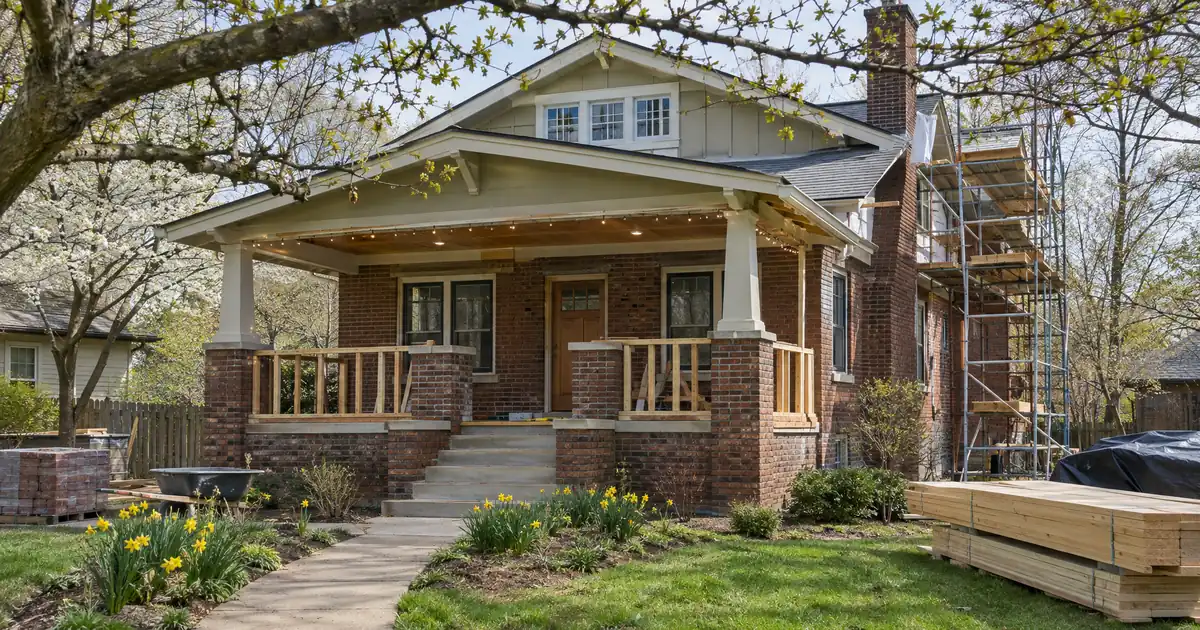
The Quick Read: A rehab loan keeps the lender involved after closing, because the renovation money is held back and released in stages only after someone verifies the work, while a no-rehab purchase or bridge loan typically funds in one piece at closing and leaves very little to check until maturity. The word “check-in” is not a formal term in the loan documents. In practice it means a draw request plus the lender’s verification of the work.
- Rehab loans split funding between an acquisition portion at closing and a holdback released against completed work.
- No-rehab loans are sized on the property’s as-is value or purchase price, with no draw cycle.
- Rehab borrowers usually front early costs, then get reimbursed after verification.
- Verification method, cadence, and fees vary by lender, so the written draw policy matters more than any general rule.
- Many investors later refinance a stabilized property into long-term rental financing, which is where the draw records pay off.
Who Each Option Is Really For
The rehab structure suits an investor whose plan depends on the lender funding construction, and who can live with oversight, paperwork, and a cash gap between phases. The no-rehab structure suits an investor buying something rent-ready or close to it, who wants the least friction after closing and does not need the lender to fund repairs. Neither is better in the abstract. The deciding variable is how much of the value you are creating after closing, and how much of that you can finance versus float yourself.
What this loan actually costs to carry.
Hard money is sized against the project and priced by time. Enter the deal and see how much the program will lend, the cash required at closing, the carry while you hold it, and what is left at the exit.
Leverage tiers on the current program: 85% with fewer than 2, 90% with 2 or more, 93% with 5 or more completed projects — every tier capped at 75% of after-repair value. Loan amounts up to $5,000,000, larger by exception; terms of 6 to 18 months, interest-only, no prepayment penalty. The rehab portion funds in draws against completed work, not at closing.
Program parameters shown update from Lendmire’s centralized guideline source. Rate, points, and months are editable assumptions, not quoted terms.
Cost cap sets the loan · positive spread
Illustrative estimate only — not a quote, Loan Estimate, approval, or commitment to lend. Rate, points, and months are editable assumptions. Hard money is business-purpose financing for real estate investors, not a consumer mortgage. Leverage on the current program tops out at 93% of project cost for investors with a documented track record, capped at 75% of after-repair value, with rehab funding up to 100% of the documented budget released in draws; actual terms vary by lender, borrower experience, property, and exit. Lendmire is a mortgage broker, not a lender.
Hard money loans are business-purpose financing for non-owner-occupied investment property, so they are reviewed differently from a standard owner-occupied mortgage. The rules for draws and inspections are contractual. They live in the loan agreement, the rehab budget, and the lender’s draw policy. That is why two lenders can offer the same headline structure and run very different check-in processes.
Side-by-Side
The table shows how these two structures typically work across published industry norms, with leverage references that reflect the wholesale network Lendmire places files with. Every cell varies by lender, property, and experience.
| Factor | Rehab loan | No-rehab (purchase or bridge) |
|---|---|---|
| Review basis | Collateral, scope, budget, and exit plan | Collateral, as-is value, and exit plan |
| Sizing reference | Project cost, capped by after-repair value | Purchase price or as-is value |
| Documentation | Scope or budget, bids, comps, entity papers | Standard purchase file, no draw package |
| Post-closing checkpoints | Draw requests, verification, partial releases | Mainly maturity and the exit |
| Who verifies work | Lender, inspector, or photo review | Usually no one |
| Entity vesting | LLC common; guarantee often expected | LLC common; guarantee often expected |
| Liquidity expectations | Cash share plus floating early work | Cash share plus carry |
| Property types | Non-owner-occupied 1-4 units | Non-owner-occupied 1-4 units |
| Exit friction | Completion, lease proof, seasoning | Lower, if rent-ready |
On leverage, the network’s fix-and-flip tiers run up to 93% of project cost (loan-to-cost) for borrowers with five or more completed projects, 90% of project cost at two or more, and 85% of project cost with fewer than two. Every tier is capped at 75% of after-repair value. Up to 100% of the rehab budget funds in draws against completed work. That figure applies to the renovation budget, not the purchase price. A bridge purchase without rehab runs up to 80% of purchase price. The top tier is reserved for experienced investors, and nothing here is a commitment to lend.
Key Terms Defined
Check-in: an informal label for the point where a borrower requests funds and the lender verifies progress before releasing money.
Draw: a staged release of rehab money after a portion of the work is complete.
Holdback: the part of the loan kept by the lender or its escrow until the work earns its release.
Draw inspection: a verification that claimed work exists and is finished. It is not a permit or code sign-off.
Lien waiver: a document from a contractor or supplier confirming that payment will not lead to a claim against the property.
After-repair value (ARV): the estimated value of the property once renovations are complete.
As-is value: what the property is worth in its current condition, before any work.
How a Rehab Loan Check-In Works
A rehab check-in follows a repeatable sequence. The details change by lender, but the order rarely does.
1. Budget and scope at underwriting. The lender reviews line items, bids, and the investor’s plan for how many draws there will be. Small, specific line items release more cleanly than broad ones.
2. Closing. The acquisition portion funds. The rehab portion sits in the holdback.
3. Borrower fronts early work. Funding is typically on a reimbursement basis, so the investor pays for the first stage and gets repaid after verification. Some lenders advance early money to experienced borrowers, and some structure a first draw at closing in exchange for a larger cash contribution.
4. Draw request. The package commonly includes the request form, an updated budget, invoices or receipts, photos, and sometimes lien waivers.
5. Verification. The lender may send an inspector, review photos, run a video walkthrough, or combine methods.
6. Release. Many lenders credit partial completion, so a line item that is half done may earn half its value. Others want an item fully installed before paying.
7. Final draw and payoff. The last release follows completion, and the loan is repaid from a sale or a refinance.
Across the wholesale network, the borrowers who stay out of trouble are the ones who treat the draw policy as a project-management document. They split work into verifiable line items, photograph as they go, and keep contractor paperwork current.
What a No-Rehab Loan Checks After Closing
Very little, in most cases. A no-rehab purchase or bridge loan is the same basic product without the holdback, sized on purchase price or as-is value. Funds go out at closing, and there is no draw schedule, no inspection cadence, and no reimbursement cycle.
The lender’s attention comes before closing: the property, the borrower, the entity, and the exit plan. After closing, the main checkpoint is maturity. Insurance, property condition, and occupancy still matter to the lender, but they are covenants in the documents rather than a recurring release process. Terms in the network run from 6 to 18 months, interest-only, with no prepayment penalty, so the exit plan is the real “check-in” on this side.
When a Rehab Loan Is the Better Fit
A rehab loan fits when the numbers depend on financing the work. If the property cannot rent or sell until it is renovated, the holdback structure is doing real work for you. It lets an investor finance up to 100% of the rehab budget in draws, which a purchase-only loan will not do.
It also fits when you want a built-in discipline. The staged release keeps spending tied to completed work, which protects the lender and, indirectly, your budget. Lenders size against completed value, so they do not want the full amount spent elsewhere while the property sits un-rehabbed.
The tradeoff is cash and coordination. You front early work, contractors often want a deposit up front, and a late release can extend carry time. A heavy scope on a vacant property also draws extra scrutiny, because no income is servicing the debt while the work happens. Thin experience typically means lower leverage, which is why the network’s tiers are tied to completed projects. Credit has a floor too. The network’s minimum is 620, with added conditions below 660, and first-time investors qualify only at the lower leverage tiers, subject to lender guidelines.
If you plan to exit into rental financing, the inputs that matter most are covered in Lendmire’s guide Hard Money BRRRR Takeout Inputs for Rehab vs No-Rehab Deals.
When a No-Rehab Loan Is the Better Fit
A no-rehab loan fits when the property is rent-ready, or needs only work you can pay for from your own pocket. You skip the draw package, the inspection scheduling, and the wait between phases. You also keep control of your contractors and your sequence of work.
It is the cleaner path when the next step is a long-term rental loan. DSCR financing compares the property’s monthly rent to its full monthly obligation (principal, interest, taxes, insurance, and any HOA dues). Because DSCR loans are written on rent-ready properties, a gutted or uninhabitable property is not a candidate for them. Rent-ready also means the lease, deposit proof, and seasoning line up sooner. Clearing the coverage ratio is not the same as positive cash flow, since repairs, vacancy, management, and capex sit outside the calculation.
The tradeoff is leverage and scope. A bridge purchase without rehab runs up to 80% of purchase price, and nothing in the loan finances renovation. If you later decide the property needs a bigger scope than expected, you are paying for it yourself or restructuring. Cash-out and rate-and-term refinances on hard money run up to 65% of value, which is a lower ceiling than purchase.
Where the Differences Bite
Verification method. In-person inspection is the most thorough and the most dependent on scheduling. Photo or video review puts less burden on the lender’s calendar and more on the borrower’s documentation. Some lenders skip third-party inspection entirely. Neither approach is wrong, but they change how much you need to document and how much time you should budget between phases.
Draw inspection versus permit approval. A lender’s draw inspection confirms that claimed work exists and is finished. It is not a permit or code sign-off, and the two can collide on the calendar when a city inspector and a lender inspector both need access. HUD’s FHA 203(k) program is a useful contrast. It is an owner-occupant product, not a hard money or DSCR loan, but it shows the same pattern in formal terms: the lender escrows rehab funds at closing and a consultant inspects each draw. HUD’s 203(k) stage list has the borrower request a draw inspection, the consultant certify the work, and both sign the release, with permit close-out tracked separately at the end. Private hard money lenders set their own version by contract.
Scope changes. A mid-project change order is where rehab loans get tested. Over-budget work, partial completion, and swapped line items all need the lender’s agreement before funds move. A no-rehab loan has no such friction, which is part of its appeal for investors who like to adjust as they go.
Cash gap. The cash you float between phases is real money. The number depends on your contractor deposits and the lender’s reimbursement approach. Build it into your liquidity plan rather than assuming the holdback covers day-one costs. Another trap is the phrase 100% rehab financing, which is accurate on paper, but in practice the first stage often comes from the borrower.
Entity and guarantee. LLC borrowers are common on both sides, subject to lender program eligibility. A personal guarantee is often expected either way, so choosing a rehab or no-rehab structure rarely changes your entity position.
Questions to Ask Before You Sign
Get these answered in writing, since the draw policy is part of the contract:
- How many draws are allowed, and is there a cap on requests?
- Is verification in person, by photo or video, or a mix?
- Does the lender pay partial completion, or only finished line items?
- Is there a fee per draw inspection or per wire, and who pays it?
- How long does a release usually take after a complete package?
- Are early or advanced draws available, and on what experience or cash terms?
- Do funds go to the borrower or directly to the contractor?
- What happens to unspent holdback at payoff?
- Does the lender need lien waivers or permit documentation with each request?
One more point deserves a flag. Some borrowers have been told close to closing that rehab funds must be brought to closing and held for draws, rather than shown as proof of funds. Confirm the mechanics early so your cash plan holds.
The Balanced Verdict
Choose the rehab structure when the work is the point of the deal and you can handle a staged, documented process. Choose the no-rehab structure when the property is ready to rent or the renovation is small enough to self-fund, and you want the lightest post-closing involvement. The more value you create after closing, the more the lender’s check-ins matter. The more value already exists in the property, the less they do.
Many investors use the two in sequence. They complete a rehab on a hard money loan, then refinance the stabilized property into long-term DSCR financing, which Lendmire brokers through select lenders in its wholesale network. The draw records, lease, and deposit proof all feed that exit. The complete DSCR loans guide walks through how that second step works. Tax treatment varies by how funds are used and how the property is held, so consult a qualified professional.
If you are buying, rehabbing or refinancing an investment property on a short timeline and want to see how the numbers work, Lendmire can help you compare hard money options based on the project, the exit plan, leverage, and your goals, across 41 markets including Washington, D.C. Leverage, credit, and terms vary by lender, property, and experience, and nothing here is a commitment to lend.
Frequently Asked Questions
Do no-rehab hard money loans have any draw requirements?
No. A purchase or bridge loan without a holdback funds at closing, so there is no draw schedule or inspection cycle. The lender’s main follow-up is the loan’s maturity and your exit, along with ordinary covenants like keeping the property insured.
Does the lender pay for my rehab before the work is done?
Usually not. Rehab funds sit in a holdback and are released against completed work, so you typically front the first stage and get reimbursed after verification. Some lenders advance early money to experienced borrowers or for a larger cash contribution, so the terms vary by lender, property, and experience.
Is a draw inspection the same as a city permit inspection?
No. A draw inspection confirms that the work you claimed exists and is finished. A permit or code inspection is a separate process run by the local authority, and the two can be scheduled at different times.
What is the highest leverage on a rehab loan versus a no-rehab loan?
On the network’s fix-and-flip tiers, leverage runs up to 93% of project cost at five or more completed projects, always capped at 75% of after-repair value, with up to 100% of the rehab budget funded in draws. These figures vary by lender, property, and experience.
Can a DSCR loan finance my rehab?
No. DSCR loans are written on rent-ready properties, with qualification based primarily on property-level rental income covering the payment, subject to lender guidelines. The hard money loan handles the renovation, and DSCR financing is the exit once the property is stabilized.
About Lendmire
Lendmire (NMLS# 2371349) is a mortgage brokerage focused on DSCR investor financing, helping arrange programs through wholesale and investor-lending channels in 41 markets, including Washington, D.C. DSCR loans are evaluated by the lender on property cash flow rather than personal income, subject to lender guidelines, supporting LLC closings and accommodating investors with four or more financed properties. Scotsman Guide Top Mortgage Workplace in both 2025 and 2026.
Get Started
Ready to find the right loan for you?
In about 30 seconds you can review financing options available for your investment property. No commitment required.
Informational only. Not a Loan Estimate, approval, or commitment to lend. Program availability and eligibility are subject to lender guidelines, credit approval, property review, and underwriting.
References
1. HUD — FHA 203(k) consultant role fact sheet
2. HUD — 203(k) program types and stages
This article is part of Lendmire’s hard money loan program — full qualification details, guidelines, and scenarios live on the program page.
Related reading: Should a First-Time Flipper Walk Away From a Vague Hard Money Lender? · Can You Use Hard Money on a Two to Four Unit Multifamily Property? · Should You Ask a Hard Money Lender Questions Before a Fix and Flip?
Brandon Miller
Founder & CEO, Mortgage Loan Originator, Lendmire LLC
- Mortgage Loan Originator · NMLS# 1129696 · Verify on NMLS Consumer Access
- North Carolina Real Estate Broker · License# 343312 · Verify on NCREC
- North Carolina Insurance Producer · License# 19053198 · Property, Casualty, Life, Health · Verify on NAIC SBS
- Lendmire LLC · Firm NMLS# 2371349 · Verify firm licensure
Legal disclosures. Lendmire (NMLS# 2371349) is a state-licensed mortgage brokerage that arranges financing through wholesale lender relationships. Lendmire is not a direct lender, depository institution, or registered financial advisor. The discussion above is general informational content about real estate financing — it is not financial, legal, or tax advice, and readers should consult licensed professionals for guidance on their individual circumstances. Loan inquiries are subject to lender underwriting; this article does not represent a commitment to lend. Loan terms, rates, and qualification standards vary by borrower, property, and state, and are subject to change at any time. Equal Housing Opportunity. NMLS Consumer Access: nmlsconsumeraccess.org.