
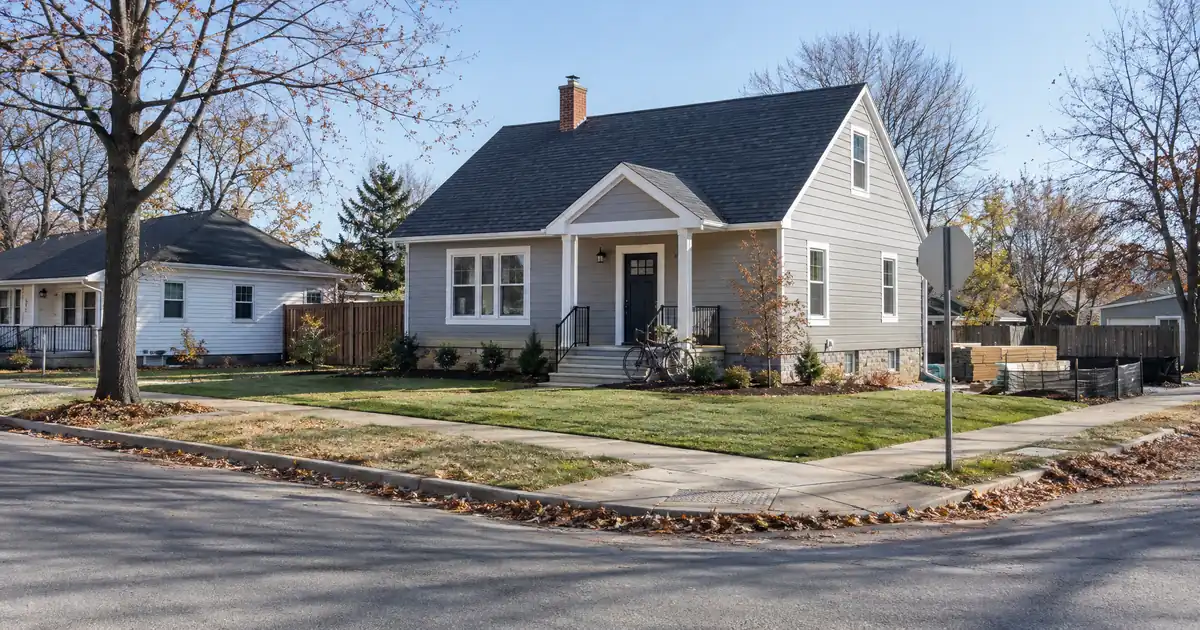
The Quick Read: A hard money lender sizes a flip loan from the deal and the guarantor’s track record, not from the entity name, so an LLC borrower is typically offered the same leverage as an individual: up to 85%, 90% or 93% of project cost by experience, always capped at 75% of after-repair value. Those figures reflect select wholesale-network programs and vary by lender, property, and experience. Nothing here is a commitment to lend.
- The LLC changes the paperwork and who signs the guarantee. It does not change the sizing math.
- The lender runs several tests at once and funds the smallest result.
- The 75% after-repair cap often binds before the cost-based percentage does.
- Your cash to close is the gap between loan and total cost, plus closing costs, carry, and reserves.
Does Naming an LLC Change the Loan Amount?
No. The LLC is the borrower on paper, but the loan amount comes from the property, the renovation plan, and the experience of the person behind the entity.
What this loan actually costs to carry.
Hard money is sized against the project and priced by time. Enter the deal and see how much the program will lend, the cash required at closing, the carry while you hold it, and what is left at the exit.
Leverage tiers on the current program: 85% with fewer than 2, 90% with 2 or more, 93% with 5 or more completed projects — every tier capped at 75% of after-repair value. Loan amounts up to $5,000,000, larger by exception; terms of 6 to 18 months, interest-only, no prepayment penalty. The rehab portion funds in draws against completed work, not at closing.
Program parameters shown update from Lendmire’s centralized guideline source. Rate, points, and months are editable assumptions, not quoted terms.
Cost cap sets the loan · positive spread
Illustrative estimate only — not a quote, Loan Estimate, approval, or commitment to lend. Rate, points, and months are editable assumptions. Hard money is business-purpose financing for real estate investors, not a consumer mortgage. Leverage on the current program tops out at 93% of project cost for investors with a documented track record, capped at 75% of after-repair value, with rehab funding up to 100% of the documented budget released in draws; actual terms vary by lender, borrower experience, property, and exit. Lendmire is a mortgage broker, not a lender.
Across the wholesale network Lendmire places files with, most hard money programs treat an LLC and an individual the same on leverage. A brand-new LLC has no flip history of its own. The lender looks at the guarantor’s completed projects instead.
So why do lenders push for an entity? Hard money loans are business-purpose investor loans. Because they are business-purpose loans, they are reviewed differently from a standard owner-occupied mortgage. An LLC makes that business purpose clear on the face of the file. Many hard money lenders ask for one, though the requirement is not identical everywhere.
Key Terms Defined
- LLC borrower: The limited liability company that takes title to the property and signs the note.
- Project cost: The purchase price plus the documented rehab budget.
- Loan-to-cost (LTC): The loan divided by project cost.
- After-repair value (ARV): The projected value of the house once renovations are finished, based on comparable sales.
- As-is value: What the property is worth today, before any work.
- Draw: A release of rehab money after the lender confirms completed work.
- Guarantor: The individual who signs a personal guarantee backing the LLC’s loan.
How Does the Lender Size the Loan, Step by Step?
The lender computes a loan amount under each test and lends the smallest one. Think of each test as a ceiling, and the loan can only reach the lowest ceiling.
1. Value the deal. The lender gets an as-is value and an ARV. Underwriting runs on both, and the loan is bound to whichever produces the smaller amount.
2. Apply the cost test. The loan percentage applies to project cost. Across the network, that is 85% of project cost with fewer than 2 completed projects, 90% with 2 or more, and 93% with 5 or more.
3. Apply the ARV cap. Every tier is capped at 75% of ARV, however experienced the borrower is.
4. Split purchase and rehab. The purchase advance funds at closing. The rehab portion is held back, and up to 100% of the documented budget is released in draws against completed work. That 100% is a rehab-budget figure, not a purchase percentage.
5. Identify the gap. You fund the difference between the loan and total cost, plus closing costs and reserves.
| Test | What it measures | When it binds |
|---|---|---|
| Loan-to-cost | Purchase plus rehab | Deep discount, modest rehab |
| ARV cap | Value after repairs | Cost stack is large vs. ARV |
| As-is value | Value today | Price or value looks weak today |
Some lenders size only on purchase price and some only on ARV, so ask which basis applies before you compare offers. Lendmire’s piece How Much a Hard Money Lender Will Lend on a Fix-and-Flip goes deeper on that ceiling.
A Worked Flip: Which Cap Binds?
The same house can hit different ceilings depending on the discount you bought it at and your experience tier. The scenarios below use modeled percentages of ARV, not market data, and skip dollar amounts so the logic stays visible.
Say the purchase price is 70% of ARV and the rehab budget is 15% of ARV. Project cost is then 85% of ARV. A borrower in the 90% tier would see a cost-based result of 76.5% of ARV. That exceeds the 75% cap, so the ARV cap binds and the loan stops at 75% of ARV. The borrower funds the remaining 10% of ARV, plus closing costs and carry.
Now buy the same house at a deeper discount. Purchase is 60% of ARV and rehab is 15%, so project cost is 75% of ARV. At the 90% tier, the cost test gives 67.5% of ARV, well under the cap. Here the cost percentage binds, and the borrower funds 7.5% of ARV.
| Modeled deal | Cost vs. ARV | Tier | Binding test |
|---|---|---|---|
| Tight margin | 85% | 90% of cost | ARV cap (75%) |
| Deep discount | 75% | 90% of cost | Cost test |
| Tight margin, newer investor | 85% | 85% of cost | Cost test |
Look at the third row. The tight-margin deal clears the cap for a newer investor because the lower tier produces a smaller number. More leverage on paper does not always mean more money in hand. When the ARV cap binds, a deeper purchase discount does more for you than a higher tier.
How Does Experience Change the Number?
Leverage steps up with documented completed projects, and for an LLC those projects belong to the guarantor.
| Completed projects | Leverage (of project cost) | ARV cap |
|---|---|---|
| Fewer than 2 | Up to 85% | 75% |
| 2 or more | Up to 90% | 75% |
| 5 or more | Up to 93% | 75% |
The top tier is reserved for experienced investors. A first-time investor can still qualify at the lower tier, subject to lender guidelines and the strength of the plan. Credit starts with a 620 minimum score, with added conditions below 660. Underwriting stays asset-based, meaning it focuses on the property, the plan, and the exit.
A new LLC does not reset your record to zero. Lenders credit the track record of the individual who guarantees the loan, as long as it is documented.
What Does the Lender Check on the LLC and on You?
The lender checks two things: that the entity is real and in good standing, and that the person behind it is creditworthy. The guarantee is the link between them.
Credit, background, and ID are reviewed on the individual guarantor, not the entity. Hard money loans to LLCs usually come with a personal guarantee, so the LLC does not shield you from the loan itself. It limits other exposure, but the guaranty is a separate promise you sign.
A typical entity package includes:
- Articles of Organization
- A signed operating agreement
- The EIN letter
- A recent certificate of good standing
- Proof of foreign registration if the LLC was formed in a different state from the property
- A borrowing resolution for multi-member LLCs
The IRS says to form the LLC with the state before applying for an EIN, and applying first may delay the number. Get the order right, because a mismatched EIN is a common reason a file stalls.
Most stalled entity files trace back to a few defects. The operating agreement is missing or unsigned. The EIN does not match the application. An out-of-state LLC never registered where the property sits. These look like denials, but they are paperwork problems.
How Do Draws and Cash to Close Work?
You wire cash at closing, the lender holds back the rehab money, and you get reimbursed as work is verified. The loan is not a lump sum for everything.
The purchase advance goes out at closing. The rehab holdback is released in draws after an inspection confirms the work in the approved budget. You submit invoices and photos, and the lender or a third-party inspector verifies the work. On many files you start the work with your own money and are reimbursed as it is completed. Some lenders pay per line item and others pay by percent complete.
Your true cash need on day one is project cost minus the loan, plus closing costs, interest carry, and reserves. That is why 90% of project cost does not mean you put down 10%. The ARV cap may trim the loan, and the fees and carry sit on top. The exact numbers vary by lender and program and follow a full review of property, leverage, and credit.
Terms run 6 to 18 months, interest-only, with no prepayment penalty. Many investors refinance out of hard money into long-term rental financing once the property is stabilized. Lendmire brokers that path, and the complete DSCR loans guide explains how it works.
Where Does the General Rule Break?
The sizing math holds for most flips, but a handful of situations bend it.
- Multiple members. The signer named in the operating agreement is not necessarily the guarantor. A minority member often cannot carry the whole capital stack alone. Removing or splitting a guarantee is a leverage and structure negotiation, never a given.
- Single-member LLCs. The IRS notes that a disregarded single-member LLC with no employees may not need an EIN for federal purposes. Lenders generally still ask for an EIN letter or W-9.
- No rehab. A bridge purchase without renovation runs up to 80% of purchase price, a different product with a different basis.
- Refinance and cash-out. Cash-out and rate-and-term refinance files are limited to 65% of value, well below flip leverage.
- Large loans. Loans go up to $5,000,000, and larger amounts are handled by exception.
- Property type. Collateral must be non-owner-occupied residential, 1 to 4 units. Commercial property, land, and owner-occupied homes are not offered.
- Split loans. Some borrowers use a purchase loan plus a separately escrowed rehab loan. That can change closing costs, so compare total structure rather than headline leverage.
- Exit lender. A thin, top-leverage rehab can run into trouble at the refinance, because some exit lenders size on the smaller of appraisal or cost.
What Mistakes Do Investors Make?
Most mistakes come from misreading what a percentage means or from entity timing.
- Believing the LLC gets more leverage. It does not. Experience and deal margin do.
- Assuming no guarantee. An LLC does not erase personal exposure on a hard money loan.
- Assuming credit is ignored. Credit is checked on the guarantor.
- Forming the entity late. If the contract is in your personal name, assigning it to the LLC needs to be clean, and the lender should see that plan up front. Form and document the LLC before you go under contract.
- Mismatching purpose and documents. The stated business purpose, the vesting, and the operating agreement should all describe the same deal.
- Assuming an LLC is mandatory for every loan. An LLC is allowed on a DSCR rental loan but never required. Hard money lenders more often want one.
How Do You Estimate Your Own Number?
Run the tests yourself before you call anyone.
1. Add purchase price and the documented rehab budget to get project cost.
2. Multiply by your tier percentage (85%, 90%, or 93%, depending on completed projects).
3. Multiply your ARV by 75%.
4. Take the smaller of those two results as the working loan size.
5. Subtract it from project cost, then add closing costs, carry, and reserves for your cash need.
6. Check that your LLC documents, EIN, and guarantor credit are in place.
Programs change, and every file is underwritten individually. This article is general information, not legal or tax advice. Talk to a qualified attorney or CPA about your own entity and situation.
Frequently Asked Questions
Does an LLC get me a bigger loan?
No. Leverage comes from the deal’s cost, the 75% ARV cap, and the guarantor’s completed projects. The LLC only changes who is on the note and how title is held.
Do I still sign personally?
Usually, yes. Hard money loans to LLCs typically come with a personal guarantee, so the lender underwrites you as the guarantor. Credit, background, and ID are checked on you.
Can a brand-new LLC borrow?
Yes, subject to lender guidelines. A new entity has no history, so the lender looks at the guarantor’s documented projects. First-time investors generally qualify at the lower leverage tier, with a 620 minimum credit score and added conditions below 660.
Can I form the LLC after I go under contract?
You can try, but it adds risk. The contract buyer, the borrower, and the vesting should line up, and an assignment must be handled cleanly. Forming and documenting the LLC before contract avoids most of that.
Can my partner be on the LLC?
Yes. Multi-member LLCs are common, and the lender will want a borrowing resolution and a clear picture of who signs. Which member guarantees the loan is a negotiation, and a minority owner may not be able to back the full amount.
Next Step
If you are buying, rehabbing or refinancing an investment property on a short timeline and want to see how the numbers work, Lendmire can help you compare hard money options based on the project, the exit plan, leverage, and your goals. Lendmire is a broker arranging financing through select lenders in its wholesale network, across 41 markets, including Washington, D.C. You can reach the team at 828-256-2183.
About Lendmire
As a non-QM mortgage broker (NMLS# 2371349), Lendmire facilitates DSCR investor loans across 41 markets, including Washington, D.C. DSCR eligibility is generally reviewed around property-level rental income instead of personal income documentation, subject to lender guidelines, serving LLC-structured portfolios and self-employed borrowers who don’t fit conventional boxes. A two-time Scotsman Guide Top Mortgage Workplace (2025, 2026).
Get Started
Ready to find the right loan for you?
In about 30 seconds you can review financing options available for your investment property. No commitment required.
Informational only. Not a Loan Estimate, approval, or commitment to lend. Program availability and eligibility are subject to lender guidelines, credit approval, property review, and underwriting.
References
1. IRS: Get an Employer Identification Number
2. IRS: Single Member Limited Liability Companies
This article is part of Lendmire’s hard money loan program — full qualification details, guidelines, and scenarios live on the program page.
Related reading: How a Hard Money Lender Counts Equity as a Flip Down Payment · How Much a Hard Money Lender Will Lend on a Fix-and-Flip · How a Hard Money Lender Sizes a Flip Without Income Documents
Brandon Miller
Founder & CEO, Mortgage Loan Originator, Lendmire LLC
- Mortgage Loan Originator · NMLS# 1129696 · Verify on NMLS Consumer Access
- North Carolina Real Estate Broker · License# 343312 · Verify on NCREC
- North Carolina Insurance Producer · License# 19053198 · Property, Casualty, Life, Health · Verify on NAIC SBS
- Lendmire LLC · Firm NMLS# 2371349 · Verify firm licensure
Required disclosures. Lendmire (NMLS# 2371349) operates as a licensed mortgage broker, not a direct lender or depository. The discussion in this article is general in nature and should not be relied upon as financial, legal, or tax advice — every investment scenario is unique and should be reviewed by a qualified professional. Any loan inquiry is subject to lender underwriting, and this article is not a commitment to lend or a guarantee of approval. Mortgage rates, loan terms, and program guidelines vary by borrower, property, and state, and may change without notice. Equal Housing Opportunity. Verify licensure at NMLS Consumer Access.