
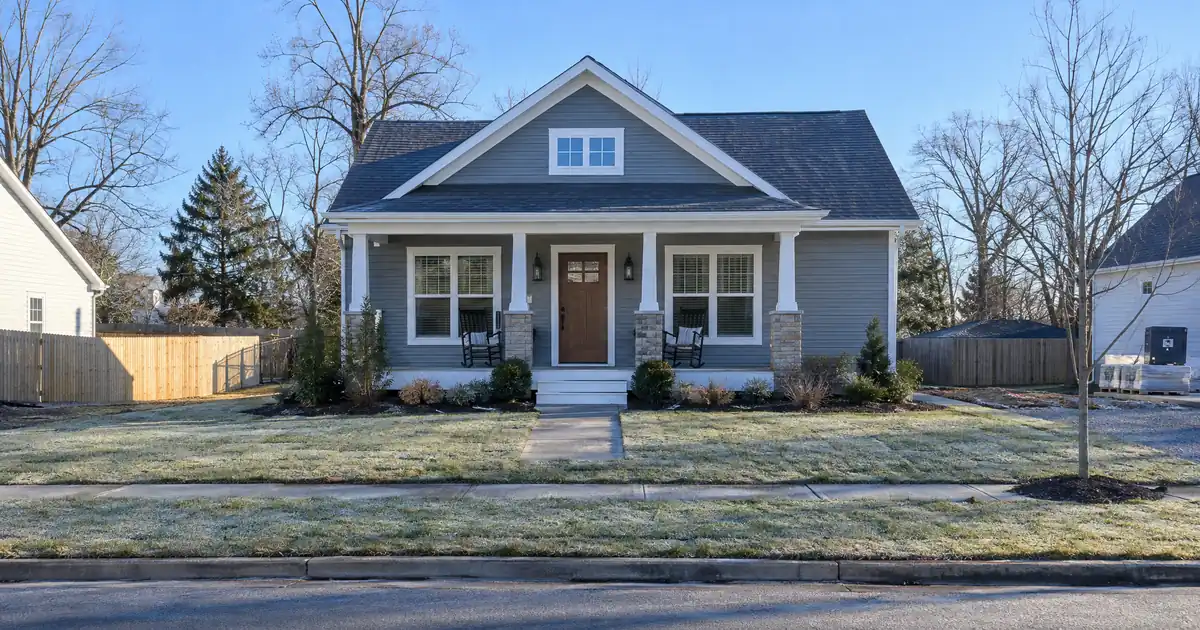
The Quick Read: Rehab money counts in how a lender sizes your loan, but it does not shrink the cash you bring: the lender adds the budget to total project cost, holds it in a holdback, releases it in draws after inspection, and still caps the whole loan against after-repair value. Think of the rehab budget as a loan line you draw on later. It is not a credit toward the down payment you owe at closing.
- Fix-and-flip leverage is sized on project cost, typically 85% to 93% depending on your completed projects, and always capped at 75% of after-repair value.
- Up to 100% of the rehab budget can fund in draws, but there is no true 100% purchase program.
- Your equity gap is the part of project cost the loan does not cover. It is usually the purchase side.
- Plan for cash beyond the gap: closing costs, early-work float, carry, and a buffer for overruns.
- Every figure varies by lender, property, and experience, and none of it is a commitment to lend.
What Does “Counting Rehab Toward Your Down Payment” Actually Mean?
It means three different things that people blur together. The rehab budget is part of the cost base the lender sizes against. The lender may also fund much of it. But the lender does not credit it as equity you contributed.
What this loan actually costs to carry.
Hard money is sized against the project and priced by time. Enter the deal and see how much the program will lend, the cash required at closing, the carry while you hold it, and what is left at the exit.
Leverage tiers on the current program: 85% with fewer than 2, 90% with 2 or more, 93% with 5 or more completed projects — every tier capped at 75% of after-repair value. Loan amounts up to $5,000,000, larger by exception; terms of 6 to 18 months, interest-only, no prepayment penalty. The rehab portion funds in draws against completed work, not at closing.
Program parameters shown update from Lendmire’s centralized guideline source. Rate, points, and months are editable assumptions, not quoted terms.
Cost cap sets the loan · positive spread
Illustrative estimate only — not a quote, Loan Estimate, approval, or commitment to lend. Rate, points, and months are editable assumptions. Hard money is business-purpose financing for real estate investors, not a consumer mortgage. Leverage on the current program tops out at 93% of project cost for investors with a documented track record, capped at 75% of after-repair value, with rehab funding up to 100% of the documented budget released in draws; actual terms vary by lender, borrower experience, property, and exit. Lendmire is a mortgage broker, not a lender.
Equity is cash you put in. A rehab budget the lender funds through draws is lender money, not yours. So it can never reduce your required equity, even though it sits inside the project cost.
Many first-time flippers hear “100% of rehab financed” and assume the project needs no cash. That claim describes the rehab budget only.
Key Terms Defined
After-repair value (ARV): The estimated market value of the property once the planned work is finished, based on comparable sales. A private-lending glossary from Fortra Law defines it the same way and shows how loan-to-ARV is figured.
Loan-to-cost (LTC): The loan amount divided by total project cost, meaning purchase price plus rehab budget.
Holdback: The part of the loan held by the lender and not wired at closing. It pays for the rehab.
Draw: A release of holdback money after a portion of the work is finished and verified.
Initial advance: The amount funded at closing, which mostly covers the purchase.
Equity gap: Total project cost minus the loan. This is the cash you bring that the loan does not replace.
Hard money loan: A short-term loan secured by the property and underwritten mainly on the asset, the plan, and the exit.
How the Lender Sizes the Loan, Step by Step
Step one: the lender builds the cost base. It adds the purchase price and the approved rehab budget. That total is project cost. The budget has to be a line-item scope of work, usually supported by contractor bids.
Step two: the lender applies a cost-based percentage. Across the wholesale network Lendmire works with, fix-and-flip leverage is tiered by documented completed projects. It runs 93% of project cost at five or more completed projects, 90% at two or more, and 85% with fewer than two. These tiers vary by lender, property, and experience. The top tier is reserved for experienced investors.
Step three: the lender tests the result against the value cap. Every one of those tiers is capped at 75% of after-repair value. The loan is the lesser of the two numbers.
You can write it as a short formula:
Maximum loan = the lesser of (cost percentage × project cost) or (75% × ARV)
Step four: the lender splits the loan. The initial advance covers the purchase. The rehab portion goes into the holdback. Up to 100% of the rehab budget can fund in draws against completed work. That is a rehab-budget figure, not a purchase figure.
Step five: the lender tests the borrower’s cash. The equity gap shows up here, and so do closing costs. Credit matters too, and 620 is the minimum score, with additional conditions below 660. First-time investors can qualify at the lower leverage tiers, subject to lender guidelines.
Where the Rehab Money Sits at Closing
At closing, the lender funds the purchase and holds back the rehab portion. That is the answer to the most common surprise in this business.
The reasoning is straightforward. The lender is lending against a finished value that does not exist yet. If it wired the whole rehab budget on day one, you could spend it elsewhere and leave the lender holding an un-rehabbed property. So the money stays in the holdback until the work earns its release.
Large depository lenders follow the same logic in other products. Fannie Mae’s rules for its renovation mortgages place renovation money in an escrow account instead of handing it to the borrower. Its servicing guide adds that funds are released after a request and an inspection. Those rules govern a different product and do not apply to hard money or DSCR files. They simply show how normal an inspected-draw structure is.
In practice, the borrower often pays the contractor first and then requests a draw. The lender inspects, confirms the work, and reimburses. So the lender’s draw schedule becomes your cash-flow schedule.
Total Cash Needed: More Than the Gap
The equity gap is only the first line. Here is the cash ladder an investor should build before making an offer.
| Cash item | What it covers |
|---|---|
| Equity gap | Project cost not covered by the loan |
| Closing costs and fees | Title, lender fees, insurance, and draw or inspection fees |
| Reserves | Cushion lenders may want shown |
| Early-work float | Contractor payments before the first draw is reimbursed |
| Carry | Interest-only payments while the work runs |
| Overrun buffer | Costs above the approved budget |
Draw and fund-control fees are costs outside the loan percentage. They vary by lender. Ask about them up front.
The float matters most. Early demolition and structural work often carry the largest bills and show the least visible progress. That is where your cash dips lowest. The first month or two of a project is when a thin cash position hurts, because you have paid out and the lender has not yet inspected.
Loan terms on the hard money program run 6 to 18 months, interest-only, with no prepayment penalty. That means carry is a steady cost while you wait for work to finish and for your exit to line up. Tax treatment varies; consult a qualified professional about how rehab spending is handled.
Where the General Rule Breaks
The pattern above holds for most purchase-and-rehab files. Several edge cases change it.
Thin spreads. When project cost runs high against ARV, the 75% cap binds. The rehab the cap cannot cover shifts into your cash to close. A deal that looks like 90% financing on paper may be much less in practice.
Heavy rehab against a low as-is value. When the rehab budget is far larger than the as-is value, many lenders get cautious. Some want proven rehab experience above a certain budget size, and some set a minimum initial disbursement. Others decline the file.
Bridge purchases with no rehab. A bridge loan has no holdback. On a purchase without rehab, the program goes up to 80% of purchase price. If repairs are needed, you pay for them from your own cash. Only the fix-and-flip structure finances the rehab itself.
Properties you already own. Cash-out and rate-and-term refinances on the hard money program go up to 65% of value, based on the as-is value, not the original purchase price. If you hold a property with little or no debt, a refinance can unlock cash for the rehab. That is not the same as a purchase with rehab, so the numbers differ.
Pledging another property. Some lenders will take a second property as added collateral in place of some cash down. That depends on the lender and the file, and it adds risk to the second property.
Lender-required rehab cash at closing. Some lenders do not accept proof of funds alone. They want the rehab money brought to closing and held until the work is done. A borrower who planned around proof of funds can face a surprise closing requirement, so ask which structure applies before you sign.
Over-budget work. The approved budget is the ceiling. Overruns are your cash. That is why a contingency line belongs in the plan.
Common Misreads
Misread one: “100% rehab financing means no money down.” It means the rehab budget can be funded in draws. The purchase side still carries the gap.
Misread two: “The lender wires the rehab budget at closing.” It holds it back and releases it as work is verified.
Misread three: “Proof of funds equals cash at closing.” Some lenders accept a showing of funds, and others require the cash up front.
Misread four: “Low credit is the main barrier.” Underwriting is asset-based, so the property, the plan, and the exit weigh heavily. Credit still matters, and 620 is the minimum score.
Misread five: “Experience decides whether I qualify.” Experience usually changes the leverage tier and terms. It matters most for leverage, as the 85%, 90%, and 93% tiers show.
What the Decision Looks Like in Practice
Start with ARV, not purchase price. The ARV cap often decides your cash, so work backward from the lender’s ARV-based cap rather than from what you paid.
Then run both tests, cost and cap, and see which one binds. If the cost test binds, a tighter purchase price or scope lowers your gap. If the cap binds, only a lower all-in cost helps, because extra rehab spending just moves into your cash.
Build the full cash ladder next. Add closing costs, early-work float, carry, and a buffer. Then compare that total to what you can hold in reserve while still funding a second deal.
Finally, plan the exit before you sign. Hard money is short-term, interest-only financing. Many investors refinance out of it into long-term rental financing once the property is stabilized and leased, and Lendmire brokers that path. That long-term product is a DSCR loan, which qualifies primarily on property-level rental income covering the payment, subject to lender guidelines. Lendmire’s complete DSCR loans guide walks through how those files work. A DSCR loan is not the tool for funding a heavy rehab, so the usual sequence is rehab first, then refinance.
The hard money program covers non-owner-occupied residential property of 1 to 4 units, with loan amounts up to $5,000,000 and larger by exception. Exact terms depend on the lender’s guidelines, property type, leverage, and a full review of the borrower’s file.
Frequently Asked Questions
Does rehab money count toward my down payment?
Not as your equity. The rehab budget is part of project cost, and the lender may fund much of it through draws, but that is lender money. Your down payment is the equity gap: project cost minus the loan, which usually sits on the purchase side. Treat the rehab funds as a separate pool.
Can I get a hard money loan with no money down?
There is no true 100% purchase program. Leverage is sized on project cost, typically 85% to 93% depending on completed projects, and capped at 75% of ARV. Up to 100% of the rehab budget can fund in draws. You still bring the equity gap plus closing costs and carry, subject to lender guidelines.
Do I pay for the rehab upfront?
Often you pay early costs yourself. The contractor works, you pay, the lender inspects, and then it releases a draw. Some lenders also want the rehab money funded into the holdback at closing. Plan for the float between your first payment and the first reimbursement.
What happens if the project goes over budget?
The approved budget is the ceiling, so overruns come out of your cash. The loan does not grow because costs did. A contingency line in the plan and a buffer in your reserves are the standard protection.
Does experience change how much cash I need?
Yes. Fewer than two completed projects puts you at the 85% of cost tier, two or more at 90%, and five or more at 93%, all capped at 75% of ARV. A first-time investor typically brings more cash on the same deal. Terms vary by lender, property, and experience.
If You Are Sizing a Deal
If you are buying, rehabbing, or refinancing an investment property on a short timeline and want to see how the numbers work, Lendmire can help you compare hard money options based on the project, the exit plan, leverage, and your goals. Lendmire is a broker that arranges financing through select lenders across 41 markets, including Washington, D.C. Hard money is not offered in Louisiana, Minnesota, North Dakota, South Dakota, Baltimore, Chicago, or Detroit. Any editable calculator on this site is an illustrative estimate only, and nothing here is a commitment to lend.
About Lendmire
Lendmire (NMLS# 2371349) is a mortgage brokerage focused on DSCR investor financing, helping arrange programs through wholesale and investor-lending channels in 41 markets, including Washington, D.C. DSCR loans are evaluated by the lender on property cash flow rather than personal income, subject to lender guidelines, supporting LLC closings and accommodating investors with four or more financed properties. Scotsman Guide Top Mortgage Workplace in both 2025 and 2026.
Many investors treat hard money as the acquisition tool and plan the exit up front – see the hard money loan overview.
Get Started
Ready to find the right loan for you?
In about 30 seconds you can review financing options available for your investment property. No commitment required.
Informational only. Not a Loan Estimate, approval, or commitment to lend. Program availability and eligibility are subject to lender guidelines, credit approval, property review, and underwriting.
References
1. Fortra Law: After Repaired Value (ARV) Glossary Entry
2. Fannie Mae Selling Guide B5-3.2-04: Homestyle Renovation Mortgages Costs and Escrow Accounts
3. Fannie Mae Servicing Guide D1-2-01: Renovation Mortgage Loans
This article is part of Lendmire’s hard money loan program — full qualification details, guidelines, and scenarios live on the program page.
Related reading: Can a Two-Project Rehabber Use Gap Funding With Hard Money? · Hard Money vs Private Money for a 2-4 Unit Flip: Down Payment · Does a Scope Change Affect Hard Money Draws on a Rehab Loan?
Brandon Miller
Founder & CEO, Mortgage Loan Originator, Lendmire LLC
- Mortgage Loan Originator · NMLS# 1129696 · Verify on NMLS Consumer Access
- North Carolina Real Estate Broker · License# 343312 · Verify on NCREC
- North Carolina Insurance Producer · License# 19053198 · Property, Casualty, Life, Health · Verify on NAIC SBS
- Lendmire LLC · Firm NMLS# 2371349 · Verify firm licensure
Legal disclosures. Lendmire (NMLS# 2371349) is a state-licensed mortgage brokerage that arranges financing through wholesale lender relationships. Lendmire is not a direct lender, depository institution, or registered financial advisor. The discussion above is general informational content about real estate financing — it is not financial, legal, or tax advice, and readers should consult licensed professionals for guidance on their individual circumstances. Loan inquiries are subject to lender underwriting; this article does not represent a commitment to lend. Loan terms, rates, and qualification standards vary by borrower, property, and state, and are subject to change at any time. Equal Housing Opportunity. NMLS Consumer Access: nmlsconsumeraccess.org.