
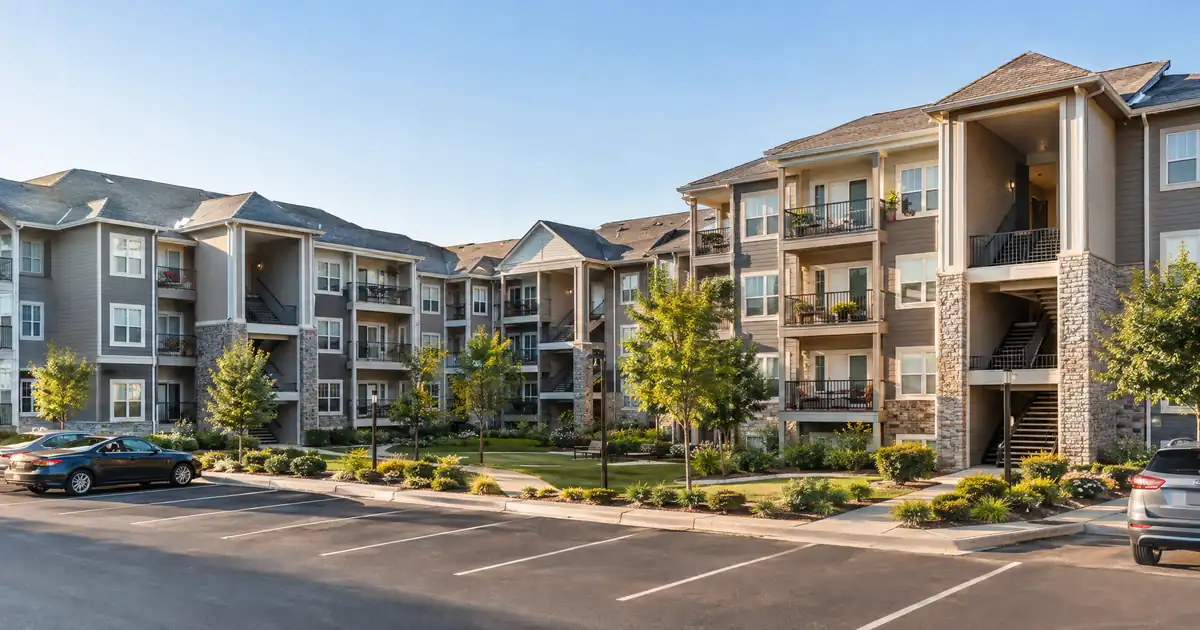
The Quick Read: On a non-owner-occupied building of one to four units, hard money lenders in Lendmire’s wholesale network typically fund up to 80% of the purchase price on a bridge purchase, 85% to 93% of project cost on a rehab depending on your track record, and up to 65% of value on a refinance. Rehab money is released in draws as work gets finished. Every figure varies by lender, property, and experience, and none is a commitment to lend.
- The loan is the lowest of several tests: a percentage of cost, a percentage of after-repair value (ARV), and a purchase or value cap.
- Rehab-heavy deals are capped at 75% of ARV, whatever the cost tier says.
- There is no true 100% purchase program. Up to 100% of the rehab budget can fund in draws, but that is a rehab figure, not a purchase figure.
- Experience sets your tier: 93% of project cost at five or more completed projects, 90% at two or more, 85% with fewer than two.
- Five-plus-unit buildings are commercial and fall outside this program.
Most investors ask “what’s the LTV?” and stop there. That is the wrong question, because the LTV is only one of the tests.
What this loan actually costs to carry.
Hard money is sized against the project and priced by time. Enter the deal and see how much the program will lend, the cash required at closing, the carry while you hold it, and what is left at the exit.
Leverage tiers on the current program: 85% with fewer than 2, 90% with 2 or more, 93% with 5 or more completed projects — every tier capped at 75% of after-repair value. Loan amounts up to $5,000,000, larger by exception; terms of 6 to 18 months, interest-only, no prepayment penalty. The rehab portion funds in draws against completed work, not at closing.
Program parameters shown update from Lendmire’s centralized guideline source. Rate, points, and months are editable assumptions, not quoted terms.
Cost cap sets the loan · positive spread
Illustrative estimate only — not a quote, Loan Estimate, approval, or commitment to lend. Rate, points, and months are editable assumptions. Hard money is business-purpose financing for real estate investors, not a consumer mortgage. Leverage on the current program tops out at 93% of project cost for investors with a documented track record, capped at 75% of after-repair value, with rehab funding up to 100% of the documented budget released in draws; actual terms vary by lender, borrower experience, property, and exit. Lendmire is a mortgage broker, not a lender.
Key Terms Defined
Hard money has its own vocabulary. Here are the terms this article uses.
Hard money loan: A short-term, interest-only loan secured by the property and underwritten mainly on the asset, the plan, and the exit.
Loan-to-value (LTV): The loan amount divided by the property’s value. In hard money lending, the loan amount is typically set as a percentage of the collateral’s value.
Loan-to-cost (LTC): The loan divided by total project cost, meaning purchase price plus the rehab budget. A higher LTC means the lender funds more of the project and you put in less of your own equity.
After-repair value (ARV): What the property should be worth once the work is done, as estimated by the appraisal.
Draw: A release of rehab money after a stage of completed work.
DSCR: Debt service coverage ratio, meaning rent compared with the full monthly obligation. A reading of 1.0 is the break-even point, as Wikipedia’s debt service coverage ratio entry notes.
What Counts as “Small”?
In this network, small means one to four units. Hard money collateral is non-owner-occupied residential property of one to four units, with ground-up construction allowed up to ten units.
Here is the catch. A fifth unit changes the category. Buildings of five or more units are commercial, and commercial, industrial, land, and hospitality collateral are not offered on this program. If your target is a six-unit brick building, a different lender type applies and the sizing logic below changes.
Four units or fewer stays in the residential bucket. A duplex, triplex, or fourplex is sized like any other investment house, with the building’s unit count mattering far less than your project, your plan, and your exit.
One short note on scope. These are business-purpose loans for investors, not owner-occupied mortgages, and they are reviewed differently for that reason.
How Lenders Actually Size the Loan
The loan is the smallest number that comes out of several tests. No regulator sets a cap on hard money leverage, so each lender picks its own limits. A lender that advertises one big percentage usually has a second, lower percentage doing the real work.
Here is the sequence, step by step.
1. Classify the deal. Is it a bridge purchase with no rehab, a fix-and-flip, a refinance, or ground-up construction? The type decides which basis governs.
2. Value the property. The appraisal gives an as-is value and, on rehab deals, an ARV.
3. Run each test. Compute the percentage of cost, the percentage of ARV, and any purchase-price or value cap.
4. Take the lowest result. That is the loan. Your equity is whatever is left over.
5. Split the money. The purchase portion funds at closing. The rehab portion is held back and released in draws against completed work.
6. Check the exit. The term is short, so the lender wants a believable sale or refinance plan.
Then your credit and experience adjust where you land on each line.
A Worked Example: Cost Versus ARV
Skip dollars for a moment and use plain units. Say total project cost is 100 and you are a first-time investor, so you sit in the 85% of project cost tier.
- If ARV is 125, the cost test gives 85. The ARV test gives 93.75, because 75% of 125 is 93.75. Cost binds. The loan is 85, and you bring 15.
- If ARV is only 105, the cost test still gives 85. But 75% of 105 is 78.75. Now ARV binds. The loan drops to 78.75, and your equity jumps to 21.25.
Same project cost, same borrower, very different cash needed. The 93% tier would not help in the second case either, since the ARV cap would still bind at 78.75. A better tier lifts the cost test only. It never lifts the ARV ceiling.
(This is why a thin-margin deal feels like it has “less leverage” than a fat-margin one, even at the same advertised tier.)
Leverage by Loan Purpose
Each transaction type has its own basis. The figures below are typical ranges for non-owner-occupied one-to-four-unit properties in the network and vary by lender, property, and experience.
| Loan purpose | Basis and typical ceiling |
|---|---|
| Bridge purchase, no rehab | Up to 80% of purchase price |
| Fix-and-flip, 5+ projects | 93% of project cost, max 75% of ARV |
| Fix-and-flip, 2+ projects | 90% of project cost, max 75% of ARV |
| Fix-and-flip, under 2 projects | 85% of project cost, max 75% of ARV |
| Cash-out or rate-term refinance | Up to 65% of value |
| Ground-up, 3+ projects | Up to 90% of cost, 75% of completed value |
Two more points belong with the table. First, up to 100% of the rehab budget can fund in draws against finished work. That is a rehab-budget figure and never a purchase LTV. Second, the top tier is reserved for experienced investors. First-time investors qualify at the lower leverage tiers, and credit conditions tighten below a 660 score, with 620 as the minimum.
Loan amounts run up to $5,000,000, with larger amounts by exception. Smaller balances vary by lender.
“Will They Lend 100%?” The Myth, Briefly
No. There is no true 100% purchase program for small apartment buildings. When someone advertises “100% financing,” the real structure is a high percentage of cost plus the rehab budget funded in draws, with the whole loan still capped by ARV.
That distinction matters because the phrase confuses a lot of first deals. A building bought below its appraised value does not automatically mean zero down either. Lenders size off the lowest test, and a cheap purchase can still hit the ARV cap or a cost tier before it hits “free.”
What Moves Your Number Up or Down
Leverage is not a single dial. Several things push it around.
- Experience. Documented completed projects are the clearest lever. Moving from fewer than two projects to two or more lifts the cost tier from 85% to 90%. Five or more reaches 93%.
- Deal margin. A wide gap between cost and ARV lets the cost test bind, which is the better outcome. A narrow gap lets the ARV cap bind.
- Condition and occupancy. A vacant or distressed building gets sized more conservatively than a stabilized one. A strong rent roll tends to support the exit plan, even though the loan is asset-based.
- Credit. The minimum is 620, with additional conditions below 660. Underwriting stays asset-based, so the property, plan, and exit still carry the file.
- Exit clarity. A lender wants to see how the loan gets repaid inside a 6-to-18-month term.
Here is a bit of broker pattern recognition. Across files like these, the ceiling a lender advertises is rarely the number a first-time investor sees. The gap between the top tier and the entry tier is the gap between a few completed flips and none. Most surprises on cash to close come from the ARV cap, not the cost percentage.
What You Bring Beyond the Down Payment
Equity is the headline. It is not the whole bill.
Beyond the equity gap, plan for lender fees, the appraisal, legal and title costs, and interest carry during the term. Interest is paid on what has been drawn, and some lenders charge on the full commitment on ground-up deals, so read the draw terms. Rehab funds usually reimburse completed work, which means you may need working cash to front the next stage before the draw arrives.
Pricing varies by lender and file, so this article does not quote it. Ask each lender for a written quote on your specific deal so you can compare like with like.
Appraisals can also cost more on multifamily property than on a single-family house, which is one more reason to ask for the full cost list up front.
Terms: Short, Interest-Only, No Penalty
Hard money terms run 6 to 18 months, interest-only, with no prepayment penalty. There are no multi-year options on the current program. A short term is the trade-off for the high leverage, so you plan the exit before you sign.
The exit is either a sale or a refinance. For a rental you are keeping, many investors refinance out of hard money into long-term DSCR financing once the building is stabilized, and Lendmire arranges that path through its wholesale network. The complete DSCR loans guide covers how that take-out works.
Run the take-out math before you buy, not at month 15. Typical DSCR purchase leverage in the network lands around 75% to 80% LTV on an investment property, and a cash-out refinance tops out near 75%. If your hard money loan sits at 90% of cost, you may need to bring cash to the refinance table. Plan for that. The exact numbers vary by lender and program and follow a full review of property, leverage, and credit.
DSCR Is a Cousin, Not a Twin
Hard money underwrites the deal. DSCR Investor Loans reviews the property’s rent used for lender review against the full monthly obligation. A reading above the 1.0 break-even point means rent covers that obligation.
That is not the same as positive cash flow. Repairs, vacancy, management, utilities, and capital expenses all sit outside the calculation. Treat the ratio as one test, not a profit forecast. Qualification runs primarily on property-level rental income covering the payment, subject to lender guidelines.
For small buildings that are already stabilized, there is also the agency route. A bridge loan helps you get the building filled first.
If you want the equity side of the DSCR exit, Lendmire’s piece How Much Equity a Top-Leverage Hard Money Rehab Needs for DSCR Cash-Out walks through it.
The Decision in Practice
Here is how an investor weighs this, in order.
1. Confirm the unit count. One to four units fits. Five-plus is commercial.
2. Decide the loan type. Pure bridge sizes off purchase price. Rehab sizes off cost with an ARV cap. Refinance sizes off value.
3. Stress the ARV. Haircut your own ARV estimate and see whether the cap binds. If it does, your real equity need is higher than the cost percentage suggests.
4. Find your tier honestly. Count completed projects you can document.
5. Size the working cash. Equity, fees, carry, and draw timing all need room.
6. Write the exit first. A sale, or a refinance into long-term DSCR financing.
Thinking out loud for a moment: the stronger play on a small building is often the one with the wider margin and the lower tier, rather than a tight deal at the top tier. The tier helps only if cost is the test that binds.
Frequently Asked Questions
Can I get hard money on a duplex, triplex, or fourplex?
Yes. One-to-four-unit non-owner-occupied residential property is the core collateral. Leverage follows the same tiers as any investment house: up to 80% of purchase price on a no-rehab bridge, or 85% to 93% of project cost on a rehab, depending on experience. Terms and eligibility vary by lender, property, and experience.
Does hard money cover a five-unit or larger apartment building?
Not on this program. Five-plus-unit buildings are commercial property, and commercial collateral is not offered here. Ground-up construction extends to ten units. For an existing larger building, the investor needs a commercial lender with different sizing rules.
Does my credit score matter?
Yes, though less than on a conventional loan. First-time investors qualify at the lower leverage tiers. Underwriting stays asset-based, meaning the property, the plan, and the exit carry the file, and nothing here is a commitment to lend.
What happens if I cannot refinance at maturity?
The term is 6 to 18 months, so the exit needs a fallback. Options include selling, extending with the lender where allowed, or bringing more cash to the refinance. Because there are no multi-year structures, many investors refinance into long-term DSCR financing once the building is stabilized. Check the take-out math before you buy.
Is there a prepayment penalty?
No. Terms run interest-only with no prepayment penalty, so you can repay when the sale or refinance happens. Fees and other costs vary by lender and file.
If you are buying, rehabbing, or refinancing an investment property on a short timeline and want to see how the numbers work, Lendmire can help you compare hard money options based on the project, the exit plan, leverage, and your goals. As a broker, Lendmire arranges financing through select lenders in its wholesale network across 41 markets, including Washington, D.C.
The four-unit line is where the sizing rules change, so check your unit count before you check your percentages.
About Lendmire
A DSCR-focused mortgage broker, Lendmire (NMLS# 2371349) places investor financing across 41 markets — 40 states plus Washington, D.C. — with DSCR eligibility generally reviewed by the lender on property cash flow instead of traditional personal-income documentation, subject to lender guidelines. Scotsman Guide named Lendmire a Top Mortgage Workplace in 2025 and 2026.
Get Started
Ready to find the right loan for you?
In about 30 seconds you can review financing options available for your investment property. No commitment required.
Informational only. Not a Loan Estimate, approval, or commitment to lend. Program availability and eligibility are subject to lender guidelines, credit approval, property review, and underwriting.
References
1. Wikipedia: Debt Service Coverage Ratio
This article is part of Lendmire’s hard money loan program — full qualification details, guidelines, and scenarios live on the program page.
Related reading: How Much Remodel a HELOC Can Carry on an LLC-Owned Rental? · How Much a DSCR Cash-Out Can Cover for a Fund Capital Call · Should a BRRRR Investor Exit Hard Money on a Low Cash-Out Refinance?
Brandon Miller
Founder & CEO, Mortgage Loan Originator, Lendmire LLC
- Mortgage Loan Originator · NMLS# 1129696 · Verify on NMLS Consumer Access
- North Carolina Real Estate Broker · License# 343312 · Verify on NCREC
- North Carolina Insurance Producer · License# 19053198 · Property, Casualty, Life, Health · Verify on NAIC SBS
- Lendmire LLC · Firm NMLS# 2371349 · Verify firm licensure
Legal disclosures. Lendmire (NMLS# 2371349) is a state-licensed mortgage brokerage that arranges financing through wholesale lender relationships. Lendmire is not a direct lender, depository institution, or registered financial advisor. The discussion above is general informational content about real estate financing — it is not financial, legal, or tax advice, and readers should consult licensed professionals for guidance on their individual circumstances. Loan inquiries are subject to lender underwriting; this article does not represent a commitment to lend. Loan terms, rates, and qualification standards vary by borrower, property, and state, and are subject to change at any time. Equal Housing Opportunity. NMLS Consumer Access: nmlsconsumeraccess.org.