
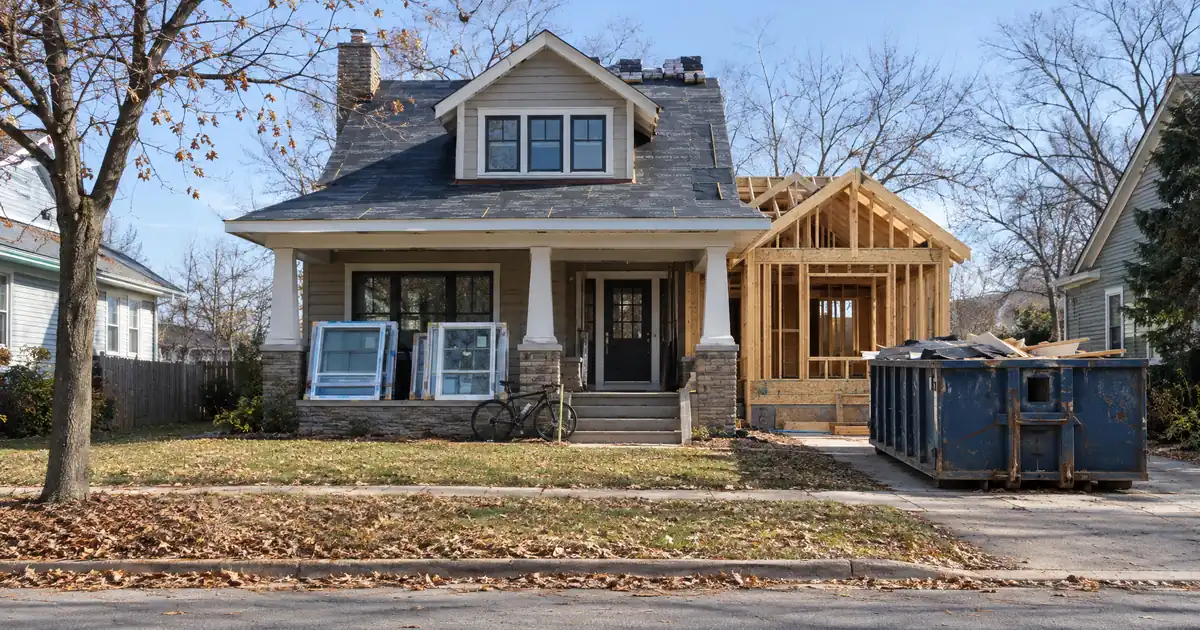
The Quick Read: In a small town with few recent sales, a hard money lender still sizes the loan from an appraiser’s or valuation professional’s after-repair value, not from your estimate, and the loan caps at a share of that value no matter how much the project costs. A thin sales record does not end the deal. It raises the bar for how well the appraiser can explain and support the number.
- Lenders in our wholesale network cap fix-and-flip loans at 75% of after-repair value on every leverage tier, typically alongside a cost-based limit, subject to lender guidelines.
- The loan is the lower of the two tests, so a low valuation shrinks the loan and raises your cash in the deal.
- Appraisers can widen the search by distance, date, and property type if they document why, and they can fall back on cost and income methods.
- Your best protection is a conservative ARV, a rehab scope that matches what local buyers actually pay for, and a documented package built before you submit.
- The bigger small-town risk is often the exit: a thin buyer pool can hurt you more than the appraisal does.
What Does ARV Actually Mean to a Hard Money Lender?
ARV is the after-repair value, the projected worth of the property once the planned renovation is finished. A lender uses it because a flip loan is secured by a building that does not yet look like the building you plan to sell. The ARV tells the lender what the collateral should be worth when the work is done.
What this loan actually costs to carry.
Hard money is sized against the project and priced by time. Enter the deal and see how much the program will lend, the cash required at closing, the carry while you hold it, and what is left at the exit.
Leverage tiers on the current program: 85% with fewer than 2, 90% with 2 or more, 93% with 5 or more completed projects — every tier capped at 75% of after-repair value. Loan amounts up to $5,000,000, larger by exception; terms of 6 to 18 months, interest-only, no prepayment penalty. The rehab portion funds in draws against completed work, not at closing.
Program parameters shown update from Lendmire’s centralized guideline source. Rate, points, and months are editable assumptions, not quoted terms.
Cost cap sets the loan · positive spread
Illustrative estimate only — not a quote, Loan Estimate, approval, or commitment to lend. Rate, points, and months are editable assumptions. Hard money is business-purpose financing for real estate investors, not a consumer mortgage. Leverage on the current program tops out at 93% of project cost for investors with a documented track record, capped at 75% of after-repair value, with rehab funding up to 100% of the documented budget released in draws; actual terms vary by lender, borrower experience, property, and exit. Lendmire is a mortgage broker, not a lender.
ARV is different from the as-is value, which is what the property is worth today in its current condition. It is also different from your purchase price. Different loan types lean on different numbers. A fix-and-flip loan is driven by ARV. A bridge loan, which is a short-term loan to buy or hold a property without a rehab budget, leans on purchase price or as-is value. A long-term DSCR rental loan on a stabilized property relies on an as-is appraisal plus a rent schedule.
Here is the part first-timers miss. Your own ARV is a starting point, not proof. The lender orders an appraisal that shows an as-is value and a subject-to-completion value, or sometimes a broker price opinion, and that independent figure goes into the loan math. Appraisers typically build the ARV from sales of similarly renovated homes nearby. That is exactly what a small town may not have.
How ARV Sets the Loan Ceiling
Across the network, hard money lenders size a flip loan with two tests and take the lower result. One test looks at your project cost. The other looks at the after-repair value. Whichever produces the smaller loan wins.
For fix-and-flip files, the typical structure runs like this, and it varies by lender, property, and experience:
- Up to 93% of project cost for borrowers with five or more completed projects.
- Up to 90% of project cost with two or more completed projects.
- Up to 85% of project cost with fewer than two.
- Every tier is capped at 75% of after-repair value.
Bridge purchases without a rehab typically go up to 80% of the purchase price. Refinances, both cash-out and rate-and-term, typically go up to 65% of value. Rehab money can fund up to 100% of the rehab budget in draws, which are released as completed work is verified. That is a rehab-budget figure, not a purchase loan-to-value. There is no true 100% purchase program.
Why does this matter in a thin market? The ARV test is the one most exposed to a weak valuation. On many flips the cost test and the 75% ARV cap land close together. When the appraiser trims the ARV, the ARV test becomes the binding one. Every point removed from ARV takes roughly three-quarters of a point off the loan ceiling, and you cover the difference.
How Do Lenders Normally Prove ARV?
In an active market, the process is a routine comparison. The appraiser picks recent sales of similar homes close to the subject, then adjusts for differences. A typical set of selection criteria looks like this.
| Criterion | What the appraiser wants | Why it matters |
|---|---|---|
| Location | Same neighborhood or market influence | Buyers shop the same area |
| Recency | Recent closed sales | Reflects today’s buyers |
| Size and layout | Similar square footage and bedrooms | Keeps adjustments small |
| Condition | Renovated to the planned finish | ARV assumes finished work |
| Property type | Same style and unit count | Avoids apples-to-oranges |
Notice what the criteria assume: a market with plenty of sales. In a small town, you may be able to check two boxes at most. The rest of this article is about what happens then.
What Counts as No Comps in a Small Town?
Almost no town has literally zero sales. The practical problem is that the sales are too few, too old, too far away, or too different to support a clean comparison. Appraisal educator McKissock notes that limited sales activity is common in rural markets, custom-home neighborhoods, and low-turnover areas.
In practice, thin evidence shows up in four ways:
- Few closed sales of any kind in the last stretch of time.
- Sales that exist but are unrenovated, so they do not show what a finished home brings.
- Renovated sales that sit in a different town or school district.
- Homes in the area that differ widely in age, size, or lot, forcing big adjustments.
That last one deserves attention. Mortgage-insurer training material from Enact lists the standard rural challenges: lack of comparable sales, large adjustments, a need for supplemental sales data, and a need for competing listings. Large adjustments are a flag for any reviewer, because the more the appraiser has to correct a comp, the less that comp really tells you.
There is no fixed small-town ARV rule. Agency guidance sets no fixed distance limits and instead asks whether the comps reflect the same market influence as the subject. Hard money lenders have their own preferences, but the logic carries over: documentation beats distance.
The Evidence Ladder When Comps Run Thin
When closest-in sales are not enough, appraisers move down a ladder of evidence. Some rungs are strong. Others only support the rungs above them. This is how a lender’s reviewer typically weighs them, based on what we see across files.
| Evidence | Credibility | How to use it |
|---|---|---|
| Closed sales, widened distance | High | Primary support, with explanation |
| Closed sales, older date | Medium-high | Time-adjust and explain |
| Nearby-town sales, similar market | Medium | Show matching buyer profile |
| Pending sales | Medium | Supports the trend |
| Active listings and competing homes | Low-medium | Context only, never the anchor |
| Cost approach (land plus build) | Supporting | Cross-checks the sales value |
| Income approach (rent-based) | Supporting | Useful when the exit is a rental |
| Local agent opinion | Low | Pre-submission sanity check |
The widening process uses three Ds: distance, date, and dissimilarity. The appraiser stretches one dimension at a time and explains each stretch. If sales are extremely limited, McKissock’s guidance says it is time to pivot to the cost and income approaches. Its comp-selection guidance adds that the analysis should not be limited to three comps and that an expanded search needs a detailed explanation, which you can read in its dos and don’ts of selecting comparable sales.
Enact’s rural review deck adds a useful concept: the market alternative, meaning a competing or substitute property a buyer might choose instead. Active listings often serve as market alternatives. They can show what buyers are being offered, but an asking price is not a sale, so they sit lower on the ladder.
One honest caution: the wider the net, the more speculative the number can become. A value built from far-away sales and heavy adjustments is easier for a reviewer to challenge. That is why the lender, not you, decides how much weight the evidence carries.
What Changes for the Lender in a Small Market?
The underwriting steps stay the same. The appraisal is ordered, the comps are chosen, adjustments are applied, and the lender reviews the result. What changes is the scrutiny.
A reviewer looks hard at the size of the net and gross adjustments, because those show how far the comps sit from the subject. The reviewer also asks whether the rehab scope fits what the local market pays for, and whether the appraiser has the local expertise to form a credible opinion of value. Property type matters too. A standard single-family home is easier to support than a duplex or an unusual layout.
Across our network, here is what tends to happen when the valuation is thin:
- The lender leans on the lower of the value measures, which makes the ARV test bind.
- A report that needs revisions, a second opinion, or a field review can stretch the file, so build in room.
- Some lenders restrict or avoid rural areas, and some ask for more cash from the borrower. Appetite varies widely lender to lender, which is where a broker earns the fee.
- Experienced borrowers with several completed projects get more room than first-timers, which is how the leverage tiers above work.
Build the ARV Package Before You Submit
A thin-comp file is won or lost on how well you organize the evidence. Your goal is to do the appraiser’s homework for them, without telling them what number to reach. A package that tends to work includes these items:
- A short comp-gap memo explaining why local sales are limited and which wider-area sales you consider relevant.
- Sale-by-sale notes on what is similar and different, including size, age, condition, and lot.
- Photos and descriptions of a finished-condition benchmark sale, so the reviewer sees what the finished product should look like.
- A detailed scope of work and budget that matches local finishes, not coastal-market finishes.
- A note from a local real estate agent on pending sales and buyer demand. It carries less weight than a closed sale, but it helps the story hang together.
- Your exit plan, sale or refinance, with realistic expectations for how long local homes sit.
Brief the appraiser too, if the lender allows contact through proper channels. A local appraiser who already knows the town starts closer to a defensible answer than one driving in from the county seat.
Stress-Testing a Thin-Comp Deal
Run the same flip twice. In the first version, the market has plenty of recent renovated sales, and the appraisal lands on your ARV. In the second, comps are sparse, and the appraiser lands 10% below your number.
In the first version, the loan is the lower of your cost-based tier and 75% of ARV. If you are a newer investor in the 85% cost tier, the cost test might bind and the ARV cap might not matter. In the second version, the 75% ARV cap drops by 10%. Your loan ceiling falls by roughly 7.5 points of your original ARV, and that gap becomes cash you bring to the table.
This is why experienced brokers tell borrowers to run the deal at a haircut ARV before they sign a purchase contract. Ask a simple question: if the appraisal comes in 10% lower, do I still have the cash, and does the deal still pay me? If the answer is no, the margin is too thin for a market where the valuation is already uncertain. The illustrative calculator on the site can help you plug in your own numbers.
The same logic applies if you plan a buy, rehab, rent, refinance, repeat approach. A cash-out or rate-and-term hard money refinance typically goes up to 65% of value, which is more conservative than the flip tier. The takeout appraisal faces the same thin-comp problem. If it comes in low, the proceeds may not repay the short-term loan.
Where the General Rule Breaks
A few situations make the usual rules harder to apply.
Unusual properties. Guideline summaries for conventional mortgage appraisals, such as this comparable-sales summary, note that custom, historic, or unique homes may need significant adjustments or a considerably expanded search area. Hard money collateral works the same way: the odder the house, the more evidence it takes. Our network lends on non-owner-occupied residential property of one to four units. Manufactured homes, log homes, and barndominiums fall outside the DSCR side of the network and are not offered there.
Acreage and outbuildings. The Enact deck separates minimal outbuildings from significant ones, including residential versus agricultural use. It also warns against blanket across-the-board adjustments just because comps are scarce. A big barn is not automatically worth anything to a buyer who wants a house.
Over-improving. The lender sets ARV from nearby sales, regardless of how nice your finishes are. High-end materials do not raise the ARV if no local sale supports them. Match the rehab to the best finished home in town, not the best home you have seen online.
Online estimates. Automated value estimates are weak in sparse markets, because they rely on the same few sales. Do not treat one as a substitute for comps.
Rural restrictions. Some lenders limit rural lending or ask for more cash. Underwriting stays asset-based on the property, the plan, and the exit.
First-time investors. A rural flip as your first project stacks several risks at once. First-timers qualify only at the lower leverage tier, so their cash in the deal is higher just when valuation risk is highest. A conservative ARV, a local partner, or an experienced co-investor can offset that.
When Is a Small-Town Deal Not Financeable?
A small-town deal tends to fall apart when several of these show up together:
- The only support for your ARV is online estimates or active listings.
- Sales that do exist are very different from the finished product you plan.
- The rehab exceeds anything the town has ever sold for.
- A 10% valuation haircut would wipe out your margin or your cash.
- You cannot name a realistic buyer for the finished home.
That last point matters most. Resale and exit risk can matter as much as valuation. In a very small town, a finished flip may sit on the market while you pay interest on a short-term loan. Terms on our hard money program run 6 to 18 months, interest-only, with no prepayment penalty. They do not stretch to multi-year options, so a slow sale eats the runway.
Where it fits, many investors refinance out of hard money into long-term rental financing once the property is stabilized, and Lendmire brokers that path through select lenders. A DSCR rental loan is sized on an as-is appraisal and a rent schedule rather than ARV, though the thin-comp issue can still show up on the as-is value. The complete DSCR loans guide explains how that second stage works. The loan amount ceiling on our hard money program is up to $5,000,000, with smaller balances varying by lender.
Tax treatment varies; consult a qualified professional.
Key Terms Defined
After-repair value (ARV): The projected value of a property after the planned renovation is finished.
As-is value: What the property is worth today, in its current condition, before any work.
Comparable sale (comp): A recent sale of a similar property, used to estimate what yours is worth.
Net and gross adjustments: Dollar corrections an appraiser applies to a comp for differences in size, condition, or location. Large totals suggest a weaker comparison.
Loan-to-cost: The loan as a share of total project cost, as opposed to a share of value.
Draws: Rehab funds released in stages as completed work is verified.
Market alternative: A competing or substitute property a buyer might choose instead of yours.
Broker price opinion (BPO): A valuation estimate from a licensed agent or broker, sometimes used instead of a full appraisal.
Frequently Asked Questions
Can I get a hard money loan if my town has almost no recent sales?
Often yes, but the lender has to see a credible valuation. Appraisers can widen distance, reach further back in time, and cross-check with cost and income methods if they explain why. Lender appetite varies, and some restrict rural areas, so a broker who sees many lenders’ guidelines can help match the file. Qualification is subject to lender guidelines.
Does the lender use my ARV estimate?
No. The lender relies on an appraisal or broker price opinion ordered on the file. Your estimate helps you plan and helps you make the case, but it is not what sizes the loan.
What is the maximum loan against ARV?
On fix-and-flip files in our network, every leverage tier is capped at 75% of after-repair value, alongside a cost-based limit of 85%, 90%, or 93% of project cost depending on completed projects. Figures vary by lender, property, and experience, and nothing is a commitment to lend.
Is there a required number of comps or a fixed distance?
No fixed distance applies across the board, and appraisers should not be limited to three comps. The standard is whether the selected sales are the best available indicators of value, with documented reasons for any stretch.
What if the appraisal comes in below my ARV?
The loan ceiling falls with it, and you bring the difference in cash. You can ask the lender how a value dispute works, supply additional evidence, or renegotiate the purchase price. The safest move is to stress-test the deal before you buy, so a low number does not break it.
Next Steps
If you are buying, rehabbing or refinancing an investment property on a short timeline and want to see how the numbers work, Lendmire can help you compare hard money options based on the project, the exit plan, leverage, and your goals. As a broker, Lendmire arranges financing through select lenders in its wholesale network across 41 markets, including Washington, D.C. Call 828-256-2183 or request a quote.
In a small town, the investor who wins is usually the one who prices the deal at the appraiser’s likely number and the buyer pool’s likely patience, not at the best number the market has ever produced.
For current guidelines and terms, see Lendmire’s DSCR loan programs page.
About Lendmire
Lendmire is a DSCR-focused mortgage brokerage, NMLS# 2371349, placing investor loans across 41 markets, including Washington, D.C. DSCR eligibility is generally reviewed by the lender around a property’s rental income rather than personal income documentation, which fits LLC-held rentals, self-employed investors, and portfolios scaling past conventional financed-property limits. Scotsman Guide named Lendmire a Top Mortgage Workplace in both 2025 and 2026.
Get Started
Ready to find the right loan for you?
In about 30 seconds you can review financing options available for your investment property. No commitment required.
Informational only. Not a Loan Estimate, approval, or commitment to lend. Program availability and eligibility are subject to lender guidelines, credit approval, property review, and underwriting.
References
1. McKissock – Credible Appraisal When Comps Are Limited
2. Enact Rural Appraisal Review deck
3. McKissock – Dos and Don’ts of Selecting Comps
4. Homebuyer.com comparable-sales guideline summary
This article is part of Lendmire’s hard money loan program — full qualification details, guidelines, and scenarios live on the program page.
Related reading: How to Improve Your Credit Tier Before a Hard Money Loan Application · How a Lender Reads a Seller-Carried Note on a Hard Money Loan · Hard Money Loan Flood Zone and Insurance Premium Conditions
Brandon Miller
Founder & CEO, Mortgage Loan Originator, Lendmire LLC
- Mortgage Loan Originator · NMLS# 1129696 · Verify on NMLS Consumer Access
- North Carolina Real Estate Broker · License# 343312 · Verify on NCREC
- North Carolina Insurance Producer · License# 19053198 · Property, Casualty, Life, Health · Verify on NAIC SBS
- Lendmire LLC · Firm NMLS# 2371349 · Verify firm licensure
Required disclosures. Lendmire (NMLS# 2371349) operates as a licensed mortgage broker, not a direct lender or depository. The discussion in this article is general in nature and should not be relied upon as financial, legal, or tax advice — every investment scenario is unique and should be reviewed by a qualified professional. Any loan inquiry is subject to lender underwriting, and this article is not a commitment to lend or a guarantee of approval. Mortgage rates, loan terms, and program guidelines vary by borrower, property, and state, and may change without notice. Equal Housing Opportunity. Verify licensure at NMLS Consumer Access.