
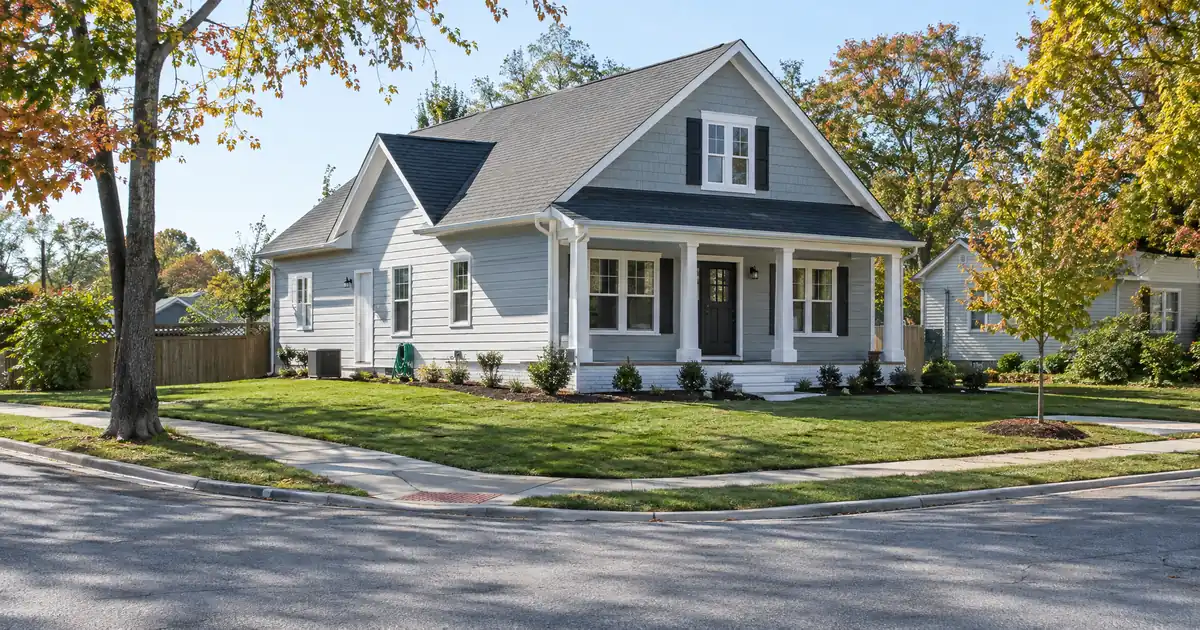
The Quick Read: A flip loan is a short-term, interest-only, business-purpose loan sized on the deal (purchase cost, rehab budget, and after-repair value, or ARV), with leverage tiered by completed projects, a 620 minimum score in parts of the network, and an exit by sale or refinance.
- Leverage runs 85%, 90%, or 93% of project cost depending on completed projects, and every tier is capped at 75% of ARV.
- Up to 100% of the rehab budget funds in draws after work is completed, not at closing.
- Terms run 6 to 18 months, interest-only, with no prepayment penalty.
- Credit minimums sit at 620, with added conditions below 660. The loan is still underwritten on the property, the plan, and the exit.
- All figures vary by lender, property, and experience, and nothing here is a commitment to lend.
What a Flip Loan Is, in Plain Terms
A flip loan lends against a deal, not a paycheck. The lender looks at what the property costs, what the rehab will cost, and what it should be worth when finished.
What this loan actually costs to carry.
Hard money is sized against the project and priced by time. Enter the deal and see how much the program will lend, the cash required at closing, the carry while you hold it, and what is left at the exit.
Leverage tiers on the current program: 85% with fewer than 2, 90% with 2 or more, 93% with 5 or more completed projects — every tier capped at 75% of after-repair value. Loan amounts up to $5,000,000, larger by exception; terms of 6 to 18 months, interest-only, no prepayment penalty. The rehab portion funds in draws against completed work, not at closing.
Program parameters shown update from Lendmire’s centralized guideline source. Rate, points, and months are editable assumptions, not quoted terms.
Cost cap sets the loan · positive spread
Illustrative estimate only — not a quote, Loan Estimate, approval, or commitment to lend. Rate, points, and months are editable assumptions. Hard money is business-purpose financing for real estate investors, not a consumer mortgage. Leverage on the current program tops out at 93% of project cost for investors with a documented track record, capped at 75% of after-repair value, with rehab funding up to 100% of the documented budget released in draws; actual terms vary by lender, borrower experience, property, and exit. Lendmire is a mortgage broker, not a lender.
Across the wholesale network Lendmire works with, the structure is consistent. Interest is paid monthly. The principal comes due at the end of the term. The investor sells the property or refinances into long-term financing.
Income documentation and debt-to-income ratios are not the center of the file. The property, the budget, the borrower’s track record, and the exit plan are. Credit and liquidity still count. A lender that ignores the borrower entirely is not one worth using.
Your Financing Options for a Flip
Several structures sit under the hard money umbrella. Which one fits depends on whether the property needs work, whether you are buying or refinancing, and what you plan to do afterward. The figures below are typical ranges from select lenders in the network and vary by lender, property, and experience.
| Structure | What it funds | Typical leverage | Best fit |
|---|---|---|---|
| Fix-and-flip | Purchase plus rehab | 85% to 93% of project cost, capped at 75% of ARV | Buy, renovate, sell |
| Bridge purchase | Purchase, no rehab | Up to 80% of purchase price | Light-touch or turnkey resale |
| Refinance | Payoff of existing debt | Up to 65% of value | Cash-out or rate/term on a held asset |
| Ground-up construction | Land-to-finished build | Up to 90% of cost and 75% of completed value at 3+ projects | Experienced builders |
| Long-term rental loan | Stabilized rental | Varies by program | The exit after the flip |
The first row is where most flippers live. The others are variations on the same asset-based logic.
Loan sizes go up to $5,000,000, larger by exception. Smaller balances vary by lender. Collateral is non-owner-occupied residential property of one to four units. Ground-up construction can run to ten units.
Some property types are not offered. Commercial, industrial, land or lots, hospitality, and owner-occupied properties are not on the program sheet.
Leverage: Two Tests, One Binding
The leverage tiers depend on documented completed projects. At five or more completed projects, the program reaches 93% of project cost. At two or more, it reaches 90%. With fewer than two, it is 85%. First-time investors qualify at the lower tiers.
Here is the catch. Every tier is also capped at 75% of ARV. The lender runs both tests, and the lower number controls.
Run the percentages on two modeled projects at the 85% tier. Say total cost (purchase plus rehab) equals 80% of ARV. The loan would be 68% of ARV, which is under the cap, so cost-based leverage governs. Now say total cost equals 95% of ARV, a thin-margin deal. At 85% of that cost, the loan would work out to roughly 81% of ARV, which is above the 75% cap. The cap binds, and the loan stops at 75% of ARV instead.
The gap between those two numbers comes out of the investor’s pocket. A headline of 93% of cost can turn into a larger cash requirement than expected on a thin-margin deal. That is why the ARV needs to be conservative and the comps need to be recent.
There is no true 100% purchase program. The 100% figure applies only to the rehab budget, and only as draws against completed work. It is a rehab-budget figure, never a purchase LTV.
How the Deal Works Through Underwriting
Here is the sequence on a typical flip file, start to finish.
1. Deal package. The borrower submits the purchase contract, an itemized rehab budget or contractor bids, ARV comparables, a timeline, proof of funds, entity documents, and a written exit plan.
2. Valuation. An independent appraisal sets the as-is value and the ARV. A low ARV shrinks the loan, because the 75% cap is applied to it.
3. Leverage test. The lender checks loan-to-cost against the borrower’s experience tier, then checks the ARV cap. The lower result becomes the maximum loan.
4. Closing. The purchase advance funds at closing. The rehab portion is held back.
5. Draws. The borrower completes a phase, submits documentation, and an inspector verifies the work. Funds are then released. Draws reimburse completed work, so the borrower floats each stage with their own cash.
6. Carry. Interest is paid monthly while the loan is outstanding. Interest typically accrues on the drawn balance, not the full commitment.
7. Exit. The property is sold, or the loan is refinanced into long-term financing before maturity.
Draw administration is where flips lose money quietly. A slow inspection cycle stretches the schedule. A stretched schedule adds carry months. Each extra month eats into the margin.
Requirements Checklist: Borrower, Property, Deal
Underwriters group the requirements into three buckets. Fixing the weak bucket before submission gives the file fewer preventable gaps.
Borrower
- Credit: a 620 minimum in parts of the network, with additional conditions below 660. Stronger scores generally improve the options.
- Experience: documented completed projects set the leverage tier.
- Liquidity: cash for the down payment, the draw gap, and interest carry.
- Entity documents: operating agreement, formation papers, and a personal guaranty are common.
Property
- Non-owner-occupied, one to four units.
- A scope that fits a flip program. Heavy structural work should be confirmed against the specific program before you rely on it.
- Comps that support the ARV.
Deal
- A rehab budget that matches the scope, with bids where possible.
- A timeline that fits inside the 6 to 18 month term with room to spare.
- An exit plan that names the buyer pool or the refinance path.
Programs change and every file is underwritten individually. Treat these as typical ranges, not promises.
How Experience and Credit Change Your Offer
Experience changes the structure of the offer, not just the price. Across the network, completed projects move you between the 85%, 90%, and 93% tiers. A first-timer starts at the lowest tier and plans for a bigger cash contribution.
Credit works differently. A 620 score can qualify in parts of the network, but files below 660 carry added conditions. Most lenders want to see stronger scores to offer the better leverage tiers. Credit does not replace the asset-based review. It sits next to it.
First-time flippers can improve the file in three ways. Use a realistic budget backed by bids. Bring more liquidity than the minimum. Show a clear exit with sold comps behind it. None of these guarantees approval, but each removes a reason to pend the file.
Where the General Rule Breaks
Owner-occupied or mixed purpose. These programs are for non-owner-occupied investment property only. A loan for a primary residence is a different product with different rules, and it falls outside this program.
Borrowing in a trust versus an LLC. Most lenders prefer an LLC with a personal guaranty, subject to lender program eligibility. Trust vesting is a separate question that depends on the lender and the purpose of the loan.
Extensions and maturity. The term is 6 to 18 months. If the project runs late, extension terms depend on the lender. Build a schedule with buffer instead of planning around an extension.
Hold-instead-of-sell pivot. A flip that becomes a rental needs long-term financing. At that point, the rent and the appraisal decide the loan, not the flip budget.
Scope limits. Ground-up construction is a separate structure with its own tiers. Land and lot loans are not offered.
The Business-Purpose Frame
These loans are made for business purposes on non-owner-occupied property, so they are reviewed differently from a standard owner-occupied mortgage. The CFPB’s summary of the Truth in Lending Act treats credit to acquire or improve non-owner-occupied rental property as business-purpose credit. The Federal Reserve’s supervisory manual lists loans to non-natural persons among the exempt categories.
That classification is why a lender can skip income documentation here. It is also why lenders ask for a business-purpose certification and confirm non-owner-occupancy. Keep the paperwork consistent with how the property will actually be used.
What the Market Backdrop Means for Your Margin
ATTOM’s latest flipping report counted 77,991 flips, or 6.2% of home sales. It put the typical gross margin at 21.5%, down from 25.7% the prior quarter and 27.6% a year earlier. Typical gross profit was $60,526, and the typical flip took 161 days from purchase to resale.
Gross profit is resale price minus purchase price. It does not include rehab, loan costs, holding costs, or selling costs. Thinner margins mean each draw delay and extra carry month takes a larger share of what is left.
Worked Example: Full Profit Math Without Dollars
Put the modeled numbers in percentages of ARV so the logic is visible.
- Purchase price: 60% of ARV.
- Rehab budget: 20% of ARV.
- Total project cost: 80% of ARV.
- Loan at the 90% tier: 72% of ARV, under the 75% cap.
- Cash the investor funds: 8% of ARV, plus the draw gap on the rehab.
- Selling costs, interest carry, and fees: all come out of the remaining 20% of ARV spread.
Now run a delayed version. The project runs several months longer than planned. Interest carry grows, selling costs stay fixed, and the spread shrinks. The investor’s net depends on how much cushion the original budget held.
That is why the margin needs room. A flip that only works at a perfect schedule is a fragile file.
Exit Strategies: Sell or Refinance
The default exit is a sale near ARV within the term. The underwriting question is whether the finished property sells at or close to the appraised after-repair value.
The second exit is a refinance. Many investors refinance out of hard money into long-term DSCR financing once the property is stabilized, and Lendmire brokers that path. The complete DSCR loans guide explains how those loans qualify on property-level rental income, subject to lender guidelines.
One note on the math. DSCR compares rent to the full monthly obligation of principal, interest, taxes, and insurance. Clearing the ratio does not mean the property cash flows. Repairs, vacancy, management, and utilities sit outside the calculation.
Line up the refinance path before closing the flip loan. Many select programs start at 1.00 coverage, and a separate select-lender path takes coverage below 1.00 with leverage and terms adjusted. Confirm which path fits the property early.
If the exit slips, the options are an extension, a refinance, or a sale at a lower price. Each costs more than a planned exit.
Why Flip Files Get Declined, and How to Fix Each
Aggressive ARV. Comps that reach too far or too high get adjusted down. Use recent sold comps that match condition and size.
Thin scope. A one-line budget invites questions. Itemize the work and attach bids.
Weak liquidity. Cash for the down payment, the draw gap, and interest carry should be documented and seasoned.
Missing entity paperwork. Operating agreements, formation documents, and guarantor details should be complete before submission.
Inexperience with no mitigation. A first-timer can offset the gap with a realistic budget, more cash, and a clear exit.
Ineligible property or scope. Land, commercial, and owner-occupied properties are not offered. Confirm eligibility before paying for an appraisal.
How to Compare Lender Offers
Compare offers on structure, not just headline leverage. Ask these questions before signing:
- Is leverage quoted on cost, on purchase price, or on ARV?
- What is the ARV cap, and how is ARV determined?
- What share of the rehab budget funds in draws, and how are inspections handled?
- Is there a prepayment penalty?
- What is the term, and what happens at maturity?
- What do entity and guarantor requirements look like?
An offer that looks better on leverage can be worse once the ARV cap and the draw gap are counted. For more on entity borrowers, see Lendmire’s piece on whether an LLC can get a hard money loan to fix and flip a house: Can an LLC Get a Hard Money Loan to Fix and Flip a House?.
Key Terms Defined
ARV (after-repair value): The appraised value of the property once the renovation is finished.
Loan-to-cost (LTC): The loan as a percentage of purchase price plus rehab budget.
Draw: A release of rehab funds after the borrower completes work and an inspector verifies it.
Interest-only: A payment structure where the borrower pays interest monthly and the principal is due at maturity.
Balloon payoff: The lump-sum principal payment due at the end of the term.
Bridge loan: A short-term loan used to buy or hold a property until a longer-term exit is in place.
Is It Right for You?
A flip loan fits when the deal has margin, the scope is clear, and the exit is realistic. It fits poorly when the spread is thin or the schedule depends on perfect execution.
Tax treatment varies; consult a qualified professional.
If you are buying, rehabbing or refinancing an investment property on a short timeline and want to see how the numbers work, Lendmire can help you compare hard money options based on the project, the exit plan, leverage, and your goals. Call 828-256-2183 or request a quote through the site.
Frequently Asked Questions
What credit score do I need for a flip loan?
A 620 minimum exists in parts of the network, with additional conditions below 660. Stronger scores generally open better leverage, and underwriting stays centered on the property, the plan, and the exit. Requirements vary by lender, property, and experience.
Can a first-time flipper qualify?
Yes, at the lower leverage tiers. With fewer than two completed projects, leverage typically sits at 85% of project cost, capped at 75% of ARV. A documented budget, solid comps, and extra liquidity improve the file.
Does the loan fund the whole rehab at closing?
No. The purchase advance funds at closing and the rehab budget is held back. Up to 100% of the rehab budget funds in draws against completed work, so the borrower covers each stage first.
How long is the term, and is there a prepayment penalty?
Terms run 6 to 18 months, interest-only, with no prepayment penalty. There are no multi-year options on the current program. Investors who need a longer runway refinance into long-term rental financing.
Does 93% leverage mean I only put 7% down?
Not necessarily. The 93% figure is a percentage of project cost, available at five or more completed projects, and it is capped at 75% of ARV. When the cap binds, the real cash requirement is higher. The draw gap adds to it. Each figure is subject to lender guidelines and a complete review of property type, leverage, and credit.
About Lendmire
Lendmire, NMLS# 2371349, is a non-QM mortgage broker serving real estate investors in 41 markets, including Washington, D.C., through DSCR investor loan programs. Qualification is generally reviewed around the subject property’s rental income, not the borrower’s W-2 history — a practical fit for LLC-titled portfolios and self-employed investors. All scenarios remain subject to lender review and program guidelines. Two consecutive Scotsman Guide Top Mortgage Workplace recognitions (2025, 2026).
Get Started
Ready to find the right loan for you?
In about 30 seconds you can review financing options available for your investment property. No commitment required.
Informational only. Not a Loan Estimate, approval, or commitment to lend. Program availability and eligibility are subject to lender guidelines, credit approval, property review, and underwriting.
References
1. CFPB Truth in Lending Act summary
2. Federal Reserve Regulation Z supervisory manual
3. attomdata.com: Home Flipping Profits Continue Gradual Two Year Decline
This article is part of Lendmire’s hard money loan program — full qualification details, guidelines, and scenarios live on the program page.
Related reading: How to Replace Seller Financing With a Hard Money Loan on a First Flip · How to Get Rehab Draws Released on a Hard Money Loan · Hard Money Maximum Loan Amount Requirements for a Flip
Brandon Miller
Founder & CEO, Mortgage Loan Originator, Lendmire LLC
- Mortgage Loan Originator · NMLS# 1129696 · Verify on NMLS Consumer Access
- North Carolina Real Estate Broker · License# 343312 · Verify on NCREC
- North Carolina Insurance Producer · License# 19053198 · Property, Casualty, Life, Health · Verify on NAIC SBS
- Lendmire LLC · Firm NMLS# 2371349 · Verify firm licensure
Compliance and disclosures. Lendmire (NMLS# 2371349) is a licensed mortgage broker and is not a direct lender, depository institution, financial advisor, or tax professional. Content in this article is general market analysis and educational information — not financial, legal, or tax advice for any specific situation. Lendmire does not guarantee loan approval; every transaction is subject to underwriting by the funding lender. Mortgage pricing and loan program guidelines are subject to change at any time without notice and vary by borrower characteristics, property type, and state regulations. Lendmire complies with Equal Housing Opportunity. Licensure verification: NMLS Consumer Access.