
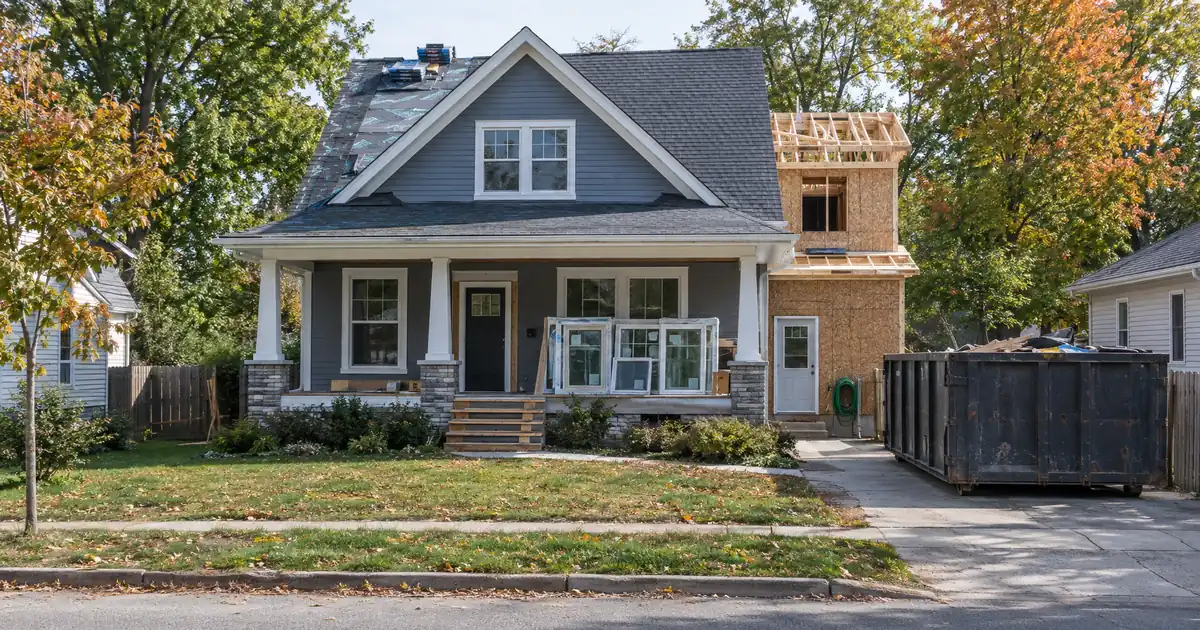
The Quick Read: A tenant in an auction property changes the plan, the possession path and the exit more than it changes the bridge loan, so the choice comes down to which risk you can price: possession delay and a lease that may cap rent, or unknown condition and a property that still needs a tenant.
- A bridge lender reviews the property, the plan and the exit, whether the house is occupied or empty.
- An inherited tenant can add rent from day one, but possession delay and a below-market lease can hurt the long-term rental refinance.
- A vacant buy is reviewed on the appraiser’s market rent alone, and the gating issue becomes rehab scope and rent-readiness.
- On most files the bridge is a short, interest-only loan, so every month of delay is a month of carry before the refinance.
The Honest Answer: Who Each Option Is For
An inherited tenant suits the investor who plans to hold the property as a rental, can absorb a slow possession process, and wants rent on the books early. A vacant buy suits the investor who needs control of the schedule, plans a rehab, or wants the long-term refinance reviewed on a clean market-rent number.
What this loan actually costs to carry.
Hard money is sized against the project and priced by time. Enter the deal and see how much the program will lend, the cash required at closing, the carry while you hold it, and what is left at the exit.
Leverage tiers on the current program: 85% with fewer than 2, 90% with 2 or more, 93% with 5 or more completed projects — every tier capped at 75% of after-repair value. Loan amounts up to $5,000,000, larger by exception; terms of 6 to 18 months, interest-only, no prepayment penalty. The rehab portion funds in draws against completed work, not at closing.
Program parameters shown update from Lendmire’s centralized guideline source. Rate, points, and months are editable assumptions, not quoted terms.
Cost cap sets the loan · positive spread
Illustrative estimate only — not a quote, Loan Estimate, approval, or commitment to lend. Rate, points, and months are editable assumptions. Hard money is business-purpose financing for real estate investors, not a consumer mortgage. Leverage on the current program tops out at 93% of project cost for investors with a documented track record, capped at 75% of after-repair value, with rehab funding up to 100% of the documented budget released in draws; actual terms vary by lender, borrower experience, property, and exit. Lendmire is a mortgage broker, not a lender.
Neither one is the safer choice in every case. The occupied buy trades a purchase discount for legal and timing risk. The vacant buy trades that risk for condition, lien and lease-up risk.
The hard money loan is a business-purpose, asset-based bridge. Across the wholesale network, a typical bridge purchase without rehab runs up to 80% of the purchase price. A purchase with rehab funds on loan-to-cost: 85% of project cost for newer investors, 90% at two or more completed projects, and 93% at five or more, each capped at 75% of after-repair value. Terms run 6 to 18 months, interest-only. These figures vary by lender, property and experience, and nothing here is a commitment to lend.
Side-by-Side
| Factor | Inherited tenant | Vacant buy |
|---|---|---|
| Bridge reviewed on | Property, plan, exit | Property, plan, exit |
| Rent used at takeout | Often lower of lease or market rent | Appraiser’s market rent only |
| Documents | Lease, deposit, proof of rent paid | Appraisal rent schedule, later a lease |
| Main risk | Possession delay, low lease | Condition, liens, no tenant yet |
| Appraisal access | Can be limited by occupant | Easier if keys are available |
| Property types | 1-4 units, unit-by-unit rent roll | 1-4 units |
| Entity vesting | Individual or LLC, per program | Individual or LLC, per program |
| Reserves | Vary by lender and file | Vary by lender and file |
| Timeline | Set by the possession path | Set by rehab scope |
The column shows published industry norms and the way files are commonly reviewed, not a fixed rule. Hard money on the front end and DSCR investor loans on the back end each follow their own lender’s guidelines. Vesting in an LLC is generally workable, subject to lender program eligibility and complete entity documents.
Key Terms Defined
Inherited tenant: A tenant who is already living in the property when you win the bid, so you take the property with that occupant and any lease in place.
Bona fide tenant: A renter under an arm’s-length lease who is not the former owner or the former owner’s close family.
DSCR: The debt service coverage ratio, which compares a property’s monthly rent to its monthly principal, interest, taxes, insurance and any HOA dues.
Market rent opinion: The appraiser’s estimate of what the property should rent for, reported on a rent schedule form.
Holdover: An occupant who stays after any right to stay has ended and may need a court process to remove.
When an Inherited Tenant Is the Better Fit
An inherited tenant works best on a buy-and-hold plan where the property is rent-ready and the tenant is paying. Three conditions make the case.
The tenant is a real, paying renter. A signed lease, a deposit on record and a payment history give the DSCR file what it wants: a lease and proof that rent is actually paid. For a 2-4 unit building, a rent roll covers each unit.
The in-place rent is close to market. Many programs use the lower of the lease or the appraiser’s market rent. A lease near market loses nothing under that test.
The investor can wait. Possession, notices and any court process run on state timelines the investor does not control. The bridge term is short, so the exit plan needs room.
Picture an investor who buys a duplex with both units leased near market. The appraisal supports both rents, the rent roll matches the leases, and the long-term refinance can be reviewed with little change from the bid-day math. That is the clean version of the occupied buy.
Now run the less clean version, using modeled numbers. The tenant pays well below market on an old lease. If the program takes the lower figure, coverage lands near 1.0x where the market rent might have supported roughly 1.2x. Many select programs start at 1.00. A separate select-lender path takes coverage below 1.00, with leverage and terms adjusted. The lower coverage can mean less leverage at the refinance, so the investor puts more cash back into the property.
What the tenant’s rights mean for the buyer
The federal rule matters most here. The OCC’s handbook chapter on tenant protections at foreclosure says the successor in interest must give a bona fide tenant notice to vacate at least 90 days before an eviction takes effect. It also says bona fide tenants may generally stay through the end of the lease. The exceptions are a buyer who will live in the home as a primary residence and a lease that is terminable at will or does not exist. The OCC adds that state law can set a longer notice period.
The owner-occupant exception does not help an investor who buys to rent. The tenant keeps the lease right.
Nolo’s overview of tenant protections after a foreclosure explains the traditional rule that a foreclosure wiped out a later lease and left the tenant month-to-month. It also lists who counts as bona fide: not the borrower or the borrower’s spouse, child or parent, and only under an arm’s-length lease. Both points matter when you triage an occupant, because a former owner or a non-bona fide occupant does not carry the same lease right.
When a Vacant Buy Is the Better Fit
A vacant buy is the better fit when you want schedule control, when you plan a rehab, or when the in-place rent would hold the refinance back. Investors often prefer vacant assets because they avoid eviction delay and the carry cost that comes with it.
The takeout rent is simpler. A vacant property has no lease, so the appraiser’s market rent is the only rent figure. The appraiser reports it on Form 1007 for a single unit or Form 1025 for 2-4 units. Fannie Mae’s forms page lists Form 1007 as the Single-Family Comparable Rent Schedule and Form 1025 as the Small Residential Income Property Appraisal Report. Those are agency forms that DSCR lenders adopted. No agency governs DSCR underwriting.
There is no lower-of-lease test, so a vacant property can be reviewed above where an old lease would have capped it. Your own rent estimate is not a qualifying figure.
The gating issue is rent-readiness. If the house needs work before it can lease, the refinance waits on the rehab. Scope the work against the bridge term before you bid. Once a tenant is placed after the rehab, the signed lease joins the file.
Vacant does not mean clean. Long vacancy can hide water damage, missing fixtures and mold. Liens and title problems can survive the sale, and what survives depends on state law and the sale type. Keep a repair reserve in the budget and order a title search before you bid.
Vacant also means a lease-up risk. If the neighborhood rents slowly, the bridge interest keeps running while the house sits empty.
How the Bridge Lender Sees an Occupied Property
Lenders look at the same three things on both files: the property, the plan and the exit. Occupancy touches all three.
Appraisal access. Buyers at auction often have limited or no interior access before the sale. Dibbini & Associates’ guide to buying foreclosed property with occupants notes this, and it also says you cannot remove an occupant by force and will likely need a legal process. A lender who cannot get inside may value the file more conservatively, so ask about appraisal access before you bid.
The plan. The plan has to hold up if possession is slow. Holdover occupants delay rehab and rent-up, and delay adds interest cost and pushes back the refinance date.
The exit. The long-term refinance wants a leased or rent-ready property. Occupancy risk is the thing that can break that exit.
Who is inside matters as much as whether anyone is. Xome’s guide to occupied properties says you may not learn who is inside until after closing. The occupant could be the former owner, a tenant with a valid lease or a squatter.
| Occupant | Rights | Likely path |
|---|---|---|
| Bona fide tenant, lease | Notice, stay to lease end | Keep, or negotiate exit |
| Month-to-month tenant | Notice applies | Keep, or give notice |
| Former owner | Not a tenant | Court process likely |
| Squatter | No lease right | Court process likely |
Possession paths run three ways. The tenant stays and pays, and you document the lease, deposit and rent history. The tenant leaves after notice, or by agreement such as cash-for-keys, and you rehab and lease at market. Or the occupant is a holdover who needs court, and the bridge term may run out, so an extension or a sale becomes the fallback.
The Takeout: What the DSCR Refinance Reviews
Both paths end at the same place: a long-term DSCR refinance, which many investors use to pay off the bridge once the property is stabilized. Lendmire arranges that path through select lenders in its wholesale network, and the full mechanics sit in Lendmire’s complete DSCR loans guide.
Most programs in the network land at 75%-80% LTV on an investment property purchase, and select high-leverage programs reach 85% LTV with roughly a 700+ score. A cash-out refinance on an investment property tops out around 75% LTV across most of the network, and about 6 months of seasoning is the common expectation. Lenders treat a payoff of a hard money loan under their own guidelines, so ask how the file will be classified before you bid.
Credit tiers matter at the takeout. A 620 floor exists in parts of the network, most programs want around 660, and 700+ opens the strongest leverage tiers. Reserves vary by lender, leverage, loan size and transaction type, and commonly sit around 6 months of PITIA.
Here is how the two files differ at the refinance:
- Occupied: the file carries a lease, proof of rent paid, and for 2-4 units a rent roll, alongside the appraiser’s market rent.
- Vacant, then leased: the file carries the appraisal’s market rent and, once a tenant is placed, the new lease.
- Partly occupied 2-4 unit building: each unit is reviewed on its own.
Clearing 1.00 is not the same as positive cash flow. DSCR compares rent to the monthly payment, taxes, insurance and any HOA dues. Repairs, vacancy, management, utilities and capex sit outside it.
A month-to-month or expired lease is weaker support than a current lease. Some programs fall back to market rent in that case.
A short-term rental plan changes the income path. Form 1007 is built for monthly rent, so short-term rental files use a different income review. Short-term rental rules can vary by city, county, HOA, and property type, so investors should confirm local rules before relying on projected rental income.
Pre-Bid Checklist for Either Path
1. Ask the lender about occupancy first. Ask whether the property can be funded occupied, what appraisal access is required and what proof of funds is needed before the bid.
2. Check the sale terms. Auction terms on payment and deposit differ by sale type, so read them before you commit to a bid.
3. Research the occupant. Drive by, check public records and look for signs of a tenant versus a former owner.
4. Ask the title company about occupancy. Title coverage often decides whether a lender funds, and occupancy can complicate it.
5. Run the exit on the lower rent. Test the DSCR refinance on the lower of the likely lease or market rent, not the best case.
6. Size the bid for the risk. Price possession delay and legal cost into an occupied bid, and condition and lien risk into a vacant bid.
For more on how the bridge fits an auction purchase, see Lendmire’s piece Rental HELOC vs Hard Money for an Investor Buying at Auction.
The Verdict
Choose the inherited tenant when the lease is real, the rent is near market and the hold plan can absorb a slow possession process. Choose the vacant buy when you need control of the schedule, you plan a rehab, or an old low lease would hold back the refinance.
In both cases the bridge is reviewed on property, plan and exit, and the refinance is reviewed on rent against the monthly payment. The bid should reflect whichever risk you took on, since one practitioner view is that legal fees and trash-out can erase an occupied discount. A discount that does not cover possession delay is not a discount.
Frequently Asked Questions
Can hard money fund an occupied auction property?
It can, depending on the lender, the property and the experience of the borrower. Lenders review occupied properties case by case, and they focus on appraisal access, the plan and whether the exit survives a possession delay. Collateral is non-owner-occupied residential property of 1-4 units, and the terms vary by lender, property and experience.
Can I buy with a tenant and keep them?
Yes, if the tenant is a bona fide tenant with a valid lease. The federal tenant protections let that tenant stay through the lease term, subject to the exceptions in the OCC’s handbook chapter. Some states add longer notice periods, so confirm local rules with counsel.
Does an inherited tenant help the DSCR refinance?
It can, when the lease is current and near market, because the file carries a signed lease and proof of rent paid. It can also hurt when the lease is below market and the program uses the lower of the lease or the appraiser’s market rent. A lease above market usually adds nothing.
What if there is no lease or the occupant is the former owner?
A former owner or an occupant with no lease is not protected as a tenant, but you still cannot remove them by force. You will likely need a legal eviction or holdover process. Plan the bridge term and the fallback exit around that process before you bid.
Is a vacant buy the safer choice?
It removes possession risk but adds condition, lien and lease-up risk. The vacant file is simpler at the refinance because only the appraiser’s market rent counts. Investors who value schedule control often prefer it, and investors who want in-place rent often prefer the occupied buy.
Next Step
If you are buying, rehabbing or refinancing an investment property on a short timeline and want to see how the numbers work, Lendmire can help you compare hard money options based on the project, the exit plan, leverage, and your goals. Lendmire is a broker that arranges financing through select lenders in its wholesale network across 41 markets, including Washington, D.C. Bring the occupancy question to the first conversation, because it shapes both the bridge and the refinance.
About Lendmire
A non-QM mortgage broker (NMLS# 2371349), Lendmire arranges DSCR financing for real estate investors in 41 markets — 40 states plus Washington, D.C. Because deals are underwritten primarily on property cash flow rather than personal income documentation, the structure suits self-employed buyers and entity-owned portfolios. Lendmire places loans through wholesale investor lenders; it is not a direct lender. Scotsman Guide named Lendmire a Top Mortgage Workplace in both 2025 and 2026.
Get Started
Ready to find the right loan for you?
In about 30 seconds you can review financing options available for your investment property. No commitment required.
Informational only. Not a Loan Estimate, approval, or commitment to lend. Program availability and eligibility are subject to lender guidelines, credit approval, property review, and underwriting.
References
1. OCC Comptroller’s Handbook, Protecting Tenants at Foreclosure
2. Nolo, Protections for Tenants After a Landlord’s Foreclosure
3. Fannie Mae, Selling and Servicing Guide Forms
4. Dibbini & Associates, Buying Foreclosed Property With Occupants Still Inside
5. Xome, What to Expect When Buying an Occupied Property
This article is part of Lendmire’s hard money loan program — full qualification details, guidelines, and scenarios live on the program page.
Related reading: Gap Funding vs. a Money Partner for Your First DSCR Rental · How to Refinance Out of Hard Money With a DSCR Loan Before the Payoff · How to Get a DSCR Refinance Through With a Non-Paying Tenant
Brandon Miller
Founder & CEO, Mortgage Loan Originator, Lendmire LLC
- Mortgage Loan Originator · NMLS# 1129696 · Verify on NMLS Consumer Access
- North Carolina Real Estate Broker · License# 343312 · Verify on NCREC
- North Carolina Insurance Producer · License# 19053198 · Property, Casualty, Life, Health · Verify on NAIC SBS
- Lendmire LLC · Firm NMLS# 2371349 · Verify firm licensure
Disclosure information. Lendmire is a state-licensed mortgage brokerage under NMLS# 2371349. Lendmire is not a depository institution, direct lender, or financial advisor — all loans referenced are placed through wholesale lender partners and are subject to each lender's underwriting standards. This article is provided for general informational purposes and is not a commitment to lend, nor does it constitute financial, legal, or tax advice. Loan programs, terms, rates, and qualification standards change without notice and depend on borrower profile, property type, and the state in which the subject property is located. Equal Housing Opportunity provider. NMLS Consumer Access: nmlsconsumeraccess.org.