
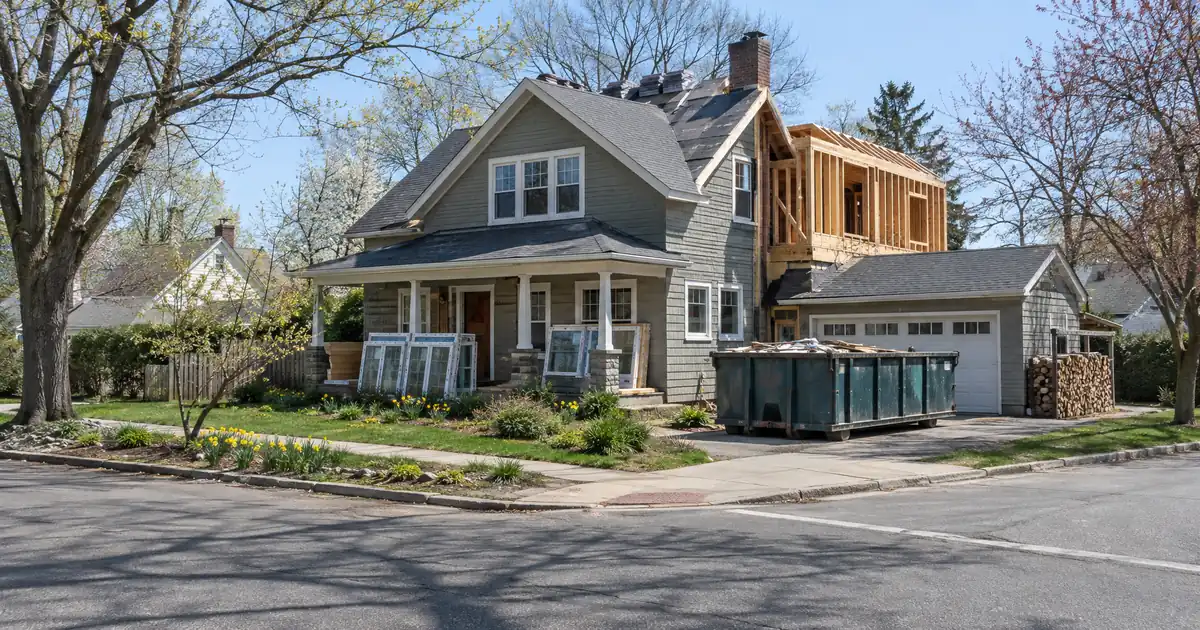
The Quick Read: A draw schedule is the list of stages in which a hard money lender releases your renovation budget from a holdback, paying each stage only after the work is finished, inspected and backed by paperwork like invoices and lien waivers, while the purchase portion funds at closing. The loan agreement sets the exact rules, so cadence, inspection method and fees differ by lender.
- You usually pay first. A draw reimburses completed work, so you need working cash to float each stage.
- Installed beats delivered. Materials sitting on site generally do not count until they are in place.
- The inspection is not a code inspection. It confirms the work exists and matches the approved scope.
- Paperwork gates the money. Lien waivers and a clean title update can hold a draw even when the work passes.
- Draw pace drives carry cost and your exit. A slow cycle delays the lease, and a delayed lease delays any refinance into long-term financing.
What Is a Rehab Draw Schedule and How Does the Holdback Work?
A hard money rehab loan has two parts. The purchase portion funds at closing. The renovation budget stays in a lender-controlled holdback and is released in stages as work is completed and verified, as investor-education commentary on fix-and-flip loans describes the structure.
What this loan actually costs to carry.
Hard money is sized against the project and priced by time. Enter the deal and see how much the program will lend, the cash required at closing, the carry while you hold it, and what is left at the exit.
Leverage tiers on the current program: 85% with fewer than 2, 90% with 2 or more, 93% with 5 or more completed projects — every tier capped at 75% of after-repair value. Loan amounts up to $5,000,000, larger by exception; terms of 6 to 18 months, interest-only, no prepayment penalty. The rehab portion funds in draws against completed work, not at closing.
Program parameters shown update from Lendmire’s centralized guideline source. Rate, points, and months are editable assumptions, not quoted terms.
Cost cap sets the loan · positive spread
Illustrative estimate only — not a quote, Loan Estimate, approval, or commitment to lend. Rate, points, and months are editable assumptions. Hard money is business-purpose financing for real estate investors, not a consumer mortgage. Leverage on the current program tops out at 93% of project cost for investors with a documented track record, capped at 75% of after-repair value, with rehab funding up to 100% of the documented budget released in draws; actual terms vary by lender, borrower experience, property, and exit. Lendmire is a mortgage broker, not a lender.
The holdback is a pool of money the lender keeps. A draw is one release from that pool. The draw schedule is the plan for when those releases happen and what must be true before each one.
Here is the part that surprises first-timers: the rehab money is not yours at closing. On Lendmire’s side of the desk, the network programs for fix-and-flip fund up to 100% of the rehab budget in draws against completed work. That is a rehab-budget figure, not a purchase loan-to-value number. It varies by lender, property, and experience.
Why Do Lenders Hold the Rehab Money Back?
Lenders hold it back because of lien priority. A lien is a legal claim on a property for unpaid work. A mechanics’ lien is the version a contractor, subcontractor or supplier can file when they are not paid.
Here is the catch. Priority is often tied to when work started, not when the lien was filed, and rules vary by state, according to GoBuildYourHouse. One state bar construction-law newsletter shows how far this can go: under that state’s statute, properly perfected construction liens can take priority over previously recorded mortgages. Treat that as an illustration that statute-based priority risk exists, not as a rule for every state.
A lender that handed over the whole rehab budget on day one would have no control over where it went. Releasing it against verified work keeps the money tied to the property.
How Does the Schedule Get Built?
The schedule starts with a scope of work and a line-item budget. Each line covers materials and labor for a trade or task. The lender then groups those lines into draws, usually by phase or milestone.
Phases should have some give. Items can shift between stages, and early stages often carry permits and dumpsters. A stronger scope makes this easy. A vague scope forces the lender to guess what counts as complete, and guessing slows releases.
How many draws you get is set in the loan documents. A smaller number of draws means fewer inspections and fewer title updates. It also means each stage costs you more cash to float. Finer slicing eases the cash gap but layers on fees.
What Does a Sample Draw Schedule Look Like?
Here is an illustrative five-draw schedule for a mid-size rehab. It is a model, not a market standard. Your loan documents control the real number of draws and what each requires.
| Draw | Phase | Completion evidence | Inspection focus | Common delay |
|---|---|---|---|---|
| 1 | Demo, permits, dumpster | Photos, permit copies | Demo done, site cleared | Missing permit paperwork |
| 2 | Structural, roof, windows | Invoices, photos | Work in place, matches scope | Materials not yet installed |
| 3 | Rough mechanicals | Invoices, sub waivers | Exposed rough-in visible | Drywall closed too early |
| 4 | Drywall, flooring, kitchen | Invoices, photos | Finished surfaces present | Unapproved scope change |
| 5 | Final punch list, cleanup | Final waivers, photos | Full scope complete | Open punch items |
The pattern matters more than the numbers. Early draws are about getting the structure right. Late draws are about finish and closeout, and the lender often keeps a portion back until the end.
How Does the Draw Cycle Work Step by Step?
The cycle repeats for every draw. Here is how it typically runs.
1. You complete a stage of work. You or your contractor pay for it. The draw reimburses completed work, as YieldStack’s draw schedule explainer describes it.
2. You submit a draw request. The package usually has the request form, an updated budget, invoices or receipts, progress photos and lien waivers.
3. The lender verifies the work. That means an on-site visit by a third-party inspector, or photo and video documentation, depending on the lender.
4. The lender may order a title update. This confirms no new liens or judgments landed since the last release.
5. The lender approves, partially approves, or rejects. Funds go to you or to the contractor, depending on lender policy.
6. You repeat for the next stage. The final draw adds a closing inspection and final waivers.
Missing lien waivers and unclear photos are common reasons a request gets sent back. Fix the package before you submit, not after.
What Do Inspection Requirements Actually Cover?
A draw inspection checks that the work you claim exists, is finished, and matches the approved scope. It is not a code or permit inspection. Your city’s building department handles that separately, and passing one does not substitute for the other.
Lenders verify in one of two ways. Some send a third-party inspector to every draw. Others rely on borrower-submitted photos and video for some or all draws. Either way, the lender picks the method, and it shows up in the loan documents.
| Factor | On-site inspector | Photo or video |
|---|---|---|
| Who verifies | Third-party visit | You document the work |
| Scrutiny | Physical check of each line | Depends on photo quality |
| Cost to you | Per-draw inspection fee | May be lower or absent |
| Scheduling | Depends on inspector calendar | You control when you shoot |
| Risk | Waiting on a visit | Unclear photos get rejected |
YieldStack notes that inspection turnaround sets the pace of the project and per-draw fees add up. Ask for the method and the fee before you sign.
Get Inspection-Ready by Phase
A simple habit saves many rejected draws. Before each request, walk the property with the line-item budget in hand.
- Early phases: photograph the cleared site and keep permit copies handy.
- Structural work: photograph installed roofing, windows and framing from the angles that show completion.
- Rough mechanicals: shoot exposed electrical, plumbing and HVAC runs before drywall covers them. Once they are hidden, no one can verify them.
- Finish work: label rooms in photos so the reviewer can match each image to a budget line.
- Final: clear the punch list. Substantially complete is a gray zone. Complete is not.
What Do Lien Waivers and Title Updates Do?
Lien waivers and title updates protect the lender’s position, and either one can hold a draw. A lien waiver is a signed document from a contractor, subcontractor or supplier. It says they have been paid and gives up future lien rights for that amount.
There are four types: partial or full, and conditional or unconditional. A partial waiver covers payment to date. A full one covers the final payment. A conditional waiver takes effect only when the payment clears. An unconditional waiver takes effect when signed. Waiver forms are generally state-specific, so use the form your title company or lender accepts. Many investors ask for partial releases from subcontractors starting with the second draw.
The title update, often called a date-down, is a fresh search showing nothing new has attached to the property since the last release. Gravel2Gavel describes a specific endorsement, ALTA 33-06, as the construction-disbursement date-down. It also notes that some pending-disbursement clauses require contractor lien waivers and proof of paid bills before the date-down issues.
A law firm writing for private lenders, Geraci Law, describes the same endorsement as the post-closing update and suggests prepaying for the expected number at closing. One construction-education source, GoBuildYourHouse, puts a date-down update at roughly $150 to $500 per draw. Treat that as indicative, not universal. Whether a short-term lender orders one on every draw of a small single-family flip varies, so ask.
What Happens When an Inspection Fails?
A failed inspection rarely kills the loan. It pauses the draw. The lender may approve part of the request, reject the rest, and ask for fixes or better documentation.
The usual path looks like this:
1. The lender explains what did not match the scope or what was incomplete.
2. You finish the work or fix the paperwork.
3. A re-inspection happens, or you resubmit photos.
4. The draw releases once the gap is closed.
Each loop costs time, and time costs interest and contractor patience. The best prevention is simple. Do not request a draw for work that is merely started, and do not close up work that still needs to be seen.
Where Does the General Rule Break?
Draw mechanics sit in private contracts and state law, so the exceptions are many. These are the ones that matter most.
- Advance draws. Some lenders will release money before the work is done, usually for long-lead items. They are the exception. Most holdback draws are based on work in place.
- Inspection method. Some lenders inspect every draw. Others inspect less often and take photos in between.
- Interest on the holdback. Interest usually accrues on the drawn balance, so carry cost rises as you draw. Some structures charge on the full commitment instead. YieldStack covers this, and your loan documents settle it.
- Work started before closing. This is a title problem. The title company may demand an indemnity package, or even a pause in construction, before it covers mechanics liens, per Geraci Law.
- Scope changes. Moving money between line items or adding work without lender approval can limit access to holdback funds. Get changes approved in writing first.
- Flip versus ground-up. Fix-and-flip draws are usually requested when work is complete. Ground-up construction draws more often follow preset milestones.
- State lien law. Notice requirements, priority rules and retainage vary by state. Your title company knows yours.
How Much Cash Do You Need to Float the Draws?
You need enough working capital to pay each stage before it reimburses. Picture three phases running in sequence: you pay the contractor, wait for the inspection and paperwork, and only then see the money. Your out-of-pocket exposure peaks just before each release.
A few habits narrow the gap. Structure contractor payments around the draw stages, keep deposits modest, and avoid paying ahead of verified progress. Keep a contingency cushion for overruns.
Leverage sets how much of your own cash goes in. Across the network, fix-and-flip leverage typically runs 93% of project cost at five or more completed projects, 90% at two or more, and 85% with fewer. Every tier is capped at 75% of after-repair value, which is the property’s estimated worth once the work is done. Cost-based figures mean loan-to-cost, not a purchase LTV. Loan terms typically run 6 to 18 months, interest-only, with no prepayment penalty. A 620 credit score is the typical minimum, with extra conditions below 660. The property is non-owner-occupied residential, 1 to 4 units, and sizes run up to $5,000,000. These are business-purpose investor loans, and everything varies by lender, property, and experience. None of it is a commitment to lend.
What Is the Final Draw and What Comes After?
The final draw closes out the holdback. It usually needs a final inspection and final lien waivers from every trade. Some programs retain a portion of the budget until then.
After that, you list the property or hold it. For investors who plan to rent, the draw process sets the timeline. It decides when the rehab finishes, when the property can be leased, and when it can move to long-term financing. That link is inference rather than sourced fact, but the logic is direct. A delayed rehab delays the lease, and a delayed lease delays the refinance.
Many investors refinance out of hard money into long-term DSCR financing once the property is stabilized, and Lendmire brokers that path. DSCR means debt service coverage ratio. It compares monthly rent to PITIA, which is principal, interest, taxes, insurance and any association dues. A DSCR loan qualifies primarily on property-level rental income covering the payment, subject to lender guidelines. A coverage of 1.00 is where many select programs start. A separate select-lender path takes coverage below 1.00, with leverage and terms adjusted. Clearing 1.00 is not the same as positive cash flow, since repairs, vacancy, management and capex sit outside the calculation.
For how the pieces fit, read the complete DSCR loans guide. For the equity side of the exit, see Lendmire’s piece How Much Equity a Top-Leverage Hard Money Rehab Needs for DSCR Cash-Out.
Keep every invoice and waiver in one organized folder.
What Should You Ask Any Lender Before You Sign?
Draw rules are contractual, so the answers live in the loan documents. Ask these before signing.
| Question | Why it matters |
|---|---|
| How many draws, and who sets them? | Drives cash float and fees |
| On-site inspector or photos? | Drives scrutiny and scheduling |
| What does each inspection cost? | Fees stack across draws |
| Is interest on drawn or full balance? | Changes carry cost |
| Are title updates ordered each draw? | Adds cost and a gate |
| Who receives the funds? | Affects contractor payments |
| What is retained until the final draw? | Sets closeout cash needs |
Key Terms Defined
Holdback: the part of the loan kept by the lender and released in stages for renovation.
Draw: a single release of holdback funds after verified work.
Draw schedule: the plan listing the stages, what must be done, and what proof is required for each release.
Mechanics’ lien: a legal claim on a property by someone who worked on it and was not paid.
Lien waiver: a signed statement that a contractor or supplier was paid and gives up lien rights for that amount.
Date-down: a title update before a disbursement that confirms no new liens or judgments have attached.
After-repair value (ARV): the estimated worth of the property once the work is complete.
Loan-to-cost: the loan amount measured against the total project cost, not just the purchase price.
Frequently Asked Questions
How many draws will I get on a hard money rehab loan?
It depends on the lender and the project. The loan documents set the number. Smaller projects often use fewer draws, and larger gut rehabs use more. Fewer draws mean fewer inspection and title fees but more cash for you to float at each stage.
Does every draw need an inspection?
Not always. Some lenders send an inspector for each draw, and others use photos and video for some or all. Ask which method applies before you sign, because it changes both your cost and how carefully you need to document the work.
Can I draw for materials delivered to the property?
Generally no. Many draw rules require installed work, so materials sitting on site usually do not count until they are in place. Advance draws for long-lead items exist but are the exception, and they are set by the lender.
Is a draw inspection the same as a city code inspection?
No. A draw inspection confirms the claimed work exists, is finished and matches the approved scope. Code and permit inspections come from the local building department and are separate.
What if my rehab goes over budget?
Overruns come out of your pocket unless the lender approves a reallocation among line items. Get scope changes approved in advance, and keep a contingency cushion. Unapproved changes can limit access to holdback funds.
If you are buying, rehabbing or refinancing an investment property on a short timeline and want to see how the numbers work, Lendmire can help you compare hard money options based on the project, the exit plan, leverage, and your goals. Lendmire is a broker arranging financing through select lenders in its wholesale network across 41 markets, including Washington, D.C.
About Lendmire
Lendmire (NMLS# 2371349) is a mortgage brokerage focused on DSCR investor financing, helping arrange programs through wholesale and investor-lending channels in 41 markets, including Washington, D.C. DSCR loans are evaluated by the lender on property cash flow rather than personal income, subject to lender guidelines, supporting LLC closings and accommodating investors with four or more financed properties. Scotsman Guide Top Mortgage Workplace in both 2025 and 2026.
Get Started
Ready to find the right loan for you?
In about 30 seconds you can review financing options available for your investment property. No commitment required.
Informational only. Not a Loan Estimate, approval, or commitment to lend. Program availability and eligibility are subject to lender guidelines, credit approval, property review, and underwriting.
References
2. GoBuildYourHouse — mechanics liens, lien waivers and draws
3. Oregon State Bar Construction Law Newsletter
4. YieldStack — fix and flip loan draw schedule
5. YieldStack
6. Gravel2Gavel — title insurance and construction loan disbursements
7. Geraci Law — construction loan considerations for private lenders
8. YieldStack
This article is part of Lendmire’s hard money loan program — full qualification details, guidelines, and scenarios live on the program page.
Related reading: Can You Get Hard Money to Buy at Auction With an Inherited Tenant? · Keeping Seller Financing vs Refinancing Into a Hard Money Loan · Is a Full-Gut Rehab Fully Financed on a Hard Money Loan?
Brandon Miller
Founder & CEO, Mortgage Loan Originator, Lendmire LLC
- Mortgage Loan Originator · NMLS# 1129696 · Verify on NMLS Consumer Access
- North Carolina Real Estate Broker · License# 343312 · Verify on NCREC
- North Carolina Insurance Producer · License# 19053198 · Property, Casualty, Life, Health · Verify on NAIC SBS
- Lendmire LLC · Firm NMLS# 2371349 · Verify firm licensure
Compliance and disclosures. Lendmire (NMLS# 2371349) is a licensed mortgage broker and is not a direct lender, depository institution, financial advisor, or tax professional. Content in this article is general market analysis and educational information — not financial, legal, or tax advice for any specific situation. Lendmire does not guarantee loan approval; every transaction is subject to underwriting by the funding lender. Mortgage pricing and loan program guidelines are subject to change at any time without notice and vary by borrower characteristics, property type, and state regulations. Lendmire complies with Equal Housing Opportunity. Licensure verification: NMLS Consumer Access.