
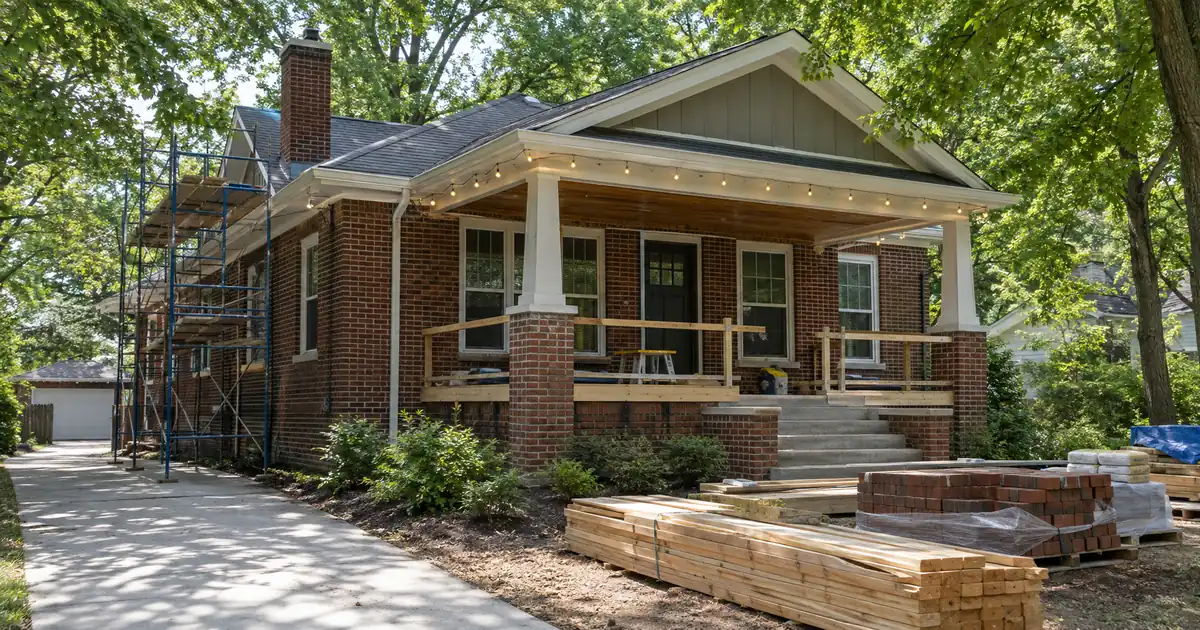
The Quick Read: Hard money is debt secured by the flip itself and sized on project cost and after-repair value, while partner capital is money from another person that fills your share of the equity, so the two usually work together instead of competing for the same job. Which one you lean on depends on how much cash you hold, how many projects you have finished, and how much of the profit you are willing to share.
- Hard money funds a percentage of project cost, and you cover the remaining gap plus closing costs and reserves.
- Partner capital can supply that gap, but the lender decides whether the money counts and under what structure.
- An equity partner takes a share of profit and holds no lien. A private or gap loan is debt and may need the first lender’s consent.
- Disclose any partner or borrowed money before you sign the purchase contract, not after.
- Experience sets your leverage tier, and partner money does not change that tier.
The honest answer comes down to who each option serves. Hard money fits an investor who has some cash and wants to keep full ownership of the profit. Partner capital fits an investor who has a good deal and a thin cash position, and who is willing to trade part of the upside for the missing equity. Many flips use both. A hard money lender funds the larger share of cost, and a partner covers the rest. The real question is how the lender treats that partner’s money.
What this loan actually costs to carry.
Hard money is sized against the project and priced by time. Enter the deal and see how much the program will lend, the cash required at closing, the carry while you hold it, and what is left at the exit.
Leverage tiers on the current program: 85% with fewer than 2, 90% with 2 or more, 93% with 5 or more completed projects — every tier capped at 75% of after-repair value. Loan amounts up to $5,000,000, larger by exception; terms of 6 to 18 months, interest-only, no prepayment penalty. The rehab portion funds in draws against completed work, not at closing.
Program parameters shown update from Lendmire’s centralized guideline source. Rate, points, and months are editable assumptions, not quoted terms.
Cost cap sets the loan · positive spread
Illustrative estimate only — not a quote, Loan Estimate, approval, or commitment to lend. Rate, points, and months are editable assumptions. Hard money is business-purpose financing for real estate investors, not a consumer mortgage. Leverage on the current program tops out at 93% of project cost for investors with a documented track record, capped at 75% of after-repair value, with rehab funding up to 100% of the documented budget released in draws; actual terms vary by lender, borrower experience, property, and exit. Lendmire is a mortgage broker, not a lender.
This article treats the down payment as the gap between total project cost and the loan amount. The loan figures below describe what Lendmire, a mortgage broker working through a wholesale network, sees on hard money files. The partner capital column describes published industry norms, which vary widely by deal and by lender.
Side-by-Side
The table below puts the two options next to each other on the points that decide a file. Hard money figures come from the programs Lendmire places files with and vary by lender, property, and experience. Partner capital has no standard form, so that column shows published industry norms.
| Factor | Hard money | Partner capital |
|---|---|---|
| What it is | Short-term secured loan | Equity share or private loan |
| Review basis | Property, plan, and exit first | The partners’ agreement, then lender review |
| Leverage | 85%, 90%, or 93% of project cost by experience, capped at 75% of after-repair value | Fills your cash gap; sets no lender leverage |
| Credit | 620 minimum, extra conditions below 660 | Depends on the partner and the first lender |
| Documentation | Scope of work, budget, experience, entity papers | JV or operating agreement, or a note, plus fund sourcing |
| Property types | Non-owner-occupied, 1-4 units | Whatever the first lender accepts |
| Entity vesting | Often an LLC, usually with a personal guaranty | Partner may be a member, a lender, or off title |
| Timeline | Fixed short term, interest-only | Set by the partnership agreement |
| Reserves | Post-closing liquidity expected | Someone must still show liquidity |
| Who bears loss | Borrower first, then the lender’s collateral | Shared by agreement, or the lender if it is a note |
Program details vary by lender, property, and experience. Nothing here is a commitment to lend.
How Hard Money Sizes the Down Payment
Hard money sizes on project cost, which is the purchase price plus the rehab budget. Across the network, a fix-and-flip typically funds 93% of project cost at five or more completed projects and 90% at two or more. With fewer than two completed projects it funds 85% of project cost. Every tier is capped at 75% of after-repair value.
Those percentages leave a gap. At the 85% tier, the investor covers roughly 15% of project cost from other money. At the 93% tier, the gap is much smaller. The top tier is reserved for experienced investors, and first-time flippers should plan around the lower one.
Up to 100% of the rehab budget can fund in draws against completed work. That is a rehab-budget figure, not a purchase loan-to-value. There is no true 100% purchase program, so even a strong file still needs cash for the purchase side, closing costs, and reserves.
The gap is bigger than the percentage suggests, because several costs sit outside it:
- Closing costs and lender charges are due at the table.
- Interest-only carry has to be paid while the rehab runs.
- Early rehab spending often comes before the first draw is released.
- Reserves are usually expected after closing.
Loan sizes run up to $5,000,000, with larger loans by exception. Terms run 6 to 18 months, interest-only, with no prepayment penalty. These are program figures, and each file is reviewed individually.
When Hard Money Is the Better Fit
Hard money is the better fit when you can cover the gap yourself and want to keep the whole profit. It also suits a flip with a clear scope, a credible after-repair value, and a defined exit.
Consider an investor with three completed flips who qualifies for the 90% tier. The gap is about 10% of project cost, plus fees and reserves. That investor can usually fund it from their own account. Bringing in a partner would mean giving away a share of profit to cover a small gap. That is rarely worth it.
Hard money also fits when control matters. You hold title, you run the rehab, and you make every decision. There is no partnership agreement to negotiate and no second party to approve a change in scope.
It is the weaker fit when your cash is thin or your experience is limited. A first-time investor sits at the lowest leverage tier, so the gap is largest exactly when cash is shortest. Credit also matters. The network’s floor is a 620 score, with additional conditions below 660, so a low score narrows the options before the property is even reviewed.
When Partner Capital Is the Better Fit
Partner capital is the better fit when the deal is strong and the cash is short. A partner who funds the gap lets you run a flip you could not otherwise afford, and it can let you run more than one at a time.
Say you find a single-family flip that fits the 85% tier, and you hold less than the gap plus closing costs and reserves. A partner who contributes that cash may turn a deal you would pass on into one you can close. In exchange, the partner earns a share of the profit. If the flip performs well, that share can cost more than borrowing would have. If the flip underperforms, the partner shares the pain.
Two structures are common, and they behave very differently:
1. Equity partner. The partner owns a share of profit and holds no lien. The first lender’s lien position stays clean, and there is no second payoff at exit.
2. Private or gap loan. The partner lends money and earns interest. This is debt, often junior to the hard money lien, and it adds a second payoff at sale.
The rule of thumb is simple. If your money partner earns interest, treat them as a lender. If they earn a share of proceeds, document the deal as a partnership or joint venture.
Partner capital is the weaker fit when the first lender restricts other financing or other parties. Some first-lien documents bar subordinate financing or further encumbrance. Even where they allow it, the lender may count combined debt against its own after-repair-value cap. That makes a gap loan risky to arrange after the fact.
How a Lender Views a Partner’s Money
A lender reviewing a hard money file asks where the down payment comes from. Most lenders want the investor’s own accumulated cash, and they may ask for bank statements to trace it. Funds that arrive late, or that look borrowed, tend to draw questions.
Partner money is often traced the same way. Depending on the lender, the partner may be reviewed like a borrower, with credit, a background check, and bank statements. Home equity does not always count as liquidity, because many lenders want cash in the bank. Whether a given lender accepts partner funds as your own contribution is lender-specific, which is why disclosure comes first.
A common structure keeps the operator on the loan and the title, with the partner documented through a joint venture or operating agreement. Whether adding a partner to title complicates the financing varies by lender. Ask before you sign anything, not after.
Reserves matter either way. A partner who covers the gap does not erase the need for post-closing liquidity. Someone still has to show cash for interest-only carry and early rehab spending.
The Securities Question for Passive Partners
If your partner is passive, with money in and effort left to you, the arrangement can raise securities-law questions. This is not legal advice, and anyone raising money from passive investors should talk to a securities attorney.
The label on the deal does not decide the outcome. A securities law firm explains that the SEC looks past the joint-venture label and applies a four-part test to the economic reality of the arrangement. Another firm notes that real estate deals structured around passive income can qualify as securities under the Securities Act definition and the Howey decision.
The practical takeaway is narrow. A friend who contributes cash and shares in your effort-driven profit is a different situation from an active co-operator who signs the guaranty and shares the work. Active co-borrowers who both guarantee the loan and split costs through a two-member LLC look very different from a silent investor. The more passive the partner, the more the structure deserves a professional’s eye.
Hybrid Structures and the Agreement That Holds Them Together
The most common real-world answer is both. A hard money loan funds the larger share of project cost, and a partner funds the equity gap. The lender sees one borrowing entity, and the partner’s rights live in a separate agreement.
A workable partner agreement settles these points in writing:
- Who funds the down payment, holding costs, rehab, and loan payments.
- How profit is split after all parties are made whole.
- Who contributes more cash if the budget overruns.
- Who can bind the company, lien the property, or sell it.
- What happens if the flip stalls past the loan term.
- How each party exits.
Separate bank accounts and dual signatures above a set threshold are common safeguards. Each party should be paid a market rate for what it contributes, whether that is capital or labor. A multi-member LLC is taxed like a partnership by default. Tax treatment can depend on how the funds are used and how the property is held; investors should keep clear records and speak with a qualified tax professional before relying on any deduction.
Where the Break-Even Sits
A partner’s profit share and a lender’s charges scale on different things. A lender’s carrying cost grows with time, because the loan is interest-only and the clock keeps running. A partner’s share grows with success, because it is a percentage of profit.
That produces a rough break-even logic:
- A fast, profitable flip tends to favor borrowing, because the carry stays short while the partner’s share stays large.
- A delayed or thin flip tends to favor the partner, because the share shrinks with profit while the lender’s carry keeps accruing.
- A loss shifts the pain. A partner on equity shares it by agreement, while debt still has to be repaid.
Treat that as a framework, not a forecast. The calculator on this site can give an illustrative estimate of how structure changes the numbers, but it is not a quote.
Key Terms Defined
Project cost: the purchase price plus the rehab budget, which is the base hard money leverage is measured against.
Loan-to-cost: the share of project cost a lender funds, with the borrower covering the rest.
After-repair value: the estimated value of the home once the rehab is finished, which caps the loan.
Equity gap: the cash you must supply between the loan and the full cost of the deal.
Equity partner: a person who funds part of the deal in exchange for a share of profit, with no lien.
Gap loan: private debt that fills the equity gap, often junior to the first lien.
A Balanced Verdict
Hard money is the stronger choice for an investor who has the cash and wants to own the whole outcome. Partner capital is the stronger choice for an investor who has the deal but not the equity, and who accepts sharing profit for access. Neither is the right call for everyone.
The decision usually turns on three variables:
- Experience. More completed projects unlock a higher tier and shrink the gap, which reduces the need for a partner.
- Cash. The thinner the cash, the more a partner looks like a sensible trade.
- Disclosure. Whichever route you choose, the lender should know about any partner or borrowed money early.
Once the property is stabilized, many investors refinance out of hard money into long-term DSCR financing, a path Lendmire brokers. Lendmire’s complete DSCR loans guide covers how that next step works.
If you are buying, rehabbing, or refinancing an investment property on a short timeline and want to see how the numbers work, Lendmire can help you compare hard money options based on the project, the exit plan, leverage, and your goals. Lendmire arranges these loans through select lenders in its wholesale network across 41 markets, including Washington, D.C.
Frequently Asked Questions
Can a partner fund my whole down payment?
Often yes, but the lender decides whether that money counts. Many lenders want to see your own sourced cash, and some review the partner like a borrower. Disclose the arrangement before you sign the purchase contract so the structure can be tested against the lender’s rules.
Does the lender need to approve my partner?
It depends on the lender and the structure. A silent equity partner with no lien and no title interest may need only disclosure and sourced funds. A partner on title or holding a lien usually draws closer review, and the first lender may need to consent.
Can I flip with none of my own money?
Not on a standard hard money program. Leverage is capped by project cost tier and by 75% of after-repair value, so a gap remains even at the top tier. Rehab funds can draw up to 100% of the budget against completed work, but that does not cover the purchase side.
Is a partner cheaper than a loan?
It depends on how the flip performs. A profit share costs more when the flip is fast and profitable, and less when it is thin or delayed. Debt costs more the longer the clock runs. Weigh the share against your expected profit, not against the loan alone.
Can my partner take a second mortgage?
Sometimes, but the first lender may prohibit it. Some first-lien documents bar subordinate financing, and combined debt can count against the lender’s after-repair-value cap. An equity partner with no lien avoids the issue entirely.
About Lendmire
Lendmire is a non-QM mortgage brokerage (NMLS# 2371349) arranging DSCR investor loans in 41 markets, including Washington, D.C., through wholesale and investor-lending channels. DSCR loans are evaluated by the lender on rental income rather than personal income, subject to lender guidelines — a fit for LLC-owned portfolios, self-employed investors, and operators scaling beyond conventional loan caps. Recognized as a Scotsman Guide Top Mortgage Workplace in 2025 and 2026.
Get Started
Ready to find the right loan for you?
In about 30 seconds you can review financing options available for your investment property. No commitment required.
Informational only. Not a Loan Estimate, approval, or commitment to lend. Program availability and eligibility are subject to lender guidelines, credit approval, property review, and underwriting.
References
1. Syndication Attorneys, on joint ventures and the SEC
2. FFS Law Firm, on when a real estate deal becomes an unregistered securities offering
This article is part of Lendmire’s hard money loan program — full qualification details, guidelines, and scenarios live on the program page.
Related reading: Hard Money Bridge Down Payment Requirements for Out-of-State Investors · How a Hard Money Lender Counts Seasoning on a Flip · How to Budget Down Payment and Rehab Cash on a Hard Money Flip
Brandon Miller
Founder & CEO, Mortgage Loan Originator, Lendmire LLC
- Mortgage Loan Originator · NMLS# 1129696 · Verify on NMLS Consumer Access
- North Carolina Real Estate Broker · License# 343312 · Verify on NCREC
- North Carolina Insurance Producer · License# 19053198 · Property, Casualty, Life, Health · Verify on NAIC SBS
- Lendmire LLC · Firm NMLS# 2371349 · Verify firm licensure
Important disclosures. Lendmire (NMLS# 2371349) is a licensed mortgage brokerage. Lendmire is not a direct lender, depository institution, or financial advisor. All loan inquiries are subject to lender underwriting; this article does not constitute a commitment to lend. Rates, terms, and program guidelines are subject to change without notice and vary by borrower profile, property type, and state. Information in this article is general in nature and is not financial, legal, or tax advice. Equal Housing Opportunity. NMLS Consumer Access: nmlsconsumeraccess.org.