
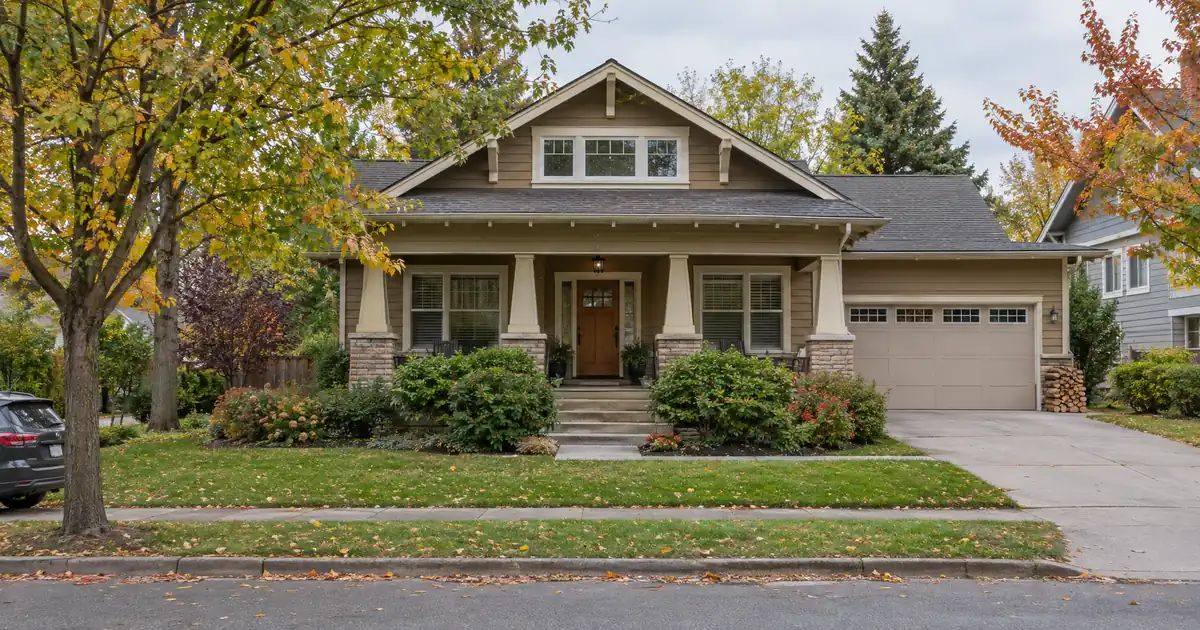
The Quick Read: Lenders add your first mortgage to the full size of the new line, divide by the home’s value, and compare that ratio to a ceiling set by occupancy and credit, which on Lendmire’s wholesale network means 70% on an investment property and up to 90% on a primary or second home only at a 720 or better credit profile. The ceiling is lender policy, not law, so it moves with the property’s use and your score. Lendmire is a broker and arranges these lines through select wholesale partners. Every figure below is subject to lender guidelines and full file review.
- The full limit counts. Combined loan-to-value (CLTV) uses the line’s credit limit, not the balance you draw.
- Second homes step with credit. On a second home, 640 supports 75% CLTV, 660 supports 80%, 680 and 700 support 85%, and 720 supports 90%, on lines up to $500,000.
- Investment lines are flat. The ceiling is 70% CLTV on an investment property, and no credit tier lifts it.
- Big lines are primary-only. A line above $500,000 is for primary residences, caps at 75% CLTV, and needs a full appraisal.
- Availability is narrower than DSCR. These lines are offered in 16 full-service states, versus DSCR financing in 41 markets, including Washington, D.C.
What Combined LTV Actually Counts
Combined LTV counts every loan secured by the property, plus the new line at its full limit. Ordinary LTV looks at one mortgage. CLTV looks at the whole stack. That is why a house with a modest first mortgage can still have less room than you expect.
How large a line the equity supports.
An equity line is sized by combined loan-to-value, occupancy, and credit — not by rental coverage. Switch the occupancy or the credit band and the ceiling moves with it.
Investment-property lines require a 700 minimum credit score; second-home lines start at a 640 minimum and primary-residence lines at 600, and the combined-LTV ceiling steps down as the credit band drops on primary-residence and second-home lines and holds on investment-property lines; the line cap steps down on primary-residence lines and holds at every tier on investment-property and second-home lines.
A debt-to-income ratio above 45% requires 680+ credit. Profiles under 640 are limited to single-family homes. At least 75% of the approved line is drawn at closing. Ceilings, floors, and caps update from Lendmire’s centralized guideline source.
Line estimate
Illustrative estimate only — not a quote, Loan Estimate, approval, or commitment to lend. The rate is an editable assumption; equity-line pricing is variable through both the draw and repayment periods and never converts to fixed. Occupancy and credit drive the ceiling together: an investment property tops out at 70% combined LTV (minimum credit 700, line cap $500,000); a second home tops out at 90% combined LTV (minimum credit 640, line cap $500,000), with the ceiling stepping down as the credit band drops (the cap holds at every tier); a primary residence tops out at 90% combined LTV (minimum credit 600), and its $750,000 maximum line is available only at 75% combined LTV or below with a 700-or-better credit profile (720 on the longer-runway program) and a full appraisal. Lines above $500,000 require a full appraisal. Credit, debt-to-income, property type, and full underwriting review all affect the final line.
The formula is plain: first mortgage balance, plus any other liens, plus the new line’s limit, divided by the home’s value.
Run it as percentages. Say the first mortgage equals 50% of the home’s value and you want a line equal to 20% of value. Your CLTV lands at 70%. If the lender’s ceiling for your occupancy and credit is 70%, you are right at the edge. If it is 80%, you have 10 points of cushion.
Two details trip people up.
The limit counts, not the draw. If the line is $100,000 and you draw $30,000, the test still uses $100,000. Lenders are underwriting what you could borrow. On this network at least 75% of the line is drawn at closing anyway, so the gap between limit and draw is small on day one.
Every lien counts. A first mortgage, an existing second, and the new line all go in the numerator. A line can sit in first or second lien position. On a home with no mortgage, the new line is the only lien, but the ceiling still applies, along with the dollar caps below.
Key Terms Defined
Combined loan-to-value (CLTV): All loans secured by the property, including the new line’s full limit, divided by the property’s value.
Loan-to-value (LTV): One loan’s balance divided by the property’s value.
Lien: A lender’s legal claim on a property that secures a loan.
Draw period: The stretch when you can borrow from the line and pay interest only.
Debt-to-income ratio (DTI): Your monthly debt payments divided by your monthly income.
Automated valuation: A computer estimate of a home’s value, used instead of a full appraisal on smaller lines.
Occupancy: How the property is used: your primary residence, a second home, or an investment property.
How the Maximum Line Gets Calculated
The maximum line equals the home’s value times the CLTV ceiling, minus the liens already on the property. Then other tests can trim it further. The arithmetic is simple. The inputs are where files go sideways.
1. Establish value. Lines at or below $500,000 ordinarily run an automated valuation with no traditional appraisal, though a higher CLTV may call for a second valuation. Every line above $500,000 needs a full appraisal. You can request a full appraisal in any case.
2. Total the liens. Use current balances on the first mortgage and any other secured debt.
3. Apply the ceiling. It depends on occupancy and credit score, covered in the next two sections.
4. Subtract. What is left is the most the percentage test allows.
5. Run the other tests. DTI tops out at 50%, drops to 45% for credit profiles from 600 to 679, and a ratio above 45% needs a 680 minimum. Lenders review your file on the interest-only payment calculated on the maximum draw, so a large line weighs on DTI even if you plan to borrow less. Line size is bounded too: $25,000 to $750,000, with a Michigan floor of $10,000.
Here are modeled examples, expressed as shares of the home’s value. They are assumptions, not market data.
| Goal | Inputs | Result |
|---|---|---|
| Forward: find the line | 80% ceiling, liens at 55% of value | Room of 25% of value |
| Reverse: hit a target | Want a line of 15% of value, 85% ceiling | Liens must be 70% of value or less |
| Low valuation | 80% ceiling, liens at 65% of value, value comes in 10% low | Room drops from 15% to about 7% of original value |
The last row deserves a second look. A 10% miss on value cut the available line by more than half. A home appraised below your expectation does not shave the line. It can gut it.
Working backward is the habit that saves time. Decide the line you need, then check whether the first mortgage leaves that much room under your ceiling. If it does not, you know before applying.
How HELOC Combined LTV Limits Differ by Occupancy
Occupancy sets the ceiling more than anything else. On this network, primary and second-home lines reach 90% CLTV only at a 720 or better credit profile. Investment-property lines cap at 70% CLTV, and nothing lifts them.
Same house. Different ceiling, depending on what you call it.
| Occupancy | Max CLTV | Credit needed | Largest line |
|---|---|---|---|
| Primary residence | Up to 90% (720+ only) | 600 program floor | $750,000 |
| Second home | Up to 90% (720+ only) | 640 minimum | $500,000 |
| Investment property | 70% | 700 minimum | $500,000 |
Why do lenders step down? Risk logic. A borrower sleeping in the house protects it first. A vacation home comes second. A rental is the first payment cut when money gets tight. The ceiling tracks that behavior.
The credit floor for a primary residence is a program minimum. It does not mean a 600 score reaches the top ceiling. Ceilings climb with the score, and the 90% tier belongs to 720 and up.
Investment lines also come in one draw structure: a five-year interest-only draw followed by a 25-year repayment. Primary and second-home lines have two options: a three-year draw with a 17-year repayment, or a five-year draw with a 25-year repayment. Pricing on each floats and never converts to fixed. Lendmire’s piece Second Home HELOC vs Primary Home HELOC When You Own Both goes deeper on that comparison.
How Credit Moves the Ceiling on a Second Home
On a second home, each step up in credit score raises the allowed CLTV, with the lowest tier at the bottom of the ladder and the highest tier at the top. The ladder applies to lines up to $500,000.
| Credit profile | Max CLTV (second home) |
|---|---|
| 720+ | 90% |
| 700+ | 85% |
| 680+ | 85% |
| 660+ | 80% |
| 640+ | 75% |
Notice 680 and 700 share a ceiling. A borrower at 695 gains nothing by chasing 700 for leverage, though other terms can differ. The jump that matters is from 700 to 720, which buys five more points of CLTV.
For a borrower sitting at 705, paying down a card to reach 720 could be worth more than any other move, since it unlocks 90%. But that only helps if equity is thin enough for the extra five points to matter. With plenty of room, skip the credit chase.
Credit review has its own mechanics. The score model is single-bureau, keyed to the primary wage earner, and the report can be no more than 90 days old at closing. There are no rescores. A bankruptcy needs four years of seasoning from discharge or dismissal.
Where the General Rule Breaks
The ladders above hold for most files, but several situations override them. Know these before you plan around a number.
Lines above $500,000. These are primary-residence only, cap at 75% CLTV, and need a full appraisal. The credit requirement is 700 or better (720 on the longer-runway program, the one built around the five-year draw). The 90% tier does not exist at this size.
Texas homesteads. A Texas primary residence is a homestead and caps at 80% combined loan-to-value, so the tiers above that never apply. Texas second homes and investment properties follow the standard tables. Texas primaries also carry a waiting period and a one-lien-at-a-time rule.
Credit-dependent caps by state. New Mexico and Ohio apply a CLTV cap that depends on the credit profile. A property listed for sale, or listed within the past 60 days, is ineligible in Indiana, North Carolina, Pennsylvania, Tennessee, Texas, and Washington.
Second home versus rental. Lenders classify occupancy by their own rules. A property with tenants on year-round leases usually reads as an investment property, even if you stay there a few weeks a year. Calling it a second home does not make it one. The CFPB’s HELOC booklet also warns that renting out a home may be prohibited under the terms of a line. Misclassifying is a bad bet. Get the label right at application.
Title. The line must be held by the individual borrower or a revocable living trust. LLCs, corporations, partnerships, and irrevocable, blind, or land trusts cannot hold title. This is the sharpest structural difference from a DSCR loan. A property already deeded to an LLC needs a vesting change or a DSCR cash-out instead.
Property type. Single-family homes, 2-4 units, PUDs, townhomes, and condominiums, including non-warrantable ones, are eligible. Manufactured homes, co-ops, condotels, log homes, commercial, mixed-use, and agricultural properties are not offered. Two- to four-unit properties need a 640 minimum on the longer-runway program.
Exposure limits. A borrower is limited to three lines. Combined exposure caps at $750,000 on the longer-runway program and $2,000,000 on the higher-leverage program. Owning more than 15 financed properties makes a borrower ineligible.
Over the Cap? Here Are Your Moves
If the math does not clear, you have four real options: wait, shrink the line, pay down the first mortgage, or raise your credit score. Each changes a different variable in the formula.
- Wait. Principal paydown and appreciation both push the liens-to-value ratio down.
- Shrink the line. A smaller request can fit under the ceiling when a larger one cannot.
- Pay down the first mortgage. Every dollar of paydown opens a dollar of room.
- Raise the score. On a second home, moving up a tier raises the ceiling.
A fifth route applies when the equity sits in a rental: switching to a different structure. Equity lines are judged on you: credit, DTI, and CLTV. A DSCR cash-out refinance is judged on the property. It qualifies primarily on property-level rental income covering the payment, subject to lender guidelines, and tops out around 75% LTV on most of the network, with about six months of seasoning as the common expectation. Select programs start at 1.00 coverage, and a separate select-lender path takes coverage below 1.00 with leverage and terms adjusted. LLC ownership may be possible on DSCR files, subject to lender program eligibility. The complete DSCR loans guide walks through that route.
One caution. Clearing 1.00 coverage is not the same as positive cash flow. The ratio compares rent to the full housing payment, and repairs, vacancy, management, and utilities sit outside it.
A cash-out replaces your first mortgage. A line sits beside it. Keeping an existing first mortgage and adding a line can beat refinancing, but only if the combined cost comes out lower, so compare the blended result, not the line alone.
Using a primary-home line to buy rentals also puts your residence behind the investment. The CFPB booklet notes you generally must pay off a HELOC in full if you sell the home. That is a plan-around-it fact.
Four Scenarios in Percentages
Each scenario below uses modeled assumptions, expressed as shares of value.
Strong credit, second home. A 740 score and a first mortgage at 55% of value. The ceiling is 90%, so the percentage test leaves 35% of value. But second-home lines stop at $500,000, so on a pricier home the dollar cap binds first.
Mid credit, second home. A 665 score and a first mortgage at 70% of value. The ceiling is 80% at 660 and up, leaving 10% of value. Improving the score to 680 lifts the ceiling to 85%, which adds five points.
Investment property. A 710 score and a first mortgage at 62% of value. The ceiling is 70% whether the score is 710 or 790, so room is 8% of value. A higher score will not fix a flat ceiling.
Low equity, primary home. A 725 score and a first mortgage at 88% of value. The 90% ceiling leaves 2% of value, almost certainly under the $25,000 minimum line. Not ideal. This borrower waits, pays down, or looks elsewhere.
The mortgage-versus-equity trap here is common. Equity you can see in the home is not equity you can use. A rental with plenty of equity may release little under a 70% ceiling.
What to Do Next
Start with three numbers: the home’s likely value, the total of your existing liens, and your credit profile. Pick the occupancy honestly. Then run the forward and reverse math from the section above before you apply.
If you are considering a home equity line and want to see how the numbers work, Lendmire can help you compare HELOC options based on the property, the equity available, credit profile, combined leverage, and your goals.
For deeper background on the mechanics discussed here, see the CFPB booklet (credit union reprint, 08/22 edition).
Frequently Asked Questions
Does the full credit line count toward CLTV, or only what I borrow?
The full limit counts. Lenders test the most you could borrow, so a $100,000 line counts as $100,000 even if you draw less. On this network, at least 75% of the line is drawn at closing, so the difference stays small at the start.
Can my LLC hold title to the property for one of these lines?
No. Title must sit with the individual borrower or a revocable living trust. LLCs, corporations, partnerships, and irrevocable, blind, and land trusts cannot hold title. If the property is already in an LLC, a vesting change is needed, or a DSCR cash-out may fit better, subject to program terms.
Will a higher credit score raise my ceiling on a rental?
No. On an investment property the network ceiling is 70% CLTV, with no tier above it. Score still matters for eligibility, since investment lines need a 700 minimum, but it does not raise leverage the way it does on a second home.
Why is my available line smaller than my equity suggests?
The lender applies the ceiling to value, subtracts all liens, then trims for DTI, line-size caps, and valuation. Equity is value minus debt. Usable equity is value times the ceiling minus debt. The gap between the two is the ceiling’s cushion.
What happens if the valuation comes in low?
The same liens become a larger share of a smaller value, so the room shrinks sharply in percentage terms. A 10% shortfall can cut the available line by more than half. Lines at or below $500,000 usually run an automated valuation, and you can request a full appraisal in any case.
About Lendmire
Lendmire, NMLS# 2371349, is a mortgage brokerage that arranges home equity lines of credit through wholesale lending partners in its 16 full-service states. Lines on primary residences, second homes and investment properties are each reviewed individually by the lender under the program’s occupancy, credit and combined-loan-to-value guidelines. Scotsman Guide named Lendmire a Top Mortgage Workplace in both 2025 and 2026.
Get Started
Ready to find the right loan for you?
In about two minutes you can review financing options available for your home or investment property. No commitment required.
Informational only. Not a Loan Estimate, approval, or commitment to lend. Program availability and eligibility are subject to lender guidelines, credit approval, property review, and underwriting.
References
1. CFPB – What You Should Know About Home Equity Lines of Credit
2. CFPB booklet (credit union reprint, 08/22 edition)
This article is part of Lendmire’s HELOC & home equity loan program — full qualification details, guidelines, and scenarios live on the program page.
Related reading: HELOC Approval Requirements and Timeline for a Primary Home · HELOC Payoff Requirements When You Sell Your Home · Can You Open a HELOC on Your Primary Home Without Refinancing?
Brandon Miller
Founder & CEO, Mortgage Loan Originator, Lendmire LLC
- Mortgage Loan Originator · NMLS# 1129696 · Verify on NMLS Consumer Access
- North Carolina Real Estate Broker · License# 343312 · Verify on NCREC
- North Carolina Insurance Producer · License# 19053198 · Property, Casualty, Life, Health · Verify on NAIC SBS
- Lendmire LLC · Firm NMLS# 2371349 · Verify firm licensure
Legal disclosures. Lendmire (NMLS# 2371349) is a state-licensed mortgage brokerage that arranges financing through wholesale lender relationships. Lendmire is not a direct lender, depository institution, or registered financial advisor. The discussion above is general informational content about real estate financing — it is not financial, legal, or tax advice, and readers should consult licensed professionals for guidance on their individual circumstances. Loan inquiries are subject to lender underwriting; this article does not represent a commitment to lend. Loan terms, rates, and qualification standards vary by borrower, property, and state, and are subject to change at any time. Equal Housing Opportunity. NMLS Consumer Access: nmlsconsumeraccess.org.