
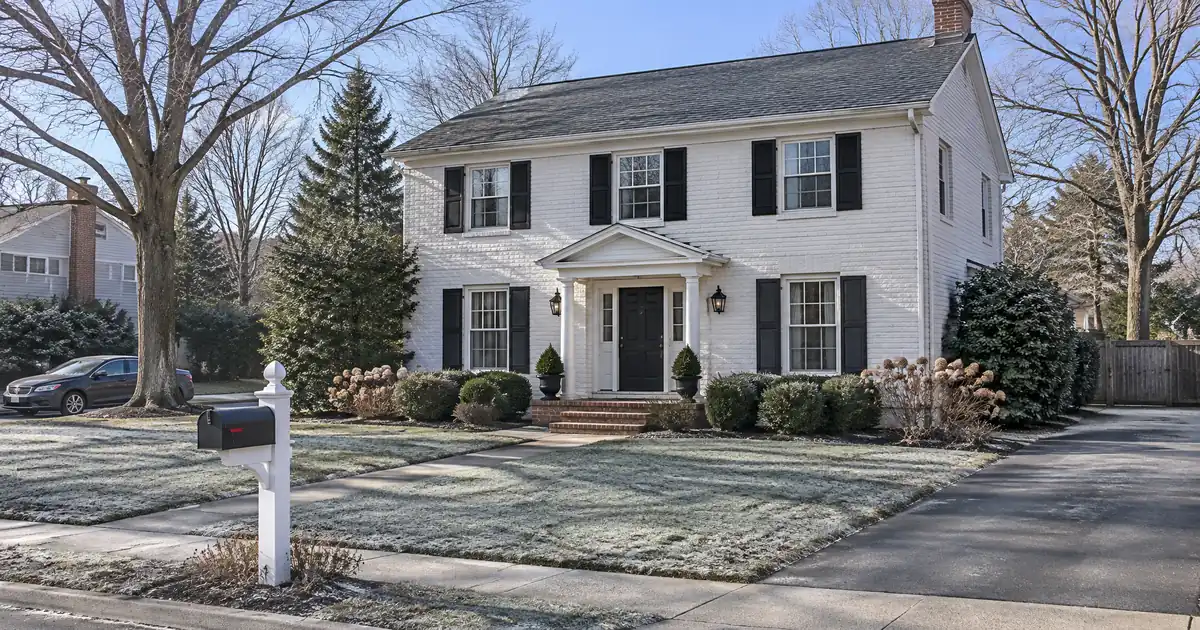
The Quick Read: A home equity line during a divorce clears two separate gates: the court’s restraints on new debt, and the lender’s need for clean title and the right signatures. Neither gate is a flat national ban, but a filed case often blocks a new lien unless the other spouse consents in writing or the court permits it. Lendmire is a mortgage broker that shops a wholesale network of equity-line lenders, so the lender fit depends on the file, not on a single name.
- Timing matters more than the choice of lender, because the filing date often decides whether a new lien is allowed.
- A decree does not remove a spouse from an existing joint line.
- The spouse who keeps the property is underwritten alone, on sole title.
- Investment-property lines in Lendmire’s network top out at 70% CLTV with a 700 minimum credit score.
- A DSCR cash-out refinance on a retained rental is the usual backup when the line is blocked.
What HELOC Lenders Look For Before the Divorce Is Final
Lenders look for a borrower who can qualify alone, hold clean title, and deliver every signature needed to create a valid lien. They are not reading your divorce file for sympathy. They are checking that nobody else has a claim that sits ahead of theirs.
How large a line the equity supports.
An equity line is sized by combined loan-to-value, occupancy, and credit — not by rental coverage. Switch the occupancy or the credit band and the ceiling moves with it.
Investment-property lines require a 700 minimum credit score; second-home lines start at a 640 minimum and primary-residence lines at 600, and the combined-LTV ceiling steps down as the credit band drops on primary-residence and second-home lines and holds on investment-property lines; the line cap steps down on primary-residence lines and holds at every tier on investment-property and second-home lines.
A debt-to-income ratio above 45% requires 680+ credit. Profiles under 640 are limited to single-family homes. At least 75% of the approved line is drawn at closing. Ceilings, floors, and caps update from Lendmire’s centralized guideline source.
Rate assumption as of November 9, 2026.
Line estimate
Illustrative estimate only — not a quote, Loan Estimate, approval, or commitment to lend. The rate is an editable assumption; equity-line pricing is variable through both the draw and repayment periods and never converts to fixed. Occupancy and credit drive the ceiling together: an investment property tops out at 70% combined LTV (minimum credit 700, line cap $500,000); a second home tops out at 90% combined LTV (minimum credit 640, line cap $500,000), with the ceiling stepping down as the credit band drops (the cap holds at every tier); a primary residence tops out at 90% combined LTV (minimum credit 600), and its $750,000 maximum line is available only at 75% combined LTV or below with a 700-or-better credit profile (720 on the longer-runway program) and a full appraisal. Lines above $500,000 require a full appraisal. Credit, debt-to-income, property type, and full underwriting review all affect the final line.
Estimate only, not a loan offer or a commitment to lend. The rate is variable and can go up. The payment shown is interest only. Full calculator disclaimer.
Across the wholesale network, the file comes down to five things:
- Title. The property must be vested in an individual or a revocable living trust. A pending court action, a recorded notice of pending litigation, or an unreleased divorce lien is a title problem.
- Signatures. The note and the lien are separate documents. A spouse on title may be asked to sign the lien even when they are not on the note.
- Credit and debt ratio. Qualification is the applicant’s alone. Non-borrowing spouse income does not count.
- Equity. The line has to fit under the combined loan-to-value cap for the occupancy type.
- Existing joint debt. Open joint lines and mortgages count against the applicant until they are paid off, closed, or refinanced into one name.
That is why a broker’s view helps here. Programs differ on credit tiers, leverage, and valuation. Which program fits depends on the property, the credit profile, and the documents you can deliver.
Gate One: The Court
Court restraints usually arrive when the case is filed, not when the decree is signed. Under them, spouses may be barred from taking on new debt or placing a lien on their property. Those orders generally last until the divorce is final or a court modifies them, and either party can ask the court to change them.
States differ on how the orders start. Nolo notes that in some states the orders arise automatically, while in others a party must request them. FindLaw adds that couples are generally expected to keep assets intact until the court decides what is marital property, and that temporary orders can cover debt and asset management.
California is the clearest example of the automatic model. A law-firm summary on Bremer Whyte’s family law blog says the filer is bound on filing and the other spouse on service. Other states issue orders only on request, and some vary by county. Do not assume your state works like California’s.
The practical rule: once a case is filed in a state with automatic orders, a new lien on marital or community property generally needs the other spouse’s written consent or a court order. Your attorney, not your lender, decides whether that applies to you.
Gate Two: Title, Signatures, and the Lender
The second gate is mechanical. A lender will not close a line on a property with a cloud on title or a missing signature. Anyone named on the deed may have to sign the lien. Community-property states and homestead rules can pull a spouse into the file even when that spouse is not on the deed. If a co-owner will not sign, a line on the whole property generally cannot close.
Lenders also want to see documentation for any court permission. Typical file items include:
- The decree or the marital settlement agreement.
- A recorded deed showing sole title, once title has been transferred.
- Any signed consent or court order allowing the new lien.
- Income documentation for the applicant alone, such as pay records or deposit-based documentation for a self-employed borrower.
- Payoff or closure letters for any joint line.
Divorce actions that involve real property can also lead to a recorded notice of pending litigation, which effectively ties up the property in county records until the case resolves. A lender sees that notice in the title search. It has to be released before a new line can go in.
A divorce lien that secures the out-spouse’s equity share is a priority problem. A new line in first or second position has to sit behind or ahead of it in a way the lender accepts. Treat this as a title question for the settlement agreement, and ask your attorney to address it in the language.
The Stage Table: What Is Possible When
| Stage | What is possible | Main risk |
|---|---|---|
| Before filing | No automatic orders yet; a new lien is not barred | A large draw may be examined as an asset move |
| Case pending | Needs consent or court order in many states | Lien cannot close without signatures |
| Settlement signed | Possible if the agreement allows it | Title still in both names |
| After decree | Retaining spouse applies alone on sole title | Joint debt may remain open |
The cleanest sequence is the decree, then the title transfer, then the application. Skipping ahead can work only where consent or an order exists.
An Existing Joint Line Is Not Fixed by the Decree
A decree changes the rights between spouses. It does not change the lender’s contract. The CFPB says divorce does not automatically change your relationship with creditors. A decree may assign a debt to one spouse, but a creditor can still collect from anyone named as a borrower. Removing your name from the title does not remove it from the loan, and sending the lender a copy of the decree does not end your responsibility on a joint account.
A lender can freeze a line, but only on limited grounds. The rule for home equity plans, Regulation Z § 1026.40, lets a creditor suspend advances or reduce a limit only for listed reasons. A divorce filing alone is not a listed reason, though the financial fallout can trigger one. Confirm the current list in the rule text.
A freeze stops new draws. It does not remove the balance or the other spouse’s liability. The options for a joint line are:
| Option | What it does | Catch |
|---|---|---|
| Pay it off | Ends the debt | Needs cash or sale proceeds |
| Close it | Stops new draws | Balance and liability remain |
| Refinance into one name | Moves debt to the keeper | Retaining spouse must qualify alone |
| Leave it open | Keeps access | Both spouses stay exposed |
Leaving a joint line open is the riskiest choice, because either borrower can draw on it and both are liable. If an ex misses payments, both credit files take the hit.
Where the Network’s Equity-Line Programs Draw the Line
Lendmire brokers equity lines through select wholesale partners and is never the lender. The program figures below are guidance ranges, subject to lender guidelines and full file review. They apply only in Lendmire’s 16 full-service states: AL, CA, CO, FL, GA, IN, MI, MT, NM, NC, OH, PA, TN, TX, VA, and WA.
Occupancy sets the ceiling, so state it before you quote it:
| Occupancy | Max CLTV | Minimum credit | Max line |
|---|---|---|---|
| Investment property | 70% | 700 | $500,000 |
| Second home | 90% (only at 720+) | 640 | $500,000 |
| Primary residence | 90% (only at 720+) | 600 | $500,000 at 90% CLTV; $750,000 at 75% CLTV, 700+ (720 on the longer-runway program) |
On an investment property, the ceiling is 70% CLTV at 700 or above, with no tier higher. The 90% figures exist only at a 720 or better credit profile. Lower credit tiers on a primary residence step down, to 85% at 660 to 700, to 80% at 640, to 70% at 620, and to 60% at 600. On a second home the tiers step down to 80% at 660 and 75% at 640.
Other mechanics that matter in a divorce file:
- Structure. The line is a standalone first or second lien. Primary residences and second homes can run either a 3-year interest-only draw with a 17-year repayment, or a 5-year draw with a 25-year repayment. Investment lines run the 5-year draw and 25-year repayment structure only. At least 75% of the line is drawn at closing, and the pricing floats rather than converting to fixed.
- Size. Lines run from $25,000 to $750,000. Anything above $500,000 is primary-residence only, requires a 700 credit profile or better (720 on the 5-year draw structure), caps at 75% CLTV, and needs a full appraisal.
- Debt ratio. The maximum is 50%, and 45% for credit profiles from 600 to 679. A ratio above 45% needs a 680 minimum. Qualification runs on the interest-only payment calculated on the maximum draw.
- Credit. A single-bureau score keyed to the primary wage earner, with a report no more than 90 days old at closing.
- Valuation. Lines at or below $500,000 ordinarily use automated valuation, though a higher CLTV may need a secondary valuation. A borrower can request a full appraisal in any case.
- Title. The borrower must be an individual or a revocable living trust. LLCs, corporations, and partnerships cannot hold title.
- Exposure. A borrower is limited to three lines, and a borrower with more than 15 financed properties is not eligible.
- Property types. Single-family, 2-4 units, PUDs, townhomes, and condominiums are eligible. Manufactured homes, co-ops, condotels, log homes, and mixed-use or agricultural zoning are not.
The LLC point matters for investors. A rental deeded to an LLC cannot take an equity line without a vesting change. A DSCR cash-out is the alternative, subject to program terms.
Who Fits and Who Does Not
The retaining spouse with sole title, a credit score above the occupancy floor, and a debt ratio under 50% fits the program. The fit weakens in these cases:
- The other spouse is still on title and will not sign.
- A court order or a recorded notice is still in place.
- The property is an investment rental below a 700 credit profile.
- The property sits in an LLC.
- The investor already holds three lines.
- The equity left under the CLTV cap does not cover the need.
That last point drives the buyout question. A line only reaches the room under the lender’s combined cap. If a spouse’s equity share is larger than that room, the line cannot fund the buyout alone. Buyouts are usually structured as refinances, and the buyout needs its own language in the settlement agreement.
The Backup: A DSCR Cash-Out on the Retained Rental
When an equity line is blocked, the usual fallback for an investor is a DSCR cash-out refinance on the rental they keep. DSCR loans are business-purpose loans for non-owner-occupied investment property, and they qualify primarily on property-level rental income covering the payment, subject to lender guidelines. Lendmire’s complete DSCR loans guide covers the full mechanics.
Across the network, a standard-rental cash-out generally tops out around 75% LTV, with about 6 months of seasoning as the common expectation. Coverage of 1.00 is where select programs start, and stronger ratios open better pricing and leverage. A separate select-lender path takes coverage below 1.00, with leverage and terms adjusted. Most programs want a credit score around 660, a 620 floor exists in parts of the network, and 700 or better unlocks the strongest tiers. LLC-titled rentals can be eligible, depending on program guidelines.
Remember what the DSCR number measures. It compares rent to the full monthly obligation of principal, interest, taxes, insurance, and any HOA dues. Clearing 1.00 is not the same as positive cash flow, because repairs, vacancy, management, utilities, and capital expenses sit outside the calculation.
Still, a DSCR file does not fix a divorce problem. It needs sole title and clean title like any other loan. Lendmire’s piece How to Qualify for an Investment Property HELOC Before the Divorce Is Final walks through the equity-line side in more detail.
Equity Line vs. the Alternatives
| Tool | Best fit | Main limit |
|---|---|---|
| Investment equity line | Modest cash need on a rental | 70% CLTV, 700 score, $500,000 max |
| DSCR cash-out | Larger cash need on a rental | Needs coverage and seasoning |
| Buyout refinance | Taking over the whole property | Retaining spouse qualifies alone |
| Selling the property | Splitting equity cleanly | Ends the investment |
A Worked Scenario
Consider an investor who owns a rental in her own name and a second property jointly with her spouse. She wants equity from the rental to fund a down payment. If she applies before filing, no automatic order exists. A large draw right before filing, though, can be examined in the property division as an asset move, and the line still shows up when the court divides property.
If she applies after filing, in a state with automatic orders, she would likely need written consent or a court order. After the decree and a recorded deed putting the rental in her sole name, she applies alone. At a 700 credit profile, the investment line caps at 70% CLTV. If that does not leave enough room, she compares a DSCR cash-out on the same rental, where the ratio of rent to the monthly obligation drives the file.
Questions to Ask Your Attorney and Your Lender
Ask the attorney:
- Do automatic orders apply in my state, and have they started?
- Do I need written consent or a court order to place a new lien?
- Does the settlement agreement address title transfer and joint lines?
- Is a divorce lien or a recorded notice of pending litigation on this property?
Ask the broker or lender:
- Which occupancy ceiling applies to this property?
- What does title need to look like before the application?
- Which valuation method applies, and when is a full appraisal required?
- If the line is blocked, what does a DSCR cash-out look like on the same property?
If you want to see how a retained rental fits either route, Lendmire’s list of top HELOC providers before the divorce is final shows how the options sort.
Key Terms Defined
HELOC: A revolving line of credit secured by a lien on the property, drawn up to a set limit.
Automatic temporary restraining order: A court order, effective in many states at filing, that limits new debt and transfers of marital property until the case ends.
Decree: The final court order that ends the marriage and divides property and debt.
Lien: A legal claim on a property that secures a loan and must be recorded before the lender closes.
Joint obligor: A person named as a borrower on a loan, who stays liable regardless of what a decree says.
CLTV: Combined loan-to-value, the total of all liens on the property divided by its value.
Frequently Asked Questions
Can I get a HELOC before the divorce is final?
Sometimes, depending on filing status, consent or court order, and title. Before filing, no automatic order exists. After filing, many states require the other spouse’s written consent or a court order for a new lien. No national ban applies.
Does filing for divorce let my lender freeze my existing line?
Filing alone is not a listed ground for a freeze under the federal rule on home equity plans. A drop in property value or a material change in finances can still be one. A freeze stops new draws but leaves the balance and both spouses’ liability in place.
Does the decree take my ex off the joint line?
No. The decree sets the rights between spouses, not between you and the lender. The line must be paid off, closed, or refinanced into one name to end the other spouse’s liability.
Can an equity line fund a spousal buyout?
Only up to the room under the combined loan-to-value cap. If the spouse’s share of equity is larger, the buyout is usually structured as a refinance, with its own language in the settlement agreement.
What if my rental is held in an LLC?
The network’s equity-line programs require title in an individual or a revocable living trust, so an LLC-held rental needs a vesting change first. A DSCR cash-out can work on LLC-titled property, depending on program guidelines.
If you are considering a home equity line and want to see how the numbers work, Lendmire can help you compare HELOC options based on the property, the equity available, credit profile, combined leverage, and your goals. Call 828-256-2183 to talk through a file. Qualification is subject to lender guidelines and credit approval. This is not a commitment to lend.
About Lendmire
Lendmire, LLC (NMLS# 2371349) is a mortgage broker. Home equity lines of credit — on a primary residence, a second home or an investment property — are arranged through wholesale lenders in Lendmire’s 16 full-service states, and every line is underwritten by the lender under its program guidelines. Scotsman Guide named Lendmire a Top Mortgage Workplace in both 2025 and 2026.
Get Started
Ready to find the right loan for you?
See your offer in seconds. No credit pull, no obligation.
Informational only. Not a Loan Estimate, approval, or commitment to lend. Program availability and eligibility are subject to lender guidelines, credit approval, property review, and underwriting.
References
1. Nolo, What is a temporary restraining order
2. FindLaw, Temporary orders in family court
3. Bremer Whyte, Automatic temporary restraining orders
4. CFPB, Can a debt collector contact me about a debt after a divorce
5. eCFR, Regulation Z § 1026.40
This article is part of Lendmire’s HELOC & home equity loan program — full qualification details, guidelines, and scenarios live on the program page.
Related reading: Top HELOC Providers Before the Divorce Is Final · Banks That Offer a HELOC Before the Divorce Is Final · HELOC vs Home Equity Loan Before the Divorce Is Final · HELOC Signature Rules Before the Divorce Is Final · Best HELOC Program During and After a Divorce
Brandon Miller
Founder & CEO, Mortgage Loan Originator, Lendmire, LLC
- Mortgage Loan Originator · NMLS# 1129696 · Verify on NMLS Consumer Access
- North Carolina Real Estate Broker · License# 343312 · Verify on NCREC
- North Carolina Insurance Producer · License# 19053198 · Property, Casualty, Life, Health · Verify on NAIC SBS
- Lendmire, LLC · Firm NMLS# 2371349 · Verify firm licensure
Compliance and disclosures. Lendmire, LLC (NMLS# 2371349) is a licensed mortgage broker and is not a direct lender, depository institution, financial advisor, or tax professional. Content in this article is general market analysis and educational information — not financial, legal, or tax advice for any specific situation. Lendmire does not guarantee loan approval; every transaction is subject to underwriting by the funding lender. Mortgage pricing and loan program guidelines are subject to change at any time without notice and vary by borrower characteristics, property type, and state regulations. Lendmire complies with Equal Housing Opportunity. Licensure verification: NMLS Consumer Access.