
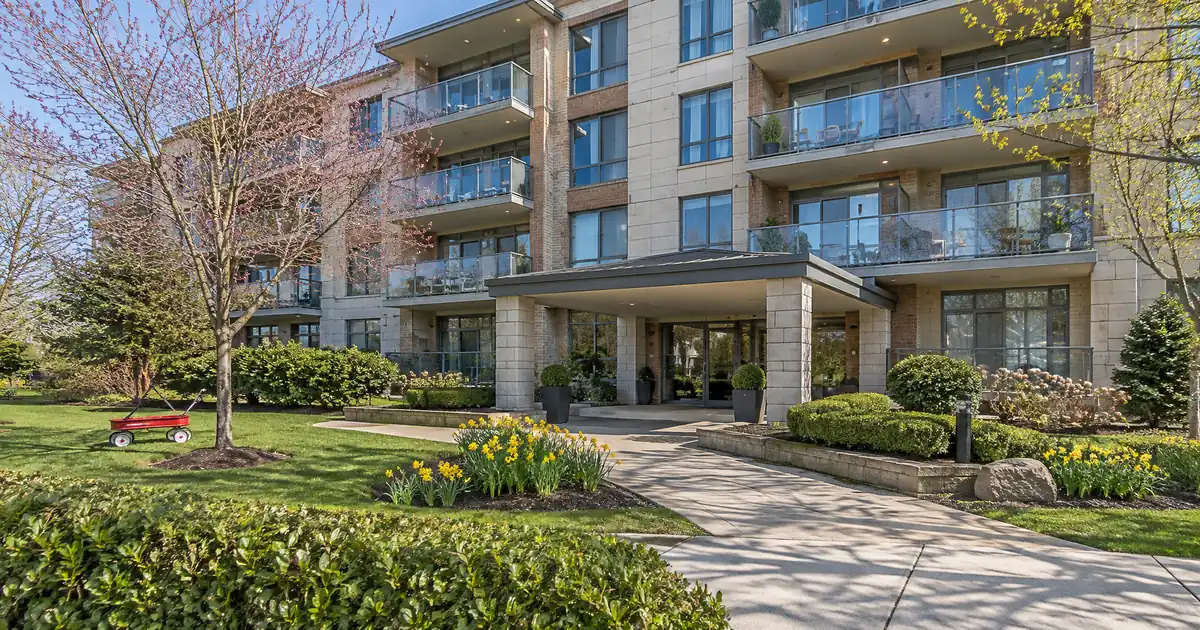
The Quick Read: Lenders will write a HELOC on a condo with an HOA, but the loan gets reviewed twice: once on your credit, income, debt, and equity, and again on the building’s finances, insurance, litigation, and owner mix, so which lender fits depends on both your profile and how the association looks to an underwriter. Lendmire is a mortgage broker that places these lines with select wholesale lenders, so it matches the file to the program rather than offering one product.
- A condo can be borrowed against, but a weak building can block a strong borrower.
- On an investment-property line, the network ceiling is 70% combined loan-to-value (CLTV), with a 700 minimum credit profile.
- Non-warrantable condos are eligible in this network. Condotels and co-ops are not.
- A condo already titled in an LLC generally needs a vesting change or a different product.
- A HELOC is reviewed against your own profile. A DSCR loan is reviewed for the property on its rent.
Key Terms Defined
HELOC: A home equity line of credit, a revolving line secured by the equity in a property you own.
CLTV: Combined loan-to-value, meaning all liens on the property added together and divided by its appraised value.
Warrantable condo: A building that passes standard project review. A non-warrantable condo fails it, often because of litigation, heavy investor ownership, or commercial space. The label describes financing, not the quality of your unit.
HOA questionnaire: A form the lender sends to the association. Someone at the association or its management company fills it out with the building’s financial and ownership facts.
Super-lien: A state-law rule that gives a limited slice of unpaid HOA assessments priority over the first mortgage.
Subordination: A written agreement that one lien stays behind another in payment priority.
Vesting: The name or entity that holds title to the property.
DSCR: Debt service coverage ratio. It compares a property’s rent to its full monthly obligation, including taxes, insurance, and HOA dues.
How large a line the equity supports.
An equity line is sized by combined loan-to-value, occupancy, and credit — not by rental coverage. Switch the occupancy or the credit band and the ceiling moves with it.
Investment-property lines require a 700 minimum credit score; second-home lines start at a 640 minimum and primary-residence lines at 600, and the combined-LTV ceiling steps down as the credit band drops on primary-residence and second-home lines and holds on investment-property lines; the line cap steps down on primary-residence lines and holds at every tier on investment-property and second-home lines.
A debt-to-income ratio above 45% requires 680+ credit. Profiles under 640 are limited to single-family homes. At least 75% of the approved line is drawn at closing. Ceilings, floors, and caps update from Lendmire’s centralized guideline source.
Line estimate
Illustrative estimate only — not a quote, Loan Estimate, approval, or commitment to lend. The rate is an editable assumption; equity-line pricing is variable through both the draw and repayment periods and never converts to fixed. Occupancy and credit drive the ceiling together: an investment property tops out at 70% combined LTV (minimum credit 700, line cap $500,000); a second home tops out at 90% combined LTV (minimum credit 640, line cap $500,000), with the ceiling stepping down as the credit band drops (the cap holds at every tier); a primary residence tops out at 90% combined LTV (minimum credit 600), and its $750,000 maximum line is available only at 75% combined LTV or below with a 700-or-better credit profile (720 on the longer-runway program) and a full appraisal. Lines above $500,000 require a full appraisal. Credit, debt-to-income, property type, and full underwriting review all affect the final line.
How Does a Lender Underwrite a Condo HELOC?
A condo HELOC runs on two tracks. One checks you. The other checks the building. Failing either track stops the file, which is why a condo can feel harder to borrow against than a detached house with the same equity.
| Review | What the lender looks at |
|---|---|
| Borrower file | Credit, debt-to-income, equity, title and vesting |
| Building file | HOA finances, reserves, insurance, litigation, owner mix, dues delinquencies |
Across the wholesale network, the borrower side is fairly standard. The program credit floor is 600. The debt-to-income ceiling is 50%, and it drops to 45% for credit profiles from 600 to 679. A ratio above 45% needs a score of at least 680. The line is qualified on the interest-only payment at the maximum draw, so a large line you do not plan to draw still gets tested as if you might.
Valuation is usually light. Lines at or below $500,000 ordinarily run an automated valuation with no traditional appraisal. A higher CLTV may trigger a second valuation, and you can request a full appraisal anyway. Every line above $500,000 requires one.
The building side is where condos diverge. The association must carry adequate master insurance, including hazard and liability coverage. Underwriters also study the budget, reserves, and recent financial history. Aging buildings and high-risk areas get extra attention on insurance. If a building fails, you may need a lender with more flexible condo guidelines or a different financing route.
What Does the HOA Actually Have to Supply?
The HOA does not approve your loan. The lender reviews the HOA. The association does control rentals and assessments, so its documents matter to both sides.
A typical packet includes:
- The completed HOA questionnaire
- The current budget and reserve information
- The master insurance certificate
- The rental-policy rules, including any rental cap or minimum lease length
- Notices of any special assessment, pending or announced
The management company usually holds these items, and you do not control when they arrive. Ask for the budget, reserve study, and litigation status before you pay for an application. A building problem found early costs you nothing. One found at the end can cost an application fee and a stalled plan.
Which Types of HELOC Lenders Handle Condos?
Lender type matters more than any single name. Big banks and large retail lenders tend to prefer warrantable buildings and owner-occupied homes. Many will not touch a non-warrantable condo or a rental. Credit unions vary by charter and appetite. A broker shops several wholesale lenders at once and matches the building, occupancy, and credit profile to a program that accepts that mix.
| Lender type | Condo flexibility | Trade-off |
|---|---|---|
| Large retail lenders | Often require warrantable buildings | One program, one set of overlays |
| Local depositories | Varies by institution | Smaller footprint, case-by-case |
| Broker with wholesale network | Includes non-warrantable condos | Terms depend on the program matched |
The best program for your situation turns on property type, occupancy, credit, leverage, and how the building reads. Treat any claim that one lender is best for everyone with suspicion.
What Does the Network Allow by Occupancy?
The ceilings depend on how you use the condo. Do not apply a primary-residence number to a rental. These are typical ranges from select wholesale lenders, subject to lender guidelines and full file review.
| Occupancy | Max CLTV | Minimum credit | Max line |
|---|---|---|---|
| Primary residence | 90% only at 720+ (up to $500,000) | 600 | $500,000 at 90% CLTV; $750,000 at 75% CLTV, 700+ (720 on the longer-runway program) |
| Second home | 90% only at 720+ | 640 | $500,000 |
| Investment property | 70% at 700+ | 700 | $500,000 |
On a primary residence, lower credit tiers step the ceiling down. A 700 profile reaches 85% up to $500,000, and a 640 profile reaches 80%. A line above $500,000 is primary-residence only. It caps at 75% CLTV, needs a higher credit profile, and requires a full appraisal.
The draw structure also changes by occupancy. Primary residences and second homes can choose a 3-year interest-only draw with a 17-year repayment period, or a 5-year draw with a 25-year repayment period. Investment lines run the 5-year draw and 25-year repayment structure only. At least 75% of the line is drawn at closing, and the structure stays variable and never converts to fixed.
Here is a modeled example, not a quote. Say you own an investment condo and your first mortgage sits at 55% of appraised value. Under a 70% investment CLTV cap, the line can use at most 15% of value, and the $500,000 line ceiling applies on top. A first mortgage at 60% of value leaves only 10%. Your existing balance sets the room, and the cap sets the limit.
- A condominium is an eligible property type, including non-warrantable buildings.
- Condotels, co-ops, manufactured homes, log homes, and commercial or mixed-use properties are not eligible.
- A property listed for sale, or recently listed, is ineligible in several states.
- A borrower is limited to three lines, and an owner of more than 15 financed properties is not eligible.
- HELOC availability through Lendmire covers 16 full-service states, narrower than its 41-market DSCR footprint, which includes Washington, D.C.
What Gets a Condo File Stuck?
Five building issues can stall a condo file.
Litigation. A building in a lawsuit can fail project review. Ask the HOA what the case is about and whether the association is the defendant.
Investor concentration. A building with many rented units can fail standard review. Ask for the owner-occupancy mix.
Thin reserves or weak insurance. Underwriters read these as a sign the association cannot absorb a big repair. Ask for the reserve study and the insurance certificate.
Special assessments. A pending or announced assessment complicates a condo loan. Ask for an HOA estoppel or demand statement showing dues status and any balance owed.
Delinquent dues. Unpaid assessments can become an HOA lien, and that is where super-liens enter.
Why Do HOA Liens Matter to a HELOC Lender?
In some states, unpaid assessments can outrank the first mortgage. A HELOC sits behind that first mortgage, usually as a second lien, so an HOA claim ahead of both pushes the HELOC lender further back.
Fixnotes describes this super-lien slice as commonly six months of unpaid assessments, or nine months in a couple of states. ManageCasa reports a nine-month slice in Nevada and six months in Colorado. A Seattle University Law Review analysis covers the concept in depth, including the six-month model approach. Those sources are secondary, so treat them as explanations of the idea rather than current statute text. Not every state has a super-lien rule, and priority can depend on when the association’s covenants were recorded.
The practical point is simple. A building with delinquent owners adds risk ahead of the lender, which makes underwriters tougher on delinquency rates. Underwriters do not apply this one way everywhere, so describe the mechanism to yourself rather than expecting any lender to follow a uniform policy.
How Does Lien Position Work?
A HELOC on this network can sit in first or second lien position. If the property carries a mortgage, the HELOC will usually sit in second. Two consequences follow.
First, your first mortgage documents must allow subordinate financing. Confirm that with the servicer, and ask an attorney if the property is a business-purpose rental.
Second, refinancing the first mortgage later means the HELOC must be paid off or subordinated. If the HELOC lender refuses to subordinate, the refinance stalls. Plan for this before you open the line, not after.
If the condo is free and clear, the HELOC becomes the first lien.
Where HOA Rules Collide With Rental Plans
A lender can approve the loan while the HOA still blocks your plan. Check the condo documents for rental caps and minimum lease lengths before you borrow against a unit you intend to rent. A building that limits the number of rented units, or bars leases under a set length, can wreck the income you were counting on.
Short-term rental rules can vary by city, county, HOA, and property type, so investors should confirm local rules before relying on projected rental income.
A fee-simple townhome with an HOA usually skips condo-style project review but still gets an association check. A townhome with shared roofs or heavy association control can start to look like a condo to an underwriter.
When a HELOC Is the Wrong Tool: Title and DSCR
A HELOC on this network must be held by you personally or by a revocable living trust. LLCs, corporations, partnerships, and irrevocable, blind, or land trusts cannot hold title. A condo already deeded to an LLC needs a vesting change, or you move to a DSCR cash-out refinance instead.
DSCR loans are designed for non-owner-occupied investment properties. Because they are business-purpose investor loans, they are reviewed differently from a standard owner-occupied mortgage. The loan is reviewed primarily on property-level rental income covering the payment, subject to lender guidelines. For the full picture, read the complete DSCR loans guide.
Here is how the DSCR side compares on a condo:
- Across most of the network, cash-out refinance tops out around 75% LTV, and about 6 months of seasoning is the common expectation.
- Coverage of 1.00 is where many select programs start. A separate select-lender path takes coverage below 1.00 with leverage and terms adjusted.
- Credit floors start at 620 in parts of the network, most programs want around 660, and 700 or higher opens the strongest tiers.
- HOA dues count in the monthly obligation, so a high-dues condo loses coverage faster than a single-family rental at the same rent.
- Clearing 1.00 is not the same as positive cash flow. Repairs, vacancy, management, utilities, and capital expenses sit outside the ratio.
For a side-by-side look at the two products, Lendmire’s piece Top Investment Property HELOC Providers on a Condo With an HOA covers the investment-line angle in more depth.
Which Path Fits Which Investor?
Run the decision in this order:
1. Who holds title? Personal name or a revocable trust keeps a HELOC possible. An LLC points toward DSCR.
2. How is the condo used? An investment line caps at 70% CLTV with a 700 minimum. A primary residence or second home has more room.
3. How healthy is the building? Pull the budget, reserves, insurance, and litigation status first.
4. What do you need the money for? A HELOC cannot fund the purchase of the condo itself on this network. A DSCR purchase loan does that.
5. Do you hold the property for rent income? If the rent clears the payment, DSCR may fit better than a line sized to your personal profile.
Credit and leverage are the other levers. A larger down payment lowers the payment and can lift the DSCR, but it never erases leverage caps, credit floors, reserve rules, or property eligibility. The strongest files have enough equity and enough rental coverage.
If the Building Gets You Declined
A decline from a building problem does not mean every lender will say no. Find out which item failed: litigation, investor mix, reserves, insurance, or a delinquent association. Then take one of these steps:
- Ask whether a lender with different condo guidelines reviews that issue differently, which is what a broker’s network is for.
- Wait for the association to resolve the cause, such as a settled lawsuit or a rebuilt reserve.
- Consider a DSCR cash-out refinance, which treats the property’s income differently.
Keep the failed item in writing so the next lender sees the same facts.
Frequently Asked Questions
Does the HOA have to approve my HELOC?
No. The lender reviews the HOA, and the HOA does not approve the loan. The association does control rental rules, special assessments, and the documents the lender needs.
Is an appraisal required on a condo line?
Not always. Lines at or below $500,000 ordinarily run an automated valuation, though a higher CLTV may require a secondary valuation. Every line above $500,000 requires a full appraisal, and you can request one at any size.
Can a non-warrantable condo get a HELOC?
Yes, through select lenders in the network. Non-warrantable means the building fails standard project review, and many mainstream lenders will not lend on it. Terms depend on the program and the reason the building fails.
Do HOA dues affect approval?
On a HELOC, dues feed into your debt-to-income ratio. On a DSCR loan, they sit in the monthly obligation that rent must cover. Either way, high dues can hurt the file.
Can I get a HELOC on a condo held in an LLC?
Not on this network. The line must be held by you or a revocable living trust. An LLC-held condo needs a vesting change, or a DSCR cash-out refinance subject to lender program eligibility.
Next Step
If you are considering a home equity line and want to see how the numbers work, Lendmire can help you compare HELOC options based on the property, the equity available, credit profile, combined leverage, and your goals. For a broader look at primary-residence and second-home condo lines, Lendmire’s piece Top HELOC Providers on a Condo With an HOA is a good companion. Programs change, and every file is underwritten individually by the lender, so none of the figures here are a commitment to lend.
A condo’s equity is only as borrowable as the building around it, so read the HOA’s paperwork before you read any lender’s.
About Lendmire
Lendmire, NMLS# 2371349, is a mortgage brokerage that arranges home equity lines of credit through wholesale lending partners in its 16 full-service states. Lines on primary residences, second homes and investment properties are each reviewed individually by the lender under the program’s occupancy, credit and combined-loan-to-value guidelines. Scotsman Guide named Lendmire a Top Mortgage Workplace in both 2025 and 2026.
Get Started
Ready to find the right loan for you?
See your offer in seconds. No credit pull, no obligation.
Informational only. Not a Loan Estimate, approval, or commitment to lend. Program availability and eligibility are subject to lender guidelines, credit approval, property review, and underwriting.
References
2. ManageCasa – HOA Liens and Foreclosure
3. Seattle University Law Review – Super-priority lien jurisdictions
This article is part of Lendmire’s HELOC & home equity loan program — full qualification details, guidelines, and scenarios live on the program page.
Related reading: Best HELOC Program on a Condo With an HOA · Top HELOC Providers on a Condo With an HOA · What Is a HELOC on a Condo With HOA Considerations? · Best HELOC Program for a Home With a Solar Lien or HOA Suit · Banks That Offer a HELOC for a Home With a Solar Lien or HOA Suit
Brandon Miller
Founder & CEO, Mortgage Loan Originator, Lendmire LLC
- Mortgage Loan Originator · NMLS# 1129696 · Verify on NMLS Consumer Access
- North Carolina Real Estate Broker · License# 343312 · Verify on NCREC
- North Carolina Insurance Producer · License# 19053198 · Property, Casualty, Life, Health · Verify on NAIC SBS
- Lendmire LLC · Firm NMLS# 2371349 · Verify firm licensure
Important disclosures. Lendmire (NMLS# 2371349) is a licensed mortgage brokerage. Lendmire is not a direct lender, depository institution, or financial advisor. All loan inquiries are subject to lender underwriting; this article does not constitute a commitment to lend. Rates, terms, and program guidelines are subject to change without notice and vary by borrower profile, property type, and state. Information in this article is general in nature and is not financial, legal, or tax advice. Equal Housing Opportunity. NMLS Consumer Access: nmlsconsumeraccess.org.