
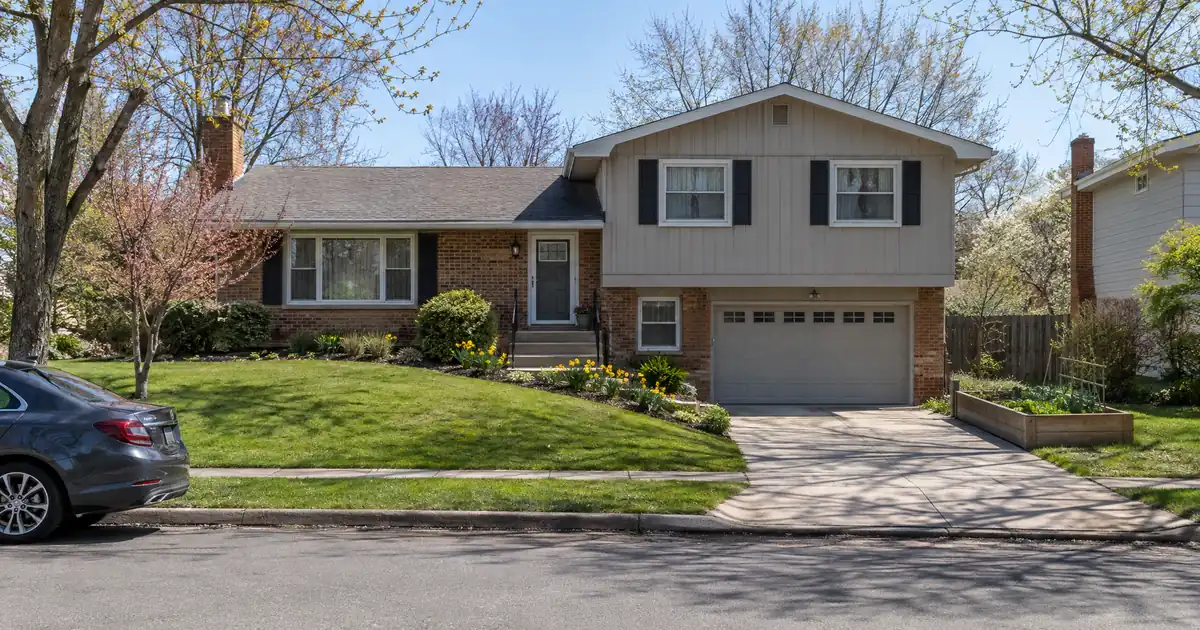
The Quick Read: Usually, yes. A revocable living trust is an accepted way to hold title on a home equity line, because the borrower keeps control of the trust and the lender looks through it to the person who signs. The file still depends on three things: the deed is actually recorded in the trust, the trust language gives the trustee power to borrow, and the borrower qualifies personally.
- Revocable living trusts are accepted vesting on the network’s equity lines. Irrevocable, blind, and land trusts are not.
- The line is underwritten on the borrower’s credit, income, and debts, not on the trust.
- A signed trust document does nothing until a deed puts the home in the trust’s name.
- Many lenders close with the home still in the trust. Some ask for it to come out first.
- On an investment property, the trust is rarely the obstacle. The rental itself is.
Investors who hold rentals in a trust usually want to know whether the trust stops a line of credit. It generally doesn’t. The bigger questions are occupancy, leverage, and whether a line is the right tool at all. The sections below cover the mechanics, the exceptions, and the investor decision. For the full picture on financing rentals, see the complete DSCR loans guide.
How large a line the equity supports.
An equity line is sized by combined loan-to-value, occupancy, and credit — not by rental coverage. Switch the occupancy or the credit band and the ceiling moves with it.
Investment-property lines require a 700 minimum credit score; second-home lines start at a 640 minimum and primary-residence lines at 600, and the combined-LTV ceiling steps down as the credit band drops on primary-residence and second-home lines and holds on investment-property lines; the line cap steps down on primary-residence lines and holds at every tier on investment-property and second-home lines.
A debt-to-income ratio above 45% requires 680+ credit. Profiles under 640 are limited to single-family homes. At least 75% of the approved line is drawn at closing. Ceilings, floors, and caps update from Lendmire’s centralized guideline source.
Line estimate
Illustrative estimate only — not a quote, Loan Estimate, approval, or commitment to lend. The rate is an editable assumption; equity-line pricing is variable through both the draw and repayment periods and never converts to fixed. Occupancy and credit drive the ceiling together: an investment property tops out at 70% combined LTV (minimum credit 700, line cap $500,000); a second home tops out at 90% combined LTV (minimum credit 640, line cap $500,000), with the ceiling stepping down as the credit band drops (the cap holds at every tier); a primary residence tops out at 90% combined LTV (minimum credit 600), and its $750,000 maximum line is available only at 75% combined LTV or below with a 700-or-better credit profile (720 on the longer-runway program) and a full appraisal. Lines above $500,000 require a full appraisal. Credit, debt-to-income, property type, and full underwriting review all affect the final line.
Key Terms Defined
Revocable living trust: A trust the creator can change or cancel at any time, which is why lenders treat the creator as the effective owner.
Inter vivos trust: A trust created during the owner’s lifetime, as opposed to one created by a will.
Vesting: The name in which title to the property is held, as shown on the recorded deed.
Funded trust: A trust whose assets have been retitled into it. An unfunded trust is a document with nothing in it.
Certification of trust: A short summary of the trust’s key facts, including the trustee’s authority, that many lenders accept in place of the full document.
CLTV: Combined loan-to-value, which adds the new line to existing liens and divides by the property value.
Why Does a Revocable Trust Still Qualify?
A revocable trust qualifies because the grantor keeps control. The person who created the trust can amend it, revoke it, and typically serves as trustee. A lender sees that person as the real owner, so the lien and the borrower’s promise to repay sit with someone it can underwrite.
Across the wholesale network, the rule on title is simple. Title must be held by an individual borrower or an inter vivos revocable living trust. That holds for primary residences, second homes, and investment properties alike. LLCs, corporations, partnerships, and irrevocable, blind, or land trusts cannot hold title on these lines.
Irrevocable trusts differ because the grantor gave up control and the trust has no income or credit of its own. Lenders have nobody to underwrite. That is a structural stop, not a paperwork issue. Lendmire’s piece Can You Get a HELOC on a Home Held in an Irrevocable Trust? covers that case.
What Do Lenders Check on a Trust-Held Home?
Lenders run three gates: title, trustee authority, and borrower qualification. Title and income are separate tests. A clean trust does not fix weak credit, and strong credit does not fix a deed that never got recorded.
The usual sequence looks like this:
1. Confirm the trust type. It must be an inter vivos revocable living trust. A document that says irrevocable, or a land trust, stops the file.
2. Check the trustee. The borrower is normally the trustee with signing authority. Joint trusts add signers, and everyone named has to be on board.
3. Confirm the deed. Title must be recorded in the trust’s name. This is where many files stall. Someone signed a trust years ago and never retitled the house.
4. Underwrite the person. The line is reviewed on the borrower’s credit, income, and debts. This is the sharpest contrast with a DSCR loan, which qualifies primarily on property-level rental income covering the payment, subject to lender guidelines.
Typical documents include the full trust or a certification of trust, any amendments, trustee identification, proof of title in the trust’s name, and confirmation that the trustee can borrow against trust property. Standard income, insurance, and ID documents follow.
Who Signs, and in What Capacity?
Often the borrower signs twice: personally on the note and as trustee on the lien. The note is the promise to repay, and that promise belongs to the individual. The lien is the claim on the home, and only the titleholder, here the trust acting through its trustee, can grant it.
Name mismatches cause real trouble. The deed, the trust, and the application should show the same names, spelled the same way. A missing co-trustee at signing or a trustee who has died or resigned can also hold up a closing.
What About the Existing First Mortgage?
If the home already carries a mortgage and you are moving it into a trust, the due-on-sale clause is the concern. For homes with fewer than five dwelling units, federal rules bar a lender from enforcing that clause on a transfer into an inter vivos trust where the borrower stays a beneficiary and occupant. The OCC’s regulation at 12 CFR Part 191 lays out the exception, including a condition that the borrower give the lender reasonable means to get notice of later transfers.
Note the wording. The protection is framed around a home the borrower occupies. A landlord moving a mortgaged rental into a trust is in a gray area, and a transfer to an LLC is not protected at all. The safe habit is to get the existing lender’s consent in writing and talk to an attorney first.
Does the Home Have to Come Out of the Trust?
Policies vary by lender. Many close with the home in the trust. Some ask the borrower to deed it out for closing and back in afterward. Across the network, a revocable living trust is accepted vesting, so moving the property out is usually not necessary.
Removal is not free. It adds deed work, title-insurance questions, and a re-deed risk. If the home is deeded out and the borrower forgets to put it back, the estate-planning benefit of the trust, including probate avoidance, can quietly disappear. Ask early which approach the lender wants. An investor on BiggerPockets describes exactly this lender-by-lender split.
How Does Title Type Change the Answer?
The table below shows how common ways of holding title fare on a network equity line.
| Title held by | Eligible? | What to do instead |
|---|---|---|
| Individual borrower | Yes | Nothing; standard file |
| Revocable living trust | Yes | Record the deed; supply trust documents |
| Irrevocable trust | No | Consider a vesting change or other product |
| Blind or land trust | No | Retitle, or use a DSCR cash-out |
| LLC or corporation | No | Vesting change, or a DSCR cash-out refinance |
Fine print: the line is a standalone first- or second-lien product, and every figure is subject to lender guidelines and full file review. This is a program-level summary, not a commitment to lend.
What Changes When the Home Is a Rental?
The trust is not what blocks a rental line. Occupancy is. NerdWallet notes that lines on investment properties exist but come with a smaller pool of lenders and lower borrowing limits than a primary home, because lenders see higher default risk.
Across the wholesale network, the occupancy tiers look like this. All figures are subject to lender guidelines.
- Investment property: the ceiling is 70% CLTV, with a 700 minimum credit profile and a maximum line of $500,000. Investment lines use a 5-year interest-only draw followed by a 25-year repayment period.
- Primary residence: the ceiling reaches 90% CLTV, but only at a 720 or better credit profile and up to $500,000. Lines up to $750,000 are primary-residence only.
- Second home: the ceiling also reaches 90% CLTV at 720 or better, with a 640 minimum credit profile and a $500,000 maximum line.
Pricing floats through both the draw and the repayment period. It never converts to fixed. That is a real difference from widely available fixed-rate DSCR structures.
Market surveys sometimes report equity-line limits that differ from these. Those describe the broader market. The network figures above are the ones that apply here.
Availability matters too. The equity line is offered only in Lendmire’s 16 full-service states: AL, CA, CO, FL, GA, IN, MI, MT, NM, NC, OH, PA, TN, TX, VA, and WA. That is narrower than the 41-market DSCR footprint.
Scenario: A Self-Employed Landlord With a Funded Trust
Picture a self-employed investor who holds a rental in a revocable trust and serves as sole trustee. The deed is recorded in the trust’s name. The trust document grants the trustee power to borrow.
Run the file this way. The loan officer confirms the trust type and pulls the deed. The investor supplies a certification of trust, trustee ID, and standard income and insurance documents. Because the collateral is an investment property, the file is held to the 70% CLTV ceiling and a 700 minimum credit profile. The borrower is qualified on a debt-to-income ratio of 50% or less, calculated on the interest-only payment at the maximum draw. Valuation on a line of $500,000 or less ordinarily runs on an automated model, with no traditional appraisal.
Now change one fact: the deed was never recorded. The file stops until title is fixed. The trust was fine. The title wasn’t.
Where Files Stall
Most delays come from preventable gaps rather than from the trust itself.
| Stall point | Fix |
|---|---|
| Unfunded trust | Record a deed into the trust before applying |
| Name mismatch across deed, trust, application | Correct to one consistent spelling |
| Trustee is not the borrower | Put the trustee on the loan |
| Trust says irrevocable or land trust | Retitle, or use a different product |
| Trust language silent on borrowing | Get a trust amendment or attorney letter |
| Existing lender consent missing | Get written consent before transferring |
A beneficiary who is not the trustee faces the hardest version. One BiggerPockets thread describes a beneficiary borrowing against a parent’s trust property, with the trustee needed on the loan and homestead rules slowing approval. That account is anecdotal, but the point holds: the person with authority has to be at the table.
What Happens at Death or Incapacity?
A successor trustee typically takes over once the trust’s own terms are triggered, but an open line of credit adds complexity. The lender will want to see the successor’s authority and may restrict further draws. Anyone with a large open balance in a trust should have the successor trustee named clearly and the paperwork current. An estate attorney is the right person to confirm how that works under the trust’s wording and state law.
The Investor Decision: Is a Line the Right Tool?
A trust that passes eligibility doesn’t make a line the right move. Three tradeoffs matter for rentals.
First, the cost floats, and the leverage ceiling is lower on investment property than on a primary home. Second, using a line for a down payment can leave a thin equity cushion and two loans to carry. Third, the qualification test is personal. A HELOC is reviewed on the borrower’s credit, income, and debts. A DSCR loan is reviewed on property rent against the full payment.
That last point is why many investors with strong rentals and heavy personal debt move to DSCR financing. DSCR loans qualify primarily on property-level rental income covering the payment, subject to lender guidelines. Across the network, most purchases land at 75%-80% LTV, and cash-out refinances top out around 75% LTV. Coverage of 1.00 is where select programs start, and a separate select-lender path goes below 1.00 with leverage and terms adjusted. A cleared coverage ratio does not equal positive cash flow, since repairs, vacancy, and management sit outside the calculation. For the cash-out comparison, see Lendmire’s guide on choosing between a line of credit and a cash-out refinance on a rental.
If the rental is held in an LLC, the equity line is off the table until the vesting changes, while DSCR programs often accept LLC vesting, depending on program guidelines.
A practical note on wording: some lenders decline when an investor asks for a HELOC on a rental, because the product name refers to a home. Asking for a line of credit secured by an investment property can get a clearer answer.
Not Legal or Tax Advice
This article is general information, not legal or tax advice. Trust wording, state law, and lender policy all affect a real file, so consult a qualified attorney or CPA about your own situation. Tax treatment varies; consult a qualified professional before relying on any deduction.
If you are considering a home equity line and want to see how the numbers work, Lendmire can help you compare HELOC options based on the property, the equity available, credit profile, combined leverage, and your goals. Lendmire brokers through select wholesale partners and is not the lender.
Frequently Asked Questions
Can the trust itself be the borrower?
No. Lenders underwrite the individual, not the trust. The trustee signs for the trust to grant the lien, while the person signs the note personally. The trust has no separate credit profile in a revocable arrangement.
Do I have to retitle the home into the trust before applying?
If the home isn’t already deeded into the trust, you can borrow as an individual instead, since individual title is also accepted. If you want the trust to hold title, record the deed first. Signing the trust document does not move the property.
Will a certification of trust be enough?
Often it is, but lenders can still ask for the full document or amendments if the certification leaves gaps on borrowing authority. Have both ready. Policies vary by lender.
Does it matter whether the home is a primary residence or a rental?
Yes, a lot. Leverage ceilings, minimum credit, and line size differ by occupancy. On an investment property, the ceiling is 70% CLTV and the maximum line is $500,000. The trust vesting rule itself stays the same.
What if my trust is irrevocable?
Generally it won’t work on these lines. Irrevocable, blind, and land trusts cannot hold title. Options include a vesting change or a different product, and an attorney should review the consequences before any retitling.
About Lendmire
As a mortgage broker (NMLS# 2371349), Lendmire helps homeowners and real estate investors in its 16 full-service states open home equity lines of credit arranged through wholesale lenders. Lendmire is never the lender; line amounts, ceilings and terms are set by the lender under its guidelines. Scotsman Guide named Lendmire a Top Mortgage Workplace in both 2025 and 2026.
Get Started
Ready to find the right loan for you?
In about 30 seconds you can review financing options available for your home or investment property. No commitment required.
Informational only. Not a Loan Estimate, approval, or commitment to lend. Program availability and eligibility are subject to lender guidelines, credit approval, property review, and underwriting.
References
1. eCFR, 12 CFR Part 191 (OCC due-on-sale preemption)
2. BiggerPockets, Property title in trust, HELOC requires taking it out?
3. NerdWallet, HELOC on an investment property
4. BiggerPockets, Can a beneficiary of a trust get a HELOC
This article is part of Lendmire’s home equity line of credit program — full qualification details, guidelines, and scenarios live on the program page.
Related reading: How to Qualify for a Short-Term Rental DSCR Loan as an LLC or Partnership · Trust vs LLC Vesting for a Super Jumbo DSCR Loan and Who Guarantees · How a Super Jumbo Bank Statement Loan Works for a Resort Home You Also Rent
Brandon Miller
Founder & CEO, Mortgage Loan Originator, Lendmire LLC
- Mortgage Loan Originator · NMLS# 1129696 · Verify on NMLS Consumer Access
- North Carolina Real Estate Broker · License# 343312 · Verify on NCREC
- North Carolina Insurance Producer · License# 19053198 · Property, Casualty, Life, Health · Verify on NAIC SBS
- Lendmire LLC · Firm NMLS# 2371349 · Verify firm licensure
Disclosure information. Lendmire is a state-licensed mortgage brokerage under NMLS# 2371349. Lendmire is not a depository institution, direct lender, or financial advisor — all loans referenced are placed through wholesale lender partners and are subject to each lender's underwriting standards. This article is provided for general informational purposes and is not a commitment to lend, nor does it constitute financial, legal, or tax advice. Loan programs, terms, rates, and qualification standards change without notice and depend on borrower profile, property type, and the state in which the subject property is located. Equal Housing Opportunity provider. NMLS Consumer Access: nmlsconsumeraccess.org.