
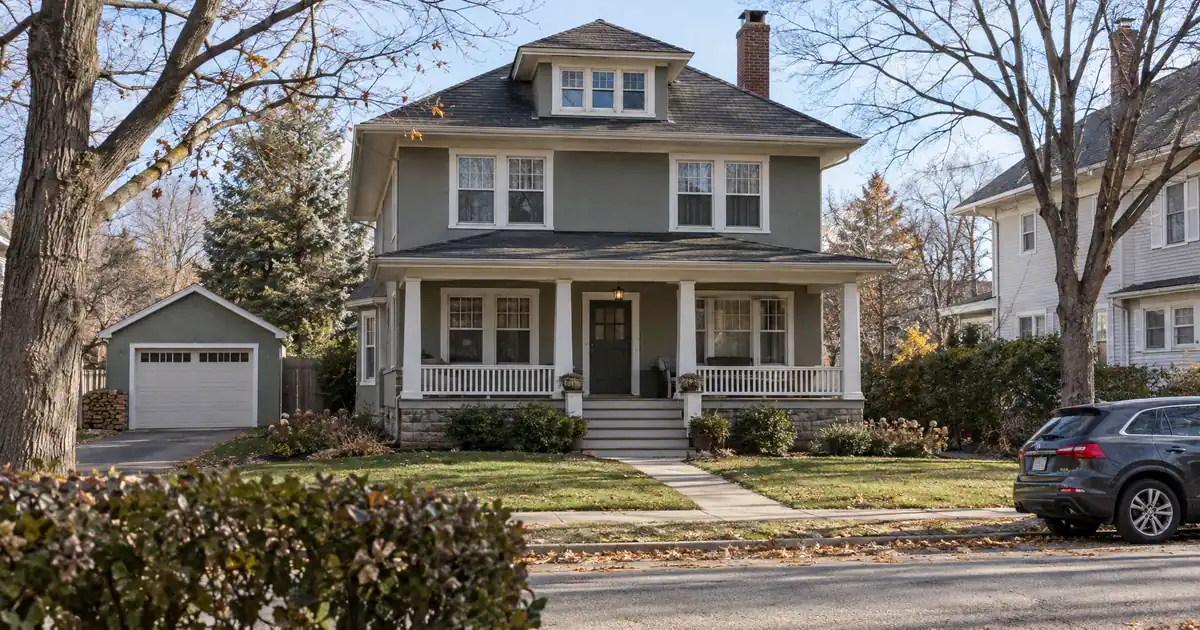
The Quick Read: A HELOC on a primary home is tested on the borrower’s credit, the available equity, and the property, and its lien position depends only on what is already recorded ahead of it, so a paid-off home gives a first lien and a home with a mortgage gives a second lien. Lien position changes how lenders size the line and what happens at sale or refinance. It does not change the basic file requirements. Everything below is subject to lender guidelines and a full file review.
- Position is set by recording order, not by the product name or the borrower’s choice.
- Across Lendmire’s wholesale network, primary-residence lines reach 90% CLTV only at a 720-or-better credit profile, and only up to $500,000.
- An investment-property line in the same network stops at 70% CLTV.
- A HELOC is underwritten on the borrower. A DSCR loan is underwritten on the property’s rent against its payment.
- Title must be held by an individual or a revocable living trust, never an LLC.
How Is Lien Position Decided?
Lien position comes from the order in which liens are recorded against the property. A HELOC is a second lien only when another lien is already recorded ahead of it. On a free-and-clear home, a new HELOC is the first lien by default.
How large a line the equity supports.
An equity line is sized by combined loan-to-value, occupancy, and credit — not by rental coverage. Switch the occupancy or the credit band and the ceiling moves with it.
Investment-property lines require a 700 minimum credit score; second-home lines start at a 640 minimum and primary-residence lines at 600, and the combined-LTV ceiling steps down as the credit band drops on primary-residence and second-home lines and holds on investment-property lines; the line cap steps down on primary-residence lines and holds at every tier on investment-property and second-home lines.
A debt-to-income ratio above 45% requires 680+ credit. Profiles under 640 are limited to single-family homes. At least 75% of the approved line is drawn at closing. Ceilings, floors, and caps update from Lendmire’s centralized guideline source.
Line estimate
Illustrative estimate only — not a quote, Loan Estimate, approval, or commitment to lend. The rate is an editable assumption; equity-line pricing is variable through both the draw and repayment periods and never converts to fixed. Occupancy and credit drive the ceiling together: an investment property tops out at 70% combined LTV (minimum credit 700, line cap $500,000); a second home tops out at 90% combined LTV (minimum credit 640, line cap $500,000), with the ceiling stepping down as the credit band drops (the cap holds at every tier); a primary residence tops out at 90% combined LTV (minimum credit 600), and its $750,000 maximum line is available only at 75% combined LTV or below with a 700-or-better credit profile (720 on the longer-runway program) and a full appraisal. Lines above $500,000 require a full appraisal. Credit, debt-to-income, property type, and full underwriting review all affect the final line.
Legal references describe the rule the same way. Cornell’s Legal Information Institute explains that a junior lien is subordinate to a senior lien, that the senior lien is paid in full first, and that priority generally follows the “first in time” rule based on the recording date. Statute can create exceptions, especially for tax liens. Nolo’s lien priority article on AllLaw adds the common case: a purchase mortgage is recorded right away, so it outranks any HELOC recorded later.
Priority rules are written by each state’s recording statutes. Some states reward the first to record, some weigh notice, and some blend the two. The article you are reading describes the general mechanics, and a title company in the property’s state confirms how they apply.
The word “second” describes repayment priority. It says nothing about the order of payments or whether the house is a second home. Two lines on one home can be first and second, or second and third, depending only on the date each was recorded.
First Lien vs. Second Lien on a Primary Home
The lien position changes the equity math and the refinance picture, but the borrower tests stay the same. The table below shows what moves and what does not.
| Factor | First-lien HELOC | Second-lien HELOC |
|---|---|---|
| Existing mortgage | None, or paid off at closing | Stays in place ahead of the line |
| Equity available | Full CLTV limit | CLTV limit minus first-mortgage balance |
| Paid first at sale | The HELOC | The first mortgage, then the HELOC |
| Underwriting focus | Borrower credit, DTI, equity | Same, plus the first-mortgage payment |
| Later first-mortgage refinance | Not applicable | Needs the HELOC lender to subordinate |
Lendmire’s network places a standalone line in either position. That is a different structure from a piggyback second, which is originated alongside a purchase mortgage. A piggyback and a standalone second are both junior liens, and neither changes the rules above.
For a deeper look at how the amounts change by position, see Lendmire’s explanation of HELOC borrowing limits on a paid-off home by lien position.
What Do Lenders Test on a Primary Home?
Lenders test four things: credit, debt-to-income, combined loan-to-value, and the property. Across the select lenders in the network, the credit tier sets both the maximum CLTV and the maximum line. The table shows primary-residence figures, which are typical ranges and not promises.
| Credit profile | Max CLTV | Line cap |
|---|---|---|
| 720+ | 90% | $500,000 |
| 700+ | 85% | $500,000 |
| 660+ | 85% | $500,000 |
| 640+ | 80% | $500,000 |
| 620+ | 70% | $400,000 |
| 600+ | 60% | $400,000 |
The 90% figure exists only at 720 and above. Lines range from $25,000 to $750,000. A line above $500,000 is for a primary residence only, requires a 700-or-better credit profile (720 on the longer-runway, five-year-draw structure), is capped at 75% CLTV, and needs a full appraisal. At 720 there is a real tradeoff: 90% CLTV up to $500,000, or a larger line up to $750,000 at a reduced 75%.
Other tests work as follows:
- Credit floor. The program floor is 600. The score model keys off the primary wage earner, and the report can be no more than 90 days old at closing.
- DTI. The maximum is 50%, and 45% for profiles from 600 to 679. A ratio above 45% requires a 680 minimum. The lender qualifies the borrower on the interest-only payment calculated on the maximum draw.
- Business bank accounts. Using them for the deposit analysis requires a 680 minimum, so a 640 borrower qualifies for the line but cannot use business accounts.
- Valuation. Lines at or below $500,000 ordinarily use an automated valuation, although a higher CLTV may require a secondary one. Every line above $500,000 needs a full appraisal, and any borrower may request one.
- Derogatory history. A bankruptcy needs 4 years of seasoning from discharge or dismissal. Foreclosure-family events split by lender: one path seasons a foreclosure at 7 years and a deed-in-lieu or short sale at 4, and the other declines the history regardless of age.
- Exposure. A borrower is limited to three lines, and a borrower owning more than 15 financed properties is not eligible.
Eligible property types include single-family homes, 2-4 units, PUDs, townhomes, and condominiums, including non-warrantable ones. Manufactured homes, co-ops, condotels, log homes, commercial and mixed-use properties, and agricultural zoning are not offered.
What the Structure Looks Like
The line has a draw period followed by a repayment period. On a primary residence, two structures exist: a 3-year interest-only draw with a 17-year amortizing repayment, and a 5-year interest-only draw with a 25-year amortizing repayment. At least 75% of the line is drawn at closing on both. Pricing floats through both periods and never converts to fixed.
The Consumer Financial Protection Bureau describes a HELOC as an open-end line you can borrow against repeatedly, with a draw period that can run 10 years in its example. The same page warns that falling behind could cost you the home. The network’s structures are shorter than that example, so read the draw dates in the actual terms.
Investment-property lines run the 5-year draw and 25-year repayment structure only. Tennessee shortens both primary-residence structures. A minimum subsequent draw of $1,000 applies after closing on the longer-runway structure, except in Texas, where it is $4,000.
A Worked Example in Percentages
The example below uses percentages of home value so the arithmetic stays visible. These are modeled assumptions, not market data.
Paid-off home. A primary home has no mortgage and the borrower has a 700+ profile. At 85% CLTV the line can reach 85% of value, still subject to the $500,000 cap. The first-lien HELOC is the only lien, so none of the equity is held back for senior debt.
Home with a mortgage. The same home has a first mortgage equal to 40% of value. At the same 85% CLTV, the line can be sized to about 45% of value. CLTV counts all liens plus the full credit limit, not only the drawn balance. A borrower who draws 75% of a line at closing still counts 100% of the limit against the ceiling.
What does not change. Credit tier, DTI, valuation rules, and property eligibility are identical in both cases. The first-mortgage payment simply enters the DTI test in the second case.
Title and Recording Checks Before Closing
A first-lien line depends on clean title, so confirming what is recorded is the first file step. Most delays on equity lines trace back to a lien nobody expected, and checking early avoids a restructure late.
1. Order the title search. It lists every recorded lien, including old mortgages, judgments, and tax liens.
2. Confirm recorded releases. A mortgage that was paid off years ago still shows on title until a release is recorded. An unreleased lien can leave the new line in second position.
3. Read the first mortgage’s documents. A second lien must be allowed under the senior loan, and some first-mortgage documents restrict added liens.
4. Confirm vesting. The property must be held by the individual borrower or a revocable living trust. A home already deeded to an LLC, subject to lender program eligibility, needs a vesting change first, or a DSCR cash-out instead.
5. Record the new lien. Its position is fixed by the recording date, so any lien recorded before it stays ahead.
Property tax liens can outrank earlier liens, as Lawyers.com notes. HOA lien priority varies by state, so a delinquent tax or HOA account is worth clearing first.
What Lien Position Changes Later
Position matters most at three later events: a sale, a first-mortgage refinance, and a foreclosure.
On a sale, the borrower generally must pay off the line in full. The federal HELOC booklet says so directly, and it also says lenders typically let you borrow up to a set percentage of your equity. The same booklet warns that renting the home to others may be prohibited under the line’s terms, which matters if a primary home later becomes a rental.
On a refinance of the first mortgage, a second-lien HELOC usually needs the HELOC lender to agree to stay in second position. That agreement is called subordination. A cash-out refinance must pay off the HELOC or have it subordinated.
On a foreclosure, LegalClarity explains that a first-mortgage foreclosure generally wipes out later-recorded liens, though the underlying debt may remain owed. Cornell’s reference adds that junior lienholders must be named in the action or their rights survive. This is why second-lien lenders size more cautiously.
Where the General Rule Breaks
The general rule is simple, but a few cases bend it.
- Texas primary residences. A Texas primary home is a homestead and caps at 80% combined loan-to-value, so the higher tiers in the table never apply. It also carries a 12-day waiting period, a one-lien-at-a-time rule, and 12-month seasoning. Texas second homes and investment properties are eligible as non-homestead transactions, and Texas properties are limited to 10 acres.
- New Mexico and Ohio. A CLTV cap that depends on the credit profile applies.
- Listed properties. A home listed for sale, or listed within the past 60 days, is ineligible in NC, PA, TN, TX, and WA.
- Occupancy change. A primary-home line and an investment-property line are different products. Investment lines are capped at 70% CLTV, and a second home follows its own floor of 640.
- Availability. These lines are available in Lendmire’s 16 full-service states: AL, CA, CO, FL, GA, IN, MI, MT, NM, NC, OH, PA, TN, TX, VA, and WA. That footprint is narrower than the 41-market DSCR footprint, which covers 40 states plus Washington, D.C.
Using a Primary-Home HELOC to Buy a Rental
Investors commonly use equity from a primary home as a down payment on a rental. The funds are usable on many files, but each lender decides what documentation it wants. Some ask that the money sit in an account for a period first, so ask before drawing.
The tradeoff is leverage. A drawn balance sits on top of the first mortgage, and the new rental carries its own loan. Because the line floats and moves from interest-only to amortizing payments, the personal payment can rise after the draw period ends.
A HELOC does not change the DSCR math on the new rental. It adds personal debt, so the borrower’s DTI on the equity line still has to clear. A DSCR loan is reviewed primarily on property-level rental income covering the payment, subject to lender guidelines. Across the network, 1.00 is where select programs start, not a universal standard, and a separate select-lender path takes coverage below 1.00 with leverage and terms adjusted. Clearing 1.00 is also not the same as positive cash flow, because repairs, vacancy, management, and capex sit outside the ratio.
If a borrower wants to keep the original first mortgage untouched, a second-lien line fits. If the plan is to replace the first mortgage and pull equity in one step, a DSCR or conventional cash-out may fit better. Lendmire’s comparison of a first-lien HELOC against a cash-out refinance on a primary home walks through that choice. For the rental itself, Lendmire’s complete DSCR loans guide covers leverage, credit tiers, and reserves.
Key Terms Defined
Lien. A lien is a legal claim recorded against a property that secures a debt.
Lien position. Lien position is a lien’s rank for repayment, set by the order of recording.
CLTV. Combined loan-to-value is all liens plus the full credit limit, divided by the property’s value.
Subordination. Subordination is a written agreement that lets a lien stay in a lower position when another loan is refinanced ahead of it.
Draw period. The draw period is the stretch when you can borrow against the line, usually with interest-only payments.
Vesting. Vesting is how title to the property is held, such as an individual or a revocable living trust.
Frequently Asked Questions
Is a HELOC always a second mortgage?
No. A HELOC is a second lien only if another lien is already recorded ahead of it. On a home with no mortgage, or when the line pays off the mortgage at closing, the HELOC is the first lien. The lien’s position follows the recording order, not the name of the product.
Does lien position change the credit score I need?
The credit floor is 600 and the tier table applies in either position. What changes is the equity available, because a first mortgage ahead of the line uses up part of the CLTV limit. A lender may also look harder at the first-mortgage payment when it tests DTI.
Can I use an LLC to hold the property?
No. Title must be held by the individual borrower or an inter vivos revocable living trust. LLCs, corporations, partnerships, and irrevocable, blind, or land trusts cannot hold title on this line. A home already in an LLC needs a vesting change or a DSCR cash-out instead.
What happens to the HELOC if I sell the home?
The line generally must be paid off in full at sale, and the payoff comes out of the sale proceeds after any senior mortgage. With two liens on the home, both are paid before the seller receives anything.
Does the way I document income change lien position?
No. Position comes from recording order alone. Income documentation affects whether the borrower qualifies under the applicable program, subject to lender guidelines, but it never moves the line ahead of or behind another lien.
Next Steps
If you are considering a home equity line and want to see how the numbers work, Lendmire can help you compare HELOC options based on the property, the equity available, credit profile, combined leverage, and your goals. Lendmire is a mortgage broker that arranges financing through select wholesale lenders, and approval is subject to lender guidelines and a full file review. Reach the team at 828-256-2183 or request a quote through the site.
About Lendmire
Lendmire is a mortgage brokerage (NMLS# 2371349) arranging home equity lines of credit — primary-residence, second-home and investment-property lines — through a wholesale lending network in its 16 full-service states. Eligibility is determined by the lender on each file. Scotsman Guide named Lendmire a Top Mortgage Workplace in both 2025 and 2026.
Get Started
Ready to find the right loan for you?
In about two minutes you can review financing options available for your home or investment property. No commitment required.
Informational only. Not a Loan Estimate, approval, or commitment to lend. Program availability and eligibility are subject to lender guidelines, credit approval, property review, and underwriting.
References
1. Cornell Legal Information Institute: Junior lien
2. Nolo via AllLaw: How lien priority works
3. Consumer Financial Protection Bureau
4. Lawyers.com: How lien priority works
6. LegalClarity: What happens to a lien on a foreclosed property
This article is part of Lendmire’s home equity line of credit program — full qualification details, guidelines, and scenarios live on the program page.
Related reading: Super Jumbo DSCR Entity Requirements for an LLC With 50 Doors · Hard Money Requirements for a First Flip With No Track Record · Can You Get a HELOC and Keep Your Current First Mortgage?
Brandon Miller
Founder & CEO, Mortgage Loan Originator, Lendmire LLC
- Mortgage Loan Originator · NMLS# 1129696 · Verify on NMLS Consumer Access
- North Carolina Real Estate Broker · License# 343312 · Verify on NCREC
- North Carolina Insurance Producer · License# 19053198 · Property, Casualty, Life, Health · Verify on NAIC SBS
- Lendmire LLC · Firm NMLS# 2371349 · Verify firm licensure
Disclosures. The information presented in this article is general market commentary, not financial, legal, or tax advice. Lendmire is a mortgage brokerage (NMLS# 2371349) — not a direct lender or depository institution — and loan placement is subject to lender underwriting. Nothing in this content represents a commitment to lend. Loan terms, pricing, and program availability vary based on borrower qualifications, property characteristics, and state of subject property, and are subject to change at any time. Lendmire complies with Equal Housing Opportunity requirements. Consumer access: nmlsconsumeraccess.org.