
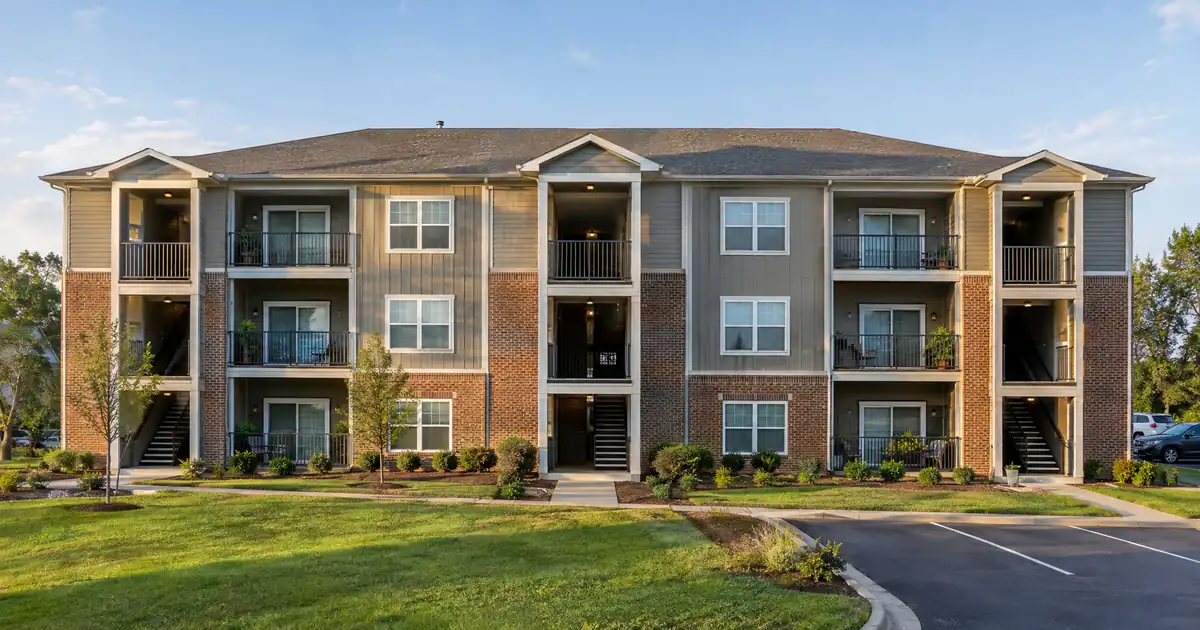
The Quick Read: Bank statements only document the borrower’s income. They do nothing for the building, and a building in litigation is reviewed as collateral on its own merits. Non-warrantable condominiums are eligible on the network’s HELOC lines, but the type of lawsuit, the insurance picture, and the association’s finances decide how the file reads, subject to lender guidelines and full file review.
- Litigation is a property-level issue. Deposits cannot fix it.
- Non-warrantable condos are eligible; condotels and co-ops are not offered.
- On an investment line, the ceiling is 70% CLTV with a 700 minimum credit profile, up to $500,000.
- Title must sit with the individual or a revocable living trust. An LLC cannot hold title.
- Lines at or below $500,000 ordinarily run on an automated valuation, though a full appraisal can be requested.
Picture an owner of a rented condo who runs a business. Traditional personal-income documentation shows little income after write-offs, but twelve months of business deposits tell the real story. A bank statement line fits that borrower. Then the lender learns the association is a defendant in a construction-defect suit. Two separate tests now run side by side. One asks whether the borrower can carry the debt. The other asks whether the building is acceptable collateral. This article walks through how each test works, where lenders land, and what to do when the building is the problem.
How large a line the equity supports.
An equity line is sized by combined loan-to-value, occupancy, and credit — not by rental coverage. Switch the occupancy or the credit band and the ceiling moves with it.
Investment-property lines require a 700 minimum credit score; second-home lines start at a 640 minimum and primary-residence lines at 600, and the combined-LTV ceiling steps down as the credit band drops on primary-residence and second-home lines and holds on investment-property lines; the line cap steps down on primary-residence lines and holds at every tier on investment-property and second-home lines.
A debt-to-income ratio above 45% requires 680+ credit. Profiles under 640 are limited to single-family homes. At least 75% of the approved line is drawn at closing. Ceilings, floors, and caps update from Lendmire’s centralized guideline source.
Line estimate
Illustrative estimate only — not a quote, Loan Estimate, approval, or commitment to lend. The rate is an editable assumption; equity-line pricing is variable through both the draw and repayment periods and never converts to fixed. Occupancy and credit drive the ceiling together: an investment property tops out at 70% combined LTV (minimum credit 700, line cap $500,000); a second home tops out at 90% combined LTV (minimum credit 640, line cap $500,000), with the ceiling stepping down as the credit band drops (the cap holds at every tier); a primary residence tops out at 90% combined LTV (minimum credit 600), and its $750,000 maximum line is available only at 75% combined LTV or below with a 700-or-better credit profile (720 on the longer-runway program) and a full appraisal. Lines above $500,000 require a full appraisal. Credit, debt-to-income, property type, and full underwriting review all affect the final line.
How Do the Two Underwriting Tests Differ?
The income test measures the borrower; the collateral test measures the building. Bank statements satisfy only the first. A strong borrower in a troubled building still faces a full property review, because the lender is lending against that unit and the association behind it.
On the income side, the lender typically reviews 12 to 24 months of personal or business statements. The underwriter strips out transfers, loan proceeds, refunds, and one-off deposits. For business accounts, an expense factor reduces the deposits before the result is averaged over the months in the window. Factors vary by program, so treat any single percentage as an illustration, not a rule. Statements that prove income and statements that prove reserves are separate document sets.
On the collateral side, the lender wants to know whether the project is stable. Across the wholesale network, a lawsuit does not end the conversation. It changes which questions get asked.
Why Does Litigation Make a Condo “Non-Warrantable”?
Pending litigation is one of the common triggers. Agency rules treat it as a project-level problem. The Fannie Mae Selling Guide lists litigation or pre-litigation activity among its ineligible-project categories, and an earlier version of that guide page describes projects where the association or the developer is a named party to a suit tied to safety, structural soundness, habitability, or functional use. The Fannie Mae Condo Status Finder FAQ also names pending, significant litigation as a common reason a project is ineligible.
That is the contrast point and nothing more. Bank statement HELOC lines are not sold to the agencies, so the agency test does not govern them. A failed agency test simply pushes the building out of conventional channels and into the non-warrantable lane, where each lender writes its own checklist. Investor commentary on BiggerPockets describes the same narrowing: once a project is non-warrantable, the realistic options shrink to portfolio-style lenders.
Key Terms Defined
Bank statement HELOC: A home equity line that documents income through deposit history instead of traditional personal-income documentation, qualifying on documented income under the applicable program, subject to lender guidelines.
Warrantable condo: A project that meets agency standards for items like litigation, reserves, and owner mix.
Non-warrantable condo: A project that fails one or more of those standards, which makes it ineligible for conventional agency financing.
Overlay: A lender’s own rule that is stricter than the underlying standard.
Special assessment: A one-time charge to owners, often triggered by repairs or legal costs.
Condo questionnaire: The form the association completes to disclose litigation, insurance, reserves, and delinquencies.
What Kinds of Litigation Do Lenders Treat Differently?
The nature of the suit matters more than the fact of a suit. Lenders sort litigation by who is suing, whether money is at stake, and whether insurance is likely to respond.
| Type of suit | Typical lender read | What to ask the association |
|---|---|---|
| Construction defect vs. developer | Serious if structural or life-safety | Scope, repair status, insurer role |
| Routine collections vs. owners | Usually minor | Dollar size, how many cases |
| Safety or habitability claim | Highest concern | Stage, remediation plan |
| Insured liability claim | Often manageable | Coverage limits, deductible |
| Owner dispute with the board | Case by case | Relief sought, cost exposure |
This table is a qualitative sorting aid, not a published rule. No outside source documents a litigation-specific rule for these lines, and no reliable figure exists for how many lenders accept litigated buildings. What the network shows in practice is wide variation. Some lenders accept certain suit types with full documentation. Others decline any building with a pending matter of a given kind.
Rule Versus Overlay: Why Lenders Disagree
Two lenders can read the same building differently because one is applying a rule and the other an overlay. The agency language targets specific matters, which are safety, structure, habitability, and functional use. Many blanket declines are lender policy layered on top, not the agency standard. That is why a decline from a big retail lender is not the final answer. Retail desks often work from one rigid checklist. A broker placing files across many wholesale lenders sees the spread: some programs want a litigation letter and an insurance review, and others will not touch the building at all.
What Else Gets Reviewed in the Building?
Litigation rarely travels alone, and stacked problems push a project further out. Reviewers typically look at:
- Owner-occupancy mix and investor concentration.
- Association budget, financial statements, and reserve study.
- Delinquent dues.
- Master insurance coverage and deductibles.
- Meeting minutes and special-assessment notices.
- Engineering reports, where relevant.
A building with a defect suit, thin reserves, and heavy investor ownership reads very differently from one with a small insured claim and healthy reserves. The condo questionnaire carries a lot of weight here, and its wording matters. Answers should be precise, current, and complete.
What Does the Network’s HELOC Actually Require?
Lendmire brokers this product through select wholesale partners and is never the lender. These figures apply to investment-property lines, subject to lender guidelines and full file review.
| Item | Investment property line |
|---|---|
| Maximum CLTV | 70% |
| Minimum credit | 700 |
| Maximum line | $500,000 |
| Structure | Standalone line, first or second lien; 5-year interest-only draw, 25-year repayment |
| Draw at closing | At least 75% of the line |
| DTI | 50% maximum; above 45% requires 680+ |
| Valuation | Automated at or below $500,000 |
| Property | Non-warrantable condos eligible; condotels, co-ops not offered |
There is no tier above $500,000 on investment lines. Larger lines exist only for primary residences. On a primary residence, the ceiling reaches 90% CLTV only at a 720-or-better profile and up to $500,000, so owners quoting that number are describing a different collateral. The line is also available only in Lendmire’s 16 full-service states, which is narrower than the DSCR footprint.
Here is the catch with valuation. An automated valuation looks at data, not at the lawsuit. The underwriter’s building review, not the valuation model, is where the litigation gets weighed. A borrower can also request a full appraisal in any case. A HELOC lender can also restrict further draws if the home’s value drops significantly, which is a live concern when a judgment or special assessment is pending.
A Scenario: Same Borrower, Two Buildings
Take one self-employed owner with twelve months of strong business deposits and a credit profile above the 700 floor. Place that borrower in two condos with identical rent and similar value.
In Building A, the association is a plaintiff in a minor, insured matter and reserves are healthy. The income test passes. The building test is mostly about documentation: a litigation letter, insurance details, and the questionnaire.
In Building B, the association faces a construction-defect claim over structural repairs, reserves are thin, and a special assessment is being discussed. The income test is unchanged. The building test now drives everything, and the file may be declined, repriced through lower leverage, or paused.
The borrower never changed. Only the collateral moved. That is the clearest way to see why deposits cannot rescue a weak building.
How Do You Find Out What the Suit Actually Is?
Get the facts before any lender pulls the file.
1. Request the current budget and financial statements from the management company.
2. Read recent meeting minutes for legal updates.
3. Ask for the completed condo questionnaire.
4. Ask whether the association’s attorney can provide a letter describing the case and its possible outcomes.
5. Confirm master insurance coverage, deductibles, and any gaps.
6. Check for special-assessment notices and delinquency levels.
Lenders commonly ask for a litigation letter or disclosure, an insurance certificate, a reserve study, and the HOA questionnaire. Having these ready spares the file avoidable delays.
Where the General Rule Breaks
Routine versus material suits. Not every lawsuit is disqualifying. Small collection actions differ sharply from structural claims. Some trade sources overstate this by saying any pending suit blocks financing. That is too broad.
Combined problems. Litigation plus low reserves plus heavy investor ownership pushes a project further out of reach than any single factor.
LLC title. An LLC cannot hold title on this line. A condo already deeded to an LLC needs a vesting change, or a DSCR cash-out may fit better. Title must sit with the individual or a revocable living trust.
Condotels and co-ops. These are not offered, even though non-warrantable condos are.
Different collateral. An investor can sometimes borrow against a primary residence, with bank statements documenting income. That sidesteps the litigated building as collateral. The tradeoff is real: the home becomes the security, and a HELOC typically works as a second mortgage when a first lien exists. Falling behind puts that home at risk.
What Does the Investor Decision Look Like?
Start with the question of whether the building, not the borrower, is the obstacle. If it is, there are two practical paths.
A DSCR cash-out qualifies primarily on property-level rental income covering the payment, subject to lender guidelines, so it sidesteps the personal income question. It does not sidestep the building review. Lendmire’s complete DSCR loans guide covers how coverage is measured. Remember that clearing a coverage threshold is not the same as positive cash flow, since repairs, vacancy, and capex sit outside the calculation. Litigation can also bring special assessments and higher dues, which cut into returns. A BiggerPockets reply warns that dues can make a condo rental hard to profit from.
For a purchase-side view of the same building problem, see Lendmire’s piece Can an HOA With Pending Litigation Still Close a Bank Statement Condo Loan?.
Sometimes waiting is smarter. If the suit is at an early, uncertain stage, or the building’s reserves are shrinking, a pause until a settlement or dismissal can improve the file. Exit liquidity matters too. BiggerPockets commentary notes that litigation, investor concentration, or low reserves can shrink the buyer pool, and appraisers must treat pending litigation or special assessments as a negative influence on value. Borrowing against an asset whose marketability is uncertain deserves a hard stress test.
Tax treatment can depend on how the funds are used and how the property is held; investors should keep clear records and speak with a qualified tax professional before relying on any deduction.
If you are considering a home equity line and want to see how the numbers work, Lendmire can help you compare HELOC options based on the property, the equity available, credit profile, combined leverage, and your goals.
Frequently Asked Questions
Is a pending lawsuit an automatic denial?
No. The nature of the suit, insurance coverage, and the association’s finances drive the read. Routine, insured matters are treated very differently from structural or safety claims, and lender policies vary widely.
Do bank statements change how the building is reviewed?
Not at all. Statements document income only. The building is judged separately as collateral, so a strong deposit history cannot offset a weak project.
Can an LLC borrow on this line?
No. Title must be held by the individual borrower or a revocable living trust. A condo deeded to an LLC needs a vesting change first, or a DSCR cash-out may be the better fit.
What if my current lender declined the building?
A decline from one lender may reflect its own overlay rather than a universal rule. Non-warrantable condos are eligible on the network’s HELOC lines, subject to full file review, so a different channel may read the same building differently.
Will legal assessments affect my qualifying numbers?
Possibly. Special assessments and higher dues raise carrying costs and can tighten debt ratios. DTI is capped at 50% on these lines, and above 45% requires a 680 minimum credit profile.
About Lendmire
Lendmire, NMLS# 2371349, is a mortgage broker that arranges home equity lines of credit in its 16 full-service states through wholesale lenders, on primary residences, second homes and investment properties. Every line is subject to the lender’s guidelines and full underwriting. Scotsman Guide named Lendmire a Top Mortgage Workplace in both 2025 and 2026.
Get Started
Ready to find the right loan for you?
In about 30 seconds you can review financing options available for your home or investment property. No commitment required.
Informational only. Not a Loan Estimate, approval, or commitment to lend. Program availability and eligibility are subject to lender guidelines, credit approval, property review, and underwriting.
References
1. Fannie Mae Selling Guide B4-2.1-03, Ineligible Projects
2. Fannie Mae Selling Guide B4-2.1-03 (earlier version)
3. BiggerPockets: Condo financing
4. BiggerPockets: Condo as a first investment
5. BiggerPockets: Question for investors who flip condos
This article is part of Lendmire’s bank statement HELOC program — full qualification details, guidelines, and scenarios live on the program page.
Related reading: How Much Equity a Founder Unlocks With a Super Jumbo Cash-Out · Bank Statement HELOC vs DSCR HELOC When Buying the Next Rental · How to Pick a Bank Statement or DSCR HELOC on a Rental You Own
Brandon Miller
Founder & CEO, Mortgage Loan Originator, Lendmire LLC
- Mortgage Loan Originator · NMLS# 1129696 · Verify on NMLS Consumer Access
- North Carolina Real Estate Broker · License# 343312 · Verify on NCREC
- North Carolina Insurance Producer · License# 19053198 · Property, Casualty, Life, Health · Verify on NAIC SBS
- Lendmire LLC · Firm NMLS# 2371349 · Verify firm licensure
Compliance and disclosures. Lendmire (NMLS# 2371349) is a licensed mortgage broker and is not a direct lender, depository institution, financial advisor, or tax professional. Content in this article is general market analysis and educational information — not financial, legal, or tax advice for any specific situation. Lendmire does not guarantee loan approval; every transaction is subject to underwriting by the funding lender. Mortgage pricing and loan program guidelines are subject to change at any time without notice and vary by borrower characteristics, property type, and state regulations. Lendmire complies with Equal Housing Opportunity. Licensure verification: NMLS Consumer Access.