
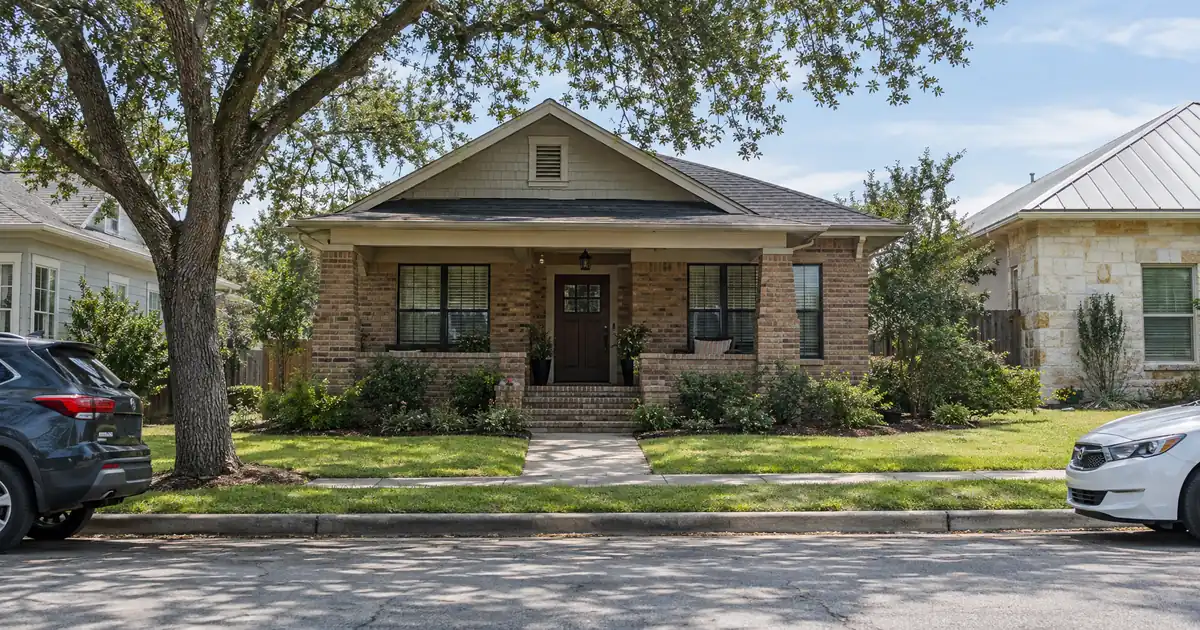
The Quick Read: A Texas homeowner can fund an ADU with a home equity line on a primary residence, but the line must stay within 80% combined loan-to-value, close after a 12-day waiting period, and be the only home equity loan on the property. A second route, a construction lien, can fund a freestanding ADU under different and lighter rules.
- Combined debt on a Texas primary residence caps at 80% of value, and the future value of the ADU does not count toward that cap.
- Only one home equity loan or line can sit on a homestead at a time.
- Each draw after closing must be at least $4,000, and at least 75% of the line is drawn at closing on the network’s equity line programs.
- A detached ADU and an attached ADU can fall under different contract rules.
- A DSCR loan, which qualifies primarily on property-level rental income covering the payment, usually comes after the build as the refinance. It does not pay the builder.
Subject to lender guidelines, every figure here is a range and not a commitment to lend.
How large a line the equity supports in Texas.
An equity line is sized by combined loan-to-value, occupancy, and credit — not by rental coverage. Switch the occupancy or the credit band and the ceiling moves with it.
Investment-property lines require a 700 minimum credit score; second-home lines start at a 640 minimum and primary-residence lines at 600, and the combined-LTV ceiling steps down as the credit band drops on primary-residence and second-home lines and holds on investment-property lines; the line cap steps down on primary-residence lines and holds at every tier on investment-property and second-home lines.
A debt-to-income ratio above 45% requires 680+ credit. Profiles under 640 are limited to single-family homes. At least 75% of the approved line is drawn at closing. Ceilings, floors, and caps update from Lendmire’s centralized guideline source.
Line estimate
Illustrative estimate only — not a quote, Loan Estimate, approval, or commitment to lend. The rate is an editable assumption; equity-line pricing is variable through both the draw and repayment periods and never converts to fixed. Occupancy and credit drive the ceiling together: an investment property tops out at 70% combined LTV (minimum credit 700, line cap $500,000); a second home tops out at 90% combined LTV (minimum credit 640, line cap $500,000), with the ceiling stepping down as the credit band drops (the cap holds at every tier); a primary residence tops out at 80% combined LTV (minimum credit 600), and its $750,000 maximum line is available only at 75% combined LTV or below with a 700-or-better credit profile (720 on the longer-runway program) and a full appraisal. Lines above $500,000 require a full appraisal. Credit, debt-to-income, property type, and full underwriting review all affect the final line.
Two Ways to Fund an ADU on a Homestead
A Texas homestead can carry a lien for a home equity line or for a construction contract. These are two separate legal paths, and the phrase “HELOC for an ADU” quietly picks one of them.
The first path is the home equity line. It is open-purpose, which means the money can go to anything, including a backyard unit. It comes with the strictest set of owner protections.
The second path is the improvement lien. It exists only to secure payment for work and materials. For a brand-new structure, a written contract is the core requirement.
The Texas Finance Commission’s home equity reference page maps these paths to different parts of the state constitution. Home equity lending sits in Section 50(a)(6). Home improvement lending sits in Section 50(a)(5). Most of the confusion online comes from blending the two.
Which one fits depends on your scope, your existing debt, and whether your homestead already carries an equity loan. Lendmire is a mortgage broker, so the practical side of this page covers the equity line you would arrange. Legal questions on contracts and liens belong with a Texas title or real estate attorney.
Key Terms Defined
Homestead: Your principal residence, which Texas law protects with extra limits on what can be secured by a lien.
ADU (accessory dwelling unit): A second, smaller living unit on the same lot as the main home, either detached or attached.
HELOC (home equity line of credit): A revolving line secured by your home. You draw, repay, and draw again within the line’s limit.
CLTV (combined loan-to-value): All loans secured by the property added together, divided by its value.
Improvement lien: A lien that secures a construction or renovation contract rather than a cash loan.
DSCR (debt service coverage ratio): Monthly rent divided by the full monthly housing payment (principal, interest, taxes, insurance, and any HOA dues).
PITIA: Principal, interest, taxes, insurance, and association dues, the full payment a DSCR loan measures rent against.
The Home Equity Line Path, Step by Step
Step 1: Confirm the home is a true homestead. The equity line rules apply only to your principal residence. A rental, a vacation home, or a property you have moved out of sits outside them.
Step 2: Run the combined-debt test. Your first mortgage, the new line, and any other liens on the home are added together. The total cannot exceed 80% of fair market value on the day the line is established. The Texas Bankers Association’s chapter on home equity lines states this combined cap for lines originated under the current rules.
Value is fixed on that day. A higher value after the ADU is built does not enlarge the line. Texas once used a lower sub-cap on lines, so older articles quoting a 50% figure are describing an earlier design.
Step 3: Check that the one-loan slot is open. Texas allows one home equity extraction at a time. A prior Texas cash-out refinance counts as a home equity loan and uses that slot. If one is open, a new line has to wait until it is resolved.
Step 4: Respect the waiting period. The lender must deliver a written notice, and closing cannot happen before the 12th day after it. The text of the constitution on Justia sets this rule. The same waiting period, the one-lien-at-a-time rule, and a 12-month seasoning gap between equity closings apply to primary residences in the network’s equity line programs.
Step 5: Close, then draw. Texas homestead equity closings must happen at authorized locations. After closing, you can draw, repay, and reborrow. Each draw after closing must be at least $4,000, per the network’s Texas guideline and the Bankers Association chapter.
The draw pattern matters for a build. The network’s equity line programs require at least 75% of the line to be drawn at closing. You cannot open a large line and leave most of it undrawn until the foundation is poured. Size the line to the budget you will actually need, because the drawn amount starts accruing interest-only payments immediately.
What the Equity Line Programs Look Like on a Texas Primary Residence
Across the wholesale network Lendmire works with, a standalone line sits in first or second lien position. Two draw structures exist on primary residences: a 3-year interest-only draw followed by a 17-year repayment, and a 5-year interest-only draw followed by a 25-year repayment. The 5-year version is the longer-runway structure. Where the two programs differ below, each figure applies only inside its own program’s terms.
Typical ranges on a Texas primary residence, all subject to lender guidelines:
- Line size: $25,000 to $750,000. Lines above $500,000 are for primary residences only, need a 700 credit profile or better (720 on the longer-runway structure), cap at 75% CLTV, and require a full appraisal.
- Leverage: Texas caps a primary residence at 80% combined. A 640 score reaches 80% CLTV on lines up to $500,000. A 620 profile reaches 70% up to $400,000, and a 600 profile reaches 60% up to $400,000.
- Credit: 600 is the program floor on primary residences. Debt-to-income tops out at 50%, falling to 45% for credit profiles from 600 to 679.
- Valuation: Lines at or below $500,000 ordinarily use an automated valuation. You can ask for a full appraisal in any case, and a higher CLTV may require a second valuation.
- Land: Texas properties are limited to 10 acres, and a property listed for sale in the past 60 days is ineligible in Texas.
- Property types: Single-family, 2-4 units, PUDs, townhomes, and condos can qualify. Manufactured homes, log homes, and co-ops are not offered.
- Title: The borrower must hold title individually or in a revocable living trust. An LLC cannot hold title on these lines.
These lines are available through Lendmire in its 16 full-service states, Texas among them. That footprint is narrower than the 41-market DSCR footprint. Because credit lines float and never convert to a fixed payment, this page leaves pricing to the calculator.
The Improvement Lien Path: New Build or Renovation?
Section 50(a)(5) is a different tool. It secures work and material for improvements, and the rules split on one question: is the work new construction, or is it repair or renovation of an existing structure?
A freestanding backyard ADU is a new improvement. The Texas Supreme Court’s decision in Spradlin v. Jim Walter Homes, summarized here, held that the added procedural protections apply to renovation of existing improvements. For new construction, a written contract is what the lien needs.
Renovation work carries more steps. The Texas Bankers Association’s page on home improvement contracts lists spousal consent, a five-day waiting period, a three-day right of rescission, and a restricted closing location. The state’s administrative code, indexed on Cornell’s Legal Information Institute, sets out separate sections for new construction, renovation, the waiting period, the rescission right, and a health-or-safety waiver.
The edge case is a mixed scope. An addition on an existing house, a second story, or a garage conversion is treated as renovation of existing improvements. The Bankers Association’s page on existing improvements says that when a project includes both renovation and new construction, the whole transaction is treated as renovation. An attached ADU or a garage conversion therefore likely lands on the stricter track. Confirm the classification with a Texas attorney before you sign a builder’s contract.
| Factor | Home equity line | Improvement lien |
|---|---|---|
| Use of funds | Anything | Work and materials only |
| Homestead required | Yes | Yes |
| Combined-debt cap | 80% CLTV | Set by the contract and lender |
| Waiting period | 12 days | None for new build; 5 days for renovation |
| Best ADU fit | Flexible budget, other costs | Detached new build |
The table is a simplified map. The improvement lien is a contract and title matter, so a title attorney should confirm your specific scope.
Where the General Rule Breaks
You already have a Texas cash-out loan. That loan holds the only slot. A new line cannot close until it is paid off or otherwise resolved.
The home is not a homestead. If you have moved out and the house is a rental, the equity line rules above do not apply. The network’s separate investment-property lines run up to 70% CLTV with a 700 minimum credit score, up to $500,000, on the 5-year draw and 25-year repayment structure only.
You rent the ADU while you live there. Renting a unit while you still occupy the main house generally does not end the homestead exemption, but moving out can. The rules depend on your county appraisal district, so call it before you list the unit. Tax treatment varies; consult a qualified professional.
You move out and rent everything. The homestead character can be lost after a permanent move. Whether an existing home equity lien then creates a legal problem is a question for counsel, not for a loan officer.
Local zoning blocks the plan. Texas has no statewide ADU law. City and county rules control whether an ADU is allowed, how large it can be, and what permits it needs. Check zoning and deed restrictions before you apply for any line, because a lender will not advance funds for a unit the city will not permit.
A first mortgage is already in place. Most homeowners have one, and it counts in the 80% test.
A Worked Example in Percentages
Say your home is appraised at 100% of its value, and your first mortgage sits at 50% of that value. The Texas ceiling is 80% combined. That leaves room for a new line of up to 30% of value, assuming your credit tier reaches the 80% level and no other liens exist.
A credit tier that tops out at 70% CLTV leaves only 20% of value as room. A 60% tier leaves 10%. The room shrinks fast, and the credit tier is often what limits the line, not the Texas cap.
Now compare that room to the build budget. If the ADU costs more than the room allows, the options are a smaller unit, more cash from you, or a different structure. A line larger than the budget is rarely the answer, because 75% of it must be drawn at closing and starts costing interest.
The calculator on this page gives an illustrative estimate of how your combined leverage stacks up. It is not a quote.
After the Build: Where DSCR Enters
Here is the common sequence among investors. They fund the build with an equity line or a construction contract, lease the finished ADU, and then refinance into a DSCR loan. A DSCR loan needs an income-producing property at closing, so it works as the takeout and not as construction money. Lendmire’s complete DSCR loans guide walks through the loan itself.
DSCR loans are designed for non-owner-occupied investment properties. While you live in the main house, the property is owner-occupied, so this exit generally fits only after you have moved out or if the ADU sits on a separate rental property you own. Because they are business-purpose investor loans, they are reviewed differently from a standard owner-occupied mortgage.
Across most of the wholesale network, a DSCR cash-out refinance tops out around 75% LTV, and about 6 months of seasoning is the common expectation. A 1.00 coverage ratio is where select programs start, with stronger ratios opening better pricing and leverage. A separate select-lender path takes coverage below 1.00, with leverage and terms adjusted. Most programs want a credit score around 660, a 620 floor exists in parts of the network, and 700 or better unlocks the strongest leverage tiers.
Two cautions matter for ADUs. First, an ADU usually needs permits and a final inspection, because lenders generally will not count rent from unpermitted space. Second, an ADU can appraise for less than it cost, since comparable sales are thin. The improvement may support a higher appraised value, depending on comps and underwriter review, but you should plan for a gap. Rent support typically comes from a rent schedule on a single-family property or an operating income statement on a 2-4 unit property. Whether an ADU counts as a second unit depends on the appraiser and the lender.
Clearing 1.00 is not the same as positive cash flow. DSCR compares rent to PITIA only, so repairs, vacancy, management, and utilities sit outside the calculation.
Manufactured homes, log homes, and barndominiums are not offered on the network’s DSCR programs, so an ADU built in one of those styles will not qualify for the takeout.
Mistakes That Cost Texas Owners Time
- Assuming one contract type fits every ADU. The detached and attached paths can follow different rules, so classify the scope first.
- Sizing the line to the post-build value. The cap uses value on the day the line is established.
- Forgetting the one-loan slot. An old Texas cash-out loan can stall a new line.
- Skipping the permit. A unit without permits can weaken both the appraisal and the DSCR takeout.
- Leaving no contingency. Cost overruns are common on builds, and a line cannot be quietly increased after closing.
- Counting rent before it exists. DSCR coverage is measured on rent the lender can support, not on a hoped-for lease.
Frequently Asked Questions
Does the ADU’s future value increase how much I can borrow?
No. The 80% combined cap is measured against fair market value on the day the line is established. An unfinished ADU adds nothing to that figure, so size the project to the equity you already have.
Can I use a HELOC on a rental to build an ADU in Texas?
Yes, but the rules differ. A rental is not a homestead, so the 12-day wait and the 80% constitutional cap do not apply. The network’s investment-property lines reach up to 70% CLTV with a 700 minimum credit score, up to $500,000, subject to lender guidelines.
Can I have a HELOC and a Texas cash-out refinance at the same time?
No. Texas permits one home equity loan or line on a homestead at a time. If a cash-out loan is already open, it has to be resolved before a new line can close, and the seasoning gap between equity closings also applies.
Does renting the ADU cost me my homestead protection?
Renting a unit while you still live on the property generally does not remove it, but moving out can. Rules vary by county appraisal district, so check with yours first and confirm with a qualified professional.
Can a DSCR loan pay for the construction?
No. A DSCR loan needs a rentable, income-producing property at closing, so it works as the refinance after the ADU is built, permitted, and leased. Qualification is subject to lender guidelines, credit, and property review.
Next Step
If you are considering a home equity line and want to see how the numbers work, Lendmire can help you compare HELOC options based on the property, the equity available, credit profile, combined leverage, and your goals. A short call can also clarify whether the line or a DSCR takeout fits your timeline for the ADU. Reach Lendmire at 828-256-2183.
About Lendmire
Lendmire — NMLS# 2371349 — is a mortgage broker that arranges home equity lines of credit in its 16 full-service states through wholesale lenders, on primary residences, second homes and investment properties. Every line is subject to the lender’s guidelines and full underwriting. Scotsman Guide named Lendmire a Top Mortgage Workplace in both 2025 and 2026.
Get Started
Ready to find the right loan for you?
See your offer in seconds. No credit pull, no obligation.
Informational only. Not a Loan Estimate, approval, or commitment to lend. Program availability and eligibility are subject to lender guidelines, credit approval, property review, and underwriting.
References
1. Texas Finance Commission, Home Equity Constitutional References
2. Texas Bankers Association, Home Equity Lines of Credit
3. Texas Constitution Article XVI, Section 50
4. Spradlin v. Jim Walter Homes (case summary)
5. Texas Bankers Association, Home Improvement Contracts
6. Texas Administrative Code Title 7, Chapter 152
7. Texas Bankers Association, Existing Improvements
This article is part of Lendmire’s HELOC & home equity loan program — full qualification details, guidelines, and scenarios live on the program page.
Related reading: Best Investment Property HELOC Program After Purchasing a Rental Property · Banks That Offer a HELOC on a Condo · Best HELOC Program on a Duplex When You Rent the Other Unit
Brandon Miller
Founder & CEO, Mortgage Loan Originator, Lendmire LLC
- Mortgage Loan Originator · NMLS# 1129696 · Verify on NMLS Consumer Access
- North Carolina Real Estate Broker · License# 343312 · Verify on NCREC
- North Carolina Insurance Producer · License# 19053198 · Property, Casualty, Life, Health · Verify on NAIC SBS
- Lendmire LLC · Firm NMLS# 2371349 · Verify firm licensure
Required disclosures. Lendmire (NMLS# 2371349) operates as a licensed mortgage broker, not a direct lender or depository. The discussion in this article is general in nature and should not be relied upon as financial, legal, or tax advice — every investment scenario is unique and should be reviewed by a qualified professional. Any loan inquiry is subject to lender underwriting, and this article is not a commitment to lend or a guarantee of approval. Mortgage rates, loan terms, and program guidelines vary by borrower, property, and state, and may change without notice. Equal Housing Opportunity. Verify licensure at NMLS Consumer Access.