
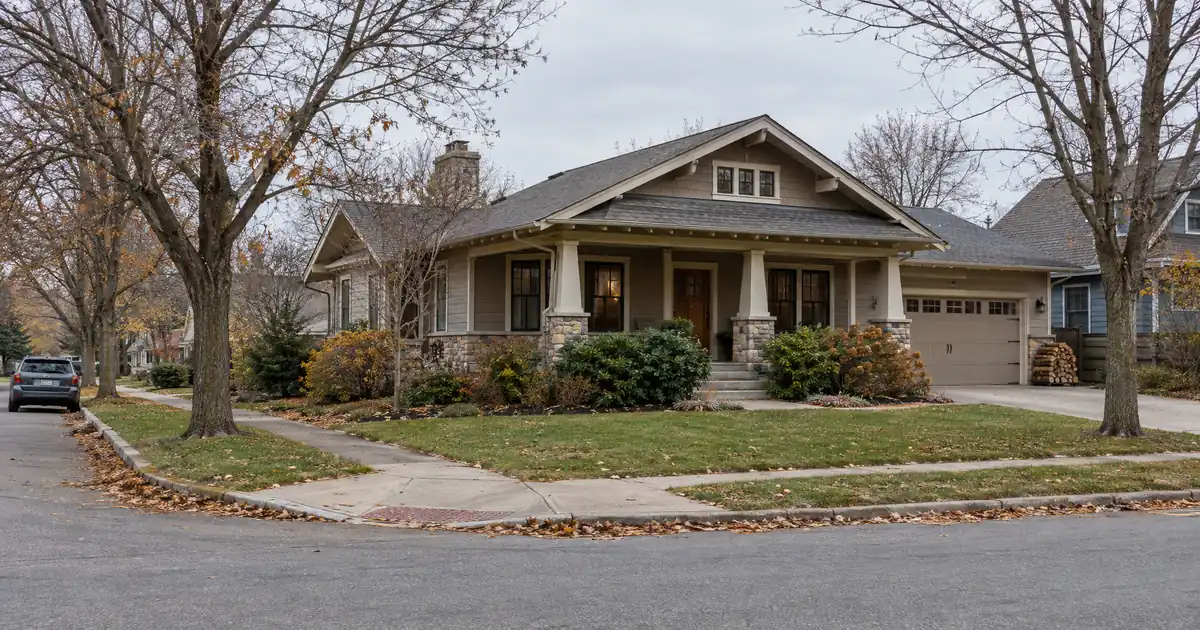
The Quick Read: A home equity line is a lien on the whole property, so every person on title has to sign it, and one heir cannot pledge an inherited house while the co-owners refuse. The workable routes are a buyout that puts title in one name, a signed agreement from every owner, or borrowing against a different property.
- Title comes first. A line needs a recorded deed in the borrower’s name, not just a spot in the will.
- A holdout heir blocks a whole-property lien. A holdout does not necessarily block a court-ordered partition.
- A buyout usually has to close before, or together with, the new financing.
- On an investment property, the network’s equity lines cap at 70% CLTV (combined loan-to-value, explained below), subject to lender guidelines.
- For a rented inherited home, a DSCR cash-out refinance is often the better fit once title is clean.
Why Title Comes Before Everything
Title decides who can pledge the property, and a lender will not lend against a house its borrower cannot fully pledge. Inheritance often leaves that question open for months or years.
How large a line the equity supports.
An equity line is sized by combined loan-to-value, occupancy, and credit — not by rental coverage. Switch the occupancy or the credit band and the ceiling moves with it.
Investment-property lines require a 700 minimum credit score; second-home lines start at a 640 minimum and primary-residence lines at 600, and the combined-LTV ceiling steps down as the credit band drops on primary-residence and second-home lines and holds on investment-property lines; the line cap steps down on primary-residence lines and holds at every tier on investment-property and second-home lines.
A debt-to-income ratio above 45% requires 680+ credit. Profiles under 640 are limited to single-family homes. At least 75% of the approved line is drawn at closing. Ceilings, floors, and caps update from Lendmire’s centralized guideline source.
Line estimate
Illustrative estimate only — not a quote, Loan Estimate, approval, or commitment to lend. The rate is an editable assumption; equity-line pricing is variable through both the draw and repayment periods and never converts to fixed. Occupancy and credit drive the ceiling together: an investment property tops out at 70% combined LTV (minimum credit 700, line cap $500,000); a second home tops out at 90% combined LTV (minimum credit 640, line cap $500,000), with the ceiling stepping down as the credit band drops (the cap holds at every tier); a primary residence tops out at 90% combined LTV (minimum credit 600), and its $750,000 maximum line is available only at 75% combined LTV or below with a 700-or-better credit profile (720 on the longer-runway program) and a full appraisal. Lines above $500,000 require a full appraisal. Credit, debt-to-income, property type, and full underwriting review all affect the final line.
Co-heirs usually hold as tenants in common. Each owns an undivided fractional share of the whole house, not a bedroom or a side of the lot. The California Lawyers Association notes that a co-owner can sell their own interest without the others’ approval. That owner cannot encumber or convey the entire property.
A line of credit is a lien on all of it. That is a title rule, not a lender whim. A lender needs every record owner’s signature on the security instrument, or it needs one heir to hold sole title.
Picture three siblings who inherit a rented house. One wants cash for repairs and another property. The other two want to keep the house as is. The first sibling owns a third of it and can borrow against nothing. A lender will not take a lien on one sibling’s undivided share in a house the others occupy or rent out.
Who Can Sign at Each Stage
Who can sign depends on where the estate sits. The answer changes as the property moves from the decedent, to the estate, to the heirs.
| Stage | Who controls title | Who can sign a lien |
|---|---|---|
| Probate open | The estate | Court-appointed personal representative |
| No probate, deed not recorded | Unclear | Usually nobody, until title is cleaned up |
| Deed recorded, one heir | That heir | The heir alone |
| Deed recorded, several heirs | All heirs together | Every owner on the deed |
| Funded revocable trust | The trust | The successor trustee, after title review |
While probate is open, the heir named in the will cannot borrow in their own name. Only the personal representative with court letters can pledge estate property. A line in the heir’s name generally waits for the recorded deed.
Some heirs skip probate and simply move in or keep renting the home out. The Iowa State Center for Agricultural Law and Taxation says heirs in that spot may possess the property but lack the clear title needed to prove ownership. It adds that clouded title usually prevents using the land as collateral. The fix starts with a title search, and an attorney is typically needed to correct the record.
What a Refusing Heir Actually Changes
A refusing heir stops a voluntary sale and stops a whole-property lien. That heir does not stop the law from dividing the property.
Any tenant in common generally has a right to ask a court to partition the property, meaning divide it or order it sold. That right is treated as absolute unless a valid written waiver bars it. So the holdout has real power over agreed transactions and much less power over the end state.
Many states soften partition for inherited land. The American Bar Association reports that the Uniform Partition of Heirs Property Act is enacted in 24 states, the U.S. Virgin Islands and the District of Columbia. Where it applies, the co-owners who did not file get the first chance to buy out the filer. A court then considers dividing the property in kind before it orders a sale. Details such as buyout windows and valuation steps vary by state.
Two cautions matter for a borrower. The act applies only once someone files a partition suit. And a buyout right helps only an heir who can fund it.
A pending dispute also hurts financing directly. An unresolved heirship question or an active lawsuit gives a title company reason to hold back, and a lender will not close without clear title.
Your Options When an Heir Refuses
You have five realistic paths. Each one trades time or control for access to the equity.
| Option | What it requires | What it costs you |
|---|---|---|
| Buyout | Appraisal, agreement, deeds, funding | Cash or a cash-out refinance |
| Agreed joint line | Every owner signs the lien | Unanimous cooperation |
| Partition | A court filing | Time, legal fees, loss of control |
| Wait | Nothing | Equity stays locked |
| Borrow elsewhere | A different property you own alone | Risk on that property |
Buyout is the cleanest route. One heir keeps the house, pays the others their shares, and ends up with sole title. Then the lender sees a normal borrower with a normal deed.
An agreed joint line can work if everyone cooperates. Owners on title may be asked to sign the lien without being obligated on the note, but lender practice differs, so confirm how a given lender handles it. A signer who is not on the loan still has their ownership interest tied to the lien.
Partition is the lever when talks fail. It is slow and expensive, and a contested case can run well past a year. It also tends to end in one heir buying the others out or in a sale, so it is a way to force the buyout question rather than a way to get a credit line.
Waiting is underrated. Sometimes the holdout changes their mind once probate closes and the tax and upkeep bills arrive.
Borrowing against another property sidesteps the deadlock. If you own a different rental or home free and clear of co-owners, that property may carry the line instead.
How a Buyout Works, Step by Step
A buyout turns many owners into one, and the order of operations matters. You need sole title before most lenders will lend, yet you often need the loan to pay for the buyout. The usual answer is to close both together.
1. Confirm title. Order a title search so everyone knows who actually owns what.
2. Appraise the property. Use an independent appraisal and agree on the value. Bankrate says heirs must first get the property appraised and agree on value and payout.
3. Subtract liens. An existing mortgage or line on the decedent’s home stays on the property through probate and comes off the value.
4. Compute each share. Take appraised value minus liens, then multiply by each heir’s ownership fraction.
5. Sign a buyout agreement. Put the value, the payments, and the deed transfers in writing.
6. Fund it. Bankrate describes cash-out financing after title consolidates, or an estate loan during probate. The structure is a cash-out whether or not the house has a mortgage.
7. Record the deeds. The departing heirs deed their shares to the keeping heir, usually at the same closing as the new loan.
What the Network’s Equity Lines Allow
Across the wholesale network the brokerage places equity lines through, the ceilings depend on how the property is used. The occupancy matters more than most borrowers expect.
On an investment property, the line caps at 70% CLTV, with a 700 minimum credit score and a maximum line of $500,000. CLTV means combined loan-to-value: all liens on the property added together, divided by its value. A rented inherited home falls in this tier.
On a primary residence, the ceiling reaches 90% CLTV, but only at a 720 credit profile or better, and only up to $500,000. Lower credit tiers step the ceiling down. Second homes follow their own table, with a 640 minimum credit score.
A few other parameters shape an inherited-property file:
- Title and vesting. The property must be held by the individual borrower or a revocable living trust. LLCs, corporations and irrevocable or land trusts cannot hold title on these lines. A house already deeded to an LLC needs a vesting change first, or a DSCR cash-out instead.
- Position. The line can sit in first or second lien position, so an existing mortgage does not automatically rule it out. It does eat into the combined leverage.
- Valuation. Lines at or below $500,000 ordinarily run an automated valuation, though a higher CLTV may require a second look. A borrower can request a full appraisal in any case.
- Availability. These lines are brokered in 16 full-service states, a narrower footprint than the brokerage’s 41-market DSCR coverage.
Every figure is subject to lender guidelines and full file review, and none is a commitment to lend.
When a DSCR Cash-Out Fits Better
If the inherited house is a rental, a DSCR cash-out refinance is often the more natural product. DSCR means debt service coverage ratio: the rent divided by the full monthly housing payment (principal, interest, taxes, insurance and any HOA dues). The loan is reviewed primarily on property-level rental income covering the payment, subject to lender guidelines.
Across most of the network, a cash-out on a standard rental tops out around 75% LTV, with about six months of seasoning as the common expectation. A short-term rental cash-out is lower, at 70% LTV. Coverage of 1.00 is where select programs start, and stronger ratios open better pricing and leverage. A separate select-lender path takes coverage below 1.00, with leverage and terms adjusted. These specifics are subject to lender guidelines and a full review of property, leverage, and credit.
Clearing 1.00 does not mean the property cash flows. Repairs, vacancy, management and utilities sit outside the calculation.
Here is the catch: a DSCR cash-out does not fix title. It still needs the keeping heir to hold the deed, and any buyout still has to be agreed and funded. The complete DSCR loans guide walks through the program mechanics. Lendmire also covers how to qualify for a DSCR HELOC when heirs will not sell.
Where the General Rule Breaks
The consent rule holds almost everywhere. A few situations bend it.
- Open probate. The personal representative signs, not the heir. Estate-level or probate loans are different products from a standard line.
- Trusts and survivorship. A funded revocable trust, joint tenancy with survivorship, or a transfer-on-death designation can avoid probate. A successor trustee or surviving owner may then sign, subject to title review.
- Heirs property passed informally. When a house moved across generations without deeds, it is effectively unfinanceable until title is cleaned up. Whether it even counts as heirs property can turn on whether it was held as tenants in common.
- Occupying heirs. A co-owner living in the house cannot be excluded without a court order. That complicates any plan that assumes you control the property.
- Written waivers. A signed agreement can waive the right to partition, which changes the holdout’s leverage.
- Hybrid partitions. A court can sell part of a property and give the rest in kind to one owner, with an equalization payment, as Iowa State describes for its state’s law.
- Missing or minor heirs. An heir who cannot be found, or who is a minor, usually forces a court process before anyone can sign.
What to Do While You Wait
The wait does not have to be dead time. Order a title commitment so you know the true owner list. Collect the court documents from probate. Get any family agreement in writing, even a simple one. Pull an appraisal if a buyout is realistic.
Hire a probate or real estate attorney if heirs cannot be found, if a partition suit is filed, or if the deed record looks incomplete. A lender cannot solve those problems for you.
Key Terms Defined
Heir: a person entitled to receive property from someone who has died, by will or by state law.
Title: the legal record of who owns the property, shown by the recorded deed.
Lien: a legal claim on a property that secures a loan.
Tenancy in common: a way co-owners hold property, each with an undivided share they can sell or leave to their own heirs.
Partition: a court process that divides jointly owned property or orders it sold.
CLTV: combined loan-to-value, which adds every loan on the property and divides by its value.
Personal representative: the person a court appoints to manage a deceased owner’s estate.
Frequently Asked Questions
Do all heirs have to sign for a home equity line on an inherited house?
Every person on the recorded deed has to sign the lien, because the line attaches to the whole property. Signing the lien is not always the same as being a borrower on the note.
Can one heir borrow against only their own share?
In practice, not through a standard equity line. An heir can generally pledge only their own fractional interest, and a lender wants a lien on the entire house. A share-only loan is a different, more specialized product, if one is available at all.
Can a sibling who refuses to sell block my line of credit?
Yes, if the line would sit on the whole property with their name on title. Their refusal does not block a partition suit, though. That is why a buyout or a signed agreement is usually the realistic fix.
Can I get a line while probate is still open?
Generally not in your own name. During probate the estate controls the property, and only the court-appointed personal representative can sign for it. Estate or probate loans exist as separate products.
Can an LLC hold the inherited property for one of these lines?
No. On the network’s equity lines, title must sit with the individual borrower or a revocable living trust. A property already in an LLC needs a vesting change first, or a DSCR cash-out instead, subject to program terms.
Talk It Through
If you are considering a home equity line and want to see how the numbers work, Lendmire can help you compare HELOC options based on the property, the equity available, credit profile, combined leverage, and your goals.
Inherited property rewards the heir who fixes title first, because every financing option downstream depends on a clean deed.
About Lendmire
Lendmire, NMLS# 2371349, is a mortgage brokerage that arranges home equity lines of credit through wholesale lending partners in its 16 full-service states. Lines on primary residences, second homes and investment properties are each reviewed individually by the lender under the program’s occupancy, credit and combined-loan-to-value guidelines. Scotsman Guide named Lendmire a Top Mortgage Workplace in both 2025 and 2026.
Get Started
Ready to find the right loan for you?
See your offer in seconds. No credit pull, no obligation.
Informational only. Not a Loan Estimate, approval, or commitment to lend. Program availability and eligibility are subject to lender guidelines, credit approval, property review, and underwriting.
References
1. California Lawyers Association
2. Iowa State Center for Agricultural Law and Taxation – The Problem with Heirs’ Property
3. ABA Real Property, Trust & Estate – 2025 Legislative Update
4. Bankrate – What to do with inherited property
5. Iowa State Center for Agricultural Law and Taxation – Hybrid partitions of heirs property
This article is part of Lendmire’s HELOC & home equity loan program — full qualification details, guidelines, and scenarios live on the program page.
Related reading: Can You Get an Investment Property HELOC Without Their Spouse on the Loan? · DSCR HELOC Requirements for Landlords Choosing a Lender · Can You Get a HELOC Without Deeding to Personal Name?
Brandon Miller
Founder & CEO, Mortgage Loan Originator, Lendmire LLC
- Mortgage Loan Originator · NMLS# 1129696 · Verify on NMLS Consumer Access
- North Carolina Real Estate Broker · License# 343312 · Verify on NCREC
- North Carolina Insurance Producer · License# 19053198 · Property, Casualty, Life, Health · Verify on NAIC SBS
- Lendmire LLC · Firm NMLS# 2371349 · Verify firm licensure
Disclosures. The information presented in this article is general market commentary, not financial, legal, or tax advice. Lendmire is a mortgage brokerage (NMLS# 2371349) — not a direct lender or depository institution — and loan placement is subject to lender underwriting. Nothing in this content represents a commitment to lend. Loan terms, pricing, and program availability vary based on borrower qualifications, property characteristics, and state of subject property, and are subject to change at any time. Lendmire complies with Equal Housing Opportunity requirements. Consumer access: nmlsconsumeraccess.org.