
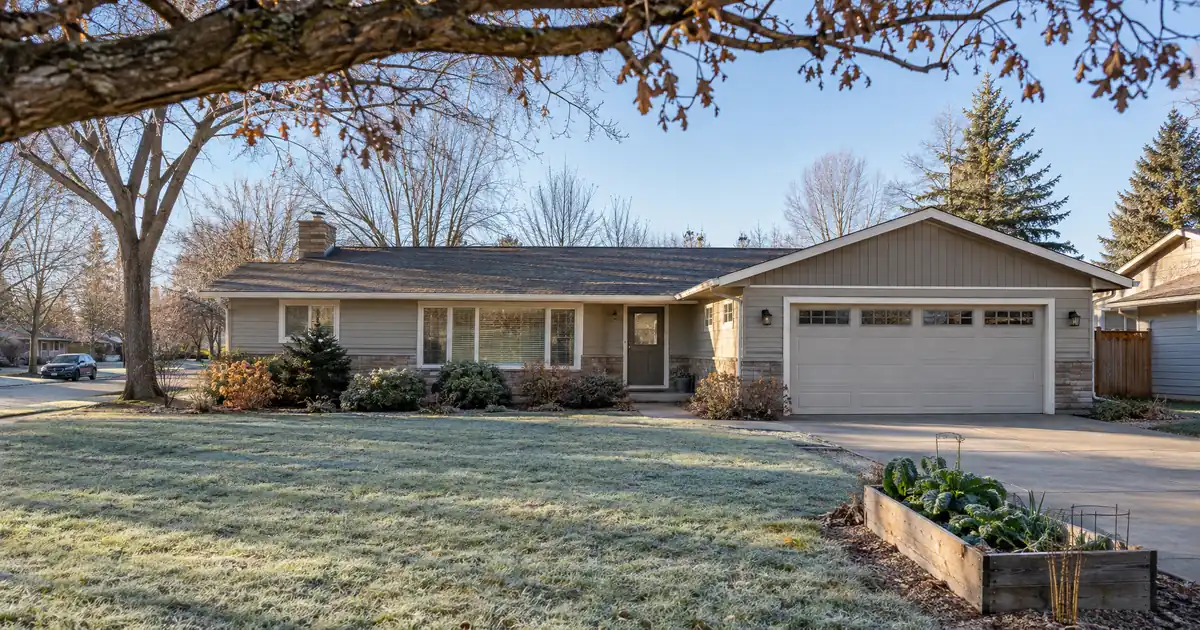
The Quick Read: A home equity line adds a second loan alongside your existing financing and suits individually titled owners with strong personal credit. A cash-out refinance replaces the first loan and suits investors who hold the home in an LLC or need a larger sum. On an owner-built home, three things decide the choice: who holds title, how the build was funded, and how well you can document the work.
- A line of credit is judged mainly on you. A DSCR cash-out is judged mainly on the property’s rent.
- On an investment property, the home equity line tops out at 70% CLTV (combined loan-to-value, meaning all loans against the home divided by its value).
- An LLC cannot hold title on the equity line. A DSCR cash-out can generally keep the LLC in place, subject to lender program eligibility.
- Standard rental cash-outs reach about 75% LTV, with roughly six months of seasoning common.
- Your permits, certificate of occupancy, and cost records matter more on an owner-built home than on a purchased one.
The Honest Answer First
Pick the line if you own the home personally (or in a revocable trust), your credit and income are strong, and you want to draw cash in pieces. Pick the cash-out if the home sits in an LLC, you already carry heavy personal debt, or you want one large sum with the rent carrying the file.
How large a line the equity supports.
An equity line is sized by combined loan-to-value, occupancy, and credit — not by rental coverage. Switch the occupancy or the credit band and the ceiling moves with it.
Investment-property lines require a 700 minimum credit score; second-home lines start at a 640 minimum and primary-residence lines at 600, and the combined-LTV ceiling steps down as the credit band drops on primary-residence and second-home lines and holds on investment-property lines; the line cap steps down on primary-residence lines and holds at every tier on investment-property and second-home lines.
A debt-to-income ratio above 45% requires 680+ credit. Profiles under 640 are limited to single-family homes. At least 75% of the approved line is drawn at closing. Ceilings, floors, and caps update from Lendmire’s centralized guideline source.
Line estimate
Illustrative estimate only — not a quote, Loan Estimate, approval, or commitment to lend. The rate is an editable assumption; equity-line pricing is variable through both the draw and repayment periods and never converts to fixed. Occupancy and credit drive the ceiling together: an investment property tops out at 70% combined LTV (minimum credit 700, line cap $500,000); a second home tops out at 90% combined LTV (minimum credit 640, line cap $500,000), with the ceiling stepping down as the credit band drops (the cap holds at every tier); a primary residence tops out at 90% combined LTV (minimum credit 600), and its $750,000 maximum line is available only at 75% combined LTV or below with a 700-or-better credit profile (720 on the longer-runway program) and a full appraisal. Lines above $500,000 require a full appraisal. Credit, debt-to-income, property type, and full underwriting review all affect the final line.
Owner-built homes add a twist. There is no purchase price and no sales comps. The paper trail you kept during construction becomes your proof of value, and it matters under either product.
Side-by-Side
The cash-out column reflects DSCR cash-out refinances placed through Lendmire’s wholesale network. The line column reflects the home equity line programs the same network places, which are available only in Lendmire’s 16 full-service states. Both are subject to lender guidelines.
| Factor | Home Equity Line | DSCR Cash-Out Refinance |
|---|---|---|
| What happens to your first loan | Stays; line is added | Paid off and replaced |
| Review basis | Personal credit, income, DTI | Property rent vs. full housing payment |
| Vesting | Individual or revocable trust | LLC generally allowed |
| Leverage ceiling, investment property | 70% CLTV | About 75% LTV, standard rental |
| Amount range | $25,000 to $500,000 on investment | Up to $3,000,000 on standard programs |
| Valuation | Often automated at $500,000 or less | Full appraisal with rent schedule |
| Reserves | Varies by file | Commonly around 6 months of PITIA |
| Owner-built paper trail | Supports value and eligibility | Supports value and cost basis |
A few notes on the table. PITIA is principal, interest, taxes, insurance, and any association dues. The line requires at least a 700 credit score on investment property. The DSCR cash-out wants roughly 660 on most programs, with a 620 floor in parts of the network. Reserves vary by lender, leverage, loan size, and transaction type. Many files are asked for about six months, and larger loans can step up.
What Owner-Built Changes
A standard purchase gives a lender a contract price. Your build gives them a stack of receipts. So the first thing to understand is where your home sits in its financing life.
If a construction-only loan funded the build, it must be paid off at completion. That payoff is often the refinance event. A construction-to-permanent loan converts on its own, so you may be dealing with a normal first mortgage. If you paid cash, there may be no first lien at all.
Next comes the paperwork. Lenders look for a certificate of occupancy from the local building department, final inspection records, and a clear permit history. They also want the draw records and receipts that show what went into the home. Keep all of it in one folder.
Valuation works differently by product. A cash-out on a rental typically uses a full appraisal with a market-rent schedule (appraisers commonly use form 1007 for single-family homes and form 1025 for 2-4 units). Owner-built homes can be harder to appraise because comparable sales may be thin. On the line, lines at or below $500,000 ordinarily run an automated valuation. A higher CLTV may call for a second valuation. You can also request a full appraisal in any case.
Seasoning, the waiting period a lender wants between events, adds a wrinkle. Within a seasoning window, many DSCR lenders size a cash-out on cost basis (what you actually spent) rather than appraised value. For a home you built on land you owned for years, the start of that clock is a lender-specific question. Ask before you assume. A larger paper trail makes the cost-basis route easier to defend.
When a HELOC Is the Better Fit
A home equity line fits best when the property is yours personally and the equity is real. It also helps when you want to leave the first mortgage alone.
You hold a good first loan you do not want to touch. The CFPB describes a HELOC as a credit line you can draw on repeatedly up to a maximum. With an existing mortgage, it becomes a second mortgage paid in addition to the first. If your construction-to-permanent loan converted on terms you like, adding a line keeps it intact.
You built with cash. A home owned free and clear can carry the line in first-lien position. That makes the structure simple: no payoff, no new first loan.
Your cash needs are phased. Say you are finishing a detached garage unit, then landscaping, then a second-phase addition. On the network’s lines, at least 75% of the line is drawn at closing, so this is not a pure draw-as-you-go product. Still, an investment line runs a 5-year interest-only draw followed by a 25-year repayment, with a $1,000 minimum on later draws on the longer-runway structure (the program that offers the longest draw period).
Your personal file is clean. The line is qualified on your credit, income, and a DTI (debt-to-income ratio) of up to 50%, calculated on the interest-only payment at the maximum draw. Investment lines need a 700 score or better. If you have a lot of financed properties, check the exposure rules: you are limited to three lines, and more than 15 financed properties makes you ineligible.
Primary and second homes get more room. A primary residence can reach 90% CLTV, but only at a 720 score or better and up to $500,000. A second home reaches 90% under the same 720 condition. An investment property never goes above 70% CLTV.
If you are weighing this for a vacation property, Lendmire’s comparison for HELOC vs cash-out refinance for a second home owner needing flexible cash covers that angle in depth.
Know the limits. A line is not offered where an LLC holds title. It is also not offered on manufactured homes, log homes, or barndominiums. The line’s floating structure means the payment can change, and the lender can freeze or reduce the line.
When a Cash-Out Refinance Is the Better Fit
A DSCR cash-out refinance fits best when the property earns its keep and your personal file is not the strongest part of the picture. DSCR (debt service coverage ratio) is the monthly rent divided by the full housing payment. DSCR loans are designed for non-owner-occupied investment properties. Because they are business-purpose investor loans, they are reviewed differently from a standard owner-occupied mortgage.
The home is in an LLC. The line cannot hold LLC title. A cash-out can generally keep the entity on the note, with a personal guarantor, depending on program terms. Names should match across the note, title, insurance, appraisal, and lease.
You need real money. Cash-outs run up to $3,000,000 on standard programs (smaller balances available through select lenders). Above $2,500,000, the network generally holds to 30-year fixed structures. That range is well above the line’s $500,000 cap on investment property.
You want the rent to qualify the file. The file qualifies primarily on property-level rental income covering the payment, subject to lender guidelines. Many select programs start at 1.00 coverage. A separate select-lender path takes coverage below 1.00, with leverage and terms adjusted. Stronger ratios tend to open better leverage.
One caution. Clearing 1.00 does not mean the property cash flows. Repairs, vacancy, management, utilities, and capex sit outside the calculation. And taking more cash out raises the new payment, which lowers the coverage ratio. A bigger cash-out can push a comfortable ratio toward the floor.
You can show cost and value. Cash-out on standard rentals tops out around 75% LTV across most of the network. On a short-term rental, the cash-out ceiling is 70%, and programs generally expect a 640+ score and about 12 months of hosting history. Short-term rental rules can vary by city, county, HOA, and property type, so investors should confirm local rules before relying on projected rental income.
You are also dealing with an existing HELOC. A cash-out would need to pay off that line or have it subordinated. Plan for it.
For another angle on this choice, see Lendmire’s article Vacation Home Cash-Out Refinance vs Primary Home for a Second-Home Owner. Lendmire’s complete DSCR loans guide covers the full program range.
The LLC Fork and the Due-on-Sale Trap
Many owner-builders hold the land in their own name and later move the finished home into an LLC. That move needs care.
Federal law, 12 U.S.C. § 1701j-3, makes due-on-sale clauses enforceable and carves out certain transfers. Deeding a mortgaged home into an LLC may trigger the clause. A payoff-and-refinance sidesteps the issue because the old loan is gone. This is a common reason investors choose a DSCR cash-out over re-titling to qualify for a line.
If the home is already in an LLC, you have two paths. Change the vesting (with the first lender’s consent, if a first mortgage exists) or use the cash-out. The line does not fit a property deeded to an LLC.
Credit and Leverage, Compared Fairly
Credit asks different things of you in each case. The line starts at a 600 floor on primary residences and at 640 on second homes. Investment lines start at 700. A bankruptcy needs four years of seasoning from discharge or dismissal. DSCR programs generally want around 660, with 700+ unlocking the strongest leverage tiers and a 620 floor in parts of the network.
Leverage works differently too. A line counts all loans against the home (CLTV). A cash-out counts the single new loan against value. Neither a bigger equity cushion nor a bigger rent figure erases credit floors, reserve rules, or property eligibility. The strongest files clear both tests: enough equity and enough coverage.
Balanced Verdict
Neither product wins by default. The home equity line is the lighter lift when you hold title personally, your credit is solid, and you want to keep a first loan in place. The DSCR cash-out is the sturdier tool when the property is in an LLC, your personal ratios are stretched, or the amount is larger than a $500,000 investment line allows.
For an owner-built home, add one more test. Whichever route you take, the lender will ask how the home was built, funded, and permitted. Gather the certificate of occupancy, permits, draw records, and receipts before you apply. Then compare the structures, not just the headline numbers.
If you are weighing a home equity line against a cash-out refinance and want to see how the numbers work, Lendmire can help you compare HELOC options based on the property, the equity available, credit profile, combined leverage, and your goals. Call 828-256-2183.
Frequently Asked Questions
Can an LLC that owns my owner-built rental get a HELOC?
Not on the network’s equity line. LLCs, corporations, partnerships, and irrevocable, blind, or land trusts cannot hold title. Only an individual or a revocable living trust can. A property already in an LLC needs a vesting change or a DSCR cash-out. A cash-out can generally keep the LLC on title, depending on program guidelines.
If I paid cash to build, is a HELOC easier?
Often simpler in structure, because a line can sit in first-lien position on a home with no mortgage. It is still qualified on your credit, income, and DTI, and investment lines top out at 70% CLTV. A cash-out on a cash-funded build can be sized on cost basis during seasoning, so your receipts matter.
How long after finishing the build can I do a cash-out?
Seasoning of about six months is the common expectation across most of the network. How that clock starts on a home built on land you owned earlier varies by lender. Ask before you apply.
Does a coverage ratio above 1.00 mean my rental makes money?
No. The ratio compares rent to PITIA only. Repairs, vacancy, management, utilities, and capex sit outside it. Treat it as a qualification test, not a profit forecast.
Can a barndominium or log home use either option?
No. Barndominiums and log homes are not offered under the network’s DSCR programs, and log homes and manufactured homes are not eligible for the equity line either.
Investors weighing their equity options can start with Lendmire’s guide to cash-out refinance on an investment property.
About Lendmire
Lendmire is a mortgage brokerage (NMLS# 2371349) arranging home equity lines of credit — primary-residence, second-home and investment-property lines — through a wholesale lending network in its 16 full-service states. Eligibility is determined by the lender on each file. Scotsman Guide named Lendmire a Top Mortgage Workplace in both 2025 and 2026.
Get Started
Ready to find the right loan for you?
In about 30 seconds you can review financing options available for your home or investment property. No commitment required.
Informational only. Not a Loan Estimate, approval, or commitment to lend. Program availability and eligibility are subject to lender guidelines, credit approval, property review, and underwriting.
References
1. CFPB – Home equity loan vs. HELOC
2. Cornell LII – 12 U.S.C. § 1701j-3
This article is part of Lendmire’s home equity line of credit program — full qualification details, guidelines, and scenarios live on the program page.
Related reading: Should an Investor Close a Cash-Out Refinance That Appraises Low? · How to Decide to Sell or Refinance a Home You Use and Rent on Airbnb · Sell vs DSCR Refinance for an Airbnb Owner Who Also Stays There
Brandon Miller
Founder & CEO, Mortgage Loan Originator, Lendmire LLC
- Mortgage Loan Originator · NMLS# 1129696 · Verify on NMLS Consumer Access
- North Carolina Real Estate Broker · License# 343312 · Verify on NCREC
- North Carolina Insurance Producer · License# 19053198 · Property, Casualty, Life, Health · Verify on NAIC SBS
- Lendmire LLC · Firm NMLS# 2371349 · Verify firm licensure
Important disclosures. Lendmire (NMLS# 2371349) is a licensed mortgage brokerage. Lendmire is not a direct lender, depository institution, or financial advisor. All loan inquiries are subject to lender underwriting; this article does not constitute a commitment to lend. Rates, terms, and program guidelines are subject to change without notice and vary by borrower profile, property type, and state. Information in this article is general in nature and is not financial, legal, or tax advice. Equal Housing Opportunity. NMLS Consumer Access: nmlsconsumeraccess.org.