
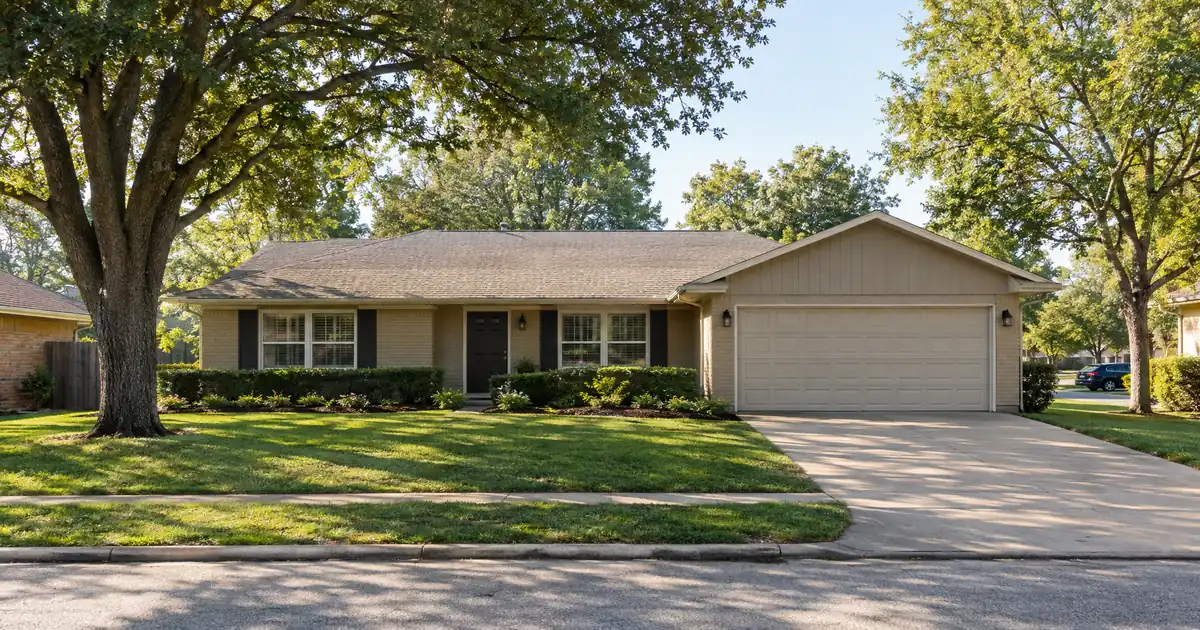
The Quick Read: A HELOC puts your home on the line as collateral, while Parent PLUS and private student loans are unsecured, so the real choice is between a possible foreclosure on your house and credit damage, garnishment, or cosigner fallout if you stop paying, with the federal loan offering far stronger hardship protections than either alternative. Here is what matters most for an owner of real estate.
- A HELOC (home equity line of credit) is the only one of the three that lets a lender foreclose on your house after missed payments.
- Parent PLUS is a federal loan with a pass/fail credit-history check, and new borrowing is now capped per student.
- A private student loan is underwritten to the lender’s credit policy and often leans on a cosigner.
- Unsecured does not mean harmless. Default still brings credit damage and collection action.
- Investors carry extra exposure: a new lien on a rental can limit future refinance room, and a foreclosure can block a later Parent PLUS loan.
The Honest Answer on Who Each Option Is For
Parent PLUS fits the parent whose credit history is clean and who wants the safest floor if income drops. A private student loan fits the borrower who fails the federal check or needs more than the cap allows, and who has the credit to carry it or a cosigner who understands the exposure. A HELOC fits the owner with real equity, steady documented income, and cash reserves, who accepts that the house backs the debt.
How large a line the equity supports.
An equity line is sized by combined loan-to-value, occupancy, and credit — not by rental coverage. Switch the occupancy or the credit band and the ceiling moves with it.
Investment-property lines require a 700 minimum credit score; second-home lines start at a 640 minimum and primary-residence lines at 600, and the combined-LTV ceiling steps down as the credit band drops on primary-residence and second-home lines and holds on investment-property lines; the line cap steps down on primary-residence lines and holds at every tier on investment-property and second-home lines.
A debt-to-income ratio above 45% requires 680+ credit. Profiles under 640 are limited to single-family homes. At least 75% of the approved line is drawn at closing. Ceilings, floors, and caps update from Lendmire’s centralized guideline source.
Line estimate
Illustrative estimate only — not a quote, Loan Estimate, approval, or commitment to lend. The rate is an editable assumption; equity-line pricing is variable through both the draw and repayment periods and never converts to fixed. Occupancy and credit drive the ceiling together: an investment property tops out at 70% combined LTV (minimum credit 700, line cap $500,000); a second home tops out at 90% combined LTV (minimum credit 640, line cap $500,000), with the ceiling stepping down as the credit band drops (the cap holds at every tier); a primary residence tops out at 90% combined LTV (minimum credit 600), and its $750,000 maximum line is available only at 75% combined LTV or below with a 700-or-better credit profile (720 on the longer-runway program) and a full appraisal. Lines above $500,000 require a full appraisal. Credit, debt-to-income, property type, and full underwriting review all affect the final line.
Most families do not need to pick one. Many stack them, and the order you stack them in decides how much of your home is ever at risk. For a deeper look at the family-side choice, see Lendmire’s HELOC vs Parent PLUS vs private student loan for college piece.
Side-by-Side
The table compares structure and risk, not pricing. Pricing lives in the calculator.
| Factor | HELOC | Parent PLUS | Private loan |
|---|---|---|---|
| Collateral | Your home | None (unsecured) | None (unsecured) |
| Who is liable | Titled borrower | Parent borrower | Borrower, often plus cosigner |
| Review basis | Equity, credit, income, DTI | Pass/fail adverse-credit check | Lender credit policy |
| Documentation | Credit, income, title, insurance | School certifies cost; no income review | Credit, income, enrollment |
| Hardship tools | Few; lender can freeze the line | Federal protections apply | Lender-specific; often limited |
| Size limit | Equity-based; $25,000 to $750,000 | $20,000 a year, $65,000 per student | Set by lender and school cost |
| Home at risk? | Yes, foreclosure | Not directly | Not directly |
DTI means debt-to-income ratio, the share of your monthly income that goes to debt payments.
How Each Option Treats Your Home
A HELOC is secured by the property. It is a line you draw on, repay, and draw on again, with your house as security. CNBC Select notes that federal and private student loans are unsecured, so those lenders cannot seize assets directly, while home-equity lenders can foreclose after missed payments.
Parent PLUS has no lien. If you default, expect credit damage and possible wage garnishment. Your house is not collateral.
A private student loan has no lien either. The lender collects through its contract, and a cosigner shares the exposure.
One honest caveat: unsecured creditors who win a court judgment may be able to pursue other assets through the courts. State rules differ, so treat unsecured as “not directly at risk,” never as “safe.” A family living on one paycheck should weigh that difference carefully.
How Parent PLUS Actually Qualifies
Parent PLUS does not use a credit score or a debt-to-income test. The Department of Education pulls a credit report and looks for specific adverse events. The school confirms eligibility and cost of attendance. No income or asset documentation enters the decision.
An aid-office document at the University of the Incarnate Word reproduces the federal criteria. Adverse credit includes debts above a set dollar threshold that are 90 or more days delinquent, or in collection or charged off within the last two years. It also includes a default determination, bankruptcy discharge, foreclosure, repossession, tax lien, wage garnishment, or write-off of federal student aid debt within the last five years. That document lists the threshold at $2,085, and a school’s aid office can confirm the current figure.
Two details matter to investors:
- A foreclosure within five years is on the adverse list. An owner with a distressed-property history can hit this wall.
- Having no credit history at all is not adverse. Thin files are not automatically denied.
A denied parent has two paths. One is an endorser with clean credit who agrees to repay if the parent does not. The other is documented extenuating circumstances, which the Department decides.
The New Cap Changes the Math
Federal law now limits new Parent PLUS borrowing to $20,000 per year and $65,000 in total per dependent student, according to Washington State University’s financial aid office. The limits attach to the student, so two parents do not double them. Parents who borrowed before the change can keep the old limits for up to three academic years, per Harvard Student Financial Services.
For many families, that leaves a gap between the cap and the full cost of attendance. The gap gets filled with a private loan, home equity, or both. That is why this comparison matters more now than it did when PLUS had no ceiling.
When a HELOC Is the Better Fit
A HELOC wins when you are the strong borrower, the equity is real, and you can absorb a bad year without selling the house.
- You have documented income and solid credit. Across the network, a home line is reviewed on equity, credit, and personal income. The 600 floor is the bottom of the range, and the strongest tiers need much more.
- You were denied federally and want to avoid cosigner risk. A line in your own name keeps a second person out of the debt.
- You want one source for a large, known need. Network lines require at least 75% of the line to be drawn at closing, so size the line to what you will actually use. A smaller line, with later draws of at least $1,000 on most files, fits better than a big line you plan to leave undrawn.
The network facts you should know before leaning on one:
- A line is a standalone loan in first or second lien position. Lines at or below $500,000 ordinarily run an automated valuation. A full appraisal is required above that.
- Lines run from $25,000 to $750,000, and anything above $500,000 exists on primary residences only.
- On a primary residence, the ceiling reaches 90% CLTV (combined loan-to-value, meaning all liens against the home divided by its value). That top tier exists only at a 720-or-better credit profile, up to $500,000.
- On an investment property, the ceiling is 70% CLTV, with a $500,000 maximum line. Investment lines run a 5-year interest-only draw followed by a 25-year repayment period.
- Pricing floats during both the draw and repayment period. It does not convert to fixed.
- Title must sit with an individual or a revocable living trust. An LLC cannot hold it.
- Placement is limited to Lendmire’s 16 full-service states, which is narrower than its 41-market DSCR footprint.
Every figure here is subject to lender guidelines and full file review.
The structural risk is the freeze. The Consumer Financial Protection Bureau explains that a HELOC lender can generally freeze or reduce the line if the home’s value falls or your finances worsen. A frozen line mid-degree breaks a plan that assumed money would be there each term. An undrawn line is available credit, not committed money.
CNBC Select also reports that HELOC proceeds may count as income and affect aid eligibility the following year. Ask the school’s aid office how it treats home-equity draws.
When Parent PLUS Is the Better Fit
Parent PLUS is the better fit when your priority is protecting the house and keeping a safety net in place.
- Your credit history is clean. The check is pass/fail, and a clean report clears it.
- Your income is uncertain. Federal loans come with hardship tools that a home-equity line and most private contracts lack. Federal loans are also canceled on the borrower’s death. The Consumer Financial Protection Bureau notes that no legal requirement forces private lenders to do the same.
- You are self-employed or have irregular income. The federal decision does not look at your income at all, so bank statements and personal-income paperwork never enter it.
- The amount fits under the cap. If the need stays within the annual and total limits, the federal route covers it without touching home equity.
The tradeoffs are real. You alone are legally responsible, not the student. New borrowers also give up some repayment flexibility on these loans. And the cap means PLUS cannot fund an expensive degree by itself.
When a Private Student Loan Is the Better Fit
A private loan is the better fit when you have been denied federally or the cap leaves a gap, and you do not want a lien on your home.
- Underwriting looks at current credit and income. A parent turned down for an old bankruptcy or lien may still qualify on today’s profile, depending on the lender.
- The student can borrow in their own name with a cosigner. That keeps the parent’s home out of the file, but it puts the cosigner’s credit on the line.
- You need to fill a gap without equity exposure. You borrow only what the federal cap does not cover.
Watch the cosigner terms closely. Some private contracts let the lender demand full repayment if a cosigner dies or files bankruptcy. Federal endorsers do not trigger that. Private loans also tend to default after four missed monthly payments, or 120 days, according to the CFPB’s key-terms page on student loans. A bankruptcy filing can trigger default as well.
Bankruptcy will not rescue you reliably here. Federal and private education loans are generally not dischargeable absent undue hardship. Treat discharge as a long shot, not a plan.
What Happens If You Stop Paying
| Step | HELOC | Parent PLUS | Private loan |
|---|---|---|---|
| Early default | Late fees, credit damage | Delinquency, credit damage | Late fees, credit damage |
| Later stage | Lender can pursue foreclosure | Collection, wage garnishment | Collection, cosigner pursued |
| Home exposure | Direct (lien) | Indirect, via court judgments | Indirect, via court judgments |
| Relief tools | Few beyond lender workout | Federal hardship options | Varies by lender |
The key difference is where the consequence lands. With a HELOC, it lands on the house itself. With the other two, it lands on your credit, wages, and cosigners first.
The Investor Angle
If you own rentals, the HELOC question has extra layers.
A new lien limits later options. A second lien raises combined leverage on that property. Most DSCR cash-out refinances in the network top out around 75% LTV on standard rentals, with roughly six months of seasoning expected. A HELOC balance on the same property reduces what is left. A DSCR (debt service coverage ratio) loan compares monthly rent to the full monthly obligation, including principal, interest, taxes, insurance, and any HOA dues. Clearing the ratio is not the same as positive cash flow, since repairs, vacancy, and management sit outside it. Final terms depend on the lender’s guidelines, the property type, and the borrower’s complete credit picture.
Entity-held rentals cannot carry the line. A property deeded to an LLC would need a vesting change, or you would use a DSCR cash-out refinance instead, subject to lender program eligibility. Lendmire’s complete DSCR loans guide explains how that route works.
Foreclosure echoes. Lose a property to foreclosure and you have a listed adverse event for a later Parent PLUS application, as the UIW criteria show.
Picture a parent who owns a duplex and a primary residence. The parent has a foreclosure from four years back, strong income now, and a student heading into a costly program. Parent PLUS may deny that file on the foreclosure unless an endorser or extenuating circumstances come into play. A private loan might still work on current credit. A line on the primary residence could work too, but it puts that home behind the debt. Each path trades one risk for another.
Tax treatment can depend on how the funds are used and how the property is held; investors should keep clear records and speak with a qualified tax professional before relying on any deduction.
A Safer Order for Most Families
For most families who want to protect the house, the order of operations looks like this:
1. Use grants, scholarships, and the student’s own federal loans first.
2. Add Parent PLUS up to what the family can carry if income drops.
3. Fill any remaining gap with a private loan the borrower can repay without relying on a cosigner’s good fortune.
4. Hold home equity in reserve rather than drawing it, unless the numbers clearly work.
That order is a judgment call, not a rule. Families with strong income and deep equity sometimes reverse steps three and four, and that is a legitimate choice if they go in knowing the house backs the debt.
Verdict
No option wins on every front. Parent PLUS carries the least danger to your home and the most hardship protection, but the cap limits it and the credit check can block it. A private loan avoids a lien but can pull in a cosigner and offers fewer safety nets. A HELOC is flexible and sized to your equity, but it is the only one that can cost you the house, and the lender can freeze it when you most need it.
The right answer comes down to one question: can you absorb a lost year of income without the house being in play? If yes, a HELOC becomes a reasonable tool. If no, lean on the unsecured routes first.
Frequently Asked Questions
Can I lose my house over a Parent PLUS loan?
Not directly, because the loan is unsecured and no lien attaches to your home. Default still brings credit damage and wage garnishment, and a creditor with a court judgment may have further options under state law. A foreclosure from another loan can also block a future Parent PLUS application for five years.
Is a private student loan secured by my home?
No. It is unsecured, so the lender has no lien on your property. A cosigner is fully liable for the debt, though, and some contracts let the lender demand full repayment if the cosigner dies or files for bankruptcy.
Can a lender freeze my HELOC while my child is in school?
Yes, in many cases. Lenders can generally freeze or reduce a line if the home’s value drops significantly or your finances worsen materially. A freeze limits new draws but does not change the balance you already owe, so avoid building a four-year plan around undrawn credit.
Can I use a HELOC on a rental property to pay tuition?
Network lines on investment properties are available at up to 70% CLTV and a $500,000 maximum, with title held by an individual or revocable trust, not an LLC. The line is underwritten on your personal credit and income. Lender treatment of personal-purpose use on a rental can vary, so confirm it before you apply.
Does a HELOC affect financial aid?
Yes, it can. CNBC Select reports that HELOC proceeds may be treated as additional income and affect aid the following year. Check with the school’s aid office, since treatment depends on how the school applies its formula.
Next Step
If you are considering a home equity line and want to see how the numbers work, Lendmire can help you compare HELOC options based on the property, the equity available, credit profile, combined leverage, and your goals. It is not the lender, and every figure above is subject to lender guidelines and full file review.
About Lendmire
Lendmire is a mortgage brokerage (NMLS# 2371349) arranging home equity lines of credit — primary-residence, second-home and investment-property lines — through a wholesale lending network in its 16 full-service states. Eligibility is determined by the lender on each file. Scotsman Guide named Lendmire a Top Mortgage Workplace in both 2025 and 2026.
Get Started
Ready to find the right loan for you?
In about 30 seconds you can review financing options available for your home or investment property. No commitment required.
Informational only. Not a Loan Estimate, approval, or commitment to lend. Program availability and eligibility are subject to lender guidelines, credit approval, property review, and underwriting.
References
1. CNBC Select: using home equity for a child’s college
2. University of the Incarnate Word financial aid: adverse-credit criteria
3. Washington State University financial aid: Parent PLUS limits
4. Harvard Student Financial Services: changes to federal student loans
5. Consumer Financial Protection Bureau: HELOC brochure
6. Consumer Financial Protection Bureau: student loan key terms
This article is part of Lendmire’s home equity line of credit program — full qualification details, guidelines, and scenarios live on the program page.
Related reading: Best Investments for Home Equity Loan · Can I Use Home Equity Loan to Buy Investment House? · VA Cash-Out vs HELOC on a Paid-Off Home When the Cap Decides
Brandon Miller
Founder & CEO, Mortgage Loan Originator, Lendmire LLC
- Mortgage Loan Originator · NMLS# 1129696 · Verify on NMLS Consumer Access
- North Carolina Real Estate Broker · License# 343312 · Verify on NCREC
- North Carolina Insurance Producer · License# 19053198 · Property, Casualty, Life, Health · Verify on NAIC SBS
- Lendmire LLC · Firm NMLS# 2371349 · Verify firm licensure
Disclosures. The information presented in this article is general market commentary, not financial, legal, or tax advice. Lendmire is a mortgage brokerage (NMLS# 2371349) — not a direct lender or depository institution — and loan placement is subject to lender underwriting. Nothing in this content represents a commitment to lend. Loan terms, pricing, and program availability vary based on borrower qualifications, property characteristics, and state of subject property, and are subject to change at any time. Lendmire complies with Equal Housing Opportunity requirements. Consumer access: nmlsconsumeraccess.org.