
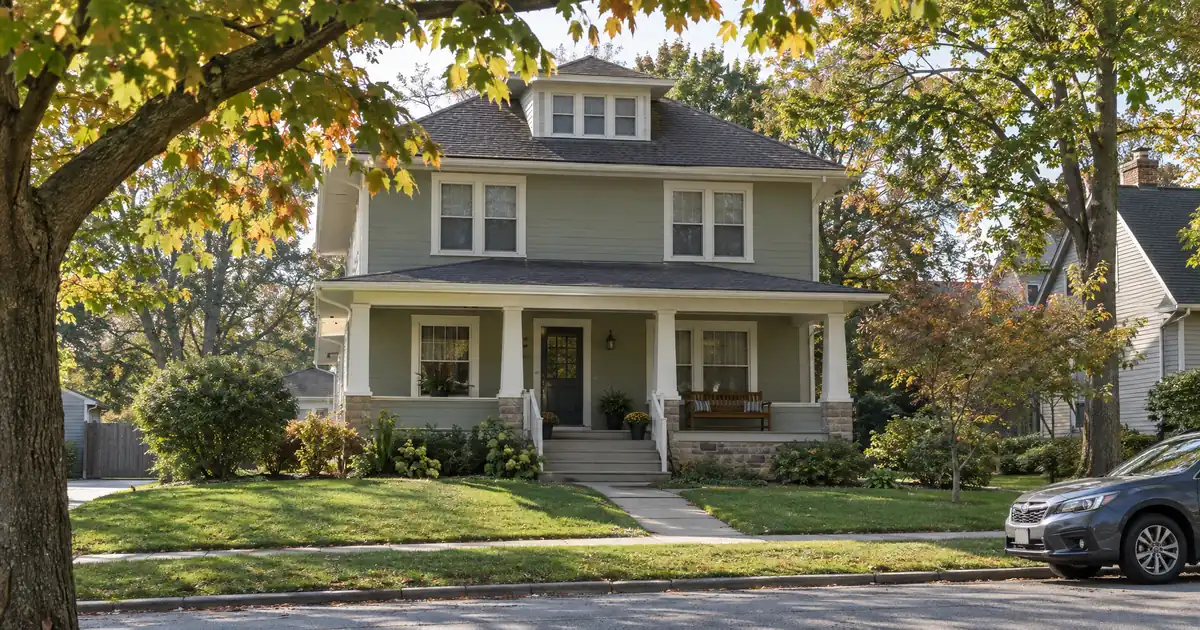
The Quick Read: A home equity line fits when you hold real equity, have steady income and credit, carry store card balances expensive enough to justify putting a lien on your home, and have a plan to keep the cards at zero afterward, all subject to lender guidelines and full file review. A home equity line of credit (HELOC) is personal debt reviewed on you and your house. It is not a DSCR loan, which is reviewed on a rental property’s income.
- Equity caps the line: lenders limit combined loans to a percentage of your home’s value.
- Credit and debt-to-income decide approval, not the card issuers’ opinion of you.
- A lien turns missed payments on store cards into a risk to your home.
- The cost of a HELOC floats with the market and never converts to a fixed amount.
- If your real goal is buying or refinancing rentals, a DSCR loan is usually the better tool.
What a HELOC Looks Like Through Our Network
Lendmire brokers HELOCs through select wholesale partners and is never the lender. The limits depend on how you use the home, so the table separates the three occupancy types. Every figure is a typical range, subject to lender guidelines.
How large a line the equity supports.
An equity line is sized by combined loan-to-value, occupancy, and credit — not by rental coverage. Switch the occupancy or the credit band and the ceiling moves with it.
Investment-property lines require a 700 minimum credit score; second-home lines start at a 640 minimum and primary-residence lines at 600, and the combined-LTV ceiling steps down as the credit band drops on primary-residence and second-home lines and holds on investment-property lines; the line cap steps down on primary-residence lines and holds at every tier on investment-property and second-home lines.
A debt-to-income ratio above 45% requires 680+ credit. Profiles under 640 are limited to single-family homes. At least 75% of the approved line is drawn at closing. Ceilings, floors, and caps update from Lendmire’s centralized guideline source.
Line estimate
Illustrative estimate only — not a quote, Loan Estimate, approval, or commitment to lend. The rate is an editable assumption; equity-line pricing is variable through both the draw and repayment periods and never converts to fixed. Occupancy and credit drive the ceiling together: an investment property tops out at 70% combined LTV (minimum credit 700, line cap $500,000); a second home tops out at 90% combined LTV (minimum credit 640, line cap $500,000), with the ceiling stepping down as the credit band drops (the cap holds at every tier); a primary residence tops out at 90% combined LTV (minimum credit 600), and its $750,000 maximum line is available only at 75% combined LTV or below with a 700-or-better credit profile (720 on the longer-runway program) and a full appraisal. Lines above $500,000 require a full appraisal. Credit, debt-to-income, property type, and full underwriting review all affect the final line.
| Occupancy | Credit floor | Top CLTV | Max line |
|---|---|---|---|
| Primary residence | 600 | 90% (720+ only) | $750,000 |
| Second home | 640 | 90% (720+ only) | $500,000 |
| Investment property | 700 | 70% | $500,000 |
CLTV means combined loan-to-value: your first mortgage plus the new line, divided by the home’s value. On a primary residence, the 90% ceiling applies only at a 720 score and a line up to $500,000. Lines above $500,000 are primary-residence only, need a 700 score or better (720 on the longer-runway structure), cap at 75% CLTV, and require a full appraisal.
Most store-card borrowers use a primary residence, so that row matters most. A 660 score, for example, typically tops out at 85% CLTV up to $500,000 on a primary residence, while a 640 score tops out at 80%.
Title is the other structural detail. These lines go to individuals or revocable living trusts. LLCs, corporations, partnerships, and irrevocable or land trusts cannot hold title, subject to program terms. That is the sharpest difference from a DSCR loan, and it matters if a rental is already deeded to an LLC.
The line is standalone, in first or second lien position. Two draw structures exist on primary and second-home lines. One runs a 3-year interest-only draw and then a 17-year fully amortizing repayment. The other runs a 5-year draw and then 25 years. Investment lines use the 5-year structure only.
At least 75% of the line is drawn at closing. That suits card payoff, because the money goes out to the issuers right away. Later draws start at a $1,000 minimum.
How Underwriting Treats It, Step by Step
A HELOC is underwritten to the borrower first and the property second. Here is the sequence on most files.
1. Credit pull. The lender uses one score tied to the primary wage earner. The report must be no more than 90 days old at closing, and rescoring is not available.
2. Debt-to-income (DTI). DTI compares your monthly debts to your monthly income. Maximum DTI is 50%, or 45% for scores from 600 to 679. A ratio above 45% needs at least a 680 score. The lender reviews your file on the interest-only payment as if you had drawn the full line.
3. Equity sizing. The lender takes the allowed CLTV, applies it to the value, and subtracts your first mortgage. What remains is the most the line can be.
4. Valuation. Lines at or below $500,000 ordinarily use an automated valuation instead of a traditional appraisal. A higher CLTV may call for a second valuation. Every line above $500,000 gets a full appraisal, and you can request one on any file.
5. Property and history checks. Single-family homes, 2-4 units, PUDs, townhomes, and condos (including non-warrantable) are eligible. Manufactured homes, co-ops, condotels, and log homes are not offered. A bankruptcy needs four years of seasoning from discharge or dismissal.
6. Draw and payoff. The lender sends funds at closing to the card issuers you name, and you repay on the line’s schedule.
Note the order. Your card balances show up in step 2, so they affect approval until they are paid. Paying them through the line may improve the debt picture, subject to lender guidelines. The borrower’s income and credit decide the file. The property’s rent does not.
What Makes Store Card Balances Different
Store cards cost more than most other cards, and that is the whole case for consolidating them. A Consumer Financial Protection Bureau issue spotlight on retail cards found that over 90 percent of retail credit cards carried a maximum purchase interest cost above 30 percent. Only 38 percent of non-retail general purpose cards did.
The agency’s credit card market report puts the 2024 averages at 31.3 percent for private label cards and 25.2 percent for general purpose cards. A private label card is a closed-loop store card that works only at one retailer.
Three habits make store balances tricky. First, borrowers often hold several small balances across several retailers, so the savings per card are modest. Second, some balances sit on a promotional plan where interest is deferred. Third, a card kept for a discount has value even at zero balance.
That changes the triage. Rank balances by what each one costs you, and move only the balances that justify a lien on your house.
| Balance type | Move to a line? | Why |
|---|---|---|
| Large, standard interest | Usually yes | The savings are largest |
| Small, standard interest | Often no | Closing costs can swamp the savings |
| Deferred-interest promo, running | Usually wait | The secured debt may cost more |
| Promo about to expire, unpaid | Compare | Pay it down or move it before it expires |
When It Fits and When It Doesn’t
A HELOC fits when four conditions line up at once. The balances are large enough that the interest saved beats the cost of opening the line. Your DTI and credit land inside program limits. Your income is stable. And you have a written plan so the cards stay at zero.
It does not fit when the balances are small, when the habit that built them is still running, or when you may need the equity soon for something else. Experian’s explainer notes that a HELOC can consolidate several card balances into one with a single payment. It also warns that this gives access to a new credit line while zeroing out the cards, which invites re-borrowing.
Self-score with these questions:
- Do the balances cost enough to justify closing costs and a lien?
- Would the payment still work if the cost of the line rose?
- Have you stopped using the cards?
- Do you plan to buy or refinance a rental soon?
- Is the equity cushion left after the draw still comfortable?
Three or more “no” answers mean you should pause.
A Worked Example
Picture a primary residence with a first mortgage equal to 65% of the home’s value. The borrower has a score in the 680s and three store cards. Under the network’s typical tiers, that profile reaches an 85% CLTV ceiling on a line up to $500,000.
The gap between 65% and 85% is the most the line could be, expressed as a share of value. The borrower only needs a fraction of that gap to clear the cards. At least 75% of the line is drawn at closing, so size the line to the payoff and not to the maximum.
Now the trap. The interest-only draw period makes the payment feel small, and a longer payoff can cost more overall even at a lower cost of borrowing. Compare total cost and not just the monthly figure. Each draw also uses up equity that a later refinance could have used.
The Risks
Your house secures the line. If you cannot repay, you could lose the home, and a store card default has never carried that risk before.
The line can also shrink. Lenders generally keep the right to freeze or reduce a line if home values fall or your finances worsen, so an open HELOC is not guaranteed money.
The cost floats with the market during both the draw and repayment periods. Stress-test the payment at a higher cost than the day you open the line.
Closing costs are real. Nasdaq’s explainer on using a HELOC to consolidate debt puts typical costs between 2% and 6% of the loan amount. That is why small balances rarely pencil out.
What to Do With the Cards Afterward
Paying a card to zero does not change your score by itself. Opening a new account and cutting utilization can move the score in either direction, and nobody can promise an improvement.
Closing an old card can shorten your credit history. Keeping a card open at zero preserves history but invites spending. A common middle path is to keep the oldest card, cut up or lock the rest, and pay in full each month.
Set guardrails before closing: automatic payment on the line, a spending ceiling on any card you keep, and a calendar check three months in.
HELOC, Equity Loan, Cash-Out, Balance Transfer, or Personal Loan
| Option | Structure | Best for |
|---|---|---|
| HELOC | Revolving, interest-only draw | Staged or uncertain needs |
| Home equity loan | Lump sum, fixed schedule | One known payoff |
| Cash-out refinance | Replaces first mortgage | Large balances, new mortgage terms |
| Balance transfer card | Unsecured, introductory period | Small balances, fast payoff |
| Personal loan | Unsecured, fixed schedule | No lien on the home |
Unsecured options keep your house out of the picture. The secured options cost less but carry more consequences.
Where DSCR Fits Instead
If your real goal is rentals, your card balances are only part of the picture. DSCR loans are designed for non-owner-occupied investment properties. Because they are business-purpose investor loans, they are reviewed differently from a standard owner-occupied mortgage.
A DSCR loan is reviewed primarily on property-level rental income covering the payment, subject to lender guidelines. It cannot tap the equity in your own residence, and proceeds must follow program rules.
Across our wholesale network, a cash-out refinance on a rental tops out around 75% LTV on a standard rental, with about six months of seasoning as the common expectation. Select programs start at 1.00 coverage, and a separate select-lender path takes coverage below 1.00 with leverage and terms adjusted. Most programs want a score around 660, and 700+ opens the strongest leverage tiers. Reserves commonly run around six months of PITIA, though they vary by lender, leverage, and loan size.
Clearing 1.00 does not mean positive cash flow. DSCR compares rent to PITIA only, and repairs, vacancy, management, and capex sit outside the calculation. Large retail lenders also tend to restrict HELOCs to primary residences and price rental lines higher, per Lofty’s investor-education overview.
Sequence matters here. A HELOC draw adds personal debt and uses equity, which can matter for reserves, liquidity, and credit when you later apply for rental financing. If you are weighing a cash-out against a line, Lendmire’s explanation of how to time a cash-out refinance covers the timing side. For the rental side, see Lendmire’s complete DSCR loans guide. The brokerage arranges DSCR investor loans across 41 markets, Washington, D.C. included, while HELOC lines are available in 16 full-service states.
Key Terms Defined
HELOC: A revolving line of credit secured by your home, with a draw period followed by a repayment period.
CLTV: Combined loan-to-value, meaning all loans on the home divided by its value.
DTI: Debt-to-income, meaning your monthly debt payments divided by your monthly income.
Private label card: A store card that works only at one retailer, often with a higher interest cost.
Deferred interest: A promotional plan where interest is waived only if you pay the balance in full by a set date.
DSCR: Debt service coverage ratio, meaning a rental’s monthly rent divided by its monthly PITIA.
Frequently Asked Questions
Can I lose my home over store card debt?
Not from the cards alone, since they are unsecured. Once you move the balance onto a HELOC, the house secures it. Missed payments on the line can lead to foreclosure, so the lien is the real cost of consolidating.
Is it worth it for a small balance?
Usually not. Closing costs, annual fees, and a lien can outweigh the interest saved. A faster payoff plan or an unsecured option often fits small balances better.
Will paying off cards raise my score?
It might, but nobody can promise it. Lower utilization helps, while a new account and a new inquiry can pull the score the other way. Results vary by credit file.
Should I close the cards after payoff?
Closing the oldest card can shorten your credit history. Many borrowers keep one old card open at zero and close or lock the rest. The better choice depends on your spending habits.
What if my equity is too low?
Then the CLTV ceiling shrinks the line, or you may not qualify. Lower credit tiers also carry lower ceilings. A smaller targeted payoff, an unsecured option, or waiting while you pay down the first mortgage may work better.
The Bottom Line
A HELOC is a conditional fit for store card balances, not a universal fix. It works when the balances are large, the equity and credit are there, and the habit has changed. If you are considering a home equity line and want to see how the numbers work, Lendmire can help you compare HELOC options based on the property, the equity available, credit profile, combined leverage, and your goals. Programs are not a commitment to lend, and every file is underwritten individually.
About Lendmire
Lendmire, NMLS# 2371349, is a mortgage brokerage that arranges home equity lines of credit through wholesale lending partners in its 16 full-service states. Lines on primary residences, second homes and investment properties are each reviewed individually by the lender under the program’s occupancy, credit and combined-loan-to-value guidelines. Scotsman Guide named Lendmire a Top Mortgage Workplace in both 2025 and 2026.
Get Started
Ready to find the right loan for you?
In about two minutes you can review financing options available for your home or investment property. No commitment required.
Informational only. Not a Loan Estimate, approval, or commitment to lend. Program availability and eligibility are subject to lender guidelines, credit approval, property review, and underwriting.
References
1. CFPB Issue Spotlight: High Cost of Retail Credit Cards
2. CFPB: CFPB Consumer Credit Card Market Report
4. Nasdaq: Pros and Cons of Using a HELOC to Consolidate Your Debt
5. Lofty: HELOC on an Investment Property
This article is part of Lendmire’s HELOC & home equity loan program — full qualification details, guidelines, and scenarios live on the program page.
Related reading: HELOC vs Balance Transfer for a Homeowner With Store Card Debt · HELOCs for Non-US Citizens Who Own a Home in the US · How a HELOC Lender Reads Your Homeowners Insurance Coverage
Brandon Miller
Founder & CEO, Mortgage Loan Originator, Lendmire LLC
- Mortgage Loan Originator · NMLS# 1129696 · Verify on NMLS Consumer Access
- North Carolina Real Estate Broker · License# 343312 · Verify on NCREC
- North Carolina Insurance Producer · License# 19053198 · Property, Casualty, Life, Health · Verify on NAIC SBS
- Lendmire LLC · Firm NMLS# 2371349 · Verify firm licensure
Disclosure information. Lendmire is a state-licensed mortgage brokerage under NMLS# 2371349. Lendmire is not a depository institution, direct lender, or financial advisor — all loans referenced are placed through wholesale lender partners and are subject to each lender's underwriting standards. This article is provided for general informational purposes and is not a commitment to lend, nor does it constitute financial, legal, or tax advice. Loan programs, terms, rates, and qualification standards change without notice and depend on borrower profile, property type, and the state in which the subject property is located. Equal Housing Opportunity provider. NMLS Consumer Access: nmlsconsumeraccess.org.