
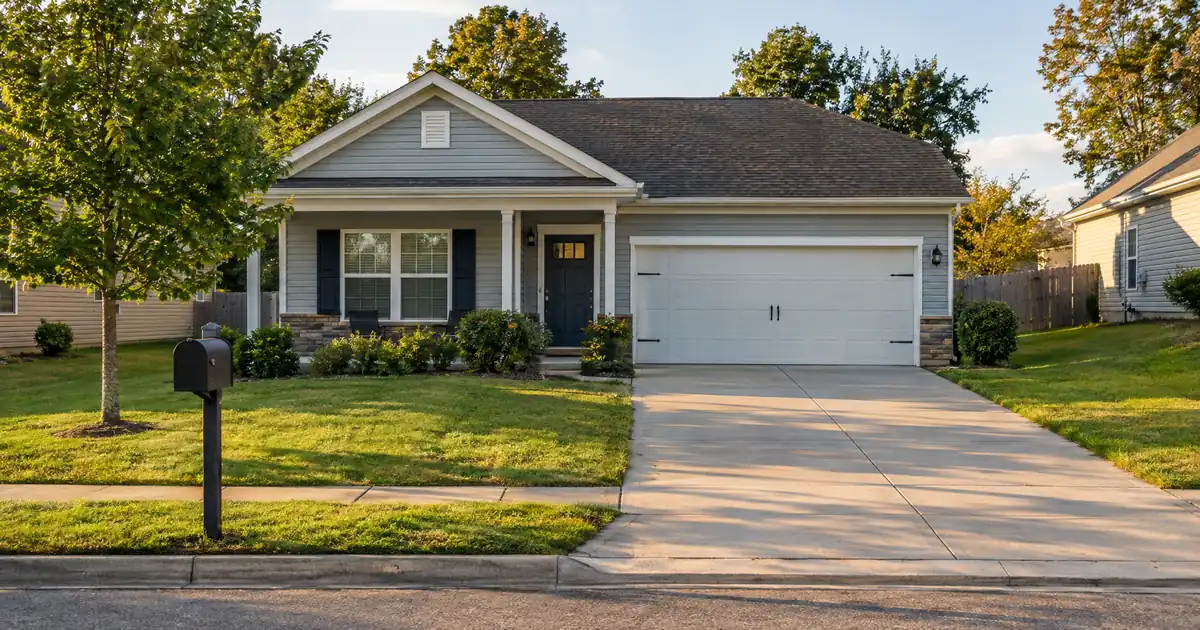
Refinancing A High-Balance Conforming Loan In A High-Cost County — The Quick Read: Refinancing a high-balance loan is usually possible, but it follows tighter rules than a standard conforming refinance. The new loan must stay under your county’s limit, or it becomes a jumbo. The most flexible high-leverage refinance option excludes high-balance loans. Equity, transaction type, and the automated underwriting finding then decide what fits.
If you own a home in an expensive county, your mortgage may be larger than the standard conforming limit and still be a conforming loan. That is a high-balance loan. The label affects which refinance programs are open to you, how much equity you need, and whether a refinance makes sense at all.
This article walks through the mechanics from start to finish. It covers what makes a loan high-balance, how the refinance is underwritten, the structures available, where the general rules break, and how to decide.
Key Takeaways
- A high-balance loan is still a conforming loan. It is not a jumbo.
- Your county sets the ceiling. Most counties sit at the baseline, and high-cost counties get a higher, county-specific number.
- Fannie Mae’s top-leverage limited cash-out option does not permit high-balance loans.
- Cash-out refinances need more equity than rate-and-term refinances.
- Over the county limit, the jumbo lanes take over.
What Makes a Loan “High-Balance”?
A high-balance loan is a conforming loan above the national baseline limit but within the limit for your specific county.
The baseline applies in most places. Per the agency’s own FAQ, over 95 percent of counties get the baseline limit. In areas where 115 percent of the local median home value exceeds the baseline, the limit rises. The law caps it at 150 percent of the baseline.
Here is the part people miss. A high-cost county does not automatically get the ceiling. The agency’s worked example makes the point: a county with a median value of $819,000 multiplies out to $941,850, which sits above the baseline and below the ceiling. Each high-cost county has its own number. When a metro area qualifies as high-cost, every county in it receives the ceiling.
The names differ by agency.
Limits can also move. The 2026 release said limits rose in all but 32 counties, so a few did not rise. The limit that applies is the one in effect when the loan is delivered or closed. Look up your county’s current figure before you plan anything.
How Is the Refinance Underwritten, Step by Step?
The refinance runs through five decisions: county limit, transaction type, automated findings, valuation, and disclosures. Each one can change your options. Work through them in order.
Step 1: Check the county limit against the new loan amount. Your new loan must cover your payoff, any financed costs, and any cash out. That total has to fit under your county’s limit. If it doesn’t, the loan is a jumbo. Across the wholesale programs Lendmire places files with, the jumbo lanes carry their own credit and leverage rules, starting at a 660 decision score, with leverage to 90% and a 50% ratio ceiling on the fixed lanes.
Step 2: Pick the transaction type. A rate-and-term refinance (called “limited cash-out” in agency language) pays off your existing first mortgage, the closing costs, and any purchase-money second lien. Only incidental cash comes back to you. A cash-out refinance lets you take out equity. These are separate programs with separate leverage caps.
Step 3: Run the loan through automated underwriting. The loan needs an Approve/Eligible finding from Desktop Underwriter. Credit, income, debt-to-income, and reserves drive the result. The wholesale conventional programs start at a 620 decision score, and the automated finding governs most files, with a total ratio ceiling of 50%. Manually underwritten loans run tighter, at 36% or 45% depending on reserves and score factors. All of this is subject to lender guidelines and full file review.
Step 4: Value the home. Value sets your loan-to-value ratio. That ratio decides eligibility and whether you need mortgage insurance. Some refinances can skip the appraisal under what Fannie Mae now calls value acceptance. Per the Fannie Mae Selling Guide, the offer must come from the automated system, no appraisal can have been obtained, and the offer can’t be more than four months old on the note date. Whether your specific high-balance refinance gets an offer is decided file by file. Don’t count on one.
Step 5: Disclosures. You receive a Loan Estimate after you apply, and a Closing Disclosure before you close. Those two documents are where you compare costs line by line.
Which Refinance Structure Fits a High-Balance Loan?
There are three main structures: rate-and-term, cash-out, and a government streamline if your current loan is FHA or VA. Which one fits depends on how much equity you hold and what you want from the new loan.
Rate-and-term (limited cash-out)
This is the standard “same balance, better terms” refinance. In the wholesale programs Lendmire works with, it allows 95% LTV on a one-unit principal residence, and up to 97% where the existing loan is agency-owned and the first-time-buyer program allows it. Mortgage insurance applies above 80% LTV. Every figure here varies by lender and program — guidelines, property type, leverage, and credit profile all apply.
Now the catch for this topic. Under Fannie Mae’s Selling Guide B2-1.3-02, high-balance loans are not permitted in the top leverage band (95.01 to 97%). That band is also fixed-rate only, DU-underwritten only, for a one-unit principal residence every borrower occupies, and requires documentation that Fannie Mae owns the loan being refinanced. Fannie Mae’s 97% LTV FAQ says the same: high-balance and adjustable-rate loans stay under the lower Eligibility Matrix maximums. Final terms depend on lender guidelines, property type, leverage, and the borrower’s complete credit picture.
So if you hold a high-balance loan with thin equity, the most flexible option is probably closed to you. The exact cap for a high-balance limited cash-out refinance lives in the live Eligibility Matrix, and it is lower than the top band. Confirm the current figure with your loan officer rather than assuming.
Cash-out refinance
A conventional cash-out refinance runs 80% LTV on a one-unit principal residence and 75% on two- to four-unit principal residences. The Fannie Mae Eligibility Matrix also requires minimum reserves on cash-out loans when the DU debt-to-income ratio exceeds 45%. These specifics are subject to lender guidelines and a full review of property, leverage, and credit.
Seasoning matters here. In the wholesale programs, the first mortgage being paid off must be at least 12 months old, counted note date to note date, and the borrower must have been on title for 6 months. Exceptions exist for delayed financing, inheritance, and legal awards. A separate wholesale lane reaches 89.99% LTV with no mortgage insurance for a 680 score and a 50% ratio on a thirty-year fixed primary residence with a conforming balance. It carries its own six months of seasoning, and it is not written on Texas homesteads, where state law caps cash-out. Terms vary by lender guidelines, property type, leverage, credit profile, and full file review.
A high-balance loan sits in the conforming lane only if the new, larger balance still fits under your county limit. Cash out pushes the balance up. That is the most common way a high-balance refinance turns into a jumbo.
Government streamlines
If your current loan is FHA, an FHA Streamline needs no appraisal and only limited credit review, but it must show a net tangible benefit. For an existing VA loan, the VA IRRRL carries a 0.5% funding fee unless you are exempt, needs no VA appraisal, and requires a net tangible benefit and seasoning of the later of 210 days and 6 payments. These are tied to your existing loan type, not to the high-balance label.
Here is how the three compare:
| Feature | Rate-and-term | Cash-out | Government streamline |
|---|---|---|---|
| Purpose | Replace loan, little cash back | Take equity out | Replace FHA or VA loan |
| Top LTV (one unit) | 95%, 97% in limited cases | 80% | Program-specific |
| High-balance in top tier | Not permitted | Not applicable | Not applicable |
| Seasoning | Varies by program | 12 months on old loan, 6 on title | VA: 210 days and 6 payments |
| Mortgage insurance | Above 80% LTV | Above 80% LTV where allowed | Program-specific |
Where Do the General Rules Break?
The rules above hold for the standard case. These edge cases are where borrowers get caught.
Balance between baseline and county limit. This is high-balance. It is eligible for standard refinances but excluded from the 97% option.
Balance above the county limit. This is a jumbo. Conforming rules no longer apply, and the jumbo lanes’ own credit and leverage rules govern.
Occupancy changes the math. The Eligibility Matrix lists different maximums for second homes and for two- to four-unit principal residences. Occupancy decides leverage, so state it accurately. Second homes run to 90% on purchases, and cash-out on a second home is capped at 75% in the wholesale programs.
Condos. Leverage limits can be lower depending on the type of project review. Some Fannie Mae-to-Fannie Mae rate-and-term refinances qualify for project review waivers, but that depends on the lender’s profile, so ask.
Manufactured homes and adjustable rates. Both are generally excluded from the best leverage tiers.
The paused high-LTV refinance. High-balance loans were once eligible for Fannie Mae’s High LTV Refinance option. Per Selling Guide B5-7-01, acquisition of those loans is paused. Don’t build a plan around it.
Credit events. Waiting periods are agency rules: four years from a chapter 7 discharge, seven from a foreclosure, and four from a short sale or deed-in-lieu. They run shorter with documented extenuating circumstances.
What Does Mortgage Insurance Do on a High-Balance Refinance?
Mortgage insurance applies whenever your new loan-to-value ratio is above 80%. You may request cancellation once you reach 80% of the original value, with a good payment history, no subordinate liens, and no decline in value. The servicer must end it automatically at 78% under the Homeowners Protection Act.
Typical published annual premiums run from 0.58% to 1.86% of the balance. That is a range, not a quote. Your actual figure depends on your credit, leverage, and the program.
This is why equity matters so much on a high-balance refinance. Reaching 80% LTV or lower avoids mortgage insurance entirely. On a large balance, even a small shift in LTV band changes the cost structure of the loan. Exact terms depend on the lender’s guidelines, property type, leverage, and a full review of the borrower’s file.
What Does the Decision Look Like in Practice?
Consider a homeowner whose loan is above the baseline but below the county limit. They want to replace their existing loan and have built healthy equity. A rate-and-term refinance fits. Because their equity is strong, leverage is not the binding constraint, and they avoid the 97% restrictions entirely.
Now consider a homeowner with thin equity. They hope to use the top-leverage option. That option excludes high-balance loans, so they would face a lower cap, mortgage insurance, and possibly no workable refinance until equity grows. The honest answer may be to wait.
A third homeowner wants cash out for a renovation. The new balance has to stay under the county limit and under 80% LTV on a one-unit home. If the combined balance crosses the county limit, the loan becomes a jumbo. Whether that is acceptable depends on the jumbo lane’s terms. It is worth running both paths side by side.
A few checks keep any of these plans honest:
- Confirm your county’s current limit before anything else.
- Compare the new loan amount, including financed costs and cash out, to that limit.
- Check your LTV against the cap for your transaction type and occupancy.
- Decide whether the break-even on closing costs fits how long you will stay.
- Ask whether value acceptance might apply, but plan for an appraisal.
On cancellation: for a refinance of your primary home, you generally have a federally required right-of-rescission window after closing, and funds are not released until that window ends. Rescinding does not erase your original loan. Budget that window into any timeline, and keep in mind that overall timing varies by file and lender.
Lendmire’s practitioner view is that high-balance files go wrong in two places: borrowers assume the 97% option applies, and borrowers add cash out without checking the county limit. Both are caught early by running the numbers before applying.
Tax treatment can depend on your situation; borrowers should speak with a qualified tax professional before relying on any deduction or credit.
Several of these paths are covered in more depth elsewhere. If you are weighing cash back, Lendmire’s explainer on who offers a no-cost cash-out refinance breaks down what that marketing term really means. And if a second mortgage is in the picture, see refinancing with a second lien subordination. For the broader menu, Lendmire’s conventional loan programs page lays out the structures available through wholesale lenders, subject to lender guidelines and full file review.
Key Terms Defined
High-balance loan: A conforming loan above the national baseline limit but within the limit for a high-cost county.
Limited cash-out refinance: A refinance that pays off the existing first mortgage and costs, with only incidental cash back to the borrower.
Loan-to-value (LTV): The loan amount divided by the home’s value, which sets eligibility and mortgage insurance need.
Value acceptance: A Fannie Mae offer, issued through its automated system, that lets some refinances skip an appraisal.
Seasoning: The minimum time a loan or ownership must exist before a cash-out refinance is allowed.
For the end-to-end picture of how these loans work — qualification, structures, and the full process — see Lendmire’s complete DSCR loans guide.
Frequently Asked Questions
Is a high-balance loan the same as a jumbo loan?
No. A jumbo exceeds your county’s conforming limit entirely and follows its own credit and leverage rules. If your new balance fits under the county limit, you stay conforming.
Can I use the 97% refinance on a high-balance loan?
No. Fannie Mae’s rules bar high-balance and adjustable-rate loans from the 95.01 to 97% limited cash-out band. That band is for fixed-rate terms up to 30 years on loans Fannie Mae owns. High-balance loans stay under the lower matrix maximums.
Does every high-cost county have the same limit?
No. Each high-cost county has its own limit, calculated from its median home value, up to a statutory ceiling. A county only gets the ceiling if it sits in a metro area that qualifies as high-cost. Look up your county’s exact figure before planning a refinance.
Can I do a cash-out refinance on a high-balance loan?
Yes, if the new balance stays under the county limit and within the cash-out cap, which is 80% LTV on a one-unit principal residence. The existing loan generally must be 12 months old and you must have been on title for 6 months, with some exceptions.
What if my county’s limit changes after I refinance?
Nothing changes for your existing loan. The limit that matters is the one in effect when your new loan is delivered or closed. Limits rose in nearly all counties for the most recent cycle, but a few fell, so check the current figure before you apply.
If you are weighing a refinance and want the break-even run on your own numbers, Lendmire can help you compare the programs on the same home.
For the program’s current guidelines, see a scenario review with Lendmire.
For the program’s current guidelines, see conventional loan programs.
About Lendmire
Lendmire is a mortgage brokerage (NMLS# 2371349) licensed for consumer mortgage lending in 16 states, arranging government-backed purchase loans and the down payment assistance options that sit on top of them through a wholesale lending network. Eligibility is determined by the lender on each file. Scotsman Guide named Lendmire a Top Mortgage Workplace in both 2025 and 2026.
Get Started
Ready to find the right loan for you?
In about 30 seconds you can review financing options available for your home or investment property. No commitment required.
Informational only. Not a Loan Estimate, approval, or commitment to lend. Program availability and eligibility are subject to lender guidelines, credit approval, property review, and underwriting.
References
2. Fannie Mae Selling Guide B2-1.3-02: Limited Cash-Out Refinance Transactions
3. Fannie Mae FAQs: 97% LTV Options
This article is part of Lendmire’s Conventional Loans series — every loan program’s qualification details, guidelines, and scenarios live on the loan options page.
Brandon Miller
Founder & CEO, Mortgage Loan Originator, Lendmire LLC
- Mortgage Loan Originator · NMLS# 1129696 · Verify on NMLS Consumer Access
- North Carolina Real Estate Broker · License# 343312 · Verify on NCREC
- North Carolina Insurance Producer · License# 19053198 · Property, Casualty, Life, Health · Verify on NAIC SBS
- Lendmire LLC · Firm NMLS# 2371349 · Verify firm licensure
Required disclosures. Lendmire (NMLS# 2371349) operates as a licensed mortgage broker, not a direct lender or depository. The discussion in this article is general in nature and should not be relied upon as financial, legal, or tax advice — every investment scenario is unique and should be reviewed by a qualified professional. Any loan inquiry is subject to lender underwriting, and this article is not a commitment to lend or a guarantee of approval. Mortgage rates, loan terms, and program guidelines vary by borrower, property, and state, and may change without notice. Equal Housing Opportunity. Verify licensure at NMLS Consumer Access.