
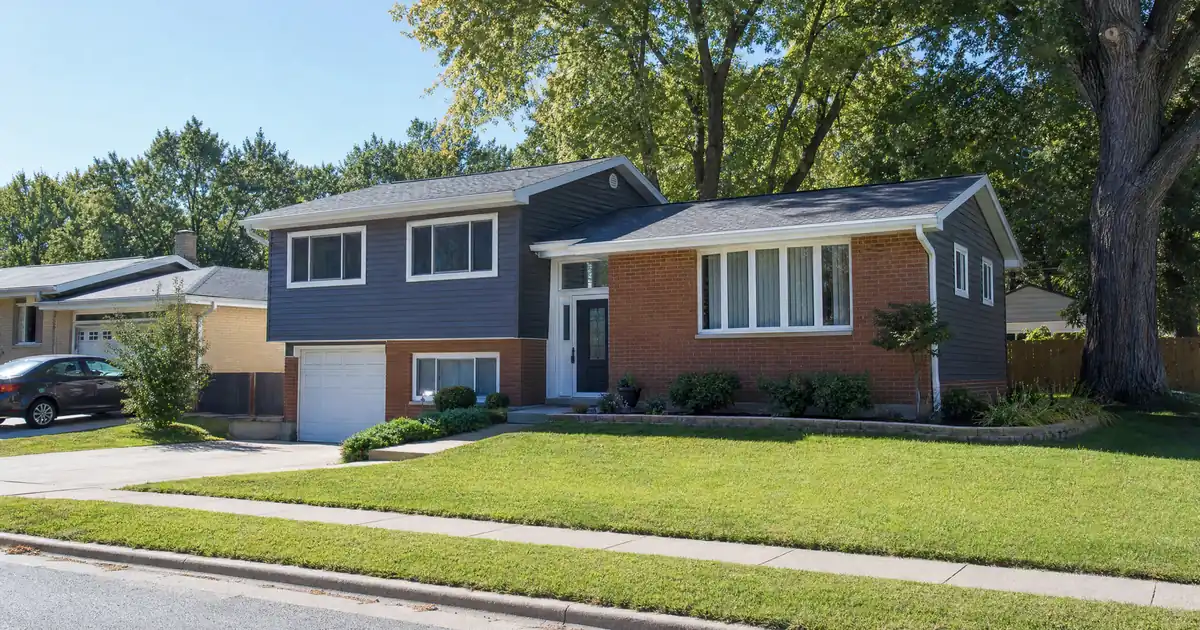
Home Equity Line Of Credit On Investment Property — The Quick Read: A HELOC can be secured by a rental property. But it’s a narrower product than the version advertised for a primary home. Lenders that offer it cap leverage well below owner-occupied norms. They also want a stronger credit file. And they often require the property to stay titled in the borrower’s own name — not an LLC. When those limits don’t fit the deal, most investors end up pulling the same equity through a DSCR cash-out refinance instead.
Here’s what matters most before going further:
How large a line the equity supports in your market.
An equity line is sized by combined loan-to-value, occupancy, and credit — not by rental coverage. Switch the occupancy or the credit band and the ceiling moves with it.
Investment-property lines require a 700 minimum credit score. Second-home tiers reach 640; primary-residence tiers reach 600.
A debt-to-income ratio above 45% requires 680+ credit. Profiles under 640 are limited to single-family homes. At least 75% of the approved line is drawn at closing. Ceilings, floors, and caps update from Lendmire’s centralized guideline source.
Line estimate
Illustrative estimate only — not a quote, Loan Estimate, approval, or commitment to lend. The rate is an editable assumption; equity-line pricing is variable through both the draw and repayment periods and never converts to fixed. Occupancy and credit drive the ceiling together: investment property runs to 70% combined LTV with a 700 credit floor and a $500,000 cap; a second home runs to 70% at a 640 floor with a $500,000 cap; a primary residence reaches up to 80% at a 600 floor, and its $750,000 maximum line applies only at 75% combined LTV or below with 720+ credit and a full appraisal. Lines above $500,000 require a full appraisal. Credit, debt-to-income, property type, and full underwriting review all affect the final line.
- Two different products share one name: a HELOC on your own home used to fund a rental, and a line secured directly against the rental itself.
- Direct-on-the-rental lines cap combined loan-to-value well below what a primary-home HELOC allows, and credit requirements run tighter.
- Many equity-line programs require the property to stay titled in the borrower’s individual name or a revocable living trust — not an LLC, a corporation, or a partnership.
- Draw periods typically run interest-only; once the draw period ends, a repayment period kicks in and the balance starts amortizing.
- Where the line’s size, title rule, or leverage cap doesn’t work for the deal, a DSCR cash-out refinance is usually the next stop for pulling equity out of a rental.
What a HELOC on an Investment Property Actually Is
A HELOC secured by a rental works like a credit card tied to the property’s equity. You draw what you need, pay it back, then draw again — up to a set limit. The property itself is the collateral. Your paycheck alone doesn’t secure it, though your personal credit still drives whether you get approved.
People use the same name for two very different deals, and lenders treat them nothing alike. Track A is a HELOC secured by the borrower’s own primary residence. The borrower then uses that money for a rental purchase, a down payment, or a renovation. This is ordinary owner-occupied underwriting. The collateral is the home the borrower lives in, and this path has the broadest pool of lenders. Track B is a line secured directly by the investment property itself. This is what most investors actually mean when they ask about a “HELOC on my rental.” It’s also the one with the real constraints — tighter equity cushions, stricter credit floors, and title rules most borrowers never see coming.
| Feature | Track A: HELOC on Primary Home | Track B: HELOC on the Rental Itself |
|---|---|---|
| Collateral | Borrower’s own residence | The investment property |
| Underwriting lane | Standard owner-occupied | Rental-specific, stricter |
| Risk to borrower | Home is behind the debt | Risk isolated to the rental |
| Lender pool | Wide | Narrower — fewer lenders offer it |
Key Terms Defined
HELOC (home equity line of credit): a revolving line of credit secured by a property’s equity, letting the borrower draw and repay funds up to a set limit.
Draw period: the years during which the borrower can pull money from the line, usually paying interest-only on whatever balance is outstanding.
Repayment period: the phase after the draw period ends, when the outstanding balance converts into a fixed schedule of principal-and-interest payments.
CLTV (combined loan-to-value): the total balance of every loan secured by a property, divided by the property’s value — the equity-cushion measure that caps how large a line can get.
DSCR (debt-service coverage ratio): a ratio comparing a property’s rent to its housing payment, used to qualify business-purpose rental loans on the property’s income rather than the borrower’s personal income alone.
Business-purpose loan: financing made for an investment or rental use rather than a home the borrower occupies — a classification that changes which disclosure rules apply.
Vesting/title: the legal form in which ownership is held — individually, in a trust, or through an entity like an LLC — which can determine whether a specific financing product is even available on that property.
How Underwriting Actually Treats a Rental-Secured Line
Here’s the short version. A line secured directly by an investment property gets qualified more like a business loan than a consumer HELOC, even though it looks the same on paper. Credit, equity cushion, and paperwork all run tighter than what a homeowner sees on their own house.
Across the broader market, per Experian, lenders offering an equity line secured directly by a rental typically cap combined loan-to-value around 80%. They also want a credit score of at least 720, and they hold debt-to-income limits somewhere in the 40-50% range. Lendmire’s wholesale network runs tighter than that market-wide picture. On an investment-property line, the ceiling available through Lendmire’s network is 70% CLTV. Full stop — that’s the cap regardless of how much equity sits in the property. The credit floor is 700, with no tier beneath it. Moving from 700 to 720 buys eligibility, not extra leverage — both tiers land at the same 70% CLTV cap. Line size runs $25,000 up to $500,000 on the investment side. That ceiling sits under the $500,000 threshold where a full appraisal kicks in. So an investment-property line stays structurally in the automated-valuation lane and commonly closes without a traditional appraisal at all.
Debt-to-income is capped around 50% for most credit profiles. It’s qualified off the interest-only payment calculated at the line’s maximum draw amount — not the actual balance drawn. If income comes from a business bank account rather than a paystub, the deposit-analysis floor sits at 680. But since investment-property lines already require 700, that documentation path is never the binding constraint on this particular product.
None of this touches how the rental’s own cash flow gets scored. That’s a separate calculation entirely, and one investors often confuse with equity-line qualification. This product is reviewed on the borrower’s personal credit and the property’s equity position — not a coverage ratio.
The Structures and Variations Investors Actually See
Most investment-property lines share a common skeleton. You get a standalone line in first or second lien position, a five-year interest-only draw period, and then a 25-year fully amortizing repayment period once the draw window closes. Tennessee runs a shorter structure — a five-year draw followed by a 10-year repayment period, rather than 25. Pricing floats across both the draw and the repayment period on these lines. It never locks into a fixed rate.
Most programs also require at least 75% of the approved line to be drawn at closing. This isn’t a line you open and leave untouched. After that initial draw, later pulls have their own floor: $1,000 minimum in most states, $4,000 in Texas.
Line sizes on the investment side run $25,000 to $500,000. Above that ceiling, the product shifts into different territory reserved for other occupancy types. Worth knowing, but not the relevant lane for a straight rental purchase or refinance-in-place scenario.
Investors weighing this against an investment property equity line of credit structured as a straight refinance should also look at the trade-off here. Keeping an existing low-cost first mortgage untouched is the entire appeal of a second-lien HELOC. Rolling everything into one new loan is the alternative.
Where the General Rule Breaks: Edge Cases That Change Everything
The single biggest edge case has nothing to do with credit or leverage. It’s how the property is titled. Most investment-property equity lines require the collateral to sit in the borrower’s individual name or a revocable living trust. LLCs, corporations, partnerships, and irrevocable, blind, or land trusts can’t hold title on these lines. That’s the sharpest structural difference from a DSCR loan, where entity ownership is routinely accommodated, subject to lender program eligibility. Say you already deeded a property into an LLC for liability protection. That property generally needs a vesting change back to individual or trust ownership before this line can attach — or you pivot to a DSCR cash-out refinance instead, which doesn’t carry that restriction.
Property type creates a second hard line. Single-family homes, 2-4 unit properties, PUDs, townhomes, and condominiums — including non-warrantable condos — are eligible, along with modular factory-built homes. Manufactured homes, co-ops, condotels, timeshares, barndominiums, log homes, commercial and mixed-use properties, agricultural-zoned parcels, raw land, and income-producing enterprises are not offered on this product. Full stop.
Exposure limits cap how far one investor can stretch across a portfolio. A borrower is limited to three of these lines totaling $750,000 combined. And owning more than 15 properties makes an investor ineligible for the product entirely, regardless of credit or equity.
Credit seasoning has its own rules. The credit report must stay current through closing, and no rescores are allowed. The file needs either two tradelines seasoned 12 months or one tradeline seasoned 24 months. Derogatory history carries its own clock. Bankruptcy needs four years from discharge or dismissal. Foreclosure needs seven years from discharge. A pre-foreclosure, deed-in-lieu, or short sale needs four years.
State overlays add another layer. Texas binds its 12-day waiting period, one-lien-at-a-time rule, and 12-month seasoning requirement to primary residences only. Texas investment properties and second homes qualify as non-homestead transactions instead, though Texas properties are capped at 10 acres regardless of use. New Mexico and Ohio apply a CLTV cap that shifts with the borrower’s credit profile rather than a flat number. A property listed for sale, or listed within the past 60 days, is ineligible in Indiana, North Carolina, Pennsylvania, Tennessee, Texas, and Washington.
This product also isn’t available everywhere Lendmire (NMLS# 2371349) places DSCR loans. The home-equity line program runs in 16 full-service states — including California, Florida, Texas, Georgia, and Ohio — a narrower footprint than Lendmire’s DSCR investor-loan network.
One structural fact trips up a lot of investors here. Many assume every rental loan works like a mortgage on their own house — it doesn’t. A properly documented, non-owner-occupied rental transaction is generally treated as business-purpose credit. That places it outside certain consumer disclosure protections that apply to a loan on the borrower’s own home, including the three-day right of rescission. That distinction is fact-specific, not automatic. A property the owner occupies part of the year, even a seasonal one, can flip back into consumer-credit treatment depending on use.
Working files across this product regularly turns up the same pattern. Investors assume rental cash flow will make qualification easier, and it doesn’t. Occupancy status and title form drive the underwriting lane here — not the rent roll. The files that move fastest through review are the ones where the borrower already holds title individually or in a revocable trust, and has a clean read on their own credit report before applying — rather than assuming the property’s income will carry the file the way it would on a DSCR loan.
HELOC vs. DSCR Cash-Out: The Real Decision
Say the $500,000 line cap, the 70% CLTV ceiling, or the individual/trust-only title rule doesn’t fit your deal. Most investors land on a DSCR cash-out refinance instead. This is a loan that qualifies primarily on the property’s rental income covering the payment, subject to lender guidelines — not the borrower’s personal credit and equity cushion alone. Lendmire’s complete DSCR loans guide walks through how that qualification works in detail.
| Feature | Investment-Property HELOC | DSCR Cash-Out Refinance |
|---|---|---|
| Leverage ceiling | 70% CLTV | Around 75% LTV on most files |
| Line/loan size | $25,000–$500,000 | Roughly up to $3,000,000 on standard programs (smaller balances available through select lenders) |
| Title/vesting | Individual name or revocable trust only | LLC-held title generally workable, subject to lender program eligibility |
| Payment structure | Interest-only draw, then amortizing repayment | Fully amortizing; interest-only structures available through select lenders |
| Review basis | Personal credit and property equity | Property rental income vs. payment (coverage ratio) |
| Credit floor | 700, no tier beneath | As low as 620 in parts of the network; most programs prefer 660 |
DSCR loans are built for non-owner-occupied investment properties. They’re business-purpose investor loans, so they get reviewed differently than a standard owner-occupied mortgage. That review centers on the rent-to-debt math, not a W-2 or a personal debt-to-income ratio. Most select-program floors sit at a 1.00 coverage ratio, meaning rent roughly matches the payment. That’s a floor for specific programs, not a universal standard — and stronger coverage, well above 1.00, tends to unlock better leverage and pricing. A larger down payment lowers the monthly obligation and can lift that coverage number. But it never overrides a program’s leverage cap, credit floor, or reserve requirement. The strongest files clear both the equity test and the rent-coverage test together. On the cash-out side specifically, most of the network holds to roughly 75% LTV, with about six months of seasoning since acquisition being the common expectation. Loan sizes generally run up to $3,000,000 on standard programs, with smaller balances available through select lenders, and loans above $2,500,000 typically get structured on a 30-year fixed basis.
Here’s a quick reality check. Clearing a 1.00 coverage ratio is not the same as positive cash flow. DSCR only compares rent to the loan payment. It doesn’t account for repairs, vacancy, management fees, utilities, or capital expenditures — all of that sits outside the calculation.
Investors weighing a home equity line of credit on an investment property against a straight cash-out refinance should also think about the existing first mortgage. A HELOC leaves it untouched. A cash-out refinance replaces it entirely. That matters most when the existing loan carries better terms than what’s currently available.
Tax treatment can depend on how the funds are used and how the property is held. Keep clear records and talk with a qualified tax professional before relying on any deduction.
Lendmire arranges DSCR investor financing through select lenders in its wholesale network. It’s a broker, never the lender, and every scenario above is subject to full underwriting, borrower and property review, and current program guidelines. Loan approval is never guaranteed, and nothing here is a commitment to lend. Review details are subject to lender overlays, and this content is general information — not financial, legal, or tax advice. Investors comparing an equity line of credit on an investment property against a DSCR cash-out option can reach Lendmire’s team at 828-256-2183 to walk through which structure actually fits their property and credit profile.
For deeper background on the mechanics discussed here, see CFPB – What is a HELOC.
Frequently Asked Questions
Can I get a HELOC directly on a rental property I don’t live in?
Yes, but fewer lenders offer it, and the terms run tighter than a HELOC on a primary home. Through Lendmire’s network, that means a 70% CLTV ceiling, a 700 credit floor, and a maximum line size of $500,000, regardless of how much equity sits in the property.
What happens if I move the property title into an LLC after opening the line?
Retitling a property into an LLC mid-term is one of the most common ways investors accidentally disqualify an existing equity line. Most of these programs require the collateral to stay in the borrower’s individual name or a revocable living trust for the life of the line. A DSCR cash-out refinance is generally the workaround for entity-titled rentals, subject to lender program eligibility.
Does the property’s rental income help me qualify for the line?
Not directly. An investment-property equity line qualifies mainly on the borrower’s personal credit and the property’s equity cushion — not the rent roll. Rental income is the qualifying factor on a DSCR loan instead, where it’s measured against the payment as a coverage ratio.
What’s the real difference between a HELOC on my house and one secured by the rental?
A HELOC on your own home follows standard owner-occupied underwriting and offers the broadest pool of lenders. A line secured by the rental itself isolates the risk to that asset, but it comes with a lower leverage ceiling, a higher credit floor, and stricter title rules.
If the rental-secured line doesn’t fit my equity position, what’s the alternative?
A DSCR cash-out refinance is the most common next step. It can reach roughly 70% LTV on most files, generally accommodates LLC-held title subject to lender program eligibility, and gets reviewed on the property’s rental coverage rather than personal credit and equity alone.
About Lendmire
Lendmire is a non-QM mortgage brokerage (NMLS# 2371349) arranging DSCR investor loans in 40 markets, including Washington, D.C. DSCR eligibility is generally reviewed around property-level rental income rather than personal income, subject to lender and program guidelines — a fit for self-employed investors and LLC-owned portfolios. Lendmire was recognized as a Scotsman Guide Top Mortgage Workplace in 2025 and 2026.
Lendmire’s Top Mortgage Workplace recognition is documented by Scotsman Guide 2025 Top Mortgage Workplace and Scotsman Guide 2026 Top Mortgage Workplace.
Get Started
Ready to find the right loan for you?
In about 30 seconds you can review financing options available for your home or investment property. No commitment required.
Informational only. Not a Loan Estimate, approval, or commitment to lend. Program availability and eligibility are subject to lender guidelines, credit approval, property review, and underwriting.
References
1. Experian – Can You Get a HELOC on an Investment Property?
Brandon Miller
Founder & CEO, Mortgage Loan Originator, Lendmire LLC
- Mortgage Loan Originator · NMLS# 1129696 · Verify on NMLS Consumer Access
- North Carolina Real Estate Broker · License# 343312 · Verify on NCREC
- North Carolina Insurance Producer · License# 19053198 · Property, Casualty, Life, Health · Verify on NAIC SBS
- Lendmire LLC · Firm NMLS# 2371349 · Verify firm licensure
Disclosure information. Lendmire is a state-licensed mortgage brokerage under NMLS# 2371349. Lendmire is not a depository institution, direct lender, or financial advisor — all loans referenced are placed through wholesale lender partners and are subject to each lender's underwriting standards. This article is provided for general informational purposes and is not a commitment to lend, nor does it constitute financial, legal, or tax advice. Loan programs, terms, rates, and qualification standards change without notice and depend on borrower profile, property type, and the state in which the subject property is located. Equal Housing Opportunity provider. NMLS Consumer Access: nmlsconsumeraccess.org.


