
The Quick Read: A takeout lender sizes your new loan at the lowest of three limits: a leverage cap applied to value, what the rent can carry, and what the lender will credit for your cost, which depends on the ownership clock. Finishing the rehab does not change any of those limits on its own.
- The new lender’s appraisal sets value. Your projected after-repair value does not.
- The waiting period is lender policy. It usually runs from the recorded deed, not from the day the work ends.
- Across most of the wholesale network, cash-out tops out around 75% LTV on a standard rental, and about 6 months of seasoning is the common expectation.
- A bigger cash-out means a bigger payment, which lowers your rent coverage.
- A payoff-only refinance and a cash-out refinance are treated differently, and any cash back triggers the cash-out rules.
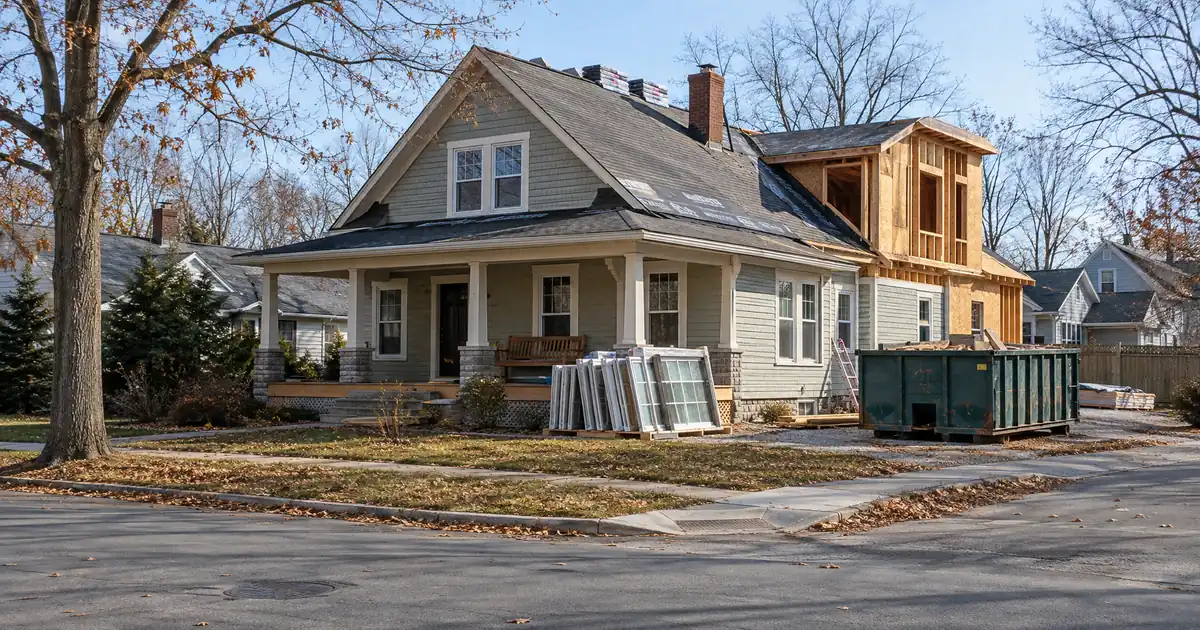
You just finished a rehab on a hard money loan, and the bridge note is ticking. This guide walks through what the takeout lender checks, in what order, and where the usual rules bend. Programs change and every file is underwritten individually, so treat the figures below as typical ranges, not promises.
Key Terms Defined
After-repair value (ARV): your estimate of what the property is worth once the work is done. The takeout lender’s appraiser forms the value that actually counts.
Seasoning: the minimum time you must own a property before a lender will size a cash-out loan on new appraised value instead of what you paid. Lofty’s BRRRR guide defines it the same way.
Cost basis: the purchase price plus documented rehab spending. Some lenders size on this number during the seasoning window.
LTV (loan-to-value): the loan amount divided by the property’s value.
PITIA: principal, interest, taxes, insurance, and any association dues. It is the full monthly obligation on the loan.
DSCR (debt service coverage ratio): monthly rent divided by PITIA. A ratio of 1.00 means rent equals the payment.
Payoff-only refinance: a new loan that retires the hard money loan and returns no cash to you.
Break-even appraisal: the lowest appraised value at which the new loan still covers the payoff and closing costs.
Why Does “Right After the Rehab” Change the File?
The bridge lender bet on what the property would become. The takeout lender bets on what it is today, and what it earns. That shift explains most surprises.
| Factor | Hard money bridge | Takeout (DSCR cash-out) |
|---|---|---|
| Main question | Will the plan work? | Does the asset carry itself? |
| Value basis | Budget and projected ARV | Fresh appraisal, sometimes capped by cost |
| Income test | None | Rent against full payment |
| Term | 6-18 months, interest-only | Long-term, often 30-year fixed |
The takeaway: the bridge underwrote your plan, and the takeout underwrites your results.
Hard money programs run 6 to 18 months, interest-only, and a hard money lender refinancing its own bridge usually sits lower, typically up to 65% of value, varying by lender, property, and experience. That is one reason many investors refinance out of hard money into long-term DSCR financing once the property is stabilized, a path Lendmire brokers. DSCR loans are designed for non-owner-occupied investment properties. Because they are business-purpose loans, they are reviewed differently from a standard owner-occupied mortgage.
How Does Underwriting Work, Step by Step?
The sequence below is how most files move through the wholesale network. The order matters because an early failure makes the later steps moot.
1. Classify the loan. The lender decides whether it is payoff-only or cash-out. Any cash back to you triggers the cash-out rules.
2. Check the ownership clock. The lender pulls the recorded deed and measures seasoning. This sets whether value or cost basis governs sizing.
3. Order the appraisal and rent schedule. The appraiser values the finished property and estimates market rent.
4. Test rent coverage. The lender divides rent by the full PITIA on the proposed new loan.
5. Review credit, reserves, and borrower structure. This includes any LLC, subject to program terms.
6. Set conditions. Expect requests for rehab records, a lease or proof of rent, insurance, and title items.
7. Close and pay off. The new loan retires the bridge, including accrued interest and fees. Whatever remains is your cash back.
Each of these steps can shrink the loan. The final amount is the lowest result, not an average.
Gate One: Does Seasoning Shrink the Loan?
Seasoning is lender policy, not law, so no regulator sets a national waiting period. Each lender sets its own. About 6 months is the common expectation across most of the network. Investor-education sites such as Lofty describe 6-12 months as typical across the market, which shows how widely policies vary.
Finishing the rehab does not start the clock or shorten it. The clock usually runs from the recorded deed. Some lenders also look at how long the property has been leased.
| Event | Usually starts the clock? |
|---|---|
| Deed recorded at purchase | Yes, most common |
| Rehab completed | No |
| Lease signed | Only for lenders with a lease clock |
| Bridge loan funded | Generally not the measure |
The takeaway: count from the deed, then ask each lender whether it also wants rental history.
Inside the window, many lenders size on the lower of appraised value or cost basis. A few decline cash-out until the window clears. After the window, the appraisal governs. Here is how that plays out in a modeled example with index numbers, not dollars. Say your cost basis is 100 and the finished property appraises at 140. At 75% LTV on a cash-out refinance of a standard rental, a cost-based loan is 75. A value-based loan is 105. Same property, same appraisal, and a 30-point swing in what you can borrow.
Gate Two: What Does the Appraisal Do to Your Cash Back?
The appraisal is the single number the whole refinance leans on. AdviceOnly’s BRRRR glossary frames the strategy as a bet on the appraised value after repairs. If the appraisal disappoints, the shortfall stays in the property as your capital.
For one- to four-unit rentals, appraisers commonly work from Fannie Mae’s published form names. Form 1007 is the single-family comparable rent schedule. Form 1025 is the small residential income property report for two to four units. DSCR loans are not agency products, but non-QM programs commonly borrow these forms to document market rent.
Appraisers need proof of the work. An itemized list of capital improvements, with receipts and before-and-after photos, helps the appraiser credit what you did. A rehab dollar does not convert to a value dollar, and an improvement may support a higher appraised value depending on comps and underwriter review.
Run the break-even math
Break-even appraisal equals your payoff plus closing costs, divided by the cash-out LTV cap. Payoff includes principal, accrued interest, and any extension or exit fees. Using the modeled index again, suppose payoff plus closing costs equal 70 and the cap is 75% on a standard rental. The break-even appraisal is about 93.
| Appraisal (index) | Max loan at 75% | Result |
|---|---|---|
| 140 | 105 | Cash back of 35 |
| 100 | 75 | Cash back of 5 |
| 93 | about 70 | Roughly break-even |
| 85 | about 64 | Cash-in needed |
The takeaway: a miss of 15 points in the appraisal can erase nearly all your cash back. Stress-test your exit at a conservative appraisal before you buy.
If the appraisal falls below break-even, the file becomes a cash-in refinance, an extension of the bridge, or a sale.
Gate Three: Does the Rent Cover the Bigger Loan?
More cash-out creates a bigger loan. A bigger loan raises PITIA. A higher PITIA lowers your coverage. That chain is why a great appraisal does not guarantee a great loan.
A coverage ratio of 1.00 is where many select programs start. Stronger ratios open better pricing and more leverage. A separate select-lender path takes coverage below 1.00, with leverage and terms adjusted. These are different paths, not one program with a moving floor.
If the property is vacant, the lender uses market rent from the appraiser’s schedule. Lease requirements vary. Some underwriters want a signed lease, proof of the first month’s rent and the security deposit, or bank deposit records. Baselane lists updated appraisals and tenant leases among typical refinance inputs.
One caution matters here. Clearing 1.00 does not mean positive cash flow. DSCR compares rent to PITIA only. Repairs, vacancy, management, utilities, and capital expenses sit outside the calculation. Budget for them separately.
Gate Four: What Do Lenders Check on the Borrower and the Property?
Credit still matters on a property-income loan. A 620 floor exists in parts of the network, most programs want around 660, and 700 or higher unlocks the strongest leverage tiers.
Reserves vary by lender, leverage, loan size, and transaction type. About 6 months of PITIA is common. Some conservative rate-and-term files at modest leverage under $1,500,000 can see reserves waived, and larger loans typically step up to about 9 months. Standard loan sizes run up to $3,000,000 on standard programs (smaller balances available through select lenders), and above $2,500,000 the network generally holds to 30-year fixed structures.
Property type matters too. DSCR financing is not offered on manufactured homes, log homes, or barndominiums. Those are stated as not offered, not as harder to finance.
A larger down payment lowers the payment and can lift coverage, but it never erases leverage caps, credit floors, reserve rules, or property eligibility. The strongest files clear both tests: enough equity and enough rent.
For a broader view of how these loans work, see Lendmire’s complete DSCR loans guide.
What Documents Does a Finished Rehab Need?
Pull these together before the bridge note gets close to maturity.
| Item | Why the lender wants it | When to gather |
|---|---|---|
| Settlement statement | Proves purchase price and date | At purchase |
| Rehab invoices and receipts | Support cost basis | As you pay |
| Draw records and final draw | Show completed work | At completion |
| Itemized improvement list | Helps the appraiser credit work | Before appraisal |
| Before-and-after photos | Show condition change | During work |
| Permits and final sign-offs | Confirm legal completion | At completion |
| Lease or rent proof | Supports the coverage test | Before application |
| Payoff statement | Sets the exact amount owed | Near closing |
The takeaway: the paper trail is what turns a finished rehab into a sized loan.
What If the File Doesn’t Clear?
You have five realistic moves, and the right one depends on the gap.
| Situation | Likely move |
|---|---|
| Inside the clock, appraisal strong | Payoff-only at cost, cash-out later |
| Appraisal short of break-even | Cash-in refinance or extend the bridge |
| Coverage too thin | Lower the loan amount or ask about sub-1.00 options through select lenders, with leverage and terms adjusted |
| Bridge matures before the clock does | Extension, or payoff-only now |
| Appraisal looks wrong | Dispute with better comps and the improvement list |
The two-step plan of payoff-only now, then cash-out later, costs two sets of closing costs. Hard money terms run 6-18 months with no prepayment penalty on the current program, so the bridge itself is cheap to exit. The carry is the expense. PropertyReach warns that a long wait on hard money can erase margins, and Lofty advises confirming the seasoning rule before you buy.
Where Does the General Rule Break?
Rate-and-term payoffs. A payoff-only refinance of the hard money loan often faces lighter seasoning restrictions, because no equity is released. The moment cash comes back, the cash-out rules apply.
Delayed financing. This is a concept borrowed from agency lending that allows a cash-out refinance of an all-cash purchase without a full waiting period. AdviceOnly notes it caps the new loan at your purchase investment plus closing costs, so it cannot return rehab money. Bridge-financed purchases generally do not qualify. Some non-QM lenders offer their own versions, so confirm the program.
Portfolio and in-house lenders. A lender using its own money can set its own seasoning, sometimes shorter, usually with different terms. Treat any shortcut as lender-specific.
Heavy rehabs. A deep renovation strands created value until the clock ends, and carry costs run all the while.
Overruns. Spending beyond what the appraisal supports remains your own cash in the deal.
Short-term rentals. STR collateral follows different leverage. Cash-out sits around 70% for STR collateral, with a 640+ score and about 12 months of hosting history expected. Lendmire’s short-term rental cash-out refinance requirements piece covers that path.
What Mistakes Cost Investors the Most?
- Sizing the exit off your ARV. Only the new lender’s appraisal counts.
- Assuming the clock starts at completion. It usually starts at the deed.
- Planning exit math at full ARV. The LTV cap leaves a margin, and a rehab dollar does not equal a value dollar.
- Letting the bridge mature first. Line up the takeout lender before the note comes due.
- Skipping the improvement list. Without it, the appraiser may not credit your work.
Frequently Asked Questions
Can I refinance right after the rehab is finished?
You can, but the loan size depends on the lender’s ownership clock. A payoff-only refinance is often available sooner. A cash-out refinance on new appraised value usually waits until seasoning clears, which is about 6 months across most of the network. Before that, many lenders cap the loan at your cost basis.
Is paying off a hard money loan considered a cash-out?
Not by itself. A refinance that only retires the bridge, with no cash to you, is payoff-only. Any cash back triggers the cash-out rules, including the leverage cap and the seasoning check.
Does the lender use my ARV to size the loan?
No. The new lender orders its own appraisal, and that value governs once seasoning clears. Your ARV is a planning figure for the bridge. If the appraisal comes in lower, your cash back shrinks or turns into cash needed at closing.
What happens if the appraisal comes in low?
The loan shrinks. You can bring cash to closing, extend the bridge, take a payoff-only exit at cost, or dispute the value with stronger comps and your improvement list. The break-even math above shows how much cushion you have.
Do lenders still check credit on a rental-income loan?
Yes. Qualification runs primarily on property-level rental income covering the payment, subject to lender guidelines, but credit scores, reserves, and property eligibility still apply. Most programs want around 660, and 700 or higher unlocks the strongest leverage tiers.
Next Step
If you are buying, rehabbing, or refinancing an investment property on a short timeline and want to see how the numbers work, Lendmire can help you compare hard money options based on the project, the exit plan, leverage, and your goals. Lendmire is a mortgage broker arranging financing through select lenders in its wholesale network across 41 markets, including Washington, D.C. Call 828-256-2183 or request a quote. Nothing here is a commitment to lend, and the right program depends on your property, credit, and exit plan.
About Lendmire
Lendmire is a non-QM mortgage brokerage (NMLS# 2371349) arranging DSCR investor loans in 41 markets, including Washington, D.C. DSCR eligibility is generally reviewed around property-level rental income rather than personal income, subject to lender and program guidelines, a fit for self-employed investors and LLC-owned portfolios. Lendmire was recognized as a Scotsman Guide Top Mortgage Workplace in 2025 and 2026.
Get Started
Ready to find the right loan for you?
See your offer in seconds. No credit pull, no obligation.
Informational only. Not a Loan Estimate, approval, or commitment to lend. Program availability and eligibility are subject to lender guidelines, credit approval, property review, and underwriting.
References
2. AdviceOnly – BRRRR Method Glossary
3. Fannie Mae Selling Guide B4-1.2-01
4. Baselane – BRRRR Method for Real Estate
This article is part of Lendmire’s hard money loan program — full qualification details, guidelines, and scenarios live on the program page.
Related reading: Can You Get Approved for a DSCR Cash-Out Refinance Instead of a Home Equity Investment? · How to Qualify and Apply for a Super Jumbo DSCR Cash-Out Refinance With 90% Rent Coverage
Brandon Miller
Founder & CEO, Mortgage Loan Originator, Lendmire LLC
- Mortgage Loan Originator · NMLS# 1129696 · Verify on NMLS Consumer Access
- North Carolina Real Estate Broker · License# 343312 · Verify on NCREC
- North Carolina Insurance Producer · License# 19053198 · Property, Casualty, Life, Health · Verify on NAIC SBS
- Lendmire LLC · Firm NMLS# 2371349 · Verify firm licensure
Required disclosures. Lendmire (NMLS# 2371349) operates as a licensed mortgage broker, not a direct lender or depository. The discussion in this article is general in nature and should not be relied upon as financial, legal, or tax advice — every investment scenario is unique and should be reviewed by a qualified professional. Any loan inquiry is subject to lender underwriting, and this article is not a commitment to lend or a guarantee of approval. Mortgage rates, loan terms, and program guidelines vary by borrower, property, and state, and may change without notice. Equal Housing Opportunity. Verify licensure at NMLS Consumer Access.