
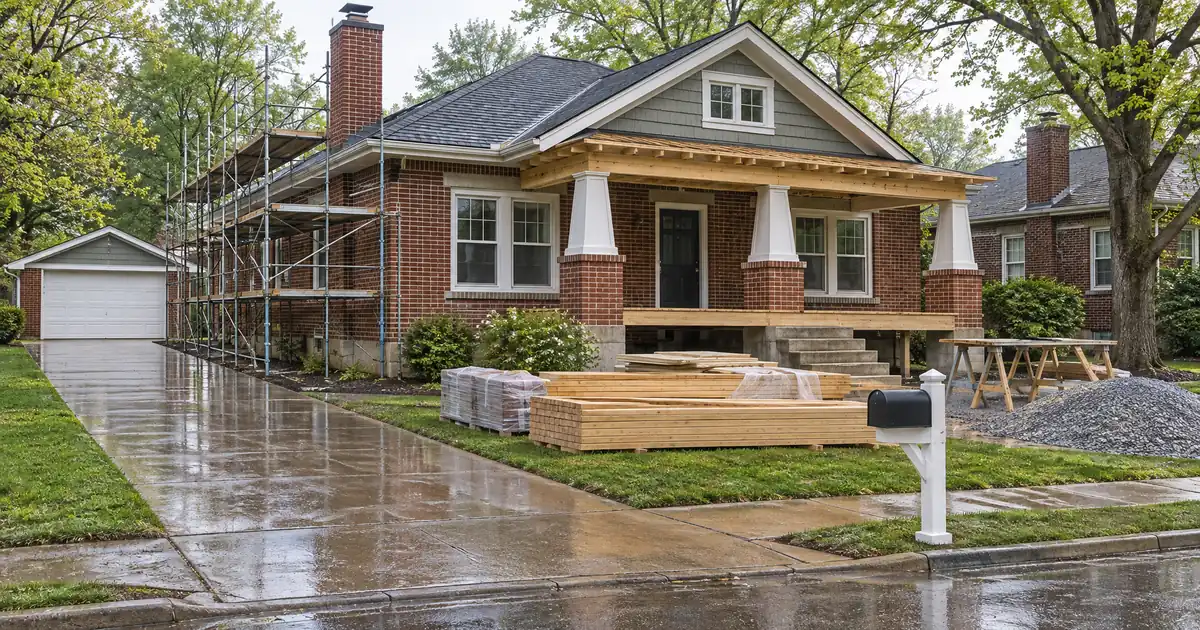
The Quick Read: Usually less than investors expect, and it is a subtraction problem: the new loan, minus the hard money payoff, minus closing costs, with the new loan sized on the refinance lender’s appraisal, not the investor’s after-repair value estimate. If payoff plus costs is higher than the capped loan, the investor brings cash to closing instead.
- Cash back = new loan − hard money payoff − closing costs, floored at zero.
- On a DSCR cash-out, the network’s ceiling is 75% LTV on standard rentals, applied to the appraised value.
- Hard money fix-and-flip leverage is sized on project cost. The exit loan is sized on value. That gap decides the check.
- Rent still has to cover the new payment at the program’s coverage floor, which is a second gate beyond LTV.
- Full recovery of the investor’s cash depends on the appraisal, the payoff, and closing costs, so it is never assured.
What Is the Formula for Cash Out?
Three numbers drive it. The lender’s appraised value sets the ceiling. The payoff letter from the hard money lender sets the first claim on the proceeds. Closing costs and any required prepaids or reserves take the next cut. Whatever remains is wired to the borrower.
DSCR Cash-Out Calculator
Run the cash-out numbers in your market
Rate source: Freddie Mac 30-yr average via FRED® — Federal Reserve Bank of St. Louis · effective Nov 5, 2026
Prefilled with starting assumptions — enter your property’s value, balance, taxes, and insurance for a more accurate picture.
Program parameters update from Lendmire’s centralized guideline source. Taxes and insurance are editable estimates.
As of Nov 5, 2026 · General Freddie Mac market benchmark, not a Lendmire loan offer. Property value, balance, taxes, and insurance are editable estimates. Maximum loan-to-value varies by lender, program, property type, and seasoning. Not a Loan Estimate, approval, or commitment to lend. Program availability and eligibility are subject to lender guidelines, credit approval, property review, and underwriting.
The exit loan here is a DSCR cash-out refinance. Across the wholesale network, a DSCR cash-out on a standard rental tops out at 75% LTV, subject to lender guidelines. Short-term-rental collateral carries a lower 70% ceiling. Hard money is measured differently. Fix-and-flip leverage on the hard money side is sized against project cost, up to 93% of project cost at the top experience tier, with every tier capped at 75% of after-repair value. Those figures vary by lender, property, and experience, and none of them is a commitment to lend.
Here is the plain-language break-even test: multiply the appraised value by the DSCR cash-out LTV cap of 75%, then subtract the hard money payoff and the closing costs. The result is the cash-out amount for the check.
If the appraisal lands low enough that the result is zero or less, no cash comes back. The investor may face a cash-in refinance instead. The BRRRR calculator at TodayCalculator uses the same logic and notes that a full BRRRR happens only when cash-out at least equals the cash the investor put in.
Why the Lender’s Appraisal Controls the Number
The investor’s ARV is a hypothesis. The appraisal is the fact. The refinance lender orders its own appraisal, and the loan is sized on that value times the LTV cap. A small miss moves the check more than most investors expect, because the LTV cap multiplies the miss while the payoff stays fixed.
Picture a bridge loan that was sized aggressively on project cost. The payoff is close to the 75% ARV ceiling already. Now the DSCR lender’s appraisal comes back a few percent light. At 75% LTV, the new loan shrinks, the payoff does not, and the cash-out line goes to zero or negative. PropertyReach’s BRRRR guide flags appraisal risk and seasoning as the two places these deals stall. The exact numbers vary by lender and program and follow a full review of property, leverage, and credit.
A fully leveraged bridge has no cushion for that miss. That is the break-even formula talking, not a market statistic. Run the exit with a conservative appraisal, not the optimistic one.
Appraisal reconsideration is a routine step when comps come in light. A packet with an itemized scope of the improvements, before-and-after documentation, and recent nearby sales gives the appraiser something to review. Without the scope, the appraiser may value the property as if the work never happened.
Gross Cash-Out, Net Cash-Out, and Cash Left in the Deal
These three terms get mixed up. Keep them separate.
- Gross cash-out: the new loan minus the hard money payoff.
- Net cash-out: gross cash-out minus closing costs, prepaids, and any reserve funding.
- Cash left in the deal: everything the investor put in, minus net cash-out.
A refinance can produce positive net cash and still leave money trapped. If the investor put in a down payment, rehab overruns, and carry, net cash-out has to cover all of it to count as a full recovery.
What Shrinks the Check
Several items sit between the loan amount and the wire.
1. Payoff growth. The payoff includes drawn principal, unpaid interest, and exit fees. Extensions raise it. Hard money terms run 6-18 months, interest-only, so every extra month adds carry.
2. Closing costs. These come off the top at settlement. On small balances, fixed costs eat a large share of proceeds.
3. Reserves. The DSCR cash-out program commonly asks for about 6 months of PITIA in reserves, stepping up to about 9 months above $1,500,000. Reserves documentation can be satisfied with verified assets, but cash used to fund reserves is not spendable cash.
4. Rent coverage. The DSCR test compares rent to PITIA. If rent is thin, the loan can shrink below what the LTV cap would allow. Value does not always set the limit. Rent sometimes does.
5. Seasoning. The network’s cash-out programs commonly expect about 6 months of ownership, measured from title recording. Inside that window, lenders often size on cost instead of appraised value.
Worked Example (Percentages and Ratios Only)
Say an investor buys a duplex with a hard money loan at the 93% of project cost tier, which is reserved for experienced investors, with the loan capped at 75% of ARV. The rehab finishes, the units lease, and ownership passes the 6-month mark. The DSCR lender’s appraisal supports the investor’s ARV.
At a 75% LTV cash-out, the new loan equals 75% of that appraised value. The hard money payoff sits below that figure because the bridge was sized on cost, and cost sat below value. The gap, less closing costs, is the cash back. If rent covers PITIA at roughly 1.2x, the coverage test clears with room, since the DSCR minimum is 1.00. The investor leaves some equity and some cash in the deal. That is a normal result. Final terms depend on the lender’s guidelines, the property type, and the borrower’s complete credit picture.
Now stress it. Appraisal lands 5% low. The new loan drops by 5% of the 75% figure, the payoff stays put, and the cash line shrinks by the full difference. At 10% low, a thinly margined deal goes to zero. Scenario by scenario:
| Scenario | Appraisal vs. ARV | Cash-out result |
|---|---|---|
| Strong | At or above ARV | Cash back, some left in |
| Average | Slightly below | Reduced cash back |
| Weak | Well below | Zero, or cash to close |
| Early refi | Inside seasoning | Payoff only, cost-based |
Modeled directionally. Real files vary by lender, property, and experience.
What If the Refinance Falls Inside Seasoning?
Then the loan is often sized on the documented basis: purchase price plus verified rehab. That usually retires the bridge but returns little or no cash. A later cash-out can follow once the seasoning period runs. Market surveys report seasoning periods of 6 to 12 months; in the wholesale network, about 6 months from title recording is the common expectation for DSCR cash-out. Confirm each program’s clock and how it is measured before the bridge maturity date gets close.
Delayed financing does not rescue a hard money buyer. It is an agency exception for cash purchases, and Fannie Mae’s Selling Guide places it in agency cash-out rules. DSCR loans are not agency products. It is mentioned here only as contrast, because investors ask.
Payoff-Only vs. Cash-Out vs. Bringing Cash
| Choice | When it fits | Result |
|---|---|---|
| Payoff-only | Early, or value too thin | Bridge retired, no cash |
| Cash-out | Seasoned, value supports | Cash back after costs |
| Bring cash | Appraisal short, bridge maturing | Loan fits, equity rebuilt |
The decision rule is simple. If cash-out is too small to matter, wait for seasoning if the bridge allows it, or take payoff-only and keep the rate-and-term option open. If the bridge is about to mature, bringing cash to closing to clear the payoff may beat an extension. Rate-and-term refinances on the DSCR side are available to 85% LTV in the network, with no cash back at closing. Leverage, reserves, and pricing vary by lender and program; the final terms follow the full file review.
Many investors refinance out of hard money into long-term DSCR financing once the property is stabilized, and Lendmire brokers that path through the hard money exit refinance program.
Plan the Exit Before the Purchase
Work backward. Start with a conservative appraisal, apply the 75% cap, subtract the projected payoff including interest and fees, subtract closing costs, and compare the result to the cash invested. If the answer is a large negative, the deal needs a lower purchase price, a smaller rehab, or a different structure.
Pulling every dollar out has a cost too. A larger loan means a higher payment, which lowers coverage. Some investors take less cash out on purpose to keep the coverage number strong. The strongest files clear both tests: enough equity and enough rental coverage. For credit, the network’s DSCR programs show a 620 floor in parts of the network, with most programs wanting around 660 and 700+ unlocking the strongest tiers. The complete DSCR loans guide walks through those tiers.
One more point. Clearing 1.00 coverage is not the same as positive cash flow. DSCR compares rent to PITIA only. Repairs, vacancy, management, and capex sit outside the calculation.
Key Terms Defined
Payoff: the amount needed to retire the hard money lien, including principal, accrued interest, and fees.
Seasoning: the ownership period a lender expects before it sizes a cash-out loan on appraised value.
Break-even appraisal: the lowest appraised value at which the refinance returns zero cash after payoff and costs.
Cash left in the deal: the investor’s total cash invested, minus net cash back at refinance.
DSCR: the ratio of rent used for lender review to PITIA, used to test whether the property covers its own payment.
Frequently Asked Questions
Can I get back all the cash I put into a BRRRR deal?
Sometimes, but only when all-in cost sits at or below the refinance loan. TodayCalculator’s formula states the condition: cash-out must be at least the total cash in. With a 75% LTV cash-out cap, the all-in cost generally has to land under that share of appraised value.
Does the lender use my ARV or its own appraisal?
Its own appraisal. The investor’s ARV is a planning figure only. The loan is sized on the lender’s appraised value times the LTV cap, subject to lender guidelines and underwriter review.
What LTV applies to the DSCR cash-out after a hard money bridge?
Up to 75% LTV on standard rental collateral across most of the network, and 70% on short-term-rental collateral. Hard money cash-out and rate-and-term refinances run up to 65% of value, and the figures vary by lender, property, and experience.
How long do I wait before cash-out is available?
About 6 months from title recording is the common expectation on the DSCR side. Inside that window, sizing often falls back to cost, which usually returns no cash.
Can rent limit my cash-out even if the value is there?
Yes. The loan has to clear the program’s coverage floor, which starts at 1.00 on select programs, with a separate select-lender path below 1.00 where leverage and terms adjust. Weak rent can shrink the loan below the LTV cap.
If you are buying or refinancing a rental property and want to see how the numbers work, Lendmire can help you compare DSCR loan options based on the property income, credit profile, leverage, and investor goals. Reach the team at 828-256-2183 or request a quote.
About Lendmire
Lendmire, NMLS# 2371349, is a non-QM mortgage broker serving real estate investors in 41 markets, including Washington, D.C., through DSCR investor loan programs. Qualification is generally reviewed around the subject property’s rental income, not the borrower’s W-2 history — a practical fit for LLC-titled portfolios and self-employed investors. All scenarios remain subject to lender review and program guidelines. Two consecutive Scotsman Guide Top Mortgage Workplace recognitions (2025, 2026).
Get Started
Ready to find the right loan for you?
See your offer in seconds. No credit pull, no obligation.
Informational only. Not a Loan Estimate, approval, or commitment to lend. Program availability and eligibility are subject to lender guidelines, credit approval, property review, and underwriting.
References
1. TodayCalculator BRRRR Calculator
3. Fannie Mae Selling Guide B2-1.3-03
This article is part of Lendmire’s hard money loan program — full qualification details, guidelines, and scenarios live on the program page.
Brandon Miller
Founder & CEO, Mortgage Loan Originator, Lendmire LLC
- Mortgage Loan Originator · NMLS# 1129696 · Verify on NMLS Consumer Access
- North Carolina Real Estate Broker · License# 343312 · Verify on NCREC
- North Carolina Insurance Producer · License# 19053198 · Property, Casualty, Life, Health · Verify on NAIC SBS
- Lendmire LLC · Firm NMLS# 2371349 · Verify firm licensure
Compliance and disclosures. Lendmire (NMLS# 2371349) is a licensed mortgage broker and is not a direct lender, depository institution, financial advisor, or tax professional. Content in this article is general market analysis and educational information — not financial, legal, or tax advice for any specific situation. Lendmire does not guarantee loan approval; every transaction is subject to underwriting by the funding lender. Mortgage pricing and loan program guidelines are subject to change at any time without notice and vary by borrower characteristics, property type, and state regulations. Lendmire complies with Equal Housing Opportunity. Licensure verification: NMLS Consumer Access.