
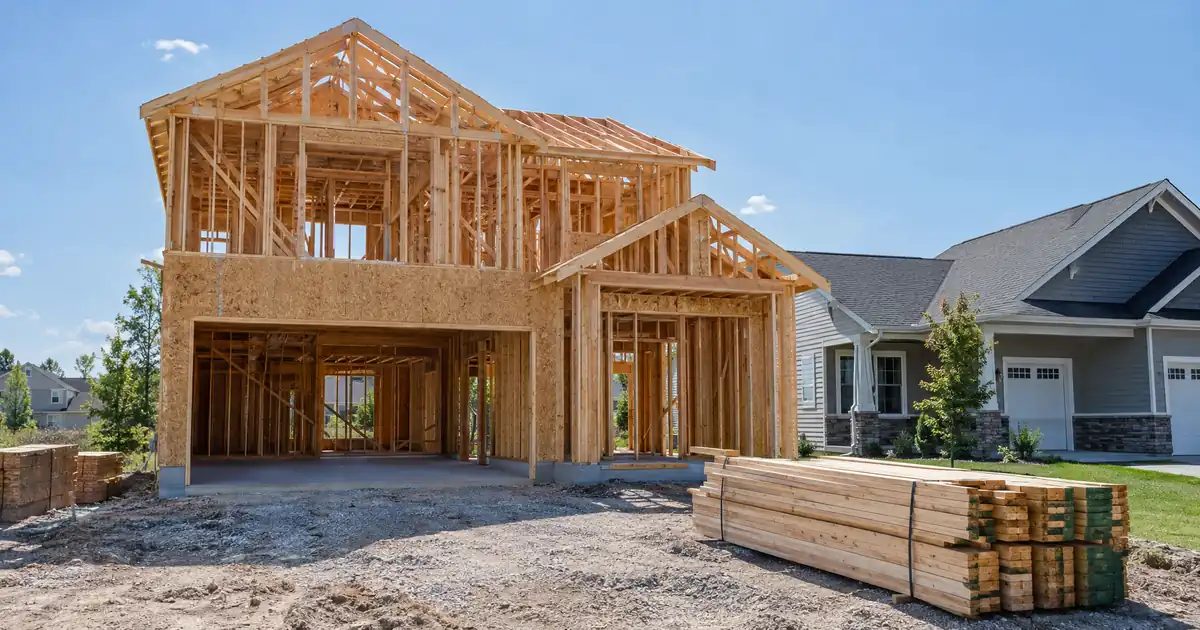
The Quick Read: Financing costs, not sticker prices, are setting what buyers can afford this fall, as of September 28, 2026. Freddie Mac’s survey put the 30-year fixed at 7.03% for the week of September 24, up from 6.30% a year earlier. Prices barely moved over the same stretch. Inventory is up and builders are cutting, but a bigger discount on the house does not offset a much bigger cost of money.
Key Takeaways
- Freddie Mac’s 30-year average rose four straight weeks through September 24, by 37 basis points in total.
- The Fed raised its target range by a quarter point on September 16, and the 10-year Treasury yield has climbed above 5%.
- Existing-home inventory is the highest in years, yet the median price still rose from a year ago.
- Buyers and investors should run their qualifying math on today’s financing costs, not on last spring’s.
- Negotiate hard on price and concessions, but never assume a price cut fixes a financing problem.
What Changed in September
The rate move was sharp, and it came in steps. Freddie Mac’s weekly survey averaged 6.71% for the week of September 3, then 6.76% on September 10. It jumped to 6.95% on September 17, a 19 basis point move. It reached 7.03% on September 24. From 6.66% in late August, that is a 37 basis point rise in four weeks. The National Apartment Association calls it the highest level of 2026. That is a trade group’s description, not Freddie Mac’s.
The Fed added to the pressure. The Federal Reserve’s FOMC statement on September 16 raised the target range by a quarter point, to 3-3/4 to 4 percent, on a 12–0 vote. The statement says inflation remains elevated. CNBC describes it as the first increase since July 2023, and reads the dot plot as showing 16 of 18 participants expecting another hike.
The bond market moved first. Here’s a point people miss. The Fed does not set mortgage rates. They track the 10-year Treasury yield, and that yield crossed 5% on September 14, two days before the Fed acted. Press reports citing Treasury data put it at an intraday 5.27% on September 28, ending near 5.23%. The yield began the year at 4.19%, per ConsumerAffairs. I’d confirm the exact close against Treasury’s own curve before quoting any single number.
Other gauges run higher than Freddie’s. The Mortgage Bankers Association reported its average 30-year contract rate at 7.12% for the week ending September 18, up from 6.97%. The Mortgage News Daily page showed its index at 7.43% on September 25. Different methods, different timing. The daily index picks up bond moves sooner.
Freddie’s survey covers conventional, conforming purchase loans for borrowers with 20% down and excellent credit. Investor and non-QM borrowers are not in that sample. Treat 7.03% as a direction signal, not a quote. Exact terms depend on the lender’s guidelines, property type, leverage, and a full review of the borrower’s file.
Are Prices Falling Enough to Matter?
No. Prices are roughly flat, and rates are not. The National Association of Realtors’ August report, released September 10, showed existing-home sales down 2.0% for the month and 1.2% from a year earlier, at a 3.98 million annual rate. It was the first reading under 4.0 million since June 2025. The median price was $429,100, up 1.6% from a year ago.
Inventory tells the other half. It reached 1.62 million units, up 5.9% from August 2025. It was the first time since November 2019 that it topped 1.6 million. Supply stood at 4.9 months, up from 4.6 a year earlier.
More homes, softer sales, a higher median. That is not a collapse. It is a market where sellers hold price and buyers hesitate because of financing.
New construction is where the discounting shows. The NAHB builder survey for September, released September 16, found 38% of builders cut prices, up from 35% in August. The sentiment index fell three points to 32. NAHB’s chairman blamed weak buyer traffic largely on rising mortgage rates. Trade press reports the average cut held at 6% and that 66% of builders used incentives, the highest since December.
Context matters here. The 38% share compares with 39% in September 2025, so cutting is elevated but not a record. And when you read that the Census Bureau showed an 8.8% drop in the average new-home price, Inman notes that it was the only statistically significant change in the report. It reflects the mix of homes sold, not a like-for-like price decline.
Two more corrections to the popular story. Census reported that August new-home sales rose from July, but that gain carries a wide margin of error, and July itself was revised up from an earlier estimate. And inventory is not back to normal: Realtor.com says active listings remain about 11% below pre-pandemic levels.
What Buying Power Actually Means
Buying power is the size of the loan a household’s income can carry at today’s cost of money. Two things set it: income and the financing cost. Price only enters when you compare that loan size to what homes cost.
Run a plain hypothetical. If a rate moves from 6.3% to 7.0%, the same monthly budget supports a noticeably smaller loan. Nothing about the house changed. Your ceiling dropped anyway.
That is the title of this column. Over the past year the Freddie Mac average rose 73 basis points while the NAR median rose 1.6%. Rates are outrunning prices. A buyer who saw a price cut in the listing feed and assumed the deal got easier may have it backward.
The MBA data shows buyers noticing. Its survey for the week ending September 18 had the purchase index down 1% seasonally adjusted and 11% below a year earlier. The refinance index fell 3% and sat 62% below last year. The prior week’s total applications fell 4.1%. Demand is thin on both sides. Every figure here varies by lender and program — guidelines, property type, leverage, and credit profile all apply.
What It Means for Real Estate Investors
Investor math runs on rent and financing cost, and both moved the wrong way. A rental that covered its debt payment in the spring may not cover it now, even at the same rent. Higher financing costs shrink coverage. That is arithmetic, not opinion.
Rents are not helping. Realtor.com’s July forecast projected a 1.2% decline in rents for 2026, a background figure from a secondary report. The NAA also warns multifamily owners face maturing loans and shifting valuations.
So the investor’s job this fall is to re-underwrite the deal on today’s numbers. That means today’s financing cost, current rent comps, and honest reserves. DSCR stands for debt service coverage ratio: monthly rent divided by the monthly housing debt payment. It is how DSCR loan programs size a file, subject to lender guidelines, and the product page carries the current guidelines. I won’t repeat figures here.
One point on non-QM. DSCR paper is not immune to rates. Its pricing moves with Treasuries like everything else. Industry forecasts from July put 2026 non-QM originations near $175 billion, and a June industry piece warned of artificial stability in DSCR paper. Treat both as background. Reports say investor products are a growing share of non-QM production, but the underlying dataset is not named, so I would not lean on the number.
Second-home buyers face the same math. If you’re weighing a vacation property, the financing story is identical, and our pieces on a vacation home in Wolfeboro and a vacation home in Windermere walk through how those files get structured.
My Take
Here’s my read. Buyers are waiting for a price drop that the data does not show, and the number that actually changed is the financing cost.
Eighteen years in lending taught me that people anchor on price because price is visible. The listing shows it. The financing cost shows up later, on the estimate. In a month like this one, that habit costs money. A seller who trims the ask by a small slice has not touched the thing that moved 73 basis points in a year.
I also think the “wait for rates to fall” instinct deserves scrutiny. The Fed just raised, the dot plot leans toward another hike, and the 10-year is above 5%. Rates may fall. They may not. Nobody in this business knows, and anyone who sounds certain is selling something. Planning around a rate drop is a bet. Planning around today’s number is a budget.
The counterargument has merit. Inventory is the highest in years, supply is at 4.9 months, and NAR’s chief economist says ample supply gives buyers better chances to negotiate. Realtor.com’s economist says the fall opportunity is on price and room to negotiate. If you can buy, this is a better negotiating table than 2022 or 2023 offered. I’d take that leverage. I just would not mistake it for relief on financing.
Genuine toss-up: whether to buy now and refinance later, or wait. The first path gets you the negotiating leverage today and the option to refinance if rates ease. The second keeps your cash but risks a market that turns. The right call depends on your cash reserves and how much payment risk you can carry, not on a forecast.
What I’d Do Now
Run every qualifying calculation on today’s financing cost. Not last spring’s, not Freddie’s weekly headline. Ask for current pricing on your own profile. Freddie’s 7.03% describes a 20%-down, excellent-credit borrower. Yours may differ, higher or lower.
Treat quotes as perishable. A quote gathered on September 14 and one gathered on September 28 are not comparable. The 10-year moved well over 20 basis points between them. If you are comparing offers, collect them on the same day.
Understand the lock. A rate lock is an agreement that holds a pricing level for a set period while the deal works forward. Floating means leaving it unlocked and taking whatever the market does. In a month when weekly rate moves ran as large as 19 basis points, floating is a real gamble. If the numbers work for you today, lock. If you’re not sure they do, that is a reason to stop and re-run the deal, not a reason to float and hope.
Use the leverage you have. Ask for price reductions, seller credits and repairs. With supply at a multi-year high and builders offering incentives, those requests land better than they did a year ago. Realtor.com names September 27 through October 3 as its best week to buy in 2026. Take that as a seasonal pattern, not a guarantee.
Investors: stress the deal. Model a soft rent and a further rise in financing cost. If the property only works in the good case, it does not work. Keep reserves. And check the exit, because a buyer of your property faces the same financing costs you do.
Watch the next data points. The MBA’s next weekly survey is due September 30, and NAR’s next existing-home sales report arrives October 13. The Sept. 28 Treasury spike may not appear in Freddie’s survey until October 1 at the earliest.
If you’re weighing a purchase or a refinance this fall, Lendmire can walk you through how the current programs fit your file. Call 828-256-2183 or request a quote.
For the end-to-end picture of how these loans work — qualification, structures, and the full process — see Lendmire’s complete DSCR loans guide.
Frequently Asked Questions
Is 7% a mortgage rate I should expect to be quoted?
Not necessarily. Freddie Mac’s 7.03% for the week of September 24 is a weekly average for conventional, conforming loans with 20% down and excellent credit. The MBA’s series and the Mortgage News Daily index both ran higher. Your own pricing depends on your credit, down payment, property and loan type, so get a current quote on your file. Final terms depend on lender guidelines, property type, leverage, and the borrower’s complete credit picture.
Did the Fed’s September hike cause mortgage rates to jump?
Only in part. The 10-year Treasury yield crossed 5% on September 14, before the Fed met on September 16. Mortgage rates follow the bond market more closely than the overnight rate the Fed controls. The hike added to an environment already moving against borrowers.
Should I wait for prices to fall before buying?
The data does not point to a broad price drop. NAR’s median was up 1.6% from a year earlier in August, even with inventory at its highest level since 2019. Builders are discounting more, but that partly reflects incentives and the mix of homes sold. Waiting is a bet on both price and rates.
Does higher inventory mean rates will come down?
No. Inventory and financing cost are separate levers. More homes for sale gives you more choice and more room to negotiate on price. It does nothing to the yield on the 10-year Treasury. You can have buyer leverage on the house and headwinds on the loan at once.
How do DSCR loans fit in when rates rise?
They qualify on the property’s rental income relative to its debt payment, rather than on personal income, subject to lender guidelines. Higher financing costs reduce that coverage, so the same rent supports less loan. Re-run the numbers on current pricing before you make an offer.
About Lendmire
Lendmire — NMLS# 2371349 — is a mortgage brokerage whose founder writes this column. DSCR investor programs reach 41 markets, including Washington, D.C.; consumer programs such as bank statement, HELOC and down payment assistance loans are arranged in 16 states; every loan is placed with, and underwritten by, a wholesale lender under that lender’s guidelines. Scotsman Guide named Lendmire a Top Mortgage Workplace in both 2025 and 2026.
Get Started
Ready to find the right loan for you?
In about 30 seconds you can review financing options available for your home or investment property. No commitment required.
Informational only. Not a Loan Estimate, approval, or commitment to lend. Program availability and eligibility are subject to lender guidelines, credit approval, property review, and underwriting.
References
1. Freddie Mac Primary Mortgage Market Survey
2. National Apartment Association on Freddie Mac rates
3. Federal Reserve FOMC statement, September 16, 2026
5. WRE News — 10 Year Treasury 5 Percent Mortgage Rates Fed September 2026
6. WRE News — 10 Year Treasury Yield Mortgage Rates September 2026
8. MBA Weekly Applications Survey, September 23, 2026
9. NAR existing-home sales report, August
10. NAHB builder sentiment, September 2026
11. investinglive.com — NAHB Housing Market for September 32 vs 34 Estimate
12. Inman notes
13. PR Newswire — Realtor.com September 27th October 3rd Marks the Best Time to Buy a Home in 2026
14. briefs.co — Realtor Lowers 2026 Home Price Forecast
This article is part of Lendmire’s Mortgage News series — every loan program’s qualification details, guidelines, and scenarios live on the loan options page.
Related reading: How Rising Interest Rates Impact Your Homebuying Power · The Impact of Higher Mortgage Rates: What Homebuyers Need to Know · 5 Crucial Questions to Ask a Mortgage Professional Before Buying a Home
Brandon Miller
Founder & CEO, Mortgage Loan Originator, Lendmire LLC
- Mortgage Loan Originator · NMLS# 1129696 · Verify on NMLS Consumer Access
- North Carolina Real Estate Broker · License# 343312 · Verify on NCREC
- North Carolina Insurance Producer · License# 19053198 · Property, Casualty, Life, Health · Verify on NAIC SBS
- Lendmire LLC · Firm NMLS# 2371349 · Verify firm licensure
Disclosure information. Lendmire is a state-licensed mortgage brokerage under NMLS# 2371349. Lendmire is not a depository institution, direct lender, or financial advisor — all loans referenced are placed through wholesale lender partners and are subject to each lender's underwriting standards. This article is provided for general informational purposes and is not a commitment to lend, nor does it constitute financial, legal, or tax advice. Loan programs, terms, rates, and qualification standards change without notice and depend on borrower profile, property type, and the state in which the subject property is located. Equal Housing Opportunity provider. NMLS Consumer Access: nmlsconsumeraccess.org.