
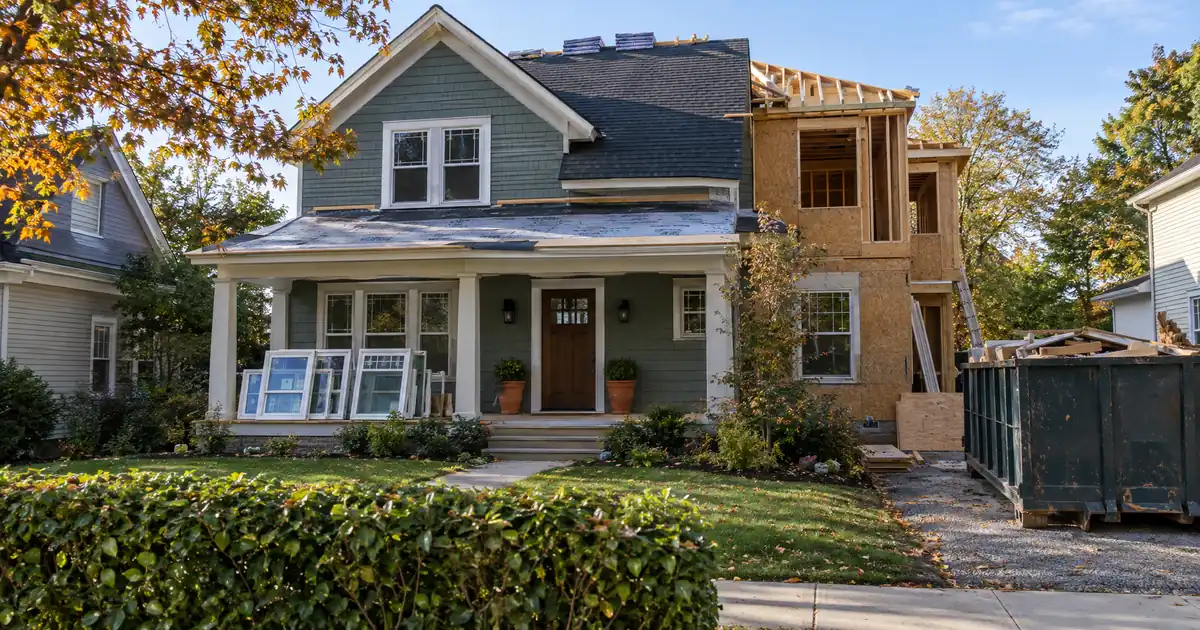
The Quick Read: You qualify by showing a long-term rental lender three things: the property has real rental coverage, the lender’s own appraisal supports enough value to pay off the hard money loan and return cash, and your file documents the purchase, the rehab, and the lease. Most programs in the wholesale network Lendmire works with expect about six months of ownership before they size a cash-out loan on appraised value. Inside that window, many sized loans fall back to your documented cost.
- The seasoning clock usually starts when title records, not when the rehab ends.
- A fresh lender-ordered appraisal sets the value. Your own after-repair estimate does not.
- Rent has to cover the new payment, and 1.00 coverage is where many select programs start.
- Your hard money loan should mature after the seasoning window, with room to spare.
What This Move Actually Is
You buy and fix a property with a short-term hard money loan. Then you replace it with long-term rental financing that pays off the bridge and may return cash.
Investors usually call this the BRRRR method (buy, rehab, rent, refinance, repeat). It is a sequence of steps, not a loan product. As Advice Only’s BRRRR glossary explains, nothing about the strategy is defined by regulation, and the refinance step is an ordinary cash-out refinance.
That matters because no outside rulebook sets your waiting period. Each lender’s program guidelines do. Lendmire is a broker, so the job is matching your file to the lenders whose guidelines fit it. Lendmire places these files through select lenders across 41 markets, including Washington, D.C.
Key Terms Defined
Seasoning is the time a lender wants you to own a property before it lends on appraised value instead of what you paid.
Cost basis is the purchase price plus documented rehab spending. It is the number a lender uses when it does not yet trust the new value.
Cash-out refinance is a new loan that pays off the old one and hands you the extra cash.
Payoff-only refinance is a new loan that covers just the old balance and closing costs, with no cash to you.
DSCR (debt service coverage ratio) is monthly rent divided by the full monthly payment: principal, interest, taxes, insurance, and association dues.
LTV (loan-to-value) is the loan amount as a percentage of the appraised value.
How Underwriting Treats a Six-Month-Old Property
Underwriting on this kind of file runs through five gates. Miss one and the loan shrinks or stalls.
1. The clock. Most programs count from the date title records in your name. If you assume it starts when the rehab finishes, you will miscount by weeks or months.
2. The value basis. Before a lender’s seasoning window clears, many programs size the loan on your cost basis. After it clears, they size on the appraised value. A cost-basis loan returns what you spent. An appraised-value loan can reach the equity your rehab created.
3. The appraisal. The lender orders its own. For a one-unit rental, the appraiser also completes a rent schedule, called a 1007. For two-to-four-unit properties, the report is a 1025, a small residential income property report. The rent figure from that appraisal drives your coverage ratio.
4. The coverage test. This is separate from seasoning. Passing one does not pass the other. 1.00 is where many select programs start, while a separate select-lender path takes coverage below 1.00 with leverage and terms adjusted. Stronger ratios open better leverage.
5. The file. Lenders that will look at a young property want proof: the deed, the purchase settlement statement, the hard money payoff letter, rehab receipts and draw records, and a signed lease with proof of deposit and first month’s rent.
One caution on coverage. Clearing 1.00 does not mean the property produces positive cash flow. DSCR compares rent to the payment only. Repairs, vacancy, management, utilities, and capital expenses sit outside the calculation.
Does the Cash-Buyer Exception Apply to a Hard Money Purchase?
Agency mortgage rules include a delayed financing exception for people who bought with cash. Fannie Mae’s Selling Guide section on cash-out refinance transactions describes it, and it comes with its own eligibility conditions and cash-out pricing.
Your purchase carried a loan secured by the property, so it was financed. The exception was built for cash buyers. Even where it applies, it ties proceeds to documented cost, not to the value you created. It also belongs to agency loans, and DSCR loans are non-agency, so it does not govern them.
Some investors hear that hard money exempts them from seasoning. It does not. Seasoning for a DSCR cash-out is lender policy. It varies by program, and a few lenders in the network shorten it when the rehab is complete and the value is well supported, usually with leverage or loan-size tradeoffs.
Payoff-Only or Cash-Out: Know Which One You Are Applying For
How the lender classifies your loan decides which seasoning rule applies. Here is the difference.
| Factor | Payoff-only | Cash-out |
|---|---|---|
| Cash to you | None beyond payoff and costs | Extra funds returned |
| Seasoning pressure | Generally lighter | Longer window, about six months |
| Value basis | Often what you owe | Appraised value once seasoned |
| Best for | Escaping a maturing bridge | Recycling capital |
Watch the trap. If you roll fees, interest, or extra draws into the new loan balance, a payoff can tip into cash-out territory. Ask your broker how a lender will classify the file before you apply.
Cost Basis Versus Appraised Value
Here is how the same file looks on either side of the seasoning window.
| Factor | Inside the window | After the window |
|---|---|---|
| Sizing basis | Cost basis (purchase plus documented rehab) | Appraised value |
| Cash returned | Roughly what you spent | Can include created equity |
| Key proof | Receipts, invoices, draw history | Appraisal and rent schedule |
| Cash-out ceiling | Lower effective leverage | Up to about 75% LTV on standard rentals |
A short-term rental changes the numbers. For short-term-rental collateral, cash-out tops out at 70% LTV, versus 75% for standard rentals. Expect a 640+ credit score and about 12 months of hosting history. Coverage floors are 1.00 on purchases and refinances. Lendmire’s piece Short-Term Rental Cash-Out Refinance Requirements Within Six Months of Purchase covers that path in full. Short-term rental rules can vary by city, county, HOA, and property type, so investors should confirm local rules before relying on projected rental income. The exact numbers vary by lender and program and follow a full review of property, leverage, and credit.
Do You Qualify? The Checklist
Qualification runs on the property’s rental income covering the payment, subject to lender guidelines. Here is what lenders in the network typically look at.
- Credit. A 620 floor exists in parts of the network. Most programs want around 660, and 700+ unlocks the strongest leverage tiers.
- Leverage. Cash-out refinance on a standard rental tops out around 75% LTV across most of the network.
- Coverage. Rent has to cover the full payment. A larger down payment on a new loan can lift the ratio, but it never erases leverage caps, credit floors, or reserve rules.
- Reserves. These vary by lender, leverage, loan size, and transaction type. Around six months of PITIA is common. Conservative rate-term files at modest leverage under $1,500,000 can see reserves waived, and larger loans typically step up to about nine months. Cash-out proceeds generally cannot count toward them.
- Loan size. Standard programs go up to $3,000,000, with smaller balances available through select lenders. Above $2,500,000 the network generally holds to 30-year fixed structures.
- Property type. One-to-four-unit rentals are the core. DSCR on manufactured homes (single- and double-wide), log homes, and barndominiums is not offered.
- Entity. If an LLC holds title, eligibility is subject to lender program requirements. Keep the vesting consistent between the hard money loan and the new loan, because a mismatch can stall a file.
The strongest files clear both tests: enough equity and enough rental coverage.
Step-by-Step: How to Apply
1. Pick the exit before you close the bridge. Confirm the seasoning rule of your target program with a broker. This is a quick step.
2. Match the bridge term to the clock. Hard money loans commonly run 6 to 18 months, interest-only, with no prepayment penalty, though terms vary by lender, property, and experience. Pick a term longer than the seasoning window, with cushion. Waiting is expensive, and a deal that needs a long bridge hold may not pencil.
3. Document as you go. Save receipts, invoices, work orders, and every draw record. This is your cost basis.
4. Get the unit leased. Collect the signed lease, deposit proof, and first month’s rent. Missing lease paperwork is a common reason files stall.
5. Run the break-even math. Divide your bridge payoff plus exit costs by the LTV cap. The result is the minimum appraised value that makes the refinance work.
6. Apply and order the appraisal. Your broker submits the file and the lender orders its own appraisal with the rent schedule.
7. Decide on the result. If the value and coverage hold, you proceed. If not, you adjust.
A rough sequence looks like this:
| Stage | What happens |
|---|---|
| Purchase | Title records and the clock starts |
| Rehab | Draws funded, receipts saved |
| Lease-up | Tenant placed, deposit and rent documented |
| Seasoning clears | Typically about six months from recording |
| Application | Appraisal ordered, file submitted |
A Worked Example
Run the numbers on this modeled scenario. These are assumptions for illustration, not market data. Say your bridge payoff plus exit costs equal 70% of the lender’s appraised value. A cash-out at 75% LTV on a standard rental leaves a thin cushion of about 5% of value, before reserves and closing costs. That is a payoff with a sliver of cash, not a big recycling event. Final terms depend on the lender’s guidelines, the property type, and the borrower’s complete credit picture.
Now say the appraisal comes in lower, and payoff plus costs equal 78% of value. You are above the cap. The loan cannot cover the payoff on its own, so you would need to bring cash to close, ask for a bridge extension, or sell.
Coverage runs the same way. If the larger new loan pushes rent coverage just under 1.00, expect less cash back and tighter terms.
If the Bridge Matures Before You Season
You have four honest options.
- Extend the hard money loan. Many lenders offer extensions, though terms vary by lender and experience.
- Do a payoff-only refinance. You avoid the maturity but leave cash on the table.
- Bring cash to close. This covers an appraisal gap, but it ties up capital.
- Sell. Sometimes the cleanest answer.
Many investors refinance out of hard money into long-term DSCR financing once a property is stabilized, and Lendmire brokers that path. For the full picture of how these loans work, see Lendmire’s complete DSCR loans guide.
Common Reasons Files Stall
- The investor assumed the clock started at rehab completion.
- The lender’s appraisal came in below the investor’s after-repair estimate.
- No signed lease, deposit proof, or first month’s rent.
- Rehab receipts and draws were never saved.
- The new payment pushed rent coverage below what the program wanted.
- Fees rolled into the loan reclassified a payoff as cash-out.
- The hard money note matured before the seasoning window cleared.
Frequently Asked Questions
How soon can I refinance after a hard money purchase?
It depends on the program. About six months of ownership is the common expectation for a cash-out loan across the network, and a few lenders shorten it with documented rehab and strong value support. Inside the window, a loan sized on cost basis may be available, and a payoff-only refinance generally faces lighter seasoning.
Does a hard money purchase count as a cash purchase?
No. A loan secured by the property means the purchase was financed. The agency cash-buyer exception was built for cash purchases and does not govern DSCR files.
Does my after-repair value set the loan amount?
No. The lender orders its own appraisal, and that value sets the LTV cap. Your estimate helps you plan, but the appraiser decides.
What documents do I need?
Expect to provide the deed, the purchase settlement statement, the hard money payoff letter, rehab receipts and draw records, a signed lease with deposit and first-month proof, and entity documents if an LLC holds title. Requirements vary by lender.
Can I do this on a short-term rental?
Yes, subject to lender guidelines. Short-term-rental collateral caps cash-out at 70% LTV, requires about 12 months of hosting history, and typically wants a 640+ score.
Next Step
If you are buying, rehabbing or refinancing an investment property on a short timeline and want to see how the numbers work, Lendmire can help you compare hard money options based on the project, the exit plan, leverage, and your goals. Programs change, every file is underwritten individually, and nothing here is a commitment to lend.
About Lendmire
Lendmire — NMLS# 2371349 — is a mortgage brokerage specializing in DSCR investor loans, helping arrange financing across 41 markets, including Washington, D.C., through wholesale and investor-lending channels. The model centers on property-level rental income reviewed by the lender rather than W-2 documentation, subject to lender guidelines, suiting entity-owned and multi-property investors. Lendmire holds Scotsman Guide Top Mortgage Workplace recognition for 2025 and 2026.
Get Started
Ready to find the right loan for you?
See your offer in seconds. No credit pull, no obligation.
Informational only. Not a Loan Estimate, approval, or commitment to lend. Program availability and eligibility are subject to lender guidelines, credit approval, property review, and underwriting.
References
1. Advice Only – BRRRR Method glossary
2. Fannie Mae Selling Guide B2-1.3-03
This article is part of Lendmire’s hard money loan program — full qualification details, guidelines, and scenarios live on the program page.
Related reading: Top DSCR Cash-Out Refinance Providers to Tap Equity From a Rental Property
Brandon Miller
Founder & CEO, Mortgage Loan Originator, Lendmire LLC
- Mortgage Loan Originator · NMLS# 1129696 · Verify on NMLS Consumer Access
- North Carolina Real Estate Broker · License# 343312 · Verify on NCREC
- North Carolina Insurance Producer · License# 19053198 · Property, Casualty, Life, Health · Verify on NAIC SBS
- Lendmire LLC · Firm NMLS# 2371349 · Verify firm licensure
Compliance and disclosures. Lendmire (NMLS# 2371349) is a licensed mortgage broker and is not a direct lender, depository institution, financial advisor, or tax professional. Content in this article is general market analysis and educational information — not financial, legal, or tax advice for any specific situation. Lendmire does not guarantee loan approval; every transaction is subject to underwriting by the funding lender. Mortgage pricing and loan program guidelines are subject to change at any time without notice and vary by borrower characteristics, property type, and state regulations. Lendmire complies with Equal Housing Opportunity. Licensure verification: NMLS Consumer Access.