
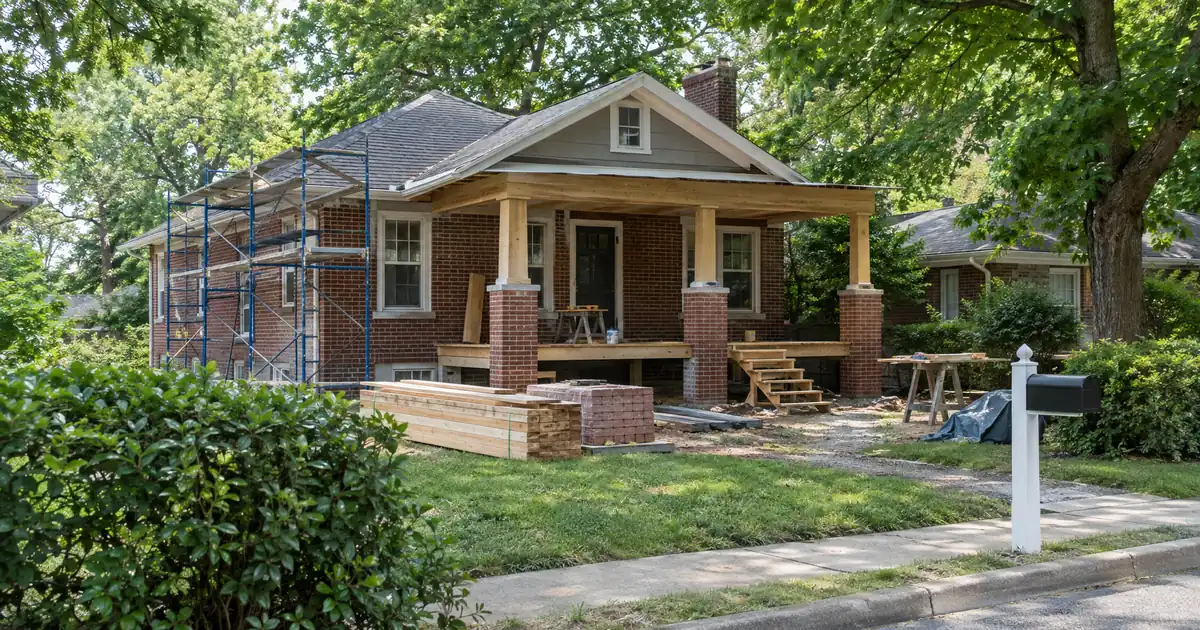
The Quick Read: An interest-only DSCR loan is long-term financing for a rental that already earns rent. A bridge loan is temporary financing for a property that is not ready for long-term financing yet. Interest-only is an optional payment feature on the first loan and the normal structure on the second.
- A DSCR loan is reviewed primarily on property-level rental income covering the payment, subject to lender guidelines. A bridge loan is reviewed on collateral value, the plan, and the exit.
- Interest-only changes the payment schedule. It does not waive credit, reserves, leverage caps, or property eligibility.
- A leased, stabilized rental points to DSCR. A vacant, mid-rehab, or below-market property points to a bridge.
- Many investors use both in sequence: bridge to acquire and stabilize, then a DSCR refinance as the exit.
The Honest Answer First
Pick the loan that matches the property’s condition today, not the one with the friendlier-sounding payment. If tenants are in place and the rent covers the housing payment, you want rental financing built to be held. If the property is empty, half-renovated, or leased far under market, you need a bridge that buys time.
What this loan actually costs to carry.
Hard money is sized against the project and priced by time. Enter the deal and see how much the program will lend, the cash required at closing, the carry while you hold it, and what is left at the exit.
Leverage tiers on the current program: 85% with fewer than 2, 90% with 2 or more, 93% with 5 or more completed projects — every tier capped at 75% of after-repair value. Loan amounts up to $5,000,000, larger by exception; terms of 6 to 18 months, interest-only, no prepayment penalty. The rehab portion funds in draws against completed work, not at closing.
Program parameters shown update from Lendmire’s centralized guideline source. Rate, points, and months are editable assumptions, not quoted terms.
Cost cap sets the loan · positive spread
Illustrative estimate only — not a quote, Loan Estimate, approval, or commitment to lend. Rate, points, and months are editable assumptions. Hard money is business-purpose financing for real estate investors, not a consumer mortgage. Leverage on the current program tops out at 93% of project cost for investors with a documented track record, capped at 75% of after-repair value, with rehab funding up to 100% of the documented budget released in draws; actual terms vary by lender, borrower experience, property, and exit. Lendmire is a mortgage broker, not a lender.
The confusion comes from the words “interest-only.” Both products can use that feature, but they use it for different jobs. In a DSCR loan, it is a choice that can help the coverage test. In a bridge, it is the default, because the loan is built to be repaid by a refinance or a sale.
This piece covers the investor version of a bridge loan, the kind used to buy, rehab, or lease up a rental. The consumer version, where a homeowner borrows against a current home to buy the next one, is a different product.
Side-by-Side
| Factor | Interest-Only DSCR | Bridge Loan (typical) |
|---|---|---|
| Main purpose | Long-term rental hold | Transition to a later exit |
| Review basis | Rent vs. housing payment | Collateral value, plan, exit |
| Personal income docs | Generally not the basis | Generally not the basis |
| Core documents | Lease or rent appraisal, entity, credit, assets | Property, project plan, exit plan, experience |
| Property condition | Rent-ready, leased or leasable | Vacant, rehab, or transitional is fine |
| Property types | Rentals; some types not offered | Typically 1-4 unit non-owner-occupied |
| Entity vesting | LLC common, per program | LLC common; guaranty typical |
| Reserves | Often about 6 months of payments | Cash to carry interest and rehab |
| Payment structure | Interest-only period, then amortizing | Interest-only through maturity |
| End of term | Payment steps up | Balloon due; refinance or sell |
The DSCR column reflects select programs in Lendmire’s wholesale network. The bridge column shows published industry norms, and the network figures appear further down. Every program varies by lender, property, and borrower.
Key Terms Defined
Interest-only period: A stretch of the loan where you pay only interest, so the balance does not fall.
Amortization: The schedule that pays down principal along with interest.
Balloon payment: The full remaining balance, due in one lump when the loan matures.
Exit strategy: The plan for paying off a bridge, usually a refinance or a sale.
Collateral: The property that secures the loan. Corporate Finance Institute notes that bridge loans must be backed by collateral such as real estate.
How Interest-Only Changes the Coverage Math
Interest-only can lift the coverage number on paper, but only if the program tests it that way. DSCR is monthly rent divided by the property’s monthly housing payment. That payment is PITIA: principal, interest, taxes, insurance, and association dues. In an interest-only execution, many programs drop principal from the bottom of the ratio. The denominator becomes interest, taxes, insurance, and dues.
Here is the catch. Each program defines this on its own. Some test the interest-only payment. Others test the fully amortizing payment, as if the loan were already paying down.
Run the numbers on a modeled file, not a real one. Assume rent covers the amortizing payment at about 0.95x and the interest-only payment at about 1.15x. Under a program that tests the interest-only payment, that file clears 1.00. Under a program that tests the amortizing payment, it sits below 1.00.
Now the nuance on 1.00. It is where many select programs start, not a universal line. A separate select-lender path takes coverage below 1.00, with leverage and terms adjusted. Stronger ratios open better leverage and pricing tiers.
Two warnings belong here.
- Passing 1.00 is not positive cash flow. DSCR counts rent against the housing payment only. Repairs, vacancy, management, utilities, and capital expenses sit outside the ratio.
- Model the step-up. When the interest-only period ends, amortization starts and the payment rises. The balance has not shrunk in the meantime. Test the later payment against realistic rent, not just today’s.
Why Neither Loan Looks at Your Paycheck
DSCR loans are designed for non-owner-occupied investment properties. Because they are business-purpose investor loans, they are reviewed differently from a standard owner-occupied mortgage. The CFPB’s Regulation Z provision exempts credit extended primarily for a business purpose, and it lists factors for judging that purpose.
Bridge loans on rentals usually sit in the same business-purpose category. That is why neither product leans on personal debt-to-income. Not every “investment” property is automatically exempt, though. Compliance Alliance points out that owner-occupied rentals have unit-count thresholds. Occupancy and loan purpose matter.
“No personal income documentation” never means no documentation. Both loans still ask for entity paperwork, credit, assets, insurance, title, and an appraisal.
When Interest-Only DSCR Is the Better Fit
Choose it when the property is leased or rent-ready, you plan to hold it, and the rent should carry the payment. Picture a duplex with tenants in place and renewals coming. Nothing needs fixing. You want financing that lasts, not a deadline.
This also fits self-employed investors and anyone with many properties, because qualification runs on the property’s rent rather than your traditional personal-income documentation. Here is what the network typically shows, subject to lender guidelines and varying by borrower and file:
- Purchase leverage: most files land at 75%-80% LTV on an investment-property purchase (20%-25% down). Select high-leverage programs reach 85% LTV on a purchase with roughly a 700+ score.
- Cash-out refinance: tops out around 75% LTV on a standard rental, with about 6 months of seasoning as the common expectation.
- Credit: a 620 floor exists in parts of the network. Most programs want around 660, and 700+ unlocks the strongest leverage tiers.
- Loan size: up to $3,000,000 on standard programs (smaller balances available through select lenders). Above $2,500,000 the network generally holds to 30-year fixed structures.
- Reserves: commonly around 6 months of PITIA. Conservative rate-term files at modest leverage under $1,500,000 can see reserves waived, and larger loans typically step up to about 9 months.
- Structures: the spine is the 30-year fixed. Interest-only periods and 40-year terms are available through select lenders in the network, and ARM structures exist too.
LLC vesting is common, subject to lender program eligibility. Manufactured homes, log homes, and barndominiums are not offered.
Rent comes from the actual lease or an appraiser’s market rent, usually on appraisal Form 1007 for single-family or Form 1025 for two-to-four units. For short-term rentals, purchases go to 75% LTV, cash-out to 70%, and expect a 640+ score and about 12 months of hosting history. Short-term rental rules can vary by city, county, HOA, and property type, so investors should confirm local rules before relying on projected rental income.
A pattern from comparable files: borrowers pick interest-only to get over the line on coverage, then discover the file would also have cleared with a modestly larger down payment. A bigger down payment lowers the payment and can lift the ratio. It never erases leverage caps, credit floors, or reserve rules. The strongest files clear both tests, enough equity and enough rental coverage. For a worked look at term choices, see Lendmire’s piece 30-Year vs Interest-Only Short-Term Rental DSCR Loan on a Rural Cabin.
When a Bridge Loan Is the Better Fit
Choose a bridge when there is no rent to test. A vacant building, a gut rehab, or a unit being repositioned cannot produce a DSCR number. A bridge looks at the as-is value, the finished value, and whether your exit is believable. PassivePockets stresses that a clear exit is critical, and that is the right instinct.
Bridges also make sense when in-place tenants pay well under market rent. A DSCR loan would test the low rent and might not cover. A bridge buys time to reset leases, then you refinance on the stronger rent. Fix first, then test.
Network figures for hard money and bridge loans vary by lender, property, and experience. Nothing here is a commitment to lend.
- Bridge purchase without rehab: up to 80% of purchase price.
- Rate-and-term or cash-out refinance: up to 65% of value on a non-owner-occupied property.
- Fix-and-flip: 93% of project cost at 5+ completed projects, 90% at 2+, and 85% with fewer. Every tier is capped at 75% of after-repair value. The top tier is for experienced investors.
- Rehab funding: up to 100% of the rehab budget funds in draws against completed work. That is a budget figure, not a purchase LTV.
- Loan size: up to $5,000,000, larger by exception.
- Term: 6-18 months, interest-only, no prepayment penalty.
- Credit: 620 minimum, with added conditions below 660. First-time investors qualify at the lower leverage tiers.
- Collateral: non-owner-occupied residential, 1-4 units.
Note the difference from a construction loan. Construction funds in draws, while a plain bridge on a finished property is usually funded in one shot at closing. Borrower experience and liquidity count. You need cash to carry interest and costs until the exit.
Many investors refinance out of a bridge into long-term DSCR financing once the property is stabilized, and Lendmire brokers that path. Check seasoning rules early, since they shape when a DSCR exit is available.
What Happens When the Clock Runs Out?
Each loan has a cliff, and they look different. The interest-only DSCR loan has a payment step-up. The bridge has a maturity date.
For DSCR, the step-up is predictable, so you can stress-test it on day one. Ask whether rent growth, a refinance, or a sale covers the gap if rent stalls. Not ideal to find out later.
For a bridge, the risks are sharper:
- Refinance failure. Rents, credit, or value may not support the permanent loan you planned. Then you face extension fees, a second bridge, or a sale.
- Fee drag. Extensions and extra closings can erase the savings of a cheap short-term loan.
- The double-deadline trap. Using a bridge on a rental that was already stable, just to refinance later, means two loans and two closings for no benefit. If tenants and rent are in place, go straight to DSCR.
Five Questions That Pick the Loan
1. Is there a signed lease, or can an appraiser support market rent today? If yes, lean DSCR. If no, lean bridge.
2. Does the property need work before tenants move in? If yes, bridge, then refinance.
3. Do you plan to hold for years? If yes, long-term DSCR beats repeated short-term loans.
4. Is your exit written down, with the numbers tested? If not, skip the bridge until it is.
5. Do you have cash for reserves or interest carry? Both loans need liquidity. Interest-only does not remove that.
Mostly yes on questions 1 and 3 means DSCR. Yes on 2, plus a solid answer on 4, means bridge then DSCR.
The Verdict
Neither product is the better loan. They solve different problems at different moments. Interest-only DSCR rewards a rental that is ready now and will be held. A bridge rewards a property that will be worth more once you finish the work.
If the property is stable, avoid paying for a bridge you do not need. If it is not, do not force it into a DSCR test it cannot pass. Interest-only helps in both, but it only shifts when the bill arrives, and the exit still needs to hold up. Tax treatment can depend on how the funds are used and how the property is held; investors should keep clear records and speak with a qualified tax professional before relying on any deduction.
If you are buying, rehabbing or refinancing an investment property and want to see how the numbers work, Lendmire can help you compare both paths based on the project, the exit plan, leverage, and your goals. Reach the brokerage at 828-256-2183. Its DSCR and bridge programs span 41 markets, including Washington, D.C.
Frequently Asked Questions
Can a DSCR loan be interest-only?
Yes, through select lenders in the network. The interest-only period is a payment feature, and after it ends the loan amortizes and the payment rises. Whether coverage is tested on the interest-only payment or the amortizing one depends on the program.
Can I skip the bridge and go straight to DSCR?
Often, if the property is leased or can be supported by a market-rent appraisal and is in rentable condition. A bridge is for properties that cannot pass a rent test yet. Using one on a stable rental can mean paying for two loans.
Does interest-only waive reserves or credit rules?
No. Credit floors, reserve expectations, leverage caps, and property eligibility still apply. Interest-only changes the payment schedule and may help the coverage ratio, nothing more.
What if my refinance does not qualify when the bridge matures?
You have fallback options, each with costs: an extension, a second bridge, or a sale. Extension fees and extra closing costs add up. Test the permanent loan against realistic rent and leverage before you take the bridge.
Does a DSCR loan need a lease?
Not always. Rent can be the actual lease or an appraiser’s market rent, and short-term rentals can use a third-party projection under their own program rules. The lender still reviews the property, credit, and reserves.
About Lendmire
Lendmire, NMLS# 2371349, is a non-QM mortgage broker serving real estate investors in 41 markets, including Washington, D.C., through DSCR investor loan programs. Qualification is generally reviewed around the subject property’s rental income, not the borrower’s W-2 history — a practical fit for LLC-titled portfolios and self-employed investors. All scenarios remain subject to lender review and program guidelines. Two consecutive Scotsman Guide Top Mortgage Workplace recognitions (2025, 2026).
Get Started
Ready to find the right loan for you?
In about 30 seconds you can review financing options available for your investment property. No commitment required.
Informational only. Not a Loan Estimate, approval, or commitment to lend. Program availability and eligibility are subject to lender guidelines, credit approval, property review, and underwriting.
References
1. Corporate Finance Institute — What Is a Bridge Loan?
2. CFPB — Regulation Z § 1026.3
3. Compliance Alliance — Regulation Z and Investment Properties
4. PassivePockets — Real Estate Bridge Loans 101
This article is part of Lendmire’s hard money loan program — full qualification details, guidelines, and scenarios live on the program page.
Related reading: Changing Title Before vs After Closing a DSCR Loan on a Rental · DSCR Income Rules for a Corporate Rental Near a Plant · How to Insure a Lake House Short-Term Rental for a DSCR Loan
Brandon Miller
Founder & CEO, Mortgage Loan Originator, Lendmire LLC
- Mortgage Loan Originator · NMLS# 1129696 · Verify on NMLS Consumer Access
- North Carolina Real Estate Broker · License# 343312 · Verify on NCREC
- North Carolina Insurance Producer · License# 19053198 · Property, Casualty, Life, Health · Verify on NAIC SBS
- Lendmire LLC · Firm NMLS# 2371349 · Verify firm licensure
Disclosure information. Lendmire is a state-licensed mortgage brokerage under NMLS# 2371349. Lendmire is not a depository institution, direct lender, or financial advisor — all loans referenced are placed through wholesale lender partners and are subject to each lender's underwriting standards. This article is provided for general informational purposes and is not a commitment to lend, nor does it constitute financial, legal, or tax advice. Loan programs, terms, rates, and qualification standards change without notice and depend on borrower profile, property type, and the state in which the subject property is located. Equal Housing Opportunity provider. NMLS Consumer Access: nmlsconsumeraccess.org.