
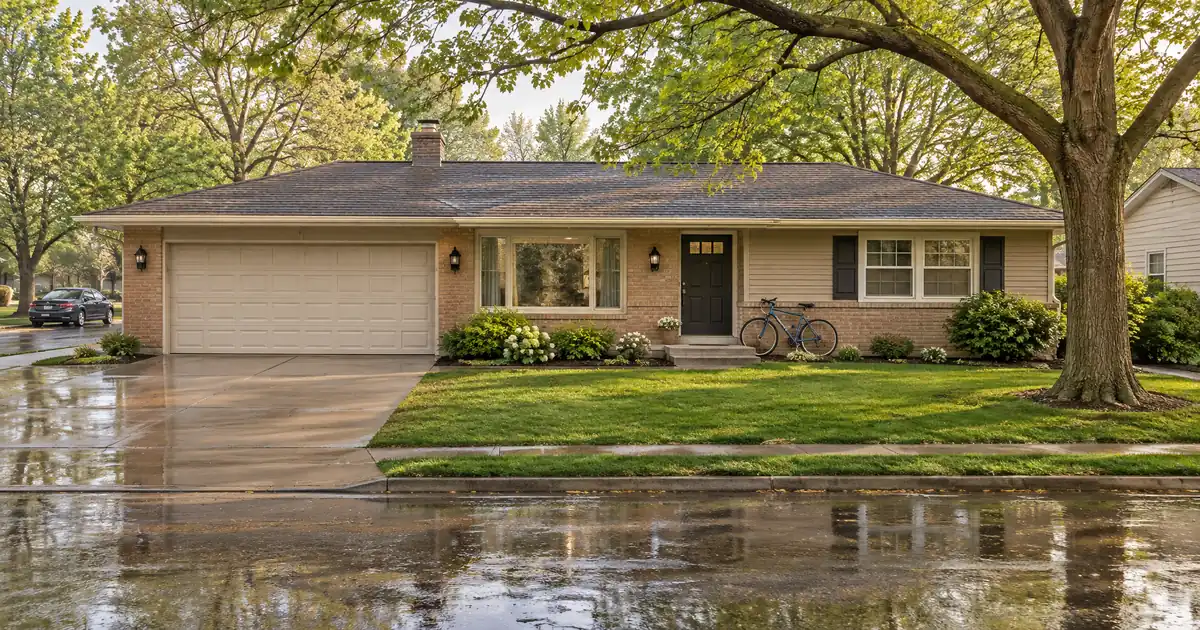
The Quick Read: A home equity line of credit (HELOC) lets you borrow against a rental while keeping your existing first mortgage. The line is a separate debt secured by the same property. The lender checks four things.
- Your first mortgage stays in place. The new lender takes second position, meaning the first lender gets paid first if the property goes through foreclosure.
- Your equity sets a ceiling, not a borrowing entitlement. On the wholesale investment line discussed here, the first mortgage balance plus the full credit limit cannot exceed 70% of the rental’s accepted value.
- The investment line requires a credit score of at least 700. A score of 720 or higher does not raise the rental-property ceiling. The maximum individual line is $500,000, subject to lender review.
- The line is not an empty emergency fund. You must borrow at least 75% of the approved limit at opening. Size it for money you actually need, not just the equity available.
Key Terms Defined
Equity is the property’s value minus the debt secured against it.
Combined loan-to-value (CLTV) is the share of the property’s accepted value taken up by the first mortgage balance and the proposed line’s full limit.
Draw period means the part of the agreement when you can borrow, repay principal and borrow again within the available limit.
Subordination means one lender agrees that another lender’s claim against the property comes first.
Vesting describes who legally owns the property, as shown on the deed.
How large a line the equity supports.
An equity line is sized by combined loan-to-value, occupancy, and credit — not by rental coverage. Switch the occupancy or the credit band and the ceiling moves with it.
Investment-property lines require a 700 minimum credit score; second-home lines start at a 640 minimum and primary-residence lines at 600, and the combined-LTV ceiling steps down as the credit band drops on primary-residence and second-home lines and holds on investment-property lines; the line cap steps down on primary-residence lines and holds at every tier on investment-property and second-home lines.
A debt-to-income ratio above 45% requires 680+ credit. On the longer-runway program, profiles under 640 are limited to single-family homes. At least 75% of the approved line is drawn at closing. Ceilings, floors, and caps update from Lendmire’s centralized guideline source.
Rate assumption as of November 23, 2026.
Line estimate
Illustrative estimate only — not a quote, Loan Estimate, approval, or commitment to lend. The rate is an editable assumption; equity-line pricing is variable through both the draw and repayment periods and never converts to fixed. Occupancy and credit drive the ceiling together: an investment property tops out at 70% combined LTV (minimum credit 700, line cap $500,000); a second home tops out at 90% combined LTV (minimum credit 640, line cap $500,000), with the ceiling stepping down as the credit band drops (the cap holds at every tier); a primary residence tops out at 90% combined LTV (minimum credit 600), and its $750,000 maximum line is available only at 75% combined LTV or below with a 700-or-better credit profile (720 on the longer-runway program) and a full appraisal. Lines above $500,000 require a full appraisal. Credit, debt-to-income, property type, and full underwriting review all affect the final line.
Estimate only, not a loan offer or a commitment to lend. The rate is variable and can go up. The payment shown is interest only. Full calculator disclaimer.
Which lenders will take second position on a rental?
Start with a precise question: Does the lender offer a revolving line on a non-owner-occupied rental, behind a first mortgage that will stay in place? A lender can offer home equity products and still say no to that request. It might accept only primary homes, require first position or offer a lump sum instead.
The distinction matters because a junior lender bears more risk. If a foreclosure sale does not produce enough to cover both debts, the junior lender takes the shortfall before the first lender does. NerdWallet reports that investment-property lines are available from fewer lenders and can have stricter qualifications than primary-home lines. An advertisement for a homeowner line tells you little about the terms available on your rental.
| Where you ask | What to establish first |
|---|---|
| Bank or credit union | Does its equity program accept rental property? |
| Commercial lending desk | Is this a property line or a business credit facility? |
| Mortgage broker | Which wholesale program fits the deed and first loan? |
A broker can compare the actual request against multiple lenders’ guidelines. That helps if the rental is a condo, your income comes through a business, or the existing mortgage has unusual terms. It does not turn a homeowner program into a rental program.
Lendmire, LLC (NMLS# 2371349) is a mortgage broker that arranges HELOCs through select wholesale lenders in its 16 full-service states. Its separate investor mortgage programs cover 40 states plus Washington, D.C. The broader footprint does not apply to these equity lines.
How much can you borrow behind your first mortgage?
Start with the value the HELOC lender accepts, not the asking price of a similar home. Apply the investment program’s combined borrowing ceiling, then subtract the current principal balance of your first mortgage. The result is the space available for a line before the lender considers the individual line limit and your income.
Investment-line calculation: accepted rental value × applicable CLTV ceiling − outstanding first mortgage balance.
The network ceiling is 70% CLTV on an investment-property line. State-specific credit rules can reduce the amount available. The lender uses the full line limit in this calculation even if you plan to borrow less. Otherwise, a borrower could pass the equity test at opening and exceed it with the next draw.
Consider two rentals with the same accepted value. One has a first mortgage already at the investment-line ceiling. That owner has equity, but none is available for this line. The other has a substantially smaller first mortgage. Its owner has room under the ceiling, although personal income could still limit the request. A higher credit score cannot create room on the first rental.
Which value counts after a renovation? Investment lines here ordinarily start with an automated valuation, a computer estimate based on property data and comparable sales. Every eligible investment line falls within the program’s automated-valuation size range. That does not mean the lender must accept the first estimate. It can seek a second valuation or a manual review, and you can request a full appraisal.
If you have renovated the property, separate the cost of the work from evidence of its value. A contractor’s invoice shows what you spent. Recent sales of comparable renovated homes help show what a buyer might pay. The improvement may support a higher appraised value, depending on those sales and the lender’s review.
Does your current mortgage allow another lien?
Read the signed note, the mortgage or deed of trust, and any riders that amend them. The note sets out the debt you agreed to repay. The mortgage or deed of trust secures that debt against the property. Look for language about additional liens, further encumbrances, transfers of ownership and written consent.
If a clause requires permission, ask the company managing your mortgage for the required consent in writing. If the wording is unclear, give it the actual proposal: the first balance stays in place, ownership stays the same, and a new lender records a junior lien. Consent to add a lien is a different question from consent to change the deed.
The HELOC lender also reviews the kind of mortgage it would sit behind. This investment program does not accept a first mortgage with any of these features:
- Negative amortization: unpaid interest can be added to the debt, making the balance grow.
- A balloon payment: a large unpaid balance comes due at the end of the term.
- Reverse-mortgage features: the loan allows advances against equity under a reverse-mortgage agreement.
A prepayment penalty is a charge for paying a loan off early. This investment-line program permits one on the existing first mortgage. Adding a separate line is not the same as paying that mortgage off. A cash-out refinance, by contrast, replaces the first mortgage and gives you part of the available equity in cash. That distinction belongs in the cost comparison.
How does the lender qualify you, step by step?
The lender screens the borrower and property, checks the equity, then verifies the income available to carry the debt. A signed lease can help document income. It does not replace the personal qualification test, even when the rent comfortably covers the first mortgage.
1. Confirm the property and borrower. The lender checks identity, occupancy, ownership and property type. An initial credit check screens for eligibility without affecting your score. The investment program uses a single credit bureau and the primary wage earner’s score. Its 700 minimum is specific to the rental line.
2. Establish the available equity. The lender obtains a valuation and checks the proposed limit against your existing mortgage. If you accept a preliminary offer, the lender then seeks consent for a full credit inquiry, which can affect your score. The preliminary offer is not final approval.
3. Verify personal income. The lender first uses an electronic payroll match or an account connection you authorize. If you are self-employed, it can analyze personal or business deposits. When that process does not establish income, the investment program permits a document review, including applicable personal and business returns.
4. Test the full line against your debts. Debt-to-income ratio (DTI) is the share of verified monthly income committed to qualifying debt obligations. This program adds the proposed line’s interest-only obligation at the maximum draw to the debts it counts. The investment-program DTI ceiling is 50%, subject to full review.
5. Review title and complete the agreement. The lender checks who owns the rental, what debts already attach to it and who must sign. After final review and signing, the initial draw is disbursed. You now have two separate debts, not a revised first mortgage.
On a mortgaged rental, ask how the lender will count the lease and the existing housing expense. Documented rent may offset the rental’s principal, interest, taxes, insurance and applicable association dues, together called PITIA. Counting all the rent as income while leaving the first mortgage out of the calculation gives you the wrong answer.
A useful broker check is to run the requested limit against both tests before discussing a larger line. If equity is the constraint, more documented income will not help. If DTI is the constraint, a smaller request can reduce the obligation used to qualify you without changing the first mortgage.
What should you gather? Start with the current mortgage statement, signed loan documents, recorded deed, insurance declarations and lease. Add trust documents if a trust owns the property. Have income records available for any earnings the electronic check cannot verify. If another person or business pays a debt on your credit report, gather proof rather than assuming the lender will exclude it.
What happens after you draw the money?
The network investment line generally has a five-year interest-only draw period followed by 25 years of repayment. Tennessee uses the same draw period but a ten-year repayment period. Interest-only means the required draw-period amount covers interest without paying down principal. Borrowing costs can change during both periods; they do not become fixed when repayment starts.
During the draw period, paying back principal restores available credit under the agreement. Once the draw period ends, borrowing stops. The remaining balance is then paid down through installments covering principal and interest. The Consumer Financial Protection Bureau explains this distinction between access to credit during the draw period and repayment afterward.
The required opening draw changes the decision. Suppose you want to replace a roof now and renovate a vacant unit later. If the roof accounts for only a small part of the proposed limit, the 75% initial draw could put you in debt for work you have not scheduled. A smaller line may fit the project better, even if the lender would consider more.
Stress-test the repayment period, not just the draw period. Assume the renovation runs over budget, the unit stays vacant and the line still carries its balance when principal repayment begins. Could your other verified income support both debts without a sale or another loan? Passing the lender’s DTI test answers a narrower question: whether you meet its rules at application.
What changes if the deed, property or borrowing plan is unusual?
A rental held in a limited liability company (LLC). This line requires individual ownership or an eligible revocable living trust, a trust its creator can change during their lifetime. An LLC, corporation or partnership cannot hold title under this program. The same exclusion applies to irrevocable, blind and land trusts.
Do not transfer a rental out of an LLC just to complete an application. A due-on-sale clause can let the first lender demand repayment after certain ownership transfers. Have the existing lender address the proposed deed change and review its consequences with your advisers. A rental-income-based cash-out refinance may preserve LLC ownership, subject to lender program eligibility, but it replaces the first loan.
A paid-off rental or an existing equity line. On a paid-off property, a new secured loan takes first position. The network program’s first-position structure requires the draw period to be closed and the debt in principal-and-interest repayment. Do not count on continuing access to revolving credit under that arrangement. Conversely, if the property already has a mortgage and a HELOC, the program does not offer a third-position line. Disclose the existing line even if its balance is zero.
A condo, modular home or mixed-use building. Eligible investment collateral includes single-family homes, two- to four-unit rentals, townhomes, qualifying condos and modular homes. Some condos outside standard conventional financing criteria are eligible. Manufactured homes, co-ops, condo hotels, log homes, barndominiums and commercial or mixed-use buildings are not offered under this investment program.
A recent purchase, vacancy or sale listing. Give the lender the acquisition date, tenant status and listing history. A vacant unit may leave you without a current lease to document rent. In certain participating states, a current sale listing or one within the prior 60 days makes the rental ineligible. These are separate issues: an eligible property type can still fail the listing test.
A larger portfolio. This investment program limits a borrower to three lines and $750,000 of combined exposure across them, with no individual investment line above $500,000. Borrowers with more than 15 financed properties are not eligible. Checking only the equity in the rental you plan to pledge misses both portfolio limits.
Which structure fits the job?
A revolving second lien makes sense when keeping the first mortgage matters and you expect to reuse credit. A one-time expense calls for a different comparison. If your need is to finance another rental, first decide which property should secure that debt rather than assuming it belongs on the rental you already own.
| Structure | Existing first mortgage | How you access funds |
|---|---|---|
| Investment-property HELOC | Stays in place | Draw and redraw during the draw period |
| Closed-end home equity loan | Stays in place | One lump sum; no redraw |
| Cash-out refinance | Replaced by a new first mortgage | One lump sum from available equity |
| Separate rental purchase mortgage | Stays on the existing rental | New debt is secured by the purchase |
A closed-end second mortgage is a separate loan for a set amount. Compare it with a HELOC if you know the project cost and do not need to borrow again. A business credit line is another distinct contract: ask what assets secure it and whether the lender will record a claim against the rental.
For a new purchase, a debt service coverage ratio (DSCR) compares the property’s rent with PITIA. A DSCR loan is reviewed primarily on property-level rental income covering the payment, subject to lender guidelines. That can suit a purchase where the new rental’s income supports financing but your personal DTI leaves little room for a HELOC. The complete guide to DSCR loans explains that underwriting approach. Rental coverage alone does not tell you what remains after vacancy, repairs or management.
If you use a line on the existing rental to help buy another, the debt stays on the original property. A later mortgage on the purchase does not absorb the line automatically. Your plan needs to work even if the later refinance does not.
Frequently Asked Questions
Can a HELOC and a purchase mortgage be arranged together?
Do not assume a standalone investment line can supply the down payment on the same property. Tell both lenders the proposed source of funds. Ask whether the purchase lender permits secondary financing and whether the line lender accepts simultaneous purchase financing or requires an ownership period first.
What if a product is advertised as a “DSCR HELOC”?
Ask whether you can repay and redraw, what qualifies you, and whether your current first mortgage gets paid off. A rent-qualified first mortgage that pays out a lump sum is a cash-out refinance, regardless of the marketing label. It does not preserve your existing first loan.
Can you use a line on your primary home instead?
Potentially, but your home then secures the debt, not the investment property. Ask whether the proposed use of funds is permitted. If the rental project cannot repay the borrowing, the obligation still sits against the home where you live.
Will keeping the HELOC affect a later refinance of the first mortgage?
It can. If you want the line to remain open, the new first lender may require the HELOC lender to agree in writing to stay in second position. If the lenders cannot agree, compare the cost of paying off the line with the benefit of replacing the first mortgage.
What should you give a broker to compare options?
Bring the mortgage balance, estimated property value, deed, credit profile and proposed use of funds. Specify both the amount you need initially and whether you expect to borrow again. Lendmire can compare HELOC options against those facts at 828-256-2183. The useful comparison is not just how much you can borrow, but how much you need to draw to keep your existing mortgage intact.
For informational purposes only. This is not a commitment to lend. Eligibility and terms depend on the lender’s current guidelines, property review and credit decision.
About Lendmire
Lendmire, LLC, NMLS# 2371349, is a mortgage brokerage that arranges home equity lines of credit through wholesale lending partners in its 16 full-service states. Lines on primary residences, second homes and investment properties are each reviewed individually by the lender under the program’s occupancy, credit and combined-loan-to-value guidelines. Scotsman Guide named Lendmire a Top Mortgage Workplace in both 2025 and 2026.
Get Started
Ready to find the right loan for you?
See your offer in seconds. No credit pull, no obligation.
Informational only. Not a Loan Estimate, approval, or commitment to lend. Program availability and eligibility are subject to lender guidelines, credit approval, property review, and underwriting.
References
1. NerdWallet
2. Consumer Financial Protection Bureau
This article is part of Lendmire’s investment property HELOC program — full qualification details, guidelines, and scenarios live on the program page.
Related reading: How to Qualify for an Investment Property HELOC and Keep Your Current First Mortgage · Best Investment Property HELOC Program When Opening a Second HELOC Alongside the First · Investment Property HELOC Lenders on a Home With No Mortgage · Best Investment Property HELOC Program Without Staying With Your Current Mortgage Lender · Investment Property HELOC vs DSCR Cash-Out Refinance and Keep Your Current First Mortgage
Brandon Miller
Founder & CEO, Mortgage Loan Originator, Lendmire, LLC
- Mortgage Loan Originator · NMLS# 1129696 · Verify on NMLS Consumer Access
- North Carolina Real Estate Broker · License# 343312 · Verify on NCREC
- North Carolina Insurance Producer · License# 19053198 · Property, Casualty, Life, Health · Verify on NAIC SBS
- Lendmire, LLC · Firm NMLS# 2371349 · Verify firm licensure
Legal disclosures. Lendmire, LLC (NMLS# 2371349) is a state-licensed mortgage brokerage that arranges financing through wholesale lender relationships. Lendmire is not a direct lender, depository institution, or registered financial advisor. The discussion above is general informational content about real estate financing — it is not financial, legal, or tax advice, and readers should consult licensed professionals for guidance on their individual circumstances. Loan inquiries are subject to lender underwriting; this article does not represent a commitment to lend. Loan terms, rates, and qualification standards vary by borrower, property, and state, and are subject to change at any time. Equal Housing Opportunity. NMLS Consumer Access: nmlsconsumeraccess.org.