
The Quick Read: A house left out of a blanket loan can carry its own HELOC, because the line is a separate loan secured only by that property, but you need title in your own name or a revocable trust, a credit score of at least 700, and room under a 70% combined leverage cap on an investment property. The lender underwrites you, not the rent. That is the biggest difference from a DSCR loan. Every figure here is subject to lender guidelines, and none of it is a commitment to lend.
- Title decides first. The borrower or a revocable living trust must hold title. An LLC cannot.
- Size and leverage. Investment lines run from $25,000 to $500,000, with a 70% CLTV ceiling that counts the full line commitment.
- Credit buys eligibility, not leverage. 700 is a hard floor, and 720 gets the same 70%.
- Your income and debts carry the file. Maximum DTI is 50%, and rent coverage does not enter the math.
- Read your existing loan documents. A first mortgage on the house, or the blanket note itself, may restrict added liens.
Key Terms Defined
You will see these terms throughout. Each one changes how the file reads.
- Blanket loan: one loan, under one note, secured by several properties. Lenders also call it a portfolio DSCR loan or a cross-collateralized loan. A bank’s own portfolio loan, meaning a loan the bank keeps on its books, is a different use of the word.
- Cross-collateralization: every property in the pool backs the whole loan, not just its own share.
- Release clause: a term in the note that lets one property leave the pool when you pay a set amount. It exists only if it was written into the note.
- HELOC: a revolving line of credit secured by a property. You draw during a set period, then repay.
- CLTV (combined loan-to-value): all loans against the property, added together, divided by its value.
- AVM (automated valuation model): a software-based value estimate used in place of a traditional appraisal.
- DTI (debt-to-income): your monthly debts compared with your monthly income.
What Does Left Out Actually Mean?
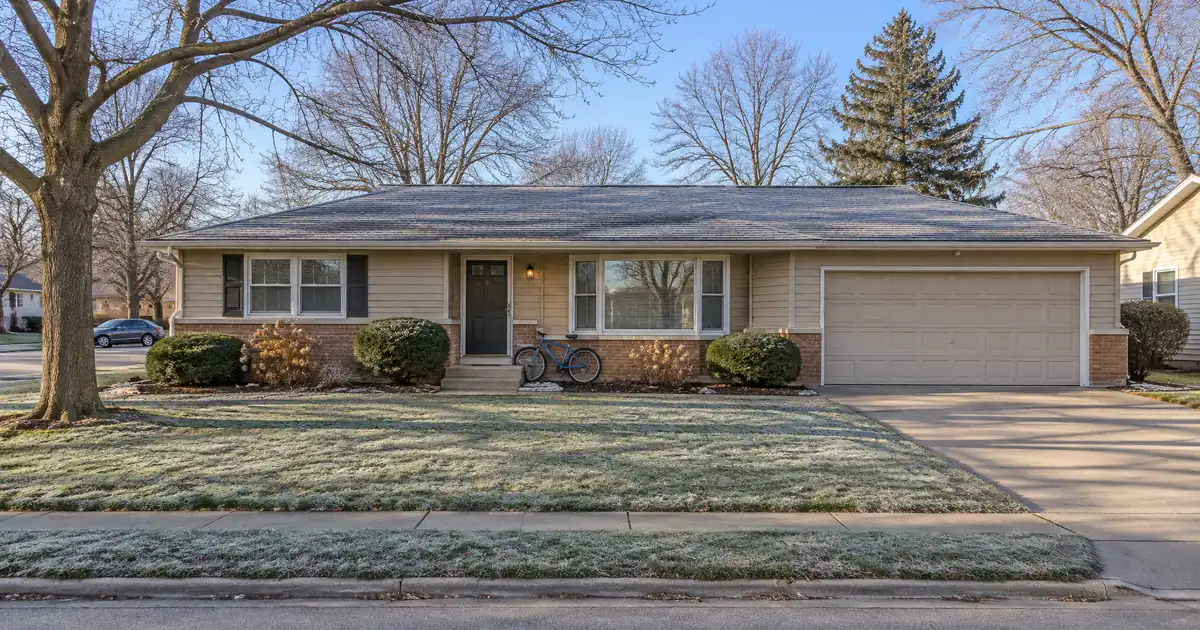
A left-out house is any rental that does not sit under the blanket note. How it got there changes the HELOC answer more than anything else on the file.
Investors leave a property out for a handful of reasons. It may already have its own mortgage. It may sit in an LLC. Its rent coverage may be too thin for the pool. It may have been bought after the blanket closed. Or the investor may want its equity kept separate from the pooled debt.
The HELOC does not touch the blanket. It is a separate loan on a separate property, and only that one house secures it. That is the appeal: the house stays free to sell, refinance or borrow against without the pool’s release terms.
| Left-out case | What it means for the HELOC |
|---|---|
| Free and clear | Line can sit in first position |
| Has its own first mortgage | Line sits second; CLTV counts both loans |
| Deeded to an LLC | Title blocks the line; DSCR cash-out is the alternative |
| Bought after the blanket | Equity may be thin; run the numbers first |
| Left out for weak rent coverage | HELOC ignores rent; your personal file decides |
How Underwriting Treats the Line, Step by Step
A HELOC is open-end credit, meaning you can borrow, repay and borrow again up to a limit during the draw period. Available equity is the home’s value minus what you owe on it. The lender’s job is to measure how much of that equity it will lend against.
1. Confirm title vesting. The deed must show you or your revocable living trust. Irrevocable, land and blind trusts do not work either.
2. Pull the existing lien balance. The lender reads your first mortgage statement. Free and clear means no balance to subtract.
3. Set the value. On lines of $500,000 or less, the lender ordinarily runs an AVM. A higher CLTV may trigger a secondary valuation, and you may ask for a full appraisal.
4. Apply the CLTV test. The ceiling is 70% on an investment property. Every lien counts, and so does the full line commitment, not only what you draw.
5. Check credit. The floor is 700. The lender pulls one bureau score, and the report must be no more than 90 days old at closing.
6. Run income and DTI. Underwriting weighs documented income, from W-2s or from bank statements, against all your debts. DTI tops out at 50%.
7. Close in first or second position. Recording order sets the position, not the product name.
Two details surprise people. You are qualified on the interest-only payment calculated on the maximum draw, whether or not you plan to use all of it. And at least 75% of the line is drawn at closing, so plan the draw before you apply.
Requirements at a Glance
On an investment property across our wholesale network, the requirements are narrow and firm. Programs differ, and every file is underwritten individually.
| Item | Investment-property line |
|---|---|
| Max CLTV | 70% |
| Credit floor | 700 (hard floor) |
| Line size | $25,000 to $500,000 |
| Structure | 5-year interest-only draw, 25-year repayment |
| Max DTI | 50% |
| Title | Individual or revocable living trust |
| Property types | Single-family, 2-4 units, PUD, townhome, condo |
Pricing floats through both the draw and the repayment periods. It does not convert to fixed.
The document set is short. Expect a government ID, a mortgage statement on every financed property, proof of insurance, income documentation, and proof of property type. Bank-statement income means 12 to 24 months of statements with non-income deposits stripped out. On an investment line, bank statements are never the binding constraint, because the 700 credit floor already sits above the 680 minimum for the deposit analysis.
Eligible property types include non-warrantable condos. Manufactured homes, co-ops, condotels, log homes, commercial, mixed-use and agriculturally zoned properties are not offered. A borrower is limited to three lines, and a borrower with more than 15 financed properties is not eligible. If your blanket pool is large, ask how its properties count toward that limit.
Investment lines run tighter than owner-occupied ones. NerdWallet reports market-wide criteria of typically 720 or higher credit and a maximum LTV of 80%, though many lenders sit lower. On our network, an investment line tops out at 70% CLTV with a 700 floor. For comparison, owner-occupied lines on our network reach 90% CLTV, and only at 720 credit or better. White Coat Investor explains the lender’s reasoning: fewer lenders offer investment lines at all.
Credit history events matter too. A bankruptcy needs four years of seasoning from discharge or dismissal. Investment files follow a seven-year path after a foreclosure and four years after a deed-in-lieu, pre-foreclosure sale or short sale, subject to lender guidelines.
Run the Equity in Percentages
Equity math on this product is subtraction. Take 70% of the AVM value, then subtract your existing liens as a percentage of that value. What remains is the most the line can be.
Say your left-out duplex has a first mortgage at 55% of its value. That leaves 15% of value for the line. With a first mortgage at 40%, the room is 30%, but the $500,000 maximum may bind first on a higher-priced property.
Now picture a forgotten second lien. An old home equity line at 10% of value, never closed out, eats 10% of your room. Every subordinate lien counts toward CLTV, even a lien you rarely use.
Drawing only part of the line does not shrink the test. The lender counts the whole commitment. A smaller line request is the only way to leave more headroom.
The AVM is the other swing factor. If it comes in under your own estimate, your room shrinks with it. A thin-equity house bought after the blanket closed is the case to check first.
Does the Blanket Loan Get in the Way?
It can, but through the documents, not through the new line. The HELOC never touches the pool. The pool’s terms can still limit what you do elsewhere.
Read the blanket note for two things. First, check what it says about the excluded property and any limits on added debt. Second, understand cross-default. A default on one pooled property counts against the whole loan until the lien is formally released, and that can reach your credit and your personal file.
The blanket payment will show up in your file. Mortgage statements on every financed property are part of the document set, so the lender sees it. How it lands in your DTI is a file-level question.
The release clause matters if you ever want to pull a property out of the pool. It is a contract term, not a right. Without a clause, a due-on-sale provision can require full payoff. With one, the price to release a property is set by your loan documents and may differ from its share of the debt, so read the formula before you rely on it.
A related risk sits on the left-out house itself. If it carries a DSCR first mortgage, the note may include a covenant that blocks an added lien. A HELOC in second position would then need that lender’s consent. Check before you apply.
Where the Rule Breaks
LLC title. An LLC cannot hold title on this product. You can re-title into your own name or a revocable trust, but weigh the insurance and liability effects first, since moving out of an LLC can change the hazard policy. The alternative is a DSCR cash-out, which qualifies primarily on property-level rental income covering the payment, subject to lender guidelines. DSCR investor loans reach 40 states plus Washington, D.C., and LLC-titled collateral is accepted subject to lender program eligibility.
Vacant or newly converted rentals. A property classified as an investment but not yet tenanted complicates the file, since there is no lease history. The HELOC itself reads your income, not the rent, but expect the property-type proof to get more attention.
Short-term rentals. A short-term rental generally falls under the same 70% CLTV ceiling and 700 floor as a long-term rental on this product.
Ineligible property types. Manufactured homes, log homes and barndominiums sit outside these programs, whether you want a line or a DSCR loan.
Narrower footprint. HELOC availability covers fewer markets than the DSCR program footprint. Confirm yours early.
Room leases. Because the line ignores rent, the lease structure does not drive qualification.
HELOC, DSCR Cash-Out or Extend the Blanket?
The right tool depends on what you want to keep. A HELOC keeps the first mortgage and the left-out house independent. A DSCR cash-out swaps the first mortgage and is reviewed on rent. Extending the blanket re-pools the house.
| Factor | HELOC | DSCR cash-out | Extend the blanket |
|---|---|---|---|
| Underwritten on | You and your equity | Rent vs. payment | Pooled rent vs. debt |
| Leverage | 70% CLTV, investment | About 75% LTV standard rental | Up to 75% of pooled value on cash-out |
| First mortgage | Stays as is | Replaced | Re-papered |
| LLC title | Blocked | Accepted per program terms | Per structure |
| Cross-default | None | None | Yes |
A DSCR cash-out reaches about 75% LTV on a standard rental and 70% on short-term-rental collateral. Select programs start at 1.00 coverage. A separate select-lender path takes coverage below 1.00 with leverage and terms adjusted. Stronger ratios open better pricing and leverage. Final terms depend on lender guidelines, property type, leverage, and the borrower’s complete credit picture.
Clearing 1.00 does not equal positive cash flow. The ratio compares rent with the full monthly housing payment only. Repairs, vacancy, management, utilities and capex sit outside it.
Extending the blanket is the option that undoes the separation you chose. The 30-year portfolio DSCR loan covers two to 20 properties under one note. It carries a pooled coverage floor of 1.00 and leverage up to 80% on a purchase or rate-and-term refinance. A rental portfolio term loan serves five or more rentals, with fixed terms and a balloon at maturity. Both pool the house back in, which is what you left it out to avoid. These specifics are subject to lender guidelines and a full review of property, leverage, and credit.
What the Decision Looks Like in Practice
Choose the HELOC when the house has real equity, your personal credit and income are strong, and you want the lowest entanglement with the pool. The line costs you a floating balance and documented income. It gives you a revolving source of capital that never touches your other rentals.
Skip it in four situations. The house sits in an LLC you are not willing to unwind. Your DTI is already near 50%. Equity is thin after the first mortgage. Or you need more leverage than 70% CLTV allows. In each case, a DSCR cash-out on the left-out house is the more natural fit, because it reads the property instead of you.
The CFPB’s HELOC booklet is the standard consumer disclosure on how these lines work and how to compare offers. Read it before you sign. For the broader picture of how rent-based loans differ, Lendmire’s complete DSCR loans guide covers the full program range.
Frequently Asked Questions
Can I get a HELOC on a rental that is not part of my blanket loan?
Yes, if the property is titled in your name or a revocable trust and clears the credit, equity and income tests. The line is a separate loan on a separate property. Lenders review each file individually, and the blanket does not need to change.
Does the blanket loan count against my DTI?
The blanket payment appears in your file, because the lender collects a mortgage statement on every financed property. How it lands in your DTI is decided file by file. Plan for a ratio no higher than 50%, measured with the line’s interest-only payment on the maximum draw.
What if the left-out house is in an LLC?
The HELOC route is closed while the LLC holds title. You can move title to yourself or a revocable trust, which may change your insurance and liability picture. Otherwise a DSCR cash-out on the house can work, subject to lender program eligibility.
Does a higher credit score raise my CLTV?
No. On an investment line, 700 and 720 both reach the same 70% CLTV. A higher score helps eligibility, not leverage, and 700 is a hard floor.
What if I want to sell or release a property from the blanket later?
The release clause in your note governs, and only if one was written. The release price is set by your loan documents and may differ from the property’s share of the debt. The left-out house is unaffected, since its line is separate.
Next Step
If you are considering a home equity line and want to see how the numbers work, Lendmire can help you compare HELOC options based on the property, the equity available, credit profile, combined leverage, and your goals. You can reach the team at 828-256-2183.
About Lendmire
Lendmire — NMLS# 2371349 — is a mortgage broker that arranges home equity lines of credit in its 16 full-service states through wholesale lenders, on primary residences, second homes and investment properties. Every line is subject to the lender’s guidelines and full underwriting. Scotsman Guide named Lendmire a Top Mortgage Workplace in both 2025 and 2026.
Get Started
Ready to find the right loan for you?
See your offer in seconds. No credit pull, no obligation.
Informational only. Not a Loan Estimate, approval, or commitment to lend. Program availability and eligibility are subject to lender guidelines, credit approval, property review, and underwriting.
References
1. CFPB: What Is a Home Equity Line of Credit HELOC
2. NerdWallet – HELOC on investment property
3. White Coat Investor – HELOC on investment property
This article is part of Lendmire’s investment property HELOC program — full qualification details, guidelines, and scenarios live on the program page.
Related reading: DSCR HELOC Requirements for a Lender on a Primary or Investment Home · DSCR HELOC Requirements to Pay for an Investment Property · DSCR HELOC Requirements on a Second Investment Property From Credit Unions
Brandon Miller
Founder & CEO, Mortgage Loan Originator, Lendmire LLC
- Mortgage Loan Originator · NMLS# 1129696 · Verify on NMLS Consumer Access
- North Carolina Real Estate Broker · License# 343312 · Verify on NCREC
- North Carolina Insurance Producer · License# 19053198 · Property, Casualty, Life, Health · Verify on NAIC SBS
- Lendmire LLC · Firm NMLS# 2371349 · Verify firm licensure
Required disclosures. Lendmire (NMLS# 2371349) operates as a licensed mortgage broker, not a direct lender or depository. The discussion in this article is general in nature and should not be relied upon as financial, legal, or tax advice — every investment scenario is unique and should be reviewed by a qualified professional. Any loan inquiry is subject to lender underwriting, and this article is not a commitment to lend or a guarantee of approval. Mortgage rates, loan terms, and program guidelines vary by borrower, property, and state, and may change without notice. Equal Housing Opportunity. Verify licensure at NMLS Consumer Access.