
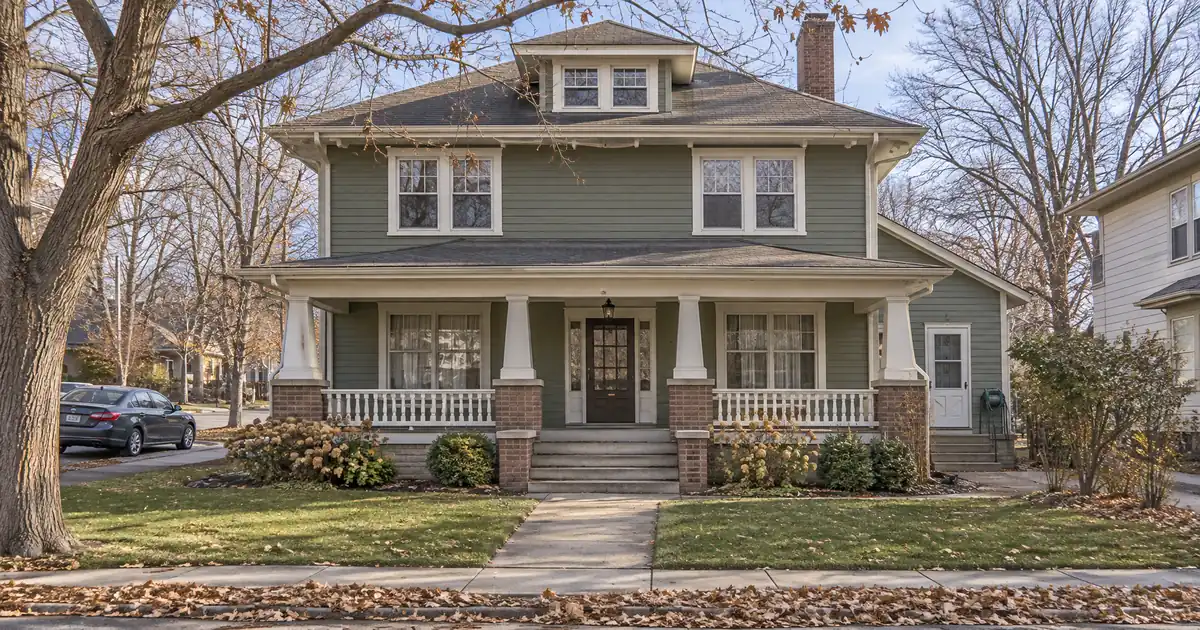
The Quick Read: A house where your parent lives for free is non-owner-occupied, so a lender sorts it into the investment tier. It does not become your primary residence or a second home. A HELOC reviews you, not the rent, so the missing rent matters less here than it would on a DSCR loan, though the occupancy answer you sign still counts.
- Occupancy is judged by who the borrower is and where the borrower lives. A relative in the house does not change the category.
- On this network, an investment-property line tops out at 70% CLTV, with a 700 minimum credit score and line sizes from $25,000 to $500,000, subject to lender guidelines.
- A HELOC has no coverage ratio, so zero rent does not fail a ratio test. A DSCR cash-out refinance does need real rent, and a rent-free parent removes it.
- Title generally has to sit with you personally or in your revocable living trust, not in an LLC.
- Disclose the arrangement plainly, because the occupancy answer you sign is a statement about the property that the lender relies on.
How Does a Lender Classify a House Where a Parent Lives Free?
It is an investment property for lending purposes. Lenders sort collateral into primary residence, second home, or investment. Primary means you live there. A second home assumes your own personal use. A house where someone else lives, with you living elsewhere, fits neither of the first two, so the file lands in the investment tier.
How large a line the equity supports.
An equity line is sized by combined loan-to-value, occupancy, and credit — not by rental coverage. Switch the occupancy or the credit band and the ceiling moves with it.
Investment-property lines require a 700 minimum credit score; second-home lines start at a 640 minimum and primary-residence lines at 600, and the combined-LTV ceiling steps down as the credit band drops on primary-residence and second-home lines and holds on investment-property lines; the line cap steps down on primary-residence lines and holds at every tier on investment-property and second-home lines.
A debt-to-income ratio above 45% requires 680+ credit. Profiles under 640 are limited to single-family homes. At least 75% of the approved line is drawn at closing. Ceilings, floors, and caps update from Lendmire’s centralized guideline source.
Line estimate
Illustrative estimate only — not a quote, Loan Estimate, approval, or commitment to lend. The rate is an editable assumption; equity-line pricing is variable through both the draw and repayment periods and never converts to fixed. Occupancy and credit drive the ceiling together: an investment property tops out at 70% combined LTV (minimum credit 700, line cap $500,000); a second home tops out at 90% combined LTV (minimum credit 640, line cap $500,000), with the ceiling stepping down as the credit band drops (the cap holds at every tier); a primary residence tops out at 90% combined LTV (minimum credit 600), and its $750,000 maximum line is available only at 75% combined LTV or below with a 700-or-better credit profile (720 on the longer-runway program) and a full appraisal. Lines above $500,000 require a full appraisal. Credit, debt-to-income, property type, and full underwriting review all affect the final line.
Many owners assume a family member changes the answer. It does not. The test is whether the borrower occupies the property, and a parent’s residence is the parent’s, not yours. The same logic means the home cannot be a second home, since you are not using it.
Rent does not enter the classification at all. A rental with no rent collected is still non-owner-occupied. That surprises people who think “investment” requires a paying tenant. For the lender, the word describes who occupies the home, not whether income flows.
The practical step is simple. Tell the lender at application that the property is non-owner-occupied and that a relative lives there. Raising it up front keeps the file clean, and you are never in the position of explaining it later.
Key Terms Defined
Non-owner-occupied: A property where the borrower does not live as a main home, which lenders treat as investment property.
CLTV (combined loan-to-value): All loans secured by the property added together, divided by its value.
HELOC: A revolving line of credit secured by real estate, with a draw period followed by a repayment period.
DSCR (debt service coverage ratio): Monthly rent divided by the full monthly obligation of principal, interest, taxes, insurance, and any HOA dues (PITIA).
Arm’s-length lease: A rental agreement between unrelated parties at market terms.
Vesting: The legal form in which title to the property is held, such as an individual, a trust, or an LLC.
How Underwriting Treats It, Step by Step
Across the wholesale network Lendmire works with, the review runs on personal credit, income, debt-to-income, and combined leverage. Rent is not the deciding test. A vacant house and a leased house are treated alike on that front, so a rent-free parent does not trigger a coverage failure, because no coverage ratio exists.
Here is the usual sequence.
1. Occupancy declaration. The application asks whether the property is primary, second home, or investment. For a parent-occupied house, the accurate answer is investment.
2. Eligibility screen. The lender checks title and vesting, property type, credit, DTI, and CLTV. This step is where most investment-property lines are decided.
3. Valuation. On this network, a line at or below $500,000 ordinarily runs an automated valuation with no traditional appraisal. A higher CLTV may require a secondary valuation, and a borrower may ask for a full appraisal. NerdWallet’s explainer on investment-property HELOCs notes that some lenders in the wider market require multiple appraisals, so valuation practice varies by lender.
4. Rent evidence, if asked. A lender may request a lease or proof of rent as supporting information. It is not a pass-or-fail test on a HELOC, and with a rent-free parent the honest answer is simply that there is none.
5. Lender-specific rules. Some lenders limit lines by location or by whether the home rents year-round. Not every lender offers an investment line at all, and requirements run stricter than on a primary-home line, per the same NerdWallet piece.
6. Signing the certification. At closing you certify the occupancy type. That signature is the part that carries real consequences, covered below.
One more point matters at step two. The ratio of the line to the home’s value is capped, and on this network an investment line caps at 70% CLTV no matter how strong your credit is. A 720 score and a 700 score both reach that same 70% ceiling, so higher credit buys eligibility rather than extra leverage.
What an Investment Line Looks Like on This Network
The figures below describe select wholesale lenders in Lendmire’s network. They apply to investment property specifically and are typical ranges, subject to lender guidelines and full file review. Caps on HELOC products reported elsewhere in the market differ, and none of those should be read as available here.
| Feature | Investment-property line |
|---|---|
| Maximum CLTV | 70% |
| Minimum credit score | 700 |
| Line size | $25,000 to $500,000 |
| Draw structure | 5-year interest-only draw, then 25-year repayment |
| Maximum DTI | 50% |
| Title | Individual or revocable living trust |
A few more details shape the decision. At least 75% of the line is drawn at closing. The line stays variable and never converts to fixed, so it behaves differently from a closed-end loan. DTI is qualified on the interest-only payment calculated at the maximum draw, which is stricter than many borrowers expect.
Eligible property types include single-family homes, 2-4 units, PUDs, townhomes, and condominiums, including non-warrantable condos. Manufactured homes, co-ops, condotels, log homes, commercial, mixed-use, and agricultural-zoned properties are not eligible. A borrower may hold up to three lines, and an owner of more than 15 financed properties is not eligible. In a few states, a property listed for sale, or listed within the past 60 days, is ineligible.
Availability is narrower than Lendmire’s DSCR reach. The HELOC product runs in 16 full-service states, while the DSCR programs cover 41 markets, including Washington, D.C. A parent’s house in a state outside those 16 cannot use this line at all.
Where the General Rule Breaks
The rule “occupancy is the borrower’s, so a parent changes nothing” holds up well, but several edge cases bend it.
The parent pays something. Charging a token amount does not turn the arrangement into a market rental. On a HELOC it changes little, since rent is not underwritten. It matters a great deal on a DSCR file, where underwriters take the lower of the lease and the appraiser’s market-rent opinion (Form 1007 for a single-family home, Form 1025 for 2-4 units). A below-market lease to a relative is not arm’s length, so underwriters generally fall back to market rent. Some DSCR programs also bar the borrower’s immediate family from the subject property even at full rent, so the program’s definition of family needs a check.
The parent holds a life estate. This creates an occupancy conflict with no arm’s-length rent. Deed wording and state law change the details, and the treatment varies by lender.
The title is in an LLC. Corporations, partnerships, and irrevocable, blind, or land trusts cannot hold title on this network either. A property already deeded to an LLC needs a vesting change before a line, or a DSCR cash-out refinance instead. That is one of the sharpest structural differences between the two products.
A parent is on the deed. Title must sit with the individual borrower or the borrower’s revocable living trust, so a parent who shares title raises a real question about whether the property qualifies as structured. Lendmire cannot answer that from the general rules, and the answer can decide whether you proceed, so raise it before you apply.
You plan to move in later. Moving in changes the occupancy category. If a DSCR loan is already on the property, it must stay non-owner-occupied for the life of the loan, so a planned move-in belongs in a different financing path. If a line exists, read its original occupancy language before changing who lives in the house.
The house is part of an estate. If title has not yet passed cleanly, the analysis changes. Lendmire’s piece on how a line works when the property still sits in an estate covers that situation.
The other unit is rented. A 2-4 unit property with a parent in one unit and a paying tenant in another has a different profile. Lendmire’s piece How to Qualify for an Investment Property HELOC on a Duplex When You Rent the Other Unit walks through that split.
Scenario Table: Four Arrangements, Four Reads
| Arrangement | Likely class | HELOC read | DSCR read |
|---|---|---|---|
| Parent rent-free | Investment | Borrower-based review | No usable rent |
| Parent pays below market | Investment | Borrower-based review | Market rent used, if family allowed |
| Parent pays market rent, lease | Investment | Borrower-based review | Depends on family rule |
| Vacant | Investment | Borrower-based review | No rent to count |
The pattern is that a HELOC read barely moves across rows, while a DSCR read changes with each one. That contrast is the whole planning question.
Can DSCR Replace the Line When a Parent Lives There?
DSCR financing is built on the property’s rent compared with the full monthly obligation. A rent-free parent leaves the ratio with no numerator. These loans are designed for non-owner-occupied investment properties, and because they are business-purpose investor loans, they are reviewed differently from a standard owner-occupied mortgage. The occupancy certification generally reaches family members, not just the borrower.
If the arrangement ends and the house is re-leased to an unrelated tenant at market terms, the picture changes. Across most programs in Lendmire’s network, a cash-out refinance on a standard rental tops out around 75% LTV, with about 6 months of seasoning as the common expectation. Credit generally needs to reach about 660 on most programs, though a 620 floor exists in parts of the network, and 700+ opens the strongest tiers. Loan sizes run up to $3,000,000 on standard programs (smaller balances available through select lenders). Reserves are commonly around 6 months of PITIA, though they vary by lender, leverage, loan size, and transaction type.
On coverage, 1.00 is where many select programs start. A separate select-lender path takes coverage below 1.00, with leverage and terms adjusted. Neither path produces anything from a rent-free parent, since both need real rent to measure. Clearing the ratio also does not mean positive cash flow, because repairs, vacancy, management, utilities, and capital expenses sit outside the calculation.
There is also a middle option. An investor in a BiggerPockets thread on HELOCs for investment property describes the usual fallback when a bank desk declines a line as a closed-end second or a rent-based second. That is one lender’s anecdote, not a rule, and a rent-based option still has no arm’s-length rent to count while a parent lives there free. The complete DSCR loans guide lays out how the ratio and the program tiers work for those who go that direction.
Disclosure and the Cost of Getting Occupancy Wrong
Occupancy is the one item on this file that cannot be softened. Signing a false statement on an application to a federally insured institution can be charged under federal law, which covers loan applications, refinancings, and home equity lines. The statute is usually discussed in the context of false primary-residence claims. A borrower who certifies investment and then moves in, or who hides a family occupant, is raising the same kind of question.
The simple discipline is to state the facts. The property is non-owner-occupied. A parent lives there. No rent is collected. A lender can work with those facts, because the classification question gets answered and the line is evaluated as an investment file. It cannot work with facts it was never told.
Tax treatment can depend on how the funds are used and how the property is held, and home-equity interest is generally deductible only when the money improves the home that secures it (IRS Publication 936); borrowers should keep clear records and speak with a qualified tax professional before relying on any deduction.
Structures and Variations Worth Comparing
Four paths come up for owners in this position.
A line on the parent-occupied house. This works on eligibility terms above: you personally or your revocable trust on title, 700+ credit, up to 70% CLTV, and DTI within the 50% maximum. It suits a borrower with strong personal credit and income who wants flexible access to equity. It does not suit someone whose DTI is already stretched, because the qualifying payment is computed on the maximum draw.
A line on your own primary residence instead. This sidesteps the classification question entirely. Occupancy-tiered ceilings are higher on a primary residence, and 90% CLTV exists only at a 720-or-better credit profile. The tradeoff is that your own home becomes the collateral. If you would rather not tie your residence to a loan for another property, the investment line has a purpose.
A DSCR cash-out refinance. This path is built for real rent. It makes sense after the property is leased at market terms to an unrelated tenant and meets seasoning and reserve rules. It also accepts LLC vesting, subject to lender program eligibility, which a HELOC does not.
A closed-end second or rent-based second. These come up when a line desk declines. They are structured differently, and a rent-based version still needs rent.
The right choice depends on what the equity is for. Using it to buy another rental is a different decision from using it to renovate the parent’s house. If the property’s own income can never support the debt while the parent stays free, the borrower’s personal income carries the entire load, and that is worth pressure-testing before drawing the line.
What Changes If the Arrangement Changes
Two changes tend to come up, and a third, a sale, ends the line itself.
The parent moves out. The house is now vacant. A HELOC reads the same, since vacancy was never a test. A DSCR cash-out still needs a lease, so it becomes available only after an arm’s-length tenancy begins and seasoning conditions are met.
You start charging rent. A lease with a related party is still not arm’s length for DSCR purposes. For a HELOC, the family tie is simply something to disclose.
You sell. The line must be repaid at sale. With an interest-only draw followed by a long repayment period, the balance carries over until payoff, so the exit plan should include the line.
A Worked Comparison: Same House, Two Owners
Picture two borrowers who each own a single-family house in a state where the line is offered. Owner A has a parent living there rent-free. Owner B leases the same type of house to an unrelated tenant at market terms. Both have 700+ credit and clean DTI.
On a HELOC, both files follow nearly the same path, because the line reviews the borrower. Both are investment, both cap at 70% CLTV, and both run on the borrower’s personal profile.
On a DSCR cash-out, Owner B has a lease, a market-rent appraisal, and a ratio that can clear 1.00 or more. Owner A has nothing to measure. The ratio never gets calculated, and the file does not move forward until the occupancy plan changes. The same house is a fit for one product and not the other, and the only difference is who lives there and what they pay.
Frequently Asked Questions
Does a parent living there rent-free make the house owner-occupied for a HELOC?
No. Owner-occupied means the borrower lives there as a main home. A relative’s residence does not change that, so the house is non-owner-occupied and the file is treated as investment. The parent also does not turn it into a second home, which assumes the borrower’s own personal use.
Will a lender refuse the line because no rent is collected?
Not for lack of rent alone. A HELOC underwrites the borrower’s credit, income, DTI, and combined leverage, not the property’s rental income. The more common obstacles are the 700 minimum score, the 70% CLTV ceiling, title held in an LLC, and whether the lender offers an investment line at all, per NerdWallet.
Can I charge my parent a small amount of rent to make the file look better?
It does not help on a HELOC, because rent is not the test. On a DSCR loan, underwriters generally use market rent when a lease to a relative is below market, and some programs bar family occupants entirely. The cleaner approach is to describe the arrangement as it is.
Is a DSCR cash-out refinance an option while my parent lives there?
Not while the parent lives there rent-free. The ratio has no rent to count, and the occupancy certification typically reaches family members. Once the property is leased at market terms to an unrelated tenant, a cash-out on a standard rental can reach around 75% LTV on most programs, subject to seasoning, credit, and reserves.
What if the property is already in my LLC?
An investment HELOC generally cannot hold LLC title, so the property would need a vesting change into your name or revocable trust first. A DSCR cash-out refinance is the structural alternative, depending on program guidelines and once real rent is in place.
If you are considering a home equity line and want to see how the numbers work, Lendmire can help you compare HELOC options based on the property, the equity available, credit profile, combined leverage, and your goals. A quote request or a call to 828-256-2183 starts that conversation; financing is arranged through select lenders in Lendmire’s wholesale network and is not a commitment to lend.
About Lendmire
Lendmire, NMLS# 2371349, is a mortgage brokerage that arranges home equity lines of credit through wholesale lending partners in its 16 full-service states. Lines on primary residences, second homes and investment properties are each reviewed individually by the lender under the program’s occupancy, credit and combined-loan-to-value guidelines. Scotsman Guide named Lendmire a Top Mortgage Workplace in both 2025 and 2026.
Get Started
Ready to find the right loan for you?
See your offer in seconds. No credit pull, no obligation.
Informational only. Not a Loan Estimate, approval, or commitment to lend. Program availability and eligibility are subject to lender guidelines, credit approval, property review, and underwriting.
References
1. NerdWallet, HELOC on an investment property
2. BiggerPockets, HELOCs for investment property
3. KEG Lawyers, federal mortgage fraud
This article is part of Lendmire’s investment property HELOC program — full qualification details, guidelines, and scenarios live on the program page.
Related reading: How Much Can You Borrow on an Investment Property HELOC on a Rental Condo?
Brandon Miller
Founder & CEO, Mortgage Loan Originator, Lendmire LLC
- Mortgage Loan Originator · NMLS# 1129696 · Verify on NMLS Consumer Access
- North Carolina Real Estate Broker · License# 343312 · Verify on NCREC
- North Carolina Insurance Producer · License# 19053198 · Property, Casualty, Life, Health · Verify on NAIC SBS
- Lendmire LLC · Firm NMLS# 2371349 · Verify firm licensure
Required disclosures. Lendmire (NMLS# 2371349) operates as a licensed mortgage broker, not a direct lender or depository. The discussion in this article is general in nature and should not be relied upon as financial, legal, or tax advice — every investment scenario is unique and should be reviewed by a qualified professional. Any loan inquiry is subject to lender underwriting, and this article is not a commitment to lend or a guarantee of approval. Mortgage rates, loan terms, and program guidelines vary by borrower, property, and state, and may change without notice. Equal Housing Opportunity. Verify licensure at NMLS Consumer Access.