
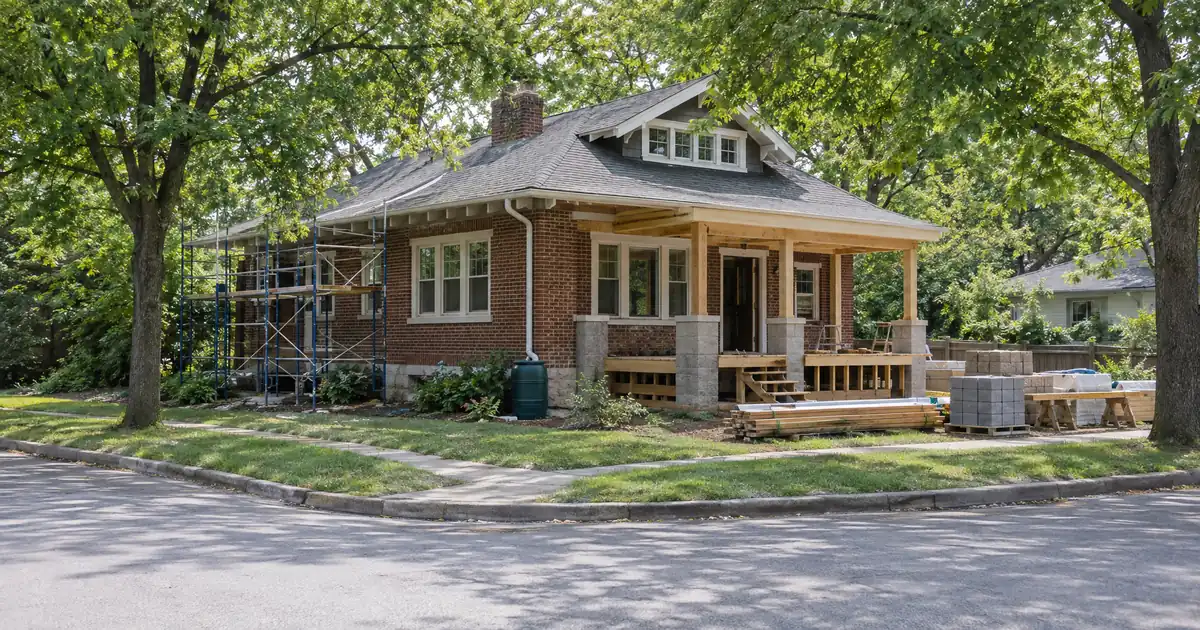
The Quick Read: The line is short-term bridge money. You open a revolving line against equity in a property you already own and draw it for the down payment and rehab. You carry interest-only payments while the work and lease-up run, then repay the whole balance with a cash-out refinance on the finished rental. Across the wholesale network Lendmire places files with, the numbers below shape almost every file.
- An investment property line tops out at 70% combined loan-to-value (CLTV), with a 700 minimum credit profile and a maximum line of $500,000, subject to lender guidelines.
- Investment lines run a 5-year interest-only draw, then a 25-year repayment. Pricing floats the whole time.
- At least 75% of the line is drawn at closing, so interest starts on most of the balance on day one.
- The exit is usually a DSCR cash-out refinance: up to 75% LTV on a standard rental, with about 6 months of seasoning as the common expectation.
- LLCs cannot hold title on this kind of line, which surprises many investors.
Key Terms Defined
BRRRR stands for buy, rehab, rent, refinance, repeat. You buy below market value, renovate, put a tenant in, pull your money out with a refinance, and start again.
HELOC is a home equity line of credit. It is a revolving line you can borrow against repeatedly, up to a limit, secured by a property you own.
CLTV is combined loan-to-value. It adds every loan on the property, such as a first mortgage and a line, and divides the total by the property’s value.
ARV is after-repair value, meaning what the property should appraise for once the rehab is finished.
Draw period is the stretch when you can borrow from the line. A repayment period follows, when you pay the balance down.
Seasoning is the waiting period a lender wants between a purchase or event and the next loan, such as a refinance.
DSCR is the debt service coverage ratio. It compares a rental’s monthly rent to its monthly principal, interest, taxes, insurance, and HOA dues (PITIA). Most DSCR programs want that ratio at or above a set floor.
How large a line the equity supports.
An equity line is sized by combined loan-to-value, occupancy, and credit — not by rental coverage. Switch the occupancy or the credit band and the ceiling moves with it.
Investment-property lines require a 700 minimum credit score; second-home lines start at a 640 minimum and primary-residence lines at 600, and the combined-LTV ceiling steps down as the credit band drops on primary-residence and second-home lines and holds on investment-property lines; the line cap steps down on primary-residence lines and holds at every tier on investment-property and second-home lines.
A debt-to-income ratio above 45% requires 680+ credit. Profiles under 640 are limited to single-family homes. At least 75% of the approved line is drawn at closing. Ceilings, floors, and caps update from Lendmire’s centralized guideline source.
Line estimate
Illustrative estimate only — not a quote, Loan Estimate, approval, or commitment to lend. The rate is an editable assumption; equity-line pricing is variable through both the draw and repayment periods and never converts to fixed. Occupancy and credit drive the ceiling together: an investment property tops out at 70% combined LTV (minimum credit 700, line cap $500,000); a second home tops out at 90% combined LTV (minimum credit 640, line cap $500,000), with the ceiling stepping down as the credit band drops (the cap holds at every tier); a primary residence tops out at 90% combined LTV (minimum credit 600), and its $750,000 maximum line is available only at 75% combined LTV or below with a 700-or-better credit profile (720 on the longer-runway program) and a full appraisal. Lines above $500,000 require a full appraisal. Credit, debt-to-income, property type, and full underwriting review all affect the final line.
What an Investment Property HELOC Actually Is
The phrase covers two different setups, and mixing them up causes most of the confusion. In one, the line sits on a home or a seasoned rental you already own. In the other, it sits on the property you are about to rehab.
The first setup works. The second rarely does. A freshly bought fixer has little usable equity until the work is finished and the value is proven, so the lender has nothing solid to lend against.
| Collateral | Can it fund the rehab? | What to expect |
|---|---|---|
| Your primary home | Yes, as outside cash | Higher leverage tier; home is at risk |
| A seasoned rental you own | Yes, as outside cash | 70% CLTV, 700 credit, title in your name |
| The BRRRR property itself | Rarely | Little equity until value is proven |
A line on your primary residence follows a separate, higher-leverage table. It can reach 90% CLTV, but only at a 720 or better credit profile. It also puts the house you live in behind your rehab budget, which is a real tradeoff.
A line on an investment property is capped at 70% CLTV no matter how strong your score is. Both a 700 and a 720 profile reach that same ceiling, so a higher score buys eligibility rather than extra leverage. The line is a standalone loan in first or second lien position. It sits behind your existing mortgage, or in first position if the property is paid off.
The product is a home equity line that works as an open-end credit line. You borrow, repay, and borrow again during the draw period. The CFPB gives a draw period of 10 years as an example for consumer lines. Investment lines in this network run a shorter 5-year draw.
How Underwriting Treats the Line, Step by Step
The lender underwrites you and the collateral property. It does not underwrite the rehab project. That is the biggest difference from a DSCR loan, where the rental’s income does the heavy lifting. Here is how the review usually runs.
Step 1: Combined leverage. The lender adds your existing mortgage to the new line and checks the total against 70% of the property’s value. If your first mortgage already uses 50% of value, only about 20% of value remains for the line. Equity you have on paper is not the same as equity you can borrow.
Step 2: Credit. Investment lines need a 700 minimum, and there is no tier beneath it. The lender uses a single-bureau score keyed to the primary wage earner, and the report can be no more than 90 days old at closing. Bankruptcy history needs 4 years of seasoning from discharge or dismissal. Foreclosure-family history on an investment file follows a 7-year path, or 4 years for a deed-in-lieu, pre-foreclosure, or short sale.
Step 3: Debt-to-income. Unlike DSCR underwriting, a HELOC looks at your personal debt-to-income ratio (DTI). The maximum is 50%, and the lender reviews your file on the interest-only payment calculated on the maximum draw. A large line therefore counts against you even if you plan to draw half of it. That payment also sits on your personal profile when you apply for the next purchase or refinance.
Step 4: Valuation. Because an investment line caps at $500,000, it falls in the automated-valuation lane. A traditional appraisal is commonly not ordered. You can request a full appraisal, and a lender may ask for a secondary valuation at higher combined leverage.
Step 5: Title and property. Title must sit with you personally or in a revocable living trust. Eligible properties include single-family homes, 2-4 unit properties, PUDs, townhomes, and condominiums, including non-warrantable ones. Manufactured homes, co-ops, condotels, log homes, and commercial, mixed-use, or agricultural-zoned property are not offered.
Step 6: Exposure limits. A borrower can hold up to three lines, and a borrower with more than 15 financed properties is not eligible. Experienced investors run into those limits before they run out of equity.
Federal guidance on consumer lines adds one more point. The FTC says a lender generally cannot freeze or cut a line if you pay as agreed. The exceptions are a significant drop in property value or a material change in your finances. Keep that exception in mind for the rehab-stage section below.
The BRRRR Clock, Stage by Stage
The line has to fit the order of events. Money goes out first. Rent shows up later. The refinance brings it back.
| Stage | Funding source | Cost behavior | Where it breaks |
|---|---|---|---|
| Buy | Line draw plus cash | Interest-only carry starts | Line sized too small |
| Rehab | Line draws | Carry grows with the balance | Overruns, delays |
| Rent | Line | Carry continues; rent begins | Lease-up slips |
| Refinance | DSCR cash-out | Line is repaid | Appraisal comes in short |
| Repeat | Restored capacity | Draw period may still be open | Draw window runs out |
Here is the sequence in plain language:
1. Open the line on an existing property before the deal needs cash. Your existing first mortgage stays in place.
2. Draw for the down payment, closing costs, and rehab. Keep draw statements and contractor invoices, because the exit lender may ask for them.
3. Pay interest-only carry while the property earns nothing. The lease-up period is an extra carrying cost, and it is easy to underbudget.
4. Rent the property and let it season. If the rehab runs late, interest on the line keeps accruing while the refinance waits.
5. Close the cash-out refinance. It must repay the line and the rehab spend all at once.
Think about step one carefully. At least 75% of the line is drawn at closing, so interest starts on most of the balance immediately, not as rehab draws happen. That makes oversizing the line expensive. Open the line you need, not the biggest one you qualify for.
Worked Example: Base Case and Downside
These figures are modeled assumptions, not market data or program terms. They are expressed as percentages of the finished value so the math stays clean.
Base case. Say you buy a rental at 55% of its expected after-repair value. You spend another 15% of that value on the rehab. Your all-in cost is 70% of ARV, funded from line draws.
The property appraises at its full expected value. A DSCR cash-out refinance on a standard rental goes up to 75% of appraised value, so it clears the 70% you owe with about 5% of value left over. That remainder has to cover closing costs and months of carry. It is thin but workable.
Downside case. Now the appraisal lands 10% below your estimate. A 75% refinance on that lower value comes to 67.5% of your original ARV estimate. You owe 70%, so you are short by about 2.5% of value before closing costs and carry. You would have to bring cash to the table, or the loop does not close.
The line stays open in that scenario, and it stays on whatever property secures it. If that property is your home, the shortfall is a problem for your home. Run the base case and the downside case before you draw a dollar.
Carry, Draws, and Reserves
Carry is the cost of holding the money while the property earns nothing. Budget it for the entire rehab plus lease-up, not just the construction schedule. Then add a contingency for overruns.
Draw discipline matters more than most investors expect. Draw what the next invoice needs, and document where every dollar went. Lenders trace borrowed funds to their source. Documentation on the exit side gets easier when the money trail is clean.
Reserves are the next trap. On the exit loan, reserves commonly run around 6 months of PITIA, though they vary by lender, leverage, loan size, and transaction type. Reserves must be your own seasoned cash. An undrawn line is permission to borrow, not money in the bank, so it does not count.
The Exit: Why the Refinance Is the Real Finish Line
The line is bridge money. It never retires itself. The refinance has to pay it off, so a BRRRR plan without a clear exit turns the line into permanent debt.
DSCR loans are designed for non-owner-occupied investment properties. Because they are business-purpose investor loans, they are reviewed differently from a standard owner-occupied mortgage. The loan is reviewed primarily on property-level rental income covering the payment, subject to lender guidelines. Cash-out on a standard rental tops out around 75% LTV across most of the network, and 70% LTV applies when the collateral is a short-term rental. The seasoning clock usually runs about 6 months from title recording, not from the day the rehab ends.
Coverage matters too. A 1.00 ratio is where many select programs start, and stronger ratios open better pricing and leverage. A separate select-lender path takes coverage below 1.00, with leverage and terms adjusted. Clearing 1.00 does not mean positive cash flow, because repairs, vacancy, management, and utilities sit outside the calculation.
For a deeper look at how that exit loan works, see the complete DSCR loans guide.
Structures and Variations
Most investors only need to choose between a few tools. The right one depends on how big the rehab is.
| Tool | Role in BRRRR | Best fit |
|---|---|---|
| Line on a home or seasoned rental | Down payment and light-to-moderate rehab | Cash-ready equity, clean credit |
| Hard or private money | Purchase and heavy rehab, paid in draws | Distressed or gut-rehab deals |
| DSCR cash-out refinance | The exit that repays everything | Rented, seasoned, stabilized property |
A common stack works like this: the line covers the down payment, a hard money lender funds construction, and the DSCR refinance pays off both. Another common stack uses the line for the entire modest rehab and goes straight to the exit loan.
The DSCR side has flexibility the line does not. The spine is the 30-year fixed. Extended terms such as 40-year and interest-only periods are available through select lenders in the network, and ARM structures exist for investors who want them. Loans above $2,500,000 generally hold to 30-year fixed.
For investors weighing options, Lendmire’s piece Best Investment Property HELOC Program for BRRRR Investors Funding the Rehab goes deeper on program fit.
Where the General Rule Breaks
LLC-held rentals. The line needs title in your name or a revocable living trust. A rental already deeded to an LLC needs a vesting change or a DSCR cash-out instead.
Heavy rehab or distressed property. A line is a poor fit for a gut job. Hard or private money, funded in draws, handles construction risk better.
Freeze mid-rehab. The CFPB notes a freeze can leave you with less access than you expected. In this network, a later freeze only touches the undrawn portion. Drawing what the project needs early limits the exposure.
Payment step-up. Once the interest-only draw ends, payments start paying down principal over the 25-year repayment. A line still open at that point is more costly to carry. Pricing floats throughout, so payments can change even when you draw nothing new.
Heavy portfolios. Investors near three lines or 15 financed properties may hit limits before equity runs out.
Ineligible property types. Manufactured homes, log homes, and barndominiums fall outside these programs. They are not offered through the network’s DSCR programs, and co-ops and condotels are not offered on the line.
Where it is offered. Lendmire arranges DSCR investor loans across 41 markets, including Washington, D.C. Its equity-line placements run in a narrower set of 16 full-service states, so availability depends on where the collateral sits.
Is This the Right Tool for Your Rehab?
The strongest files clear two tests: enough equity and enough rental coverage. A larger down payment can lift DSCR and lower the payment, but it never erases leverage caps, credit floors, reserve rules, or property eligibility.
A line fits when:
- You hold a rental or home with real equity under the 70% CLTV ceiling.
- Your credit sits at 700 or better, and your DTI holds up on the maximum-draw payment.
- The rehab is light or moderate, and you have budgeted carry for lease-up.
- You have a clear path to a seasoned, rented property and a DSCR cash-out.
A line is the wrong tool when the rehab is heavy, the collateral is an LLC-held rental, or the only equity sits in the property you are about to renovate.
Frequently Asked Questions
Can I put the HELOC on the property I just bought?
Rarely. A new purchase has little usable equity until the rehab is done and the value is proven, so most lenders will not lend against it. Investors usually secure the line with a home or a seasoned rental they already own. That cash then funds the down payment and rehab on the new deal.
Does the HELOC replace the cash-out refinance?
No. The line is the bridge, and the refinance is the exit. The DSCR cash-out loan has to repay the line, the rehab spend, and any other debt on the finished rental. Without a clear path to that refinance, the line becomes permanent debt.
What if the appraisal comes in low?
Cash-out proceeds shrink with the value. A 75% loan on a lower appraisal may not clear everything you drew, and you would have to cover the gap. Run a downside case before drawing, and keep a contingency so one short appraisal does not stall the loop.
Can the line be frozen while the rehab is underway?
A lender can generally freeze or reduce a line if the property value falls significantly or your finances change materially, per the FTC’s consumer guidance. In this network, a freeze reaches only the undrawn portion. That is why many investors draw what the project needs early instead of waiting.
Can an LLC hold the line?
No. A rental already deeded to an LLC needs a vesting change before it can secure the line. A DSCR cash-out is the other route.
If you are considering a home equity line and want to see how the numbers work, Lendmire can help you compare HELOC options based on the property, the equity available, credit profile, combined leverage, and your goals. Call 828-256-2183 to talk it through. Every file is reviewed individually, and nothing here is a commitment to lend.
About Lendmire
As a mortgage broker (NMLS# 2371349), Lendmire helps homeowners and real estate investors in its 16 full-service states open home equity lines of credit arranged through wholesale lenders. Lendmire is never the lender; line amounts, ceilings and terms are set by the lender under its guidelines. Scotsman Guide named Lendmire a Top Mortgage Workplace in both 2025 and 2026.
Get Started
Ready to find the right loan for you?
See your offer in seconds. No credit pull, no obligation.
Informational only. Not a Loan Estimate, approval, or commitment to lend. Program availability and eligibility are subject to lender guidelines, credit approval, property review, and underwriting.
References
1. CFPB: What Is a Home Equity Line of Credit HELOC
2. FTC – Home Equity Loans and Home Equity Lines of Credit
This article is part of Lendmire’s investment property HELOC program — full qualification details, guidelines, and scenarios live on the program page.
Related reading: Best Investment Property HELOC Program as a Foreign National · Best Investment Property HELOC Program for Fast Funding When Bridging to a New Home · Investment Property HELOC Lenders With Flexible Repayment Options
Brandon Miller
Founder & CEO, Mortgage Loan Originator, Lendmire LLC
- Mortgage Loan Originator · NMLS# 1129696 · Verify on NMLS Consumer Access
- North Carolina Real Estate Broker · License# 343312 · Verify on NCREC
- North Carolina Insurance Producer · License# 19053198 · Property, Casualty, Life, Health · Verify on NAIC SBS
- Lendmire LLC · Firm NMLS# 2371349 · Verify firm licensure
Compliance and disclosures. Lendmire (NMLS# 2371349) is a licensed mortgage broker and is not a direct lender, depository institution, financial advisor, or tax professional. Content in this article is general market analysis and educational information — not financial, legal, or tax advice for any specific situation. Lendmire does not guarantee loan approval; every transaction is subject to underwriting by the funding lender. Mortgage pricing and loan program guidelines are subject to change at any time without notice and vary by borrower characteristics, property type, and state regulations. Lendmire complies with Equal Housing Opportunity. Licensure verification: NMLS Consumer Access.