
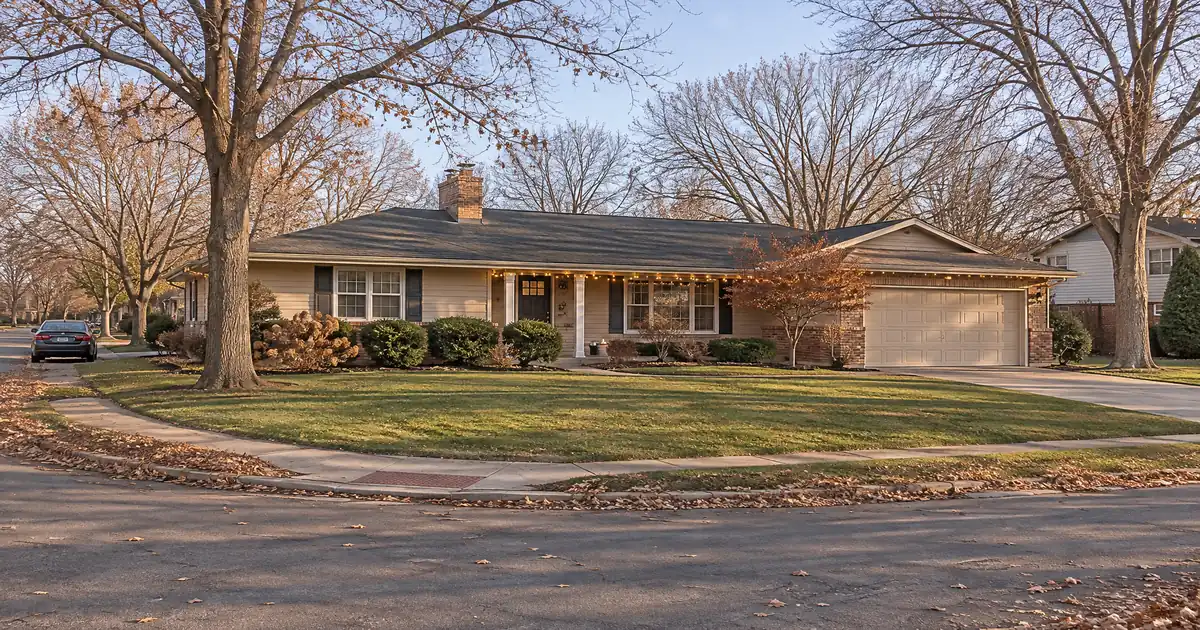
The Quick Read: An investment property HELOC, a home equity line of credit placed behind or beside your first mortgage, is a separate loan with its own signers, so being on the first mortgage together does not decide who signs; the names on title do, and one spouse can often borrow alone while both sign to pledge the property.
- Both spouses on the first mortgage usually means both are on title, and the new line’s lien document then needs both signatures.
- Signing the lien pledges the property. It does not make that spouse a borrower.
- On the network we place files with, an investment line tops out at 70% CLTV (combined loan-to-value) and $500,000, with a 700 minimum credit score.
- Title must sit with an individual or a revocable living trust. An LLC cannot hold title on these lines.
- The first mortgage’s own documents can restrict a second lien, so check them before you apply.
Key Terms Defined
HELOC: A home equity line of credit. You borrow against the equity in a property, draw funds as needed, and pay on what you use.
Note: The promise to repay. Only borrowers sign it.
Lien (mortgage or deed of trust): The document that pledges the property as collateral. Owners on title generally sign it.
Title: The record of who owns the property. It is set by the recorded deed, not by who is on the loan.
CLTV: Combined loan-to-value. You add every loan against the property, including the new line, and divide by the property’s value.
Community property: A marital-property system used in some states. It can give a spouse a legal interest even when that spouse is not on the deed.
Tenancy by the entirety: A way for married couples to hold title where neither spouse can pledge the property alone.
Subordination: A written agreement by a lender to sit behind another lender’s lien.
How large a line the equity supports.
An equity line is sized by combined loan-to-value, occupancy, and credit — not by rental coverage. Switch the occupancy or the credit band and the ceiling moves with it.
Investment-property lines require a 700 minimum credit score; second-home lines start at a 640 minimum and primary-residence lines at 600, and the combined-LTV ceiling steps down as the credit band drops on primary-residence and second-home lines and holds on investment-property lines; the line cap steps down on primary-residence lines and holds at every tier on investment-property and second-home lines.
A debt-to-income ratio above 45% requires 680+ credit. Profiles under 640 are limited to single-family homes. At least 75% of the approved line is drawn at closing. Ceilings, floors, and caps update from Lendmire’s centralized guideline source.
Line estimate
Illustrative estimate only — not a quote, Loan Estimate, approval, or commitment to lend. The rate is an editable assumption; equity-line pricing is variable through both the draw and repayment periods and never converts to fixed. Occupancy and credit drive the ceiling together: an investment property tops out at 70% combined LTV (minimum credit 700, line cap $500,000); a second home tops out at 90% combined LTV (minimum credit 640, line cap $500,000), with the ceiling stepping down as the credit band drops (the cap holds at every tier); a primary residence tops out at 90% combined LTV (minimum credit 600), and its $750,000 maximum line is available only at 75% combined LTV or below with a 700-or-better credit profile (720 on the longer-runway program) and a full appraisal. Lines above $500,000 require a full appraisal. Credit, debt-to-income, property type, and full underwriting review all affect the final line.
What Is an Investment Property HELOC?
An investment property HELOC is a revolving line secured by a rental you own, not by the home you live in. It sits in first or second lien position. Behind a first mortgage, it is a second loan with its own terms.
It is a different product from a DSCR loan. A DSCR loan, short for debt service coverage ratio, qualifies primarily on property-level rental income covering the payment, subject to lender guidelines. Lenders look at your income, credit, debt-to-income ratio (DTI), and the equity left in the property.
Lendmire is a broker, not a lender. It places these lines through select wholesale partners. The investment-property parameters across that network are consistent:
- Combined leverage: up to 70% CLTV on an investment property, with no higher tier.
- Credit: a 700 minimum. A 720 score earns the same 70% ceiling, so a higher score buys eligibility, not extra leverage.
- Line size: $25,000 to $500,000 on an investment property.
- Structure: a 5-year interest-only draw period followed by a 25-year repayment period. Pricing floats and does not convert to fixed. At least 75% of the line is drawn at closing.
- DTI: up to 50% at these credit levels, qualified on the interest-only payment at the maximum draw.
- Valuation: because a line caps at $500,000, it typically uses an automated valuation instead of a traditional appraisal. A borrower can still ask for a full appraisal.
Availability is narrower than the DSCR footprint. These lines are offered in 16 full-service states, while DSCR financing covers 41 markets, including Washington, D.C. Every figure here is subject to lender guidelines and full file review. Programs change.
Does Being on the First Mortgage Together Change Anything?
Not directly. The first mortgage is a separate contract between you and your first lender. The new line needs its own signatures.
What matters is title. Both spouses on the first mortgage almost always means both are on the deed. A lender taking a lien wants a lien on the whole property, and that takes every record owner.
That settles who signs the lien. It says nothing yet about who borrows.
Two common structures follow.
1. One spouse borrows, both sign the lien. The borrowing spouse owes the debt. The other spouse pledges the property but is not liable on the note.
2. Both borrow. A co-borrower can add income to the file. Both then owe the full drawn balance from day one.
The lender cannot generally push you into the second structure if one spouse qualifies alone. The law that sets this limit comes up in the section on spousal signatures.
What the Law Says About Spousal Signatures
The federal rule that governs this is Regulation B, published by the CFPB. It bars a lender from requiring a spouse’s signature on the credit instrument when the applicant is reviewed on their own for the amount and terms requested. A spouse may be added as an additional party, but the lender cannot require that the added party be the spouse.
The exception is collateral. The rule’s official interpretations say that when an applicant offers jointly held property as security, the lender may require the spouse to sign the documents needed to create a valid security interest. That is the lien, not the note.
Put plainly:
- A creditworthy borrower cannot be forced to bring in a co-borrower spouse.
- Jointly owned collateral cannot be pledged without the other owner’s signature on the lien.
- A lender asking for your spouse’s lien signature is following the rule. A lender requiring your spouse on the note when you qualify alone generally is not.
Two state-law variations matter. In community-property states, a lender may require a spouse’s signature when the applicant relies on that spouse’s separate income. In states where couples hold title as tenants by the entirety, state law can make the other spouse’s signature necessary to reach the property at all. In both cases, the signature is limited to what the lender needs to secure the property.
Who Signs What: A Quick Table
| Structure | Note (owes debt) | Lien (pledges property) |
|---|---|---|
| Both on title, one borrows | Borrowing spouse | Both spouses |
| One spouse on title, other off | Titled spouse | Titled spouse; off-title spouse only if state law requires |
| Title in revocable trust with both | Borrower(s) | Both, as trustees |
State homestead, community-property, and dower rules decide whether an off-title spouse signs. If none applies, that spouse may not be involved at all.
How Underwriting Treats the File, Step by Step
Step 1: Title is pulled. The lender confirms who owns the property and how it is held. This sets the lien signers.
Step 2: You pick the borrower structure. One borrower or two. This is the real decision point, and the discussion follows these steps.
Step 3: Credit is reviewed. Across the network, the investment minimum is 700. The score model is a single-bureau score keyed to the primary wage earner. The report can be no more than 90 days old at closing, and there are no rescores.
Step 4: Income and DTI are tested. Maximum DTI is 50%. Because the payment is calculated on the interest-only amount at the maximum draw, the test is stricter than the first draw suggests.
Step 5: The first mortgage is checked. Pull the loan documents and look for due-on-sale language and any covenant on additional liens. Ask the servicer in writing whether a subordinate lien is permitted.
Step 6: CLTV is calculated. Add the first mortgage balance and the new line, then divide by value. The most the line can be is the 70% cap times value, minus liens already recorded.
Step 7: Valuation is run. Usually automated at this size.
Step 8: Closing. The closing agent confirms who signs. Title companies may ask for marital-status or non-homestead affidavits.
Step 9: Funding. Many investors expect a three-day cancellation window like the one on a home loan. The right to cancel generally covers a primary residence, not a rental or investment property. Do not plan around one.
One Borrower or Two?
Adding the second spouse as a borrower helps when income is the weak point. A second income lowers the DTI. It also puts the second spouse’s name on the drawn balance.
Leaving the second spouse off the note keeps the debt on one person. That works when one income and one credit profile clear the file alone.
Consider a scenario where one spouse has a strong score and income, and the other has thin credit. Putting the stronger spouse alone on the note, with both on the lien, is the cleaner path. Adding the weaker profile as a co-borrower brings no leverage benefit, because the 70% ceiling is the same at any qualifying score.
The tradeoff is real. A lien-only spouse is not on the note, but the property they co-own is still on the line. If the borrower does not pay, the lender can look to the property. Make that choice with open eyes.
A Worked Example
This is a modeled example, not a quote. Say a couple owns a rental together and both are on the first mortgage and the deed. The first mortgage balance is 50% of the property’s value.
The 70% CLTV cap leaves room for a line of up to 20% of the property’s value. The line must also clear the $25,000 minimum and stay under the $500,000 maximum. Both spouses sign the lien. One spouse, with a credit score above 700 and a DTI inside 50%, is the sole borrower. These specifics are subject to lender guidelines and a full review of property, leverage, and credit.
At closing, at least 75% of the line is drawn. The interest-only draw period runs five years. Repayment then runs 25 years.
Now flip one variable. If the first mortgage balance were closer to 65% of value, room for a new line shrinks to about five points of value. At that point, a line may be too small to meet the minimum. The first mortgage balance often decides whether a line is worth doing at all.
Where the General Rule Breaks
Divorce pending. Many states impose automatic restraining orders once a divorce is filed. These can bar new liens on marital property without written consent or a court order, and they can reach investment property. A spouse on title usually still has to sign. A divorce decree alone does not change recorded title. A deed, such as a quitclaim, has to be recorded.
Quitclaim to add or remove a spouse. A quitclaim moves title, not the debt. Adding a spouse to title usually adds a lien signer. Whether a new lender counts seasoning from the recorded deed date varies by program, so ask in writing before you record.
One spouse unreachable or estranged. If both are on title, a line generally cannot be placed without both signatures, even when the applicant qualifies alone.
Title in an LLC. LLCs, corporations, partnerships, and irrevocable, blind, or land trusts cannot hold title on these lines. If your rental is in an LLC, you need either a vesting change or a different product. A DSCR cash-out refinance may be the fit, with LLC vesting subject to lender program eligibility.
Trust title. If the rental sits in a revocable living trust that includes both spouses, both may need to sign as trustees.
Guarantor spouse. The bar on requiring a spouse’s signature also protects the spouse of a guarantor. A lender generally cannot demand that spouse’s signature on the guaranty just because of the marriage.
The first lender’s due-on-sale clause. Federal law, 12 U.S.C. 1701j-3, limits a lender’s ability to call a loan due when a borrower creates a subordinate lien on certain residential property of fewer than five units. Whether that protection reaches a business-purpose loan on an investment property is not clearly settled. Do not treat it as a safe harbor. Your first mortgage documents still control.
Reverse order. If you place a line first and later refinance the first mortgage with a DSCR loan, the line holder must agree to subordinate. It can refuse. Plan the sequence before you open the line.
Property-type limits. Single-family, 2-4 unit, PUD, townhome, and condominium properties can be eligible. Manufactured homes, co-ops, condotels, log homes, commercial, mixed-use, and agricultural-zoned properties are not offered. Borrowers are also capped at three lines and 15 financed properties.
Credit events. A bankruptcy needs 4 years of seasoning from discharge or dismissal. Foreclosure-family history on investment files follows a 7-year path for a foreclosure and 4 years for a deed-in-lieu, pre-foreclosure, or short sale.
HELOC or DSCR Cash-Out Refinance?
A DSCR cash-out refinance replaces the first mortgage with one new loan and pulls equity out at the same time. Many investors compare it with a line when the property is in an LLC or the amount needed is larger.
| Factor | Investment HELOC | DSCR cash-out refinance |
|---|---|---|
| First mortgage | Stays in place | Replaced |
| Underwritten to | You: income, credit, DTI | Property rent vs. payment |
| Max leverage | 70% CLTV (investment) | About 75% LTV on a standard rental |
| LLC title | Not eligible | May work, per lender program eligibility |
| Signers | Both owners on lien | Per program and title |
| Seasoning | Title and lender-dependent | About 6 months commonly expected |
Both paths depend on equity, and equity alone is never enough. A DSCR file also needs rental coverage. If you are weighing a replacement of the first mortgage, that is a refinance rather than a line.
A line gives flexibility. You draw only what you need after the opening draw. The cost is a floating payment structure and a second lien that future refinances must work around. Keep that second point in mind if you plan to move your first mortgage into a DSCR loan. The complete DSCR loans guide walks through how that refinance side works.
Myths Worth Dropping
“The spouse who isn’t borrowing doesn’t have to sign.” If that spouse is on title, they generally do. The lender can require their signature on the lien even when it cannot require it on the note.
“Signing the lien makes me a borrower.” It does not. It pledges the property.
“We’re both on the first mortgage, so we already consented.” The first mortgage is a separate contract. The line needs its own lien signatures, and the first loan may restrict further liens.
“A quitclaim solves the signature problem.” It usually adds a signer instead.
“A divorce filing means no line.” The answer depends on state, case, and lender. Where an automatic order applies, a lien is usually possible with written consent or a court order.
Frequently Asked Questions
Can one spouse get an investment property HELOC without the other?
Often, yes, as the borrower. If both are on title, the other spouse generally still signs the lien. If only one spouse is on title, whether the other signs depends on state homestead and community-property rules.
Does the spouse who signs only the lien owe the debt?
No. Only borrowers sign the note and owe the balance. The lien-only spouse co-owns a property that secures the line, so the property is at risk if the borrower defaults.
What credit score and leverage apply to an investment line on this network?
Typically a 700 minimum, and up to 70% CLTV on an investment property. A 720 score does not raise that ceiling. Lines run $25,000 to $500,000, subject to lender guidelines and file review.
Can I use a line if my rental is in an LLC?
Not on this product. Title must be with an individual or a revocable living trust. An LLC-held rental calls for a vesting change or a DSCR cash-out refinance, depending on program terms.
Does adding a second lien trigger my first lender’s due-on-sale clause?
It can, depending on the first loan’s documents. Federal law protects some subordinate liens on residential property of fewer than five units, but its reach on investor business-purpose loans is unsettled. Ask the servicer in writing.
What to Do Next
Pull your deed and your first mortgage documents. Confirm who is on title and whether further liens are restricted. Decide whether one spouse can qualify alone. Then estimate your combined leverage against the 70% investment cap.
If you are considering a home equity line and want to see how the numbers work, Lendmire can help you compare HELOC options based on the property, the equity available, credit profile, combined leverage, and your goals.
About Lendmire
Lendmire (NMLS# 2371349) is a mortgage brokerage serving homeowners and real estate investors in its 16 full-service states. Home equity lines of credit are arranged through wholesale lending channels; Lendmire brokers the line and the lender underwrites each application under its occupancy-based guidelines. Scotsman Guide named Lendmire a Top Mortgage Workplace in both 2025 and 2026.
Get Started
Ready to find the right loan for you?
See your offer in seconds. No credit pull, no obligation.
Informational only. Not a Loan Estimate, approval, or commitment to lend. Program availability and eligibility are subject to lender guidelines, credit approval, property review, and underwriting.
References
1. CFPB, Regulation B, 12 CFR 1002.7
2. Cornell LII, Regulation B Official Interpretations (Supplement I to Part 1002)
3. Experian, Right of Rescission
4. Cornell LII, 12 U.S.C. 1701j-3
This article is part of Lendmire’s investment property HELOC program — full qualification details, guidelines, and scenarios live on the program page.
Related reading: Can You Get a Bank Statement HELOC on a Property With a Hard Money First Mortgage? · Can You Get an Investment Property HELOC in a Living Trust? · Can You Get an Investment Property HELOC With One Year of History?
Brandon Miller
Founder & CEO, Mortgage Loan Originator, Lendmire LLC
- Mortgage Loan Originator · NMLS# 1129696 · Verify on NMLS Consumer Access
- North Carolina Real Estate Broker · License# 343312 · Verify on NCREC
- North Carolina Insurance Producer · License# 19053198 · Property, Casualty, Life, Health · Verify on NAIC SBS
- Lendmire LLC · Firm NMLS# 2371349 · Verify firm licensure
Disclosure information. Lendmire is a state-licensed mortgage brokerage under NMLS# 2371349. Lendmire is not a depository institution, direct lender, or financial advisor — all loans referenced are placed through wholesale lender partners and are subject to each lender's underwriting standards. This article is provided for general informational purposes and is not a commitment to lend, nor does it constitute financial, legal, or tax advice. Loan programs, terms, rates, and qualification standards change without notice and depend on borrower profile, property type, and the state in which the subject property is located. Equal Housing Opportunity provider. NMLS Consumer Access: nmlsconsumeraccess.org.