
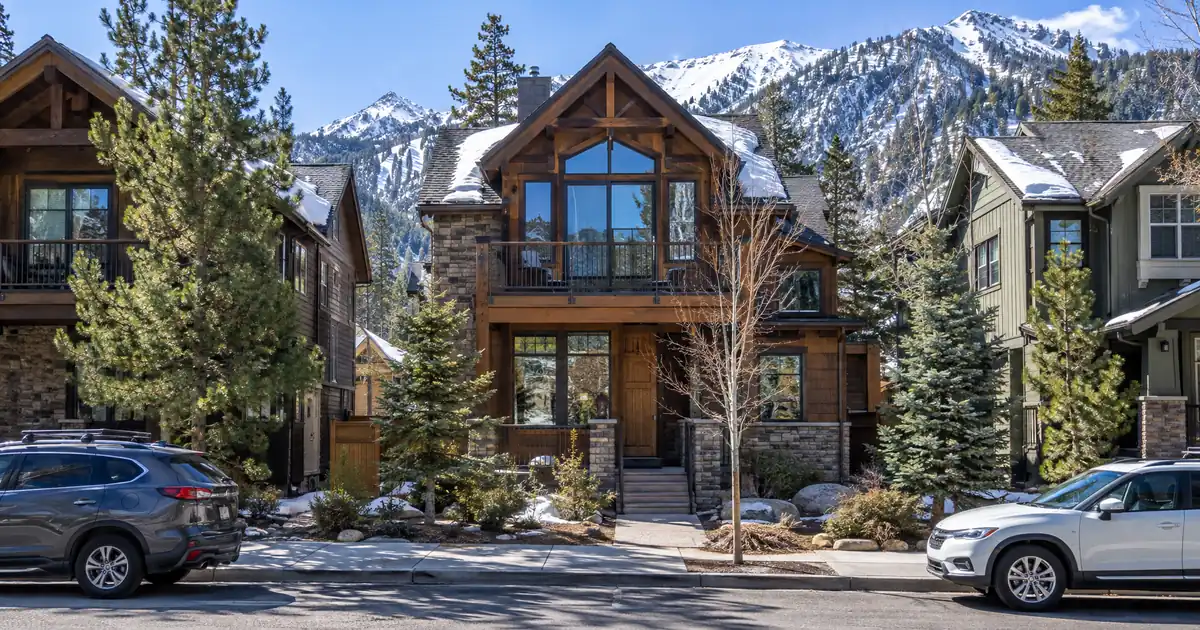
Same town, same month, two rent numbers that barely resemble each other. CoStar-sourced data on Apartments.com puts average rent in Big Bear Lake at $850 a month, with two-bedrooms near $1,035. A housing study reported by the Big Bear Grizzly lands at $2,183. A lender’s appraiser has to pick one, and that choice decides whether an investment property loan here works or stalls. The gap is the most important fact in this market.
The Short Version: An investment property loan in Big Bear Lake, California is underwritten primarily on the property’s rental income measured against its full monthly obligation, so the work is proving a defensible long-term rent on a purchase price that resort-town demand has pushed up.
DSCR Calculator
Run the numbers in Big Bear Lake, CA
Rate source: Freddie Mac 30-yr average via FRED® — Federal Reserve Bank of St. Louis · effective Sep 24, 2026
Prefilled with starting assumptions — enter your own rent or nightly figures, taxes, insurance, and HOA for a more accurate picture.
Program parameters update from Lendmire’s centralized guideline source. Taxes and insurance are editable estimates.
As of Sep 24, 2026 · General Freddie Mac market benchmark, not a Lendmire loan offer. Rent, nightly rate, occupancy, taxes, and insurance are editable estimates. Short-term rental figures are estimates only and vary significantly by season, property type, management approach, and local short-term-rental rules — confirm local regulations before relying on them. Qualifying income for short-term rentals varies by program — some use appraisal market rent, others use documented STR history or projections — and is confirmed in underwriting. Not a Loan Estimate, approval, or commitment to lend. Program availability and eligibility are subject to lender guidelines, credit approval, property review, and underwriting.
- Zillow puts Big Bear City’s average home value at $395,087, against $605,462 for Big Bear Lake.
- Big Bear City multi-family listings start near $479,000, barely above that submarket’s $449,000 single-family median.
- A single cabin on a long-term lease tends to land below 1.00 coverage. Small multifamily can clear it.
- Most purchase files sit at 75%-80% LTV, with 85% reserved for the strongest borrowers. Every figure here varies by lender and program — guidelines, property type, leverage, and credit profile all apply.
Big Bear Lake Market Snapshot
A quick read on the Big Bear Lake investor landscape — figures come from the cited sources below. Confirm current property-level numbers before underwriting.
| Metric | Detail |
|---|---|
| Home prices | Average home value $551,574–$605,462 (Zillow Home Value Index) |
| Typical rents | Avg monthly rent $2,183 (big bear lake) (Big Bear Grizzly) |
| University enrollment | 2,159 students (Ed-Data Bear Valley Unified) |
| Population | 5,044 population (2024) (U.S. Census Bureau QuickFacts) |
| Employment | 201-500 employees (range estimate, LinkedIn) |
Start East of the Lake: Big Bear City
Big Bear City is where the purchase math begins to work. Zillow’s typical home value there is $395,087, roughly 35% under the lakefront core, while the local-study rent for the two areas is nearly identical: $2,138 in Big Bear City versus $2,183 in Big Bear Lake. A lower basis against similar rent is what a coverage ratio rewards.
The appreciation story points the same way, which surprises people who assume lakefront always wins. NeighborhoodScout shows Big Bear City appreciating 143.84% over ten years, about 9.32% a year and top-decile nationally. Its Big Bear Lake page shows just 1.75% over the most recent twelve months. Past performance is not a forecast, but an investor buying east of the lake is at least not paying a lakefront premium for flat equity.
Marketing time tells a similar story. Redfin’s multi-family data shows 130 days on market in Big Bear City against 246 days in Big Bear Lake. Slower turnover means thinner, older comps, and appraisers feel that. A buyer here is likelier to get a clean value opinion east of the lake.
| Factor | Big Bear City | Big Bear Lake |
|---|---|---|
| Zillow home value | $395,087 | $605,462 |
| Local-study avg rent | $2,138 | $2,183 |
| Multi-family listing range | $479K-$795K | $449,999-$3.8M |
| Multi-family days on market | 130 | 246 |
| Appreciation | 143.84% over 10 yrs | 1.75% past 12 mo |
The product that stands out is the duplex. Homes.com shows multi-family listings in Big Bear City from $479,000 to $795,000 against a $449,000 single-family median. That is roughly a 7% step up in asking price for a second income stream. On the lake side, Homes.com shows multi-family spanning $449,999 to $3.8 million against a $624,900 single-family median, so the multi-unit price has almost nothing to do with the rent it produces.
One caution on the aggregator numbers. city-data.com, drawing on Census-derived data, shows 3-4 unit structures averaging $383,909 and 2-unit structures averaging $755,331. That ordering looks odd, and small-sample averages in a town of about 5,000 people can swing on a few sales. Treat it as directional. The listing-level evidence from Homes.com is more useful for underwriting conversations.
Run the Numbers: One Cabin, One Duplex
A single-family rental in Big Bear City on a long-term lease lands below 1.00 coverage at standard leverage. The same money into a duplex can reverse that. Both examples below are modeled assumptions, not sourced market facts, and both are built on rent divided by full PITIA (principal, interest, taxes, insurance and any HOA dues).
The cabin. Picture an investor buying a single-family home at $449,000, the Big Bear City median, with 25% down. Model rent at the local-study $2,138. Run against the full obligation including taxes and insurance, coverage comes out around 0.8x. That is not a file most standard programs will take at this leverage, and pushing to 20% down only widens the gap. Final terms depend on lender guidelines, property type, leverage, and the borrower’s complete credit picture.
The duplex. Now take a Big Bear City duplex at $479,000, the bottom of the current listing range, with 25% down. Assume two 2-bedroom units each rent for $1,800 (a modeled figure, deliberately below the $2,138 local-study average). Combined rent of $3,600 against full PITIA runs a little above 1.2x, including taxes and insurance. Put the CoStar two-bedroom figure of $1,035 per unit into the same structure and coverage falls to roughly 0.7x. Same building, same loan, and the answer changes depending on which rent survey the appraiser believes. These specifics are subject to lender guidelines and a full review of property, leverage, and credit.
That is the real underwriting risk in Big Bear, and it isn’t the price. The investor who shows up with signed leases at market rent gives the lender something better than either survey. The one who shows up with a projection is at the mercy of whichever comp set gets pulled.
It’s a genuine toss-up whether the duplex or a smaller single-family home is the better first purchase. The duplex has better coverage and two income streams. The single-family home is easier to exit and cheaper to carry through a vacancy. An investor with one property and thin reserves might reasonably choose the cabin and accept lower coverage with more cash down. An investor who wants the file to clear standard programs will usually find the duplex does the work.
What’s the Catch on Sub-1.00 Deals?
Many standard DSCR programs are built around a 1.00x benchmark because rent covers the obligation at that level. Anything below it, like the cabin above, has to be structured differently, and the question worth asking first is whether it should be.
A lender reviewing a sub-1.00 file may look at a sub-1.00 program, an interest-only structure, or blended income that includes documented short-term rental history. Each typically comes with tradeoffs: more cash down, stronger credit, deeper reserves, or different pricing. Eligibility depends on lender guidelines, credit profile, reserves, property review and any state overlays. None of it is a given.
Resort markets add a wrinkle. Many lenders want trailing platform income for seasoned STR properties rather than a rent survey, and long-term comps are thin in Big Bear. If an investor is reaching for a sub-1.00 structure because no property in their target area clears 1.00 at honest rents, that is a signal to rethink the submarket, not the loan type. If the property has a clear appreciation story or the borrower can absorb the carry, sub-1.00 is defensible. Otherwise the stronger move is often moving east or toward two units.
Conventional financing deserves a hard look too. For a W-2 borrower with strong income and one or two properties, a conventional loan may carry a lower cost and won’t care that long-term rent is thin. DSCR earns its place when the borrower is entity-held, self-employed, or past the point where conventional financed-property limits bite. The program-to-program comparison lays out where that line sits.
The Village and the Lakefront (Skip or Buy for the Story?)
The lakefront core is a hard fit for a long-term-rent DSCR file. Zillow’s typical Big Bear Lake home value is $605,462 (Redfin’s median sale price sits lower at $571K, reflecting sold prices rather than an index). Local-study rent of $2,183 against that basis leaves little room. Observed waterfront listings run from roughly $900,000 to $3.49 million, and at those prices long-term rent is beside the point. The buyer is paying for second-home or vacation use.
The city’s own housing element explains why comps are hard to find. The California Department of Housing and Community Development filing notes Big Bear Lake has relatively few long-term rental units, citing one 2-bedroom townhouse offered at $3,500 a month. One asking rent doesn’t make a market, but it shows how thin the long-term supply is.
That cuts both ways for an investor. Scarcity supports rent stability once a unit is leased, and the county-sponsored housing study reported by the Grizzly found 58% of roughly 40,000 short-term units across the mountain communities used as seasonal second homes. But scarcity also gives the appraiser very few same-submarket rent comps. An investor buying here should expect the lender to lean on regional or Big Bear City data, and should plan the file around that.
Who should still buy near the Village? Someone with a strong equity position who values location and will run the property on its own merits, typically with more cash down. Or someone buying a small multifamily on the lake side at the low end of that $449,999 floor, where the price still relates to the income. For most first-time investors the coverage math says start east.
Who Rents for Twelve Months
Year-round demand here comes from workers, not visitors, and the research supports it with employment facts instead of assumptions. The U.S. Census Bureau puts the population at 5,044, and the same Census series shows it down 3.8% across five years. Median household income is $76,250 per California Demographics. Data USA shows employment growing 4.4%, from 2.41k to 2.51k jobs in a single year. A shrinking resident count alongside growing employment is the pattern you’d expect when workers are being priced out of living where they work.
The seasonal layer sits on top of that. A city housing element on file with California HCD notes that Big Bear Mountain Resort adds about 2,000 seasonal employees in winter, and that about 91% of employed residents work within 30 minutes of home. Big Bear Mountain Resort, owned by Alterra Mountain Company, anchors that hiring. That is roughly 2,000 people needing housing on top of a resident base of about 5,000, with no headcount source from the resort itself, so treat the figure as historical and approximate.
The steadier anchor is healthcare. Bear Valley Community Healthcare District, which runs the only hospital in the valley, is listed by LinkedIn’s company profile at 201-500 employees. That’s a range estimate, not an official count. Hospital staff are the kind of year-round, non-seasonal tenant a long-term lease is built around. The district’s own site, bvchd.com, describes emergency care and a rural health clinic serving the valley.
The local nonprofit Big Bear Workforce Housing Initiative says businesses struggle to retain and recruit employees and that the City Council has named workforce housing a top priority. Tenant demand that is structural rather than cyclical is what a long-term-lease DSCR investor is buying into. Just remember demand doesn’t set rent. A strong tenant pool helps the file only if the rent it supports shows up in leases.
What a Clean File Looks Like
In resort markets like this one, the common friction is the rent figure. The cleaner files tend to arrive with executed leases, entity documents, title and property details organized before lender review. The files that stall usually lead with a projected rent and no lease behind it. When the rent survey and the lease disagree, the lease is what a lender can rely on. Investors here often do better running two scenarios side by side, long-term rent and documented platform income where the property has history, before deciding which structure to submit.
A few program guideposts apply here, all subject to lender guidelines and varying by borrower, property and loan scenario:
- Purchase leverage is typically 75%-80% LTV, or about 20%-25% down. Up to 85% is possible only on the strongest files.
- The baseline coverage benchmark is 1.00x, calculated as rent used for lender review against PITIA.
- Credit tiers generally run from a 620 floor up through 700, and 700 is the overlay for high leverage.
- Reserves are typically about 6 months of PITIA.
- Standard programs reach up to $3,000,000, with smaller balances routed through select lenders in the network.
One property-type note matters in mountain towns. Manufactured homes, log homes and barndominiums fall outside these DSCR programs. Some cabin-style properties will be timber-framed rather than log, and that distinction should be settled before an offer, not after. Loans to LLC-titled borrowers are available subject to lender program eligibility.
For the mechanics behind all of this, the guide “What Is a DSCR Loan” covers the basics, and DSCR loan options for California investors covers the state. Lendmire’s DSCR platform overview shows the wider network. Anyone with a specific listing in hand can start your quote or call 828-256-2183.
The Best Next Step
Before any offer, pull your own rent evidence. Skip the surveys. Look at current long-term listings and signed leases in the exact Big Bear City block or duplex you’re considering, and compare them with both the $850 CoStar figure and the $2,183 local-study figure. Then confirm current short-term-rental rules, taxes and insurance with qualified local professionals. A rent you can defend on paper is worth more in this market than any price concession.
Frequently Asked Questions
How do you qualify for a DSCR loan in Big Bear Lake, California?
Qualification centers on the property’s rent against its full monthly obligation, with 1.00x a common baseline. Borrowers also need to meet credit and reserve guidelines, typically a 620 floor and about 6 months of PITIA. In Big Bear the practical hurdle is documenting a long-term rent that supports coverage, since comps are thin. Eligibility is subject to lender guidelines and property review.
DSCR vs. conventional financing
Two common ways to finance an investment property in Big Bear Lake, CA. They qualify you differently — here’s how investors weigh them.
Why investors choose it
- Qualifies on the property’s rental income — no personal tax returns, W-2s, or pay stubs needed to document income.
- No personal debt-to-income ceiling to clear, so existing mortgages and obligations don’t cap your borrowing the same way.
- Can be closed in an LLC, keeping the property inside a business entity.
- Built for scaling — not held to the limit on number of financed properties that conventional financing applies.
- Underwriting centers on the deal: generally qualifies when the rent covers the payment, a 1.00x coverage ratio being a common baseline (confirmed in underwriting).
- Designed specifically for investment property, including long-term and, where the program allows, short-term rentals.
Where it’s strong
- Often the lowest ongoing financing cost for a buyer who fully qualifies on personal income — a fit for a first property or a cost-first purchase.
Trade-offs for investors
- Requires full personal income documentation and must fit within a debt-to-income limit — salary, existing debts, and other mortgages all count.
- Typically held in your personal name rather than a business entity.
- Caps how many financed properties you can carry, which can become a ceiling as a portfolio grows.
- Evaluates you as a borrower as much as the property, which usually means more paperwork.
How investors usually choose: a first or single property often optimizes for the lowest financing cost; portfolio builders often optimize for leverage, vesting in an LLC, and scaling past conventional caps. The right answer depends on your goals, the property, and current guidelines — both paths run through select lenders in Lendmire’s wholesale network, with eligibility and terms confirmed in underwriting.
What are the requirements for an investment property loan in Big Bear Lake, California?
Expect 20%-25% down on most purchases, with 15% down reserved for the strongest files. You’ll also need credit that meets the program tier and reserves of about 6 months. The property has to be an eligible type, so manufactured homes, log homes and barndominiums fall outside these programs. Specific terms vary by borrower, property and lender.
Does a Big Bear Lake cabin cover its debt on long-term rent alone?
Usually not at standard leverage. A modeled single-family purchase near the Big Bear City median comes out around 0.8x including taxes and insurance, using the local-study rent. Small multifamily is the likelier route to 1.00x or better. Lenders may review sub-1.00 files through other structures, but those typically require more cash down or stronger credit.
Why do Big Bear Lake and Big Bear City rent surveys disagree so much?
Different sources measure different things. CoStar-sourced data shows $850 a month for Big Bear Lake, while the local housing study reported $2,183. Part of it is the mix of long-term and seasonal-influenced rents. The spread matters because an appraiser or lender may lean on whichever comp set is most defensible. Signed leases resolve the question better than any survey.
How do DSCR lenders review rental income instead of traditional tax-return income in California?
Lendmire arranges DSCR investor loans. The lender evaluates the property’s rental income against its monthly obligation rather than personal income documentation, subject to lender guidelines. That structure supports LLC closings and borrowers with four or more financed properties.
For current guidelines and terms, see Lendmire’s DSCR loan programs page.
About Lendmire
Lendmire (NMLS# 2371349) is a mortgage brokerage focused on DSCR investor financing, helping arrange programs through wholesale and investor-lending channels in 41 markets, including Washington, D.C. DSCR loans are evaluated by the lender on property cash flow rather than personal income, subject to lender guidelines, supporting LLC closings and accommodating investors with four or more financed properties. Scotsman Guide named Lendmire a Top Mortgage Workplace in both 2025 and 2026.
Get Started
Ready to find the right loan for you?
In about 30 seconds you can review financing options available for your investment property. No commitment required.
Informational only. Not a Loan Estimate, approval, or commitment to lend. Program availability and eligibility are subject to lender guidelines, credit approval, property review, and underwriting.
References
1. Apartments.com rent market trends: Big Bear Lake
2. Big Bear Grizzly housing study report
3. Zillow Home Value Index: Big Bear City
5. Ed-Data Bear Valley Unified
6. U.S. Census Bureau QuickFacts: Big Bear Lake
8. NeighborhoodScout: Big Bear City
9. Redfin — Big Bear City Multi Family Homes for Sale
10. Redfin — Big Bear Lake Multi Family Homes for Sale
11. Homes.com multi-family listings: Big Bear City
12. Homes.com
13. city-data.com
14. Redfin — Big Bear Lake Housing Market
15. California HCD Big Bear Lake housing element
18. California HCD
20. bvchd.com
21. Big Bear Workforce Housing Initiative
22. 2025
23. 2026
This article is part of Lendmire’s DSCR loan program — full qualification details, guidelines, and scenarios live on the program page.
Related reading: Cash Out Refinance Investment Property in Crystal Lake, Illinois: What Qualifying Takes on $2,100 Rent · Investment Property Loans in Oakland, CA: The 2026 DSCR Financing Guide to the Flatlands · Super Jumbo DSCR Loans In Lake Arrowhead: Leverage And Reserves
Guides: DSCR Loans in Big Bear Lake, CA · DSCR Loans in California
Brandon Miller
Founder & CEO, Mortgage Loan Originator, Lendmire LLC
- Mortgage Loan Originator · NMLS# 1129696 · Verify on NMLS Consumer Access
- North Carolina Real Estate Broker · License# 343312 · Verify on NCREC
- North Carolina Insurance Producer · License# 19053198 · Property, Casualty, Life, Health · Verify on NAIC SBS
- Lendmire LLC · Firm NMLS# 2371349 · Verify firm licensure
Disclosures. The information presented in this article is general market commentary, not financial, legal, or tax advice. Lendmire is a mortgage brokerage (NMLS# 2371349) — not a direct lender or depository institution — and loan placement is subject to lender underwriting. Nothing in this content represents a commitment to lend. Loan terms, pricing, and program availability vary based on borrower qualifications, property characteristics, and state of subject property, and are subject to change at any time. Lendmire complies with Equal Housing Opportunity requirements. Consumer access: nmlsconsumeraccess.org.