
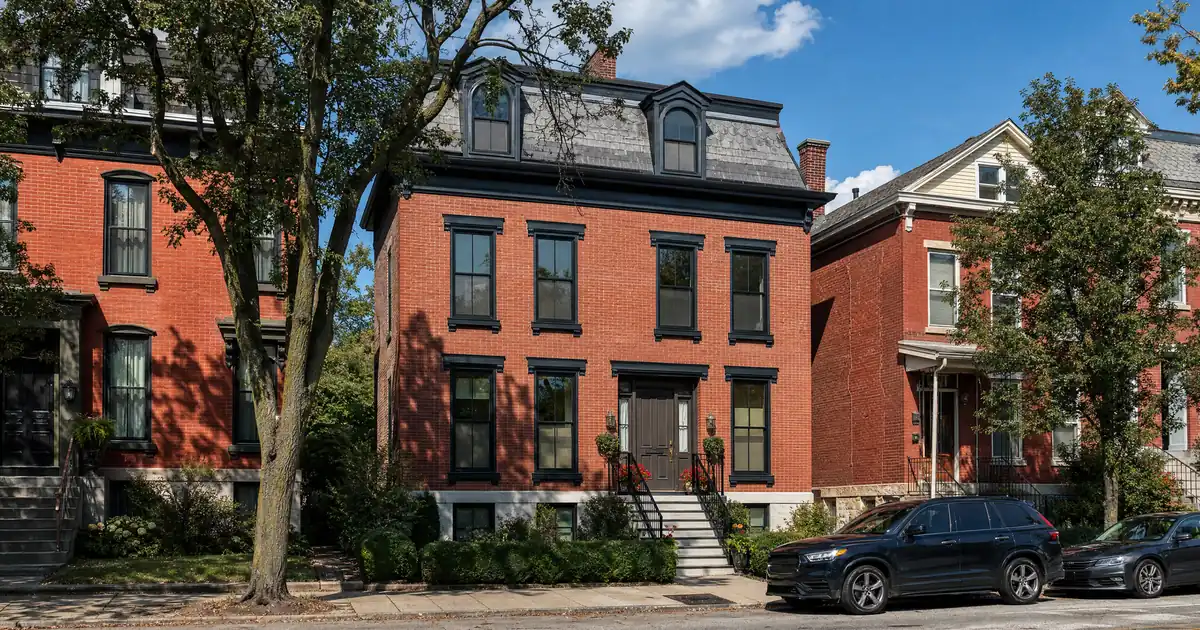
A rental in West Price Hill hits the DSCR math like this: a single-family home near the neighborhood’s median sale price of $174,900 (Homes.com), rented at an average of $1,015 a month (RentCafe). That’s one of the tightest price-to-rent spreads in the metro. It’s also not automatically a clean file — run the actual full-carrying-cost math and the coverage ratio lands in the high-0.80s to low-0.90s, not the 1.20x-plus territory the raw price-to-rent spread might suggest. That gap between “looks cheap” and “clears the number” is the whole game in Cincinnati, and it changes block by block.
Key Takeaways: Investment property loans in Cincinnati, Ohio are underwritten primarily on a property’s rental income measured against its full monthly carrying cost, and that math splits sharply by submarket — Over-the-Rhine rents average $1,975 a month (RentCafe; Redfin), while West Price Hill trades near $174,900.
DSCR Calculator
Run the numbers in your market
Rate source: Freddie Mac 30-yr average via FRED® — Federal Reserve Bank of St. Louis · effective Jul 30, 2026
Prefilled with starting assumptions — enter your own rent or nightly figures, taxes, insurance, and HOA for a more accurate picture.
Program parameters update from Lendmire’s centralized guideline source. Taxes and insurance are editable estimates.
As of Jul 30, 2026 · General Freddie Mac market benchmark, not a Lendmire loan offer. Rent, nightly rate, occupancy, taxes, and insurance are editable estimates. Short-term rental figures are estimates only and vary significantly by season, property type, management approach, and local short-term-rental rules — confirm local regulations before relying on them. Qualifying income for short-term rentals varies by program — some use appraisal market rent, others use documented STR history or projections — and is confirmed in underwriting. Not a Loan Estimate, approval, or commitment to lend. Program availability and eligibility are subject to lender guidelines, credit approval, property review, and underwriting.
- Over-the-Rhine coverage runs roughly 1.05x to 1.10x at current rent-to-price levels, depending on leverage.
- West Price Hill’s tighter spread still underwrites in the high-0.80s to low-0.90s, short of full 1.00x on rent alone.
- Walnut Hills multi-family listings carry a median asking price near $250,000, and one triplex listing shows gross rent near $2,985 a month.
- Westwood and Northside carry 26 percent-plus year-over-year appreciation that has outrun rent growth.
- Standard purchase leverage runs 75 percent to 80 percent loan-to-value under current program guidelines, subject to lender overlays.
Cincinnati sits at 311,224 residents inside the city limits, part of a 2.3 million-person metro that ranks as the 30th-largest in the country (U.S. Census Bureau; USAFacts). Lendmire (NMLS# 2371349) arranges DSCR investor loans on Cincinnati, Ohio properties, and the file mechanics on this metro’s DSCR deals are unusually neighborhood-dependent — more so than most Midwest cities Lendmire covers.
Cincinnati Market Snapshot
A quick read on the Cincinnati investor landscape — figures come from the cited sources below. Confirm current property-level numbers before underwriting.
| Metric | Detail |
|---|---|
| Home prices | $270K median sale price (Redfin) |
| Recent appreciation | Westwood: +26.2% yoy (Redfin Westwood Housing Market) |
| University enrollment | 53,235 total students (University of Cincinnati) |
| Population | 2.3 million metro population (USAFacts Cincinnati Metro) |
| Employment | 15,000 jobs in greater cincinnati area (Whiting-Turner) |
The West Price Hill Math: Tight Spread, Thin Coverage
West Price Hill is the affordability leader in Cincinnati, and that’s exactly why the coverage math still comes up short of a full 1.00x — landing in the high-0.80s to low-0.90s including taxes and insurance on rent alone. At a median price near $174,900 and average rent of $1,015 a month, a purchase at 75 percent to 80 percent loan-to-value lands the coverage ratio in that same range once property tax and insurance are folded into the monthly obligation — not the full ratio a bare price-to-rent glance might suggest.
Redfin’s trailing three-month read on the submarket puts the median at $188,000, up 1.6 percent year over year — modest appreciation compared to the hot east-side pockets, but modest also means more sales to comp off of, which matters at appraisal time (Redfin). For an investor who wants entry-price affordability, West Price Hill delivers. For an investor who needs the property to carry itself on day-one rent with no other structuring, it’s borderline.
That’s not a dead end — it’s a structuring conversation. A sub-1.00 program, an interest-only structure that lowers the monthly obligation, or a larger down payment that reduces the loan balance can all move a file like this closer to, or across, the 1.00x line, all subject to lender guidelines, credit approval, and property review. This is exactly the kind of scenario worth a call to walk through — Lendmire can be reached at 828-256-2183 to talk through the numbers on a specific address before an offer goes in.
Where Coverage Actually Clears 1.00x: Over-the-Rhine’s Rent Premium
Over-the-Rhine is the counterintuitive winner on this list, and the reason is rent, not price. With sale prices well above the metro’s more affordable submarkets but still climbing year over year, and with an average rent of $1,975 a month, the coverage ratio on a standard purchase runs closer to 1.05x to 1.10x, depending on down payment, once full carrying costs are included (Redfin; RentCafe).
That’s a sharper result than the cheaper west Price Hill math produces, and it’s worth sitting with for a second: the higher-priced neighborhood clears the ratio more comfortably than the lower-priced one. Rent, not purchase price, is doing the work. Over-the-Rhine’s redevelopment run has been underwritten by roughly $363 million in reinvestment poured into the neighborhood over the past eight years by the Cincinnati Center Development Corporation, and that capital has pulled market-rate rents up to levels that simply didn’t exist in the district fifteen years ago. Tenant demand here leans on downtown employers — Procter & Gamble, Kroger, and Fifth Third Bank all sit within a short commute — plus the young-professional and restaurant-scene draw that keeps turnover manageable.
The thinner comp depth in fast-appreciating pockets is worth flagging honestly, though OTR’s redevelopment has been running long enough now that comp density has caught up in most of the district. That’s less true a few neighborhoods over, which shows up in the appreciation section below.
Skip Single-Family in Bond Hill — Multi-Unit Is the Play
Bond Hill’s own listing data makes the property-type call for you. Single-family homes in the submarket carry a median price of $215,000, while small multifamily (2-4 unit) properties trade higher, from $285,000 to $425,000 — and several of those multifamily listings market themselves specifically as fully rented, updated cash-flow plays (Homes.com). That price gap between single-family and small multifamily stock signals the submarket is built for income stacking, not standalone SFR holds. Bond Hill sits roughly nine miles from downtown, with both Cincinnati Children’s Hospital Medical Center and UC Medical Center within about five miles, which supports steady tenant demand from hospital-system staff and residents without leaning on any single employer.
Walnut Hills tells the same story with sharper numbers. Multi-family listings there carry a median asking price near $250,000, and one fully leased triplex on the market brings in $2,985 a month gross (Redfin). Run that median price against that triplex’s rent at 75 percent to 80 percent loan-to-value with full carrying costs included and the coverage ratio lands around 1.7x to 1.8x — the kind of margin that gives a file real cushion against a rate move, a vacancy month, or a maintenance surprise. Cincinnati’s older housing stock makes this math repeatable: nearly 30 percent of the metro’s rental units, more than 26,000 of them, were built in 1939 or earlier, meaning small multifamily conversions like this triplex are common inventory, not rare finds.
The math on multi-unit properties gets clearer once you see the guide “What Is a DSCR Loan” — the qualifying income is the property’s, not the borrower’s personal W-2 or tax return, which is exactly why a fully leased triplex with strong rent rolls can outqualify a single-family home at a similar price point.
The Appreciation-Led Submarkets: Westwood, Northside, and Anderson Township
Westwood and Northside are running the opposite math from Walnut Hills — price is sprinting ahead of rent, which means day-one coverage is tight even though equity is building fast. Westwood’s median sale price hit $228,000 as of last November, up 26.2 percent year over year, while average rent sat at $1,000 a month, up only 5 percent over the same period (Redfin; Zumper). Run that price-and-rent combination through a full-carrying-cost purchase and coverage lands well under 1.00x on rent alone, closer to the mid-0.60s to low-0.70s.
Northside shows the same pattern at a steeper price tier. Median sale price ran $330,000 as of last September, up 26.9 percent year over year, while a legacy duplex listed in the same neighborhood showed rents of $725 and $675 — $1,400 a month combined, or $16,800 a year gross (Redfin; Homes.com). That older duplex, priced near the neighborhood median, underwrites well under 1.00x on its current, unrenovated rent roll — a modeled read puts it closer to 0.65x once full carrying costs are included.
Neither of these is a walk-away. They’re a different play than Walnut Hills or Over-the-Rhine: buy for the appreciation trajectory and the eventual rent catch-up, not for immediate cash flow. Northside’s duplex, in particular, is a renovation-and-reposition story more than a buy-and-hold-as-is story — bring the units to market rent and the picture on a future refinance changes meaningfully, which is a conversation for DSCR loan programs across the Lendmire platform rather than this purchase-side discussion.
Anderson Township, on the east side, is the suburban version of the same appreciation thesis. Median price there sits at $353,000, up 17.6 percent year over year — a stronger family-tenant single-family appreciation play than a day-one cash-flow deal, and worth pairing with a longer hold horizon.
Working DSCR brokers see a recurring pattern in appreciation-led metros like this one: files priced off a hot 12-month comp set often come in tight on rent-to-debt ratio at acquisition, then get repriced favorably at refinance once a full year of seasoning and a fresh appraisal catch up to the market move. The trap is underwriting the deal as if the appreciation has already shown up in the rent roll — it usually hasn’t yet.
Is Clifton Still Worth It After the Rent Pullback?
Clifton’s rents just took a real hit — average asking rent fell 28.8 percent year over year to $1,050 a month across active listings, per Zumper’s most recent read on the submarket. That’s a sharp pullback for a neighborhood that sits directly against the University of Cincinnati and its medical center, and it likely reflects a wave of new supply hitting the market rather than a collapse in underlying demand. The university itself just posted its largest enrollment in its history, at 53,235 students for the fall term, including 4,560 at the UC Blue Ash regional campus and 3,091 at UC Clermont (University of Cincinnati).
For an investor, that combination — softer current rents, a growing enrollment base, and proximity to both UC Medical Center and Cincinnati Children’s Hospital Medical Center — reads as a temporary dip in a structurally strong rental corridor, not a demand problem. Coverage math built off today’s depressed Clifton rent will underwrite conservatively; if the rent pullback proves cyclical rather than structural, that conservative underwriting becomes upside on the next lease turn. It’s a genuine judgment call, and one worth running past someone who has seen a few cycles in university-adjacent submarkets before committing.
Hyde Park and Oakley sit a notch above Clifton on price and rent stability. Hyde Park’s median rent runs $1,600 a month, supported by strong school-district demand that anchors long-term single-family and small-multifamily tenancy. Oakley, six miles northeast of downtown near the Rookwood Commons retail corridor, has become a hub for millennials and young families — more than 40 percent of its residents rent, and rents there have climbed steadily at 3 percent to 5 percent annually over the past five years, with the current average at $1,675 a month. Both are workforce-and-professional tenant bases rather than appreciation bets, which makes them the steadier — if less dramatic — cousins of the Westwood and Northside story.
Cincinnati’s Amazon Air Hub Changes the Tenant-Wage Story
No other Midwest metro Lendmire covers has this specific asset. Amazon Air’s primary U.S. cargo hub sits at Cincinnati/Northern Kentucky International Airport, a $1.5 billion investment spanning 920 acres that gives the operation access to more than 40 Amazon fulfillment centers and directly employs 15,000 people across the greater Cincinnati area (CVG Airport). That hub sits inside a broader Kentucky air-cargo corridor that also includes UPS and DHL operations, giving the region a logistics-workforce concentration that Columbus and Indianapolis don’t match at anywhere near this scale.
That matters for a DSCR investor because it diversifies Cincinnati’s tenant-wage base away from the single-employer or single-university stories that define a lot of smaller Midwest metros. Cincinnati’s economy already runs on eight Fortune 500 headquarters, led by Procter & Gamble, which has called the city home since 1837 (P&G Careers), plus TriHealth’s roughly 14,000 team members across four hospitals (TriHealth), and 26,681 residents working in health care and social assistance alone (Data USA). Layer a 15,000-job logistics hub on top of that consumer-goods, healthcare, and financial-services base, and the tenant pool renting Cincinnati’s older brick duplexes and small multifamily stock is built on more than one economic leg.
What Cincinnati Files Actually Need to Clear Underwriting
Cincinnati’s mix of $175,000 west-side single-family homes and $250,000 east-side multi-unit stock keeps most acquisition files inside standard program parameters, which helps on the paperwork side even when the coverage math runs tight. Typical purchase leverage runs 75 percent to 80 percent loan-to-value, meaning 20 percent to 25 percent down on most files. A minimum DSCR benchmark of a 1.00x floor, with rent covering the full monthly obligation at that level, is available on select programs, though most standard files are underwritten to stronger coverage above that baseline. Some lenders may review files below that threshold with stronger reserves, lower leverage, or other compensating factors, subject to lender guidelines. Reserve requirements generally run around six months of the property’s carrying cost, with credit tiers commonly referenced at 620, 660, 680, and 700, the higher tiers unlocking stronger leverage on the strongest files. Loans placed to an LLC-titled entity are common on Cincinnati acquisitions, subject to program eligibility.
Cincinnati’s occupancy backdrop supports the underwriting case, too: the metro’s occupancy rate ran at 94.1 percent heading into last year, ahead of the 93.7 percent national benchmark, and forecasters projected another 30 basis points of improvement as absorption outpaces a construction pipeline that’s grown but hasn’t overheated — about 4,900 units under construction against 3,800 delivered the prior year (MMG Real Estate Advisors). Rent growth across the metro is running 2.5 percent to 3.7 percent annually, with citywide average rent at $1,483 a month, though other aggregators put that figure closer to $1,400 — the range itself is the honest answer, since no single government rent index exists at the city level. Citywide, the median sale price sits at $290,000, up 5.4 percent year over year — a moderate pace compared to the 26 percent-plus spikes in Westwood and Northside, and a useful baseline for comparing any specific neighborhood’s math against the metro as a whole (Redfin).
For anyone weighing a specific address against these parameters, the program-to-program comparison lays out how DSCR underwriting differs from a conventional investment-property loan, and the state’s broader program guidelines are worth a look before locking in a submarket. Review details remain subject to lender overlays, credit approval, and property-level review.
DSCR vs. conventional financing
Two common ways to finance an investment property in Cincinnati, OH. They qualify you differently — here’s how investors weigh them.
Why investors choose it
- Qualifies on the property’s rental income — no personal tax returns, W-2s, or pay stubs needed to document income.
- No personal debt-to-income ceiling to clear, so existing mortgages and obligations don’t cap your borrowing the same way.
- Can be closed in an LLC, keeping the property inside a business entity.
- Built for scaling — not held to the limit on number of financed properties that conventional financing applies.
- Underwriting centers on the deal: generally qualifies when the rent covers the payment, a 1.00x coverage ratio being a common baseline (confirmed in underwriting).
- Designed specifically for investment property, including long-term and, where the program allows, short-term rentals.
Where it’s strong
- Often the lowest ongoing financing cost for a buyer who fully qualifies on personal income — a fit for a first property or a cost-first purchase.
Trade-offs for investors
- Requires full personal income documentation and must fit within a debt-to-income limit — salary, existing debts, and other mortgages all count.
- Typically held in your personal name rather than a business entity.
- Caps how many financed properties you can carry, which can become a ceiling as a portfolio grows.
- Evaluates you as a borrower as much as the property, which usually means more paperwork.
How investors usually choose: a first or single property often optimizes for the lowest financing cost; portfolio builders often optimize for leverage, vesting in an LLC, and scaling past conventional caps. The right answer depends on your goals, the property, and current guidelines — both paths run through select lenders in Lendmire’s wholesale network, with eligibility and terms confirmed in underwriting.
Frequently Asked Questions
How do you qualify for a DSCR loan in Cincinnati, Ohio?
Qualification centers on the subject property’s rental income measured against its full monthly carrying cost, not personal income documentation. A lender reviews the lease or market rent, the property’s tax and insurance figures, and the resulting coverage ratio, generally alongside credit score, reserves, and down payment — all subject to lender guidelines and program eligibility.
What are the requirements for an investment property loan in Cincinnati, Ohio?
Most files need 20 percent to 25 percent down, a credit score commonly in the 620-to-700 range depending on the program tier, and reserves equal to roughly six months of the property’s carrying cost. Entity-titled purchases through an LLC are common in this market, subject to program eligibility, and exact terms vary by borrower, property, and lender.
Why does West Price Hill’s cheap pricing not automatically mean strong DSCR coverage?
Because coverage depends on rent relative to the full monthly obligation, not just the purchase price. West Price Hill’s $174,900 median price and $1,015 average rent produce one of the tightest price-to-rent spreads in the metro, but once tax and insurance are folded into the carrying cost, coverage still lands short of a full 1.00x on rent alone — closer to the high-0.80s to low-0.90s on standard leverage.
Is Over-the-Rhine too expensive for a strong coverage ratio?
No — it’s actually one of the stronger coverage plays in the metro because rent, not price, drives the ratio. At a $270,000 median price and $1,975 average rent, the coverage ratio runs closer to 1.05x to 1.10x on standard leverage, ahead of several lower-priced west-side submarkets.
Does Cincinnati’s older housing stock create financing complications?
It creates opportunity more than complication. Roughly 30 percent of the metro’s rental units were built in 1939 or earlier, which means a large existing inventory of duplex and triplex conversions is available for acquisition without new construction risk — though older mechanical systems and roofs are worth a property condition review during due diligence.
Cincinnati’s investor market rewards the kind of file-level attention this metro’s data demands — a Fortune 500-dense economy, a genuinely unique logistics anchor in the Amazon Air hub at CVG, and a housing stock old enough that the numbers vary block by block rather than following one citywide curve.
Anyone weighing a specific Cincinnati submarket against these numbers can reach Lendmire at 828-256-2183 or talk through the numbers directly.
If you only take one thing from this piece, it’s this: in Cincinnati, the neighborhood with the lowest price isn’t the neighborhood with the best coverage ratio — rent strength beats sticker price every time the math actually gets run.
About Lendmire
Lendmire — NMLS# 2371349 — is a mortgage brokerage specializing in DSCR investor loans, helping arrange financing across 41 markets, including Washington, D.C., through wholesale and investor-lending channels. The model centers on property-level rental income reviewed by the lender rather than W-2 documentation, subject to lender guidelines, suiting entity-owned and multi-property investors. Lendmire holds recognition as a 2026 Scotsman Guide Top Workplace, following its 2025 Top Workplace recognition the year prior.
For broader investor-financing rules and property-type coverage across the state, see Ohio DSCR loans.
Get Started
Ready to find the right loan for you?
In about 30 seconds you can review financing options available for your investment property. No commitment required.
Informational only. Not a Loan Estimate, approval, or commitment to lend. Program availability and eligibility are subject to lender guidelines, credit approval, property review, and underwriting.
References
1. Homes.com
2. RentCafe
3. Redfin
5. USAFacts
6. Redfin
9. Redfin
10. Homes.com
11. Redfin
12. Zumper
13. Redfin
14. Homes.com
15. CVG Airport
16. P&G Careers
17. TriHealth
18. Data USA
20. Redfin
21. a 2026 Scotsman Guide Top Workplace
This article is part of Lendmire’s DSCR loan program — full qualification details, guidelines, and scenarios live on the program page.
Related reading: DSCR Cash Out Refinance Cincinnati Ohio · DSCR Loans Cincinnati: Investor Financing for Over-the-Rhine, Hyde Park, Northern Kentucky, Mason & Real Estate Investors · Cash Out Refinance Investment Property in Fairfield Ohio
Guides: DSCR Loans in Cincinnati, OH · DSCR Loans in Ohio
Brandon Miller
Founder & CEO, Mortgage Loan Originator, Lendmire LLC
- Mortgage Loan Originator · NMLS# 1129696 · Verify on NMLS Consumer Access
- North Carolina Real Estate Broker · License# 343312 · Verify on NCREC
- North Carolina Insurance Producer · License# 19053198 · Property, Casualty, Life, Health · Verify on NAIC SBS
- Lendmire LLC · Firm NMLS# 2371349 · Verify firm licensure
Important disclosures. Lendmire (NMLS# 2371349) is a licensed mortgage brokerage. Lendmire is not a direct lender, depository institution, or financial advisor. All loan inquiries are subject to lender underwriting; this article does not constitute a commitment to lend. Rates, terms, and program guidelines are subject to change without notice and vary by borrower profile, property type, and state. Information in this article is general in nature and is not financial, legal, or tax advice. Equal Housing Opportunity. NMLS Consumer Access: nmlsconsumeraccess.org.