
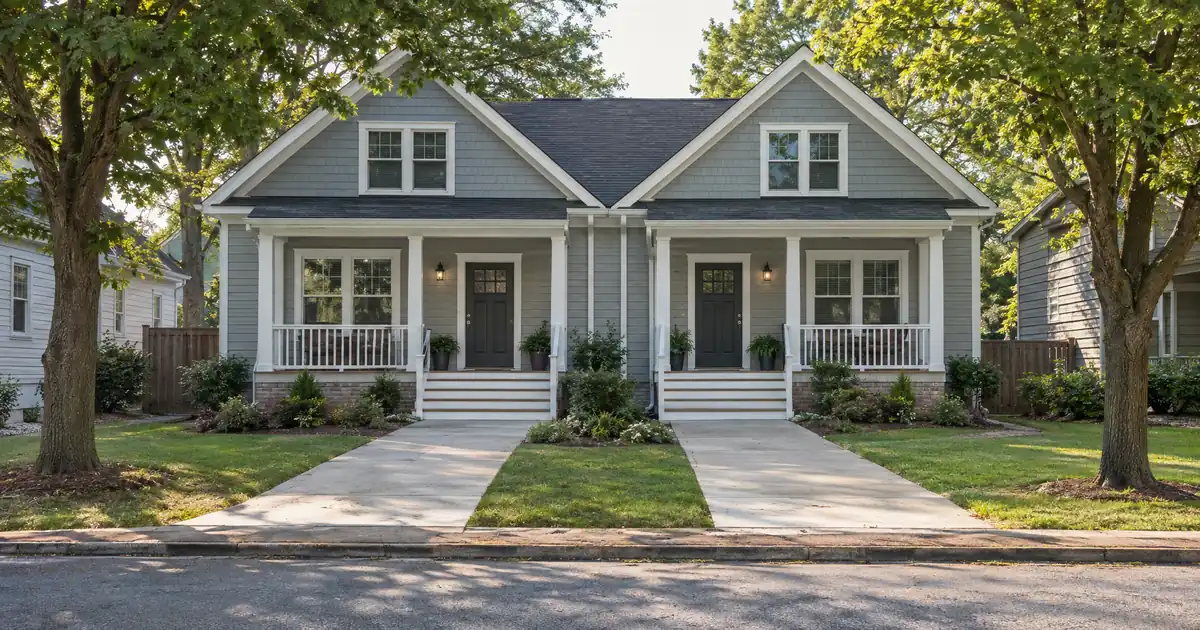
Investment property loans in Galveston cover a range of financing paths, and this article breaks down how DSCR underwriting applies to the island’s small multifamily market. A four-unit building priced near Galveston’s citywide multifamily median of $410,000 generates four separate rent checks instead of one, and that structural difference is often the entire gap between a DSCR file that clears its coverage ratio and one that doesn’t. On Galveston Island, where single-family homes carry a median price between $415,000 and $495,000 depending on the neighborhood (Homes.com) and long-term rents for most unit types run in the $1,100 to $1,600 range, the property type an investor chooses frequently matters more than the block it sits on.
Lendmire (NMLS# 2371349) works with investors buying or refinancing in Galveston, Texas, helping place DSCR financing through Lendmire’s Texas DSCR platform.
DSCR Calculator
Run the numbers in your market
Rate source: Freddie Mac 30-yr average via FRED® — Federal Reserve Bank of St. Louis · effective Jul 30, 2026
Prefilled with starting assumptions — enter your own rent or nightly figures, taxes, insurance, and HOA for a more accurate picture.
Program parameters update from Lendmire’s centralized guideline source. Taxes and insurance are editable estimates.
As of Jul 30, 2026 · General Freddie Mac market benchmark, not a Lendmire loan offer. Rent, nightly rate, occupancy, taxes, and insurance are editable estimates. Short-term rental figures are estimates only and vary significantly by season, property type, management approach, and local short-term-rental rules — confirm local regulations before relying on them. Qualifying income for short-term rentals varies by program — some use appraisal market rent, others use documented STR history or projections — and is confirmed in underwriting. Not a Loan Estimate, approval, or commitment to lend. Program availability and eligibility are subject to lender guidelines, credit approval, property review, and underwriting.
TL;DR: In Galveston, Texas, a DSCR loan is underwritten primarily on the rent a property generates measured against its full monthly obligation, and the island’s UTMB-anchored small multifamily stock changes which properties clear that math — a fourplex near the citywide multifamily median of $410,000 (Redfin) often produces stronger coverage than a single-family home at the same price point.
- Citywide multifamily list price runs near $410,000, close to the single-family median.
- East End duplex and fourplex conversions sit blocks from UTMB’s Galveston campus.
- Lasker Park multifamily prices average roughly $298,456, tightening rent-to-price math.
- West End long-term rents (about $3,274 per month) rarely cover its $793,539 average price.
- Fifty-four percent of Galveston housing is renter-occupied, versus 46 percent owner-occupied.
Galveston Market Snapshot
A quick read on the Galveston investor landscape — figures come from the cited sources below. Confirm current property-level numbers before underwriting.
| Metric | Detail |
|---|---|
| Home prices | $329,950 median (Homes.com Lasker Park) |
| Employment | ~15,000 employees (Wikipedia) |
East End Historic District: Where UTMB Meets the Fourplex
The East End Historic District is the strongest DSCR-fit submarket on the island because its housing stock already comes split into rentable units. Multiple currently listed four-unit buildings near UTMB are marketed on the MLS specifically as cash-flowing multifamily assets — not a theoretical thesis, but a repeatable, tradable category of property. Many of the neighborhood’s Victorian and Greek Revival homes, protected under National Historic Landmark status, were long ago converted into duplex, triplex, or fourplex configurations, which means an investor doesn’t need to seek zoning approval to add units. The conversion has already been done.
The demand driver is UTMB itself. The Galveston campus employs 9,892 people according to the Houston Business Journal’s regional employer rankings, though broader estimates that include the full system put employment closer to 15,000 across the network. Its John Sealy Hospital emergency department holds Level I Trauma Center certification and serves as the lead trauma facility for a nine-county region in Southeast Texas — meaning the tenant pool pulling housing here isn’t just Galveston residents, it’s residents, nurses, techs, and traveling clinical staff rotating in from a much wider catchment. That’s a fundamentally different renter base than the vacation-driven cycles that shape other parts of the island.
Texas A&M University at Galveston sits nearby too, but its pull on off-campus rental demand is smaller than its name suggests. TAMUG enrolls 1,761 full-time undergraduates (Niche), and its own admissions materials note that students in the Engineering-at-Galveston cohort are required to live in on-campus housing where space is available. UTMB’s roughly 15,000-employee footprint, without any blanket live-on-campus rule, carries far more weight for a long-term rental underwriting case than TAMUG’s enrollment figure implies at first glance.
East End’s median single-family price sits near $485,000 (Homes.com), and average rents there run around $1,095, with 2-bedroom units averaging closer to $1,673. On a fourplex, the combined rent from four separate leases is what makes the math work — a single 3-bedroom home at that price point renting for one check often can’t clear the same coverage ratio a fourplex clears comfortably.
Lasker Park and Lost Bayou: The Workforce Housing Math
Lasker Park is where Galveston’s rent-to-price math tightens up the most in an investor’s favor. Multifamily properties there carry a median price of $329,950 and an average sale price of $298,456 (Homes.com) — well under the citywide multifamily median of roughly $410,000 — while average 1-bedroom rent runs $1,095, only modestly below the citywide average. Because the price discount here is proportionally larger than the rent discount, Lasker Park’s coverage ratio math tends to run tighter to break-even than pricier historic or beachfront pockets, which is exactly the lever DSCR underwriting rewards.
Lost Bayou Historic District tells a similar story, with 1-bedroom rents averaging around $1,100 (Rent.com) among the most affordable in the city. Neither neighborhood carries the historic-preservation cachet of the East End, and neither offers much appreciation upside beyond broader island trends. What they offer instead is workforce demand: renters employed in the city’s dominant sectors of health care and social assistance, accommodation and food services, and educational services, which together account for more than 10,000 jobs held by Galveston residents, per Census-derived DataUSA figures. That’s a tenant base built on payroll, not tourism seasonality.
What’s the Catch on West End Beach Houses?
The West End is Galveston’s most price-negotiable submarket right now, but the negotiability comes from an oversupply problem, not a value opportunity. Registered short-term rentals on the island roughly doubled between recent years, reaching nearly 5,000 units, and that oversaturation is most visible in the West End and among beachside condos, where inventory volatility runs highest (April Aberle Realty). Current island-wide STR occupancy sits at just 47 percent (Airbtics), which explains why a wave of investors are exiting the short-term rental business here and putting properties on the market.
That sell-off creates a real acquisition pipeline — but the numbers only work if an investor prices the deal on long-term rent, not prior short-term revenue. West End homes average $793,539 for roughly 1,784 square feet (HAR.com), against average long-term rent of about $3,274 per month. Run that price against that rent at a standard long-term-lease DSCR structure, and the coverage ratio lands well below the 1.00 floor referenced on select programs. West End condos offer a cheaper entry point, with 39 units recently listed at a median of $399,000 (Redfin), but the same tension applies: this submarket is built for STR income documentation, not a market-rent schedule.
For an investor with the reserves and risk tolerance to run a property on trailing STR revenue, or to convert a distressed STR exit into a long-term hold at a steep enough discount, the West End can work. For an investor underwriting on long-term rent alone at current prices, it usually doesn’t.
Downtown and the Strand: Tourist Rents, Thinner Long-Term Fit
Downtown Galveston posts the highest 1-bedroom rents on the island, averaging $1,375 (Rent.com), against a single-family median price of $415,000. The demand here comes from cruise-port proximity and downtown nightlife employment rather than a durable institutional anchor. The Port of Galveston generates more than $2.3 billion in annual economic impact and roughly 13,890 jobs statewide, with a new cruise terminal expected to add 1,085 jobs and $138 million in annual impact as part of a $250 million infrastructure push (Port of Galveston; City of Galveston). That’s a genuine growth driver for hospitality and service employment, but it’s tourism-adjacent employment, which historically supports shorter-term or higher-turnover tenancies rather than the multi-year leases that make a DSCR file easiest to underwrite.
Running the Fourplex vs. Single-Family Numbers
The clearest way to see the property-type effect is to line the modeled coverage ratios up side by side. These are illustrative scenarios built from the researched price and rent figures above, financed at a loan-to-value common as a starting point for investor purchases here, with room to move higher on stronger files.
| Submarket | Price (approx.) | Rent Basis (modeled) | Coverage Ratio |
|---|---|---|---|
| East End fourplex | $410,000 | 4x 2BR near $1,150/mo | ~1.6x–1.7x |
| Downtown single-family | $415,000 | Modeled ~$1,900/mo | ~0.7x |
| Lasker Park duplex | $298,456 | 2x 1BR near $1,095/mo | ~1.05x–1.10x |
| West End single-family | $793,539 | LTR avg $3,274/mo | ~0.6x |
The downtown single-family rent figure is a modeled assumption, not a sourced market comp — no reliable single-family long-term rent figure surfaced in current research, so this line is meant to illustrate the mechanism, not to serve as a market fact. What it shows holds regardless: a four-unit building priced near the single-family median but generating four separate rent streams clears coverage thresholds that a comparable single-family home at the same price often can’t.
Where a scenario lands below a healthy coverage ratio on long-term rent alone, that isn’t necessarily a dead end. Some lenders review lower-coverage structures, interest-only restructuring, or blended short-term-rental income as compensating paths, though those routes typically come with reduced leverage, stronger credit requirements, or additional reserves, and eligibility review depends on lender guidelines, credit profile, and property review in every case.
What Qualifies for an Investment Property Loan Here
Standard DSCR programs available through Lendmire’s network typically run in a familiar loan-to-value range on a purchase, with room to extend on the strongest files where guidelines allow. Most programs are built around a coverage ratio benchmark — rent divided by the full monthly obligation, including principal, interest, taxes, insurance, and any homeowners association dues — because that’s the point at which the property’s income covers its own payment; select programs allow that floor to sit at 1.00. Credit tiers commonly referenced across the network scale upward from the mid-600s, with the higher tiers generally required for higher-leverage requests. Reserve requirements typically scale with loan size, rising further on larger loan amounts. All of this is guideline-level guidance rather than a guarantee, and actual terms depend on lender review, the borrower’s file, and the property itself.
Investors buying under an LLC — common for the fourplex and duplex product described above — can generally use entity ownership within these programs, subject to lender program eligibility, and the rental-income-first structure tends to suit repeat or entity-owned buyers better than a single first-time purchase. For a full breakdown of how the ratio is built, the guide “What Is a DSCR Loan” walks through the mechanics, and Lendmire’s DSCR-versus-conventional breakdown covers when a conventional loan might actually be the better call — typically for a single, personally titled rental where the borrower’s traditional employment income cleanly supports the payment without needing the property’s rent to carry the file.
Files from markets structurally similar to Galveston — coastal, tourism-adjacent, with a dominant institutional employer nearby — tend to show a recognizable pattern: the cleaner files are the ones where the borrower separates trailing STR income from a conservative long-term rent comp up front, rather than submitting blended numbers and hoping the file reconciles itself. The common friction point is the opposite — a borrower pricing a West End-style property off last year’s short-term revenue instead of the market-rent figure a lender will actually use.
DSCR vs. conventional financing
Two common ways to finance an investment property in Galveston, TX. They qualify you differently — here’s how investors weigh them.
Why investors choose it
- Qualifies on the property’s rental income — no personal tax returns, W-2s, or pay stubs needed to document income.
- No personal debt-to-income ceiling to clear, so existing mortgages and obligations don’t cap your borrowing the same way.
- Can be closed in an LLC, keeping the property inside a business entity.
- Built for scaling — not held to the limit on number of financed properties that conventional financing applies.
- Underwriting centers on the deal: generally qualifies when the rent covers the payment, a 1.00x coverage ratio being a common baseline (confirmed in underwriting).
- Designed specifically for investment property, including long-term and, where the program allows, short-term rentals.
Where it’s strong
- Often the lowest ongoing financing cost for a buyer who fully qualifies on personal income — a fit for a first property or a cost-first purchase.
Trade-offs for investors
- Requires full personal income documentation and must fit within a debt-to-income limit — salary, existing debts, and other mortgages all count.
- Typically held in your personal name rather than a business entity.
- Caps how many financed properties you can carry, which can become a ceiling as a portfolio grows.
- Evaluates you as a borrower as much as the property, which usually means more paperwork.
How investors usually choose: a first or single property often optimizes for the lowest financing cost; portfolio builders often optimize for leverage, vesting in an LLC, and scaling past conventional caps. The right answer depends on your goals, the property, and current guidelines — both paths run through select lenders in Lendmire’s wholesale network, with eligibility and terms confirmed in underwriting.
Frequently Asked Questions
How do you qualify for a DSCR loan in Galveston, Texas?
Qualification centers on the property’s rent measured against its full monthly obligation rather than the borrower’s personal income documentation. A lender will typically want a market rent estimate or lease, a purchase contract or appraisal, and standard credit and reserve documentation; approval, terms, and leverage depend on lender guidelines and the specific file.
What are the requirements for an investment property loan in Galveston, Texas?
Most programs available through Lendmire’s network look for a common loan-to-value range on a purchase, a coverage ratio generally at or above a lender-set benchmark — as low as 1.00 on select programs — credit scaling upward from the mid-600s depending on leverage requested, and reserves that scale with loan size. Exact requirements vary by lender, credit profile, and the property itself.
Why do UTMB-area fourplexes score better on DSCR math than single-family homes here?
Because four separate rent checks on one loan produce more combined income against a single payment than one rent check on a comparably priced home. East End multifamily listings near UTMB are already marketed as income-producing assets on the current market, which gives investors a concrete acquisition target rather than a hypothetical conversion project.
Does the West End work for a long-term-rental DSCR purchase, or only short-term?
Long-term rent in the West End tends to run well below what’s needed to cover a purchase at current average pricing, based on the researched price-to-rent figures above. The submarket is better suited to short-term-rental income documentation or a discounted acquisition from the current STR sell-off, converted and re-underwritten on realistic long-term comps rather than prior nightly revenue.
What loan-to-value and reserve levels are typical across Lendmire’s network for a Galveston purchase?
Programs commonly reviewed include familiar purchase leverage ranges, a coverage benchmark that on select programs can be as low as 1.00, and reserve requirements that scale with loan size, all subject to lender guidelines and individual file review.
Where This Market Heads From Here
Galveston’s pricing signals point to a market in transition rather than one running hot in either direction — Zillow shows values down slightly over the past year while Redfin shows a modest gain, and homes are averaging 130 days on market against roughly 10.9 months of supply. That’s a buyer-favorable environment for negotiating acquisition price, which matters directly for coverage-ratio math on a purchase.
The next 12 to 24 months likely bring two parallel stories. In the West End, continued STR oversupply should keep pushing sellers toward exit, creating a steady supply of discounted acquisition candidates for investors willing to underwrite on long-term rent rather than prior nightly revenue. In the East End and around UTMB, the story is steadier and less dramatic: a durable institutional tenant base, already-converted multifamily stock, and comp depth thin enough that patient buyers who do their own diligence — rather than relying on a single data provider’s price — are likely to find the better long-term entries.
About Lendmire
Lendmire — NMLS# 2371349 — is a mortgage brokerage focused on DSCR investor lending, arranging financing across 41 markets, including Washington, D.C., through wholesale and investor-lending channels. Its underwriting approach centers on the property’s rental income as reviewed by the lender, rather than personal W-2 documentation, subject to lender guidelines, which tends to suit entity-owned purchases and repeat investors building a multi-property portfolio. Lendmire has been recognized as a top-ranked workplace in 2026 and as a 2025 Scotsman Guide Top Workplace. Investors weighing a Galveston purchase can reach Lendmire at 828-256-2183 or connect with Lendmire to review options against a specific property.
Get Started
Ready to find the right loan for you?
In about 30 seconds you can review financing options available for your investment property. No commitment required.
Informational only. Not a Loan Estimate, approval, or commitment to lend. Program availability and eligibility are subject to lender guidelines, credit approval, property review, and underwriting.
References
1. Redfin — Galveston Multi-Family Homes for Sale
2. Homes.com — Lasker Park Multi-Family Homes
3. University of Texas Medical Branch — Wikipedia
4. Texas A&M University at Galveston — Niche
5. Rent.com — Galveston Rent Trends
6. April Aberle Realty — Galveston Real Estate Market
7. Airbtics — Annual Airbnb Revenue in Galveston
8. Scotsman Guide — Top Workplaces 2026
9. a 2025 Scotsman Guide Top Workplace
This article is part of Lendmire’s DSCR loan program — full qualification details, guidelines, and scenarios live on the program page.
Related reading: DSCR Loans Galveston: Investor Financing for Galveston Island Rental Properties, Airbnb, and Real Estate Investors · DSCR Cash Out Refinance Galveston Texas · Investment Property Loans in Houston, TX: The Northeast Corridor Coverage Math
Guides: DSCR Loans in Galveston, TX · DSCR Loans in Texas
Brandon Miller
Founder & CEO, Mortgage Loan Originator, Lendmire LLC
- Mortgage Loan Originator · NMLS# 1129696 · Verify on NMLS Consumer Access
- North Carolina Real Estate Broker · License# 343312 · Verify on NCREC
- North Carolina Insurance Producer · License# 19053198 · Property, Casualty, Life, Health · Verify on NAIC SBS
- Lendmire LLC · Firm NMLS# 2371349 · Verify firm licensure
Disclosure information. Lendmire is a state-licensed mortgage brokerage under NMLS# 2371349. Lendmire is not a depository institution, direct lender, or financial advisor — all loans referenced are placed through wholesale lender partners and are subject to each lender's underwriting standards. This article is provided for general informational purposes and is not a commitment to lend, nor does it constitute financial, legal, or tax advice. Loan programs, terms, rates, and qualification standards change without notice and depend on borrower profile, property type, and the state in which the subject property is located. Equal Housing Opportunity provider. NMLS Consumer Access: nmlsconsumeraccess.org.