
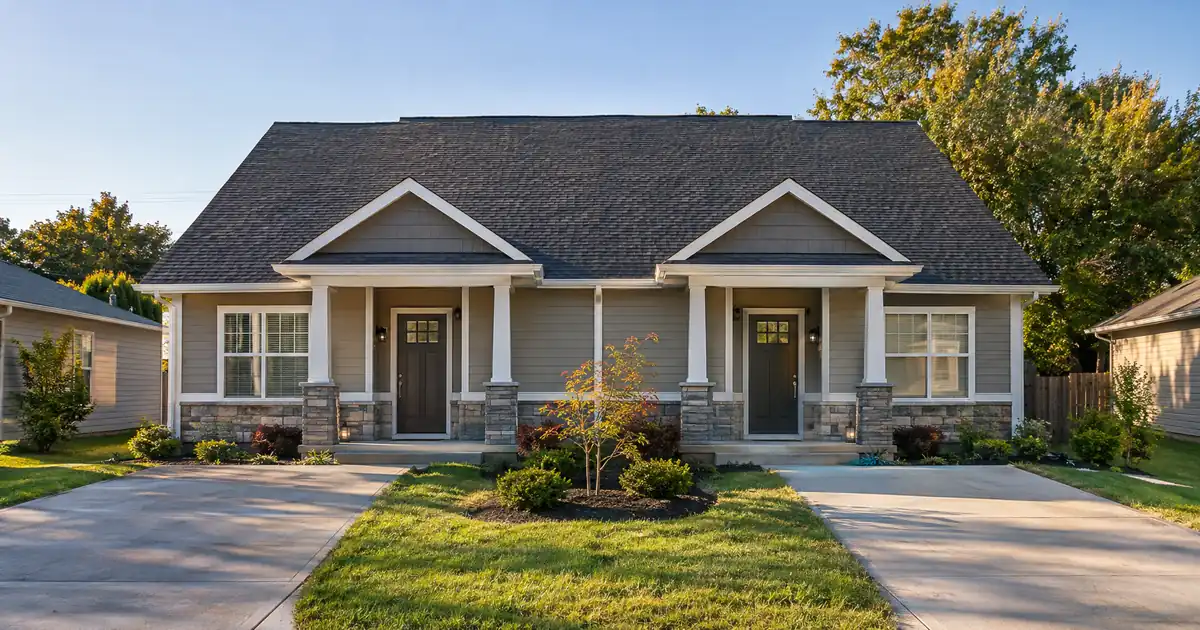
When you’re securing investment property loans in Indianapolis, the rent estimate looks fine right up until taxes and insurance get added to the payment. Buy the right property — the right corridor, the right price band — and the coverage ratio clears 1.00x with room to spare. In this market, neighborhood choice does more work than almost any other underwriting variable, and the research backs that up with real price bands and real rent comps rather than a single citywide average pretending to describe the whole city.
TL;DR: In Indianapolis, Indiana, a DSCR purchase loan is underwritten primarily on the property’s in-place or market rent measured against its full monthly obligation — principal, interest, taxes and insurance — rather than the borrower’s traditional personal-income documentation, subject to lender guidelines and property review.
DSCR Calculator
Run the numbers in your market
Rate source: Freddie Mac 30-yr average via FRED® — Federal Reserve Bank of St. Louis · effective Jul 30, 2026
Prefilled with starting assumptions — enter your own rent or nightly figures, taxes, insurance, and HOA for a more accurate picture.
Program parameters update from Lendmire’s centralized guideline source. Taxes and insurance are editable estimates.
As of Jul 30, 2026 · General Freddie Mac market benchmark, not a Lendmire loan offer. Rent, nightly rate, occupancy, taxes, and insurance are editable estimates. Short-term rental figures are estimates only and vary significantly by season, property type, management approach, and local short-term-rental rules — confirm local regulations before relying on them. Qualifying income for short-term rentals varies by program — some use appraisal market rent, others use documented STR history or projections — and is confirmed in underwriting. Not a Loan Estimate, approval, or commitment to lend. Program availability and eligibility are subject to lender guidelines, credit approval, property review, and underwriting.
- Near Eastside entry prices run $160,000-$230,000 — some of the lowest in the city relative to rent.
- Marion County’s rental vacancy rate sits at a 15-year low of 3.9% (Fair Housing Center of Central Indiana).
- Small multifamily in Fountain Square, Irvington and Beech Grove trades at $130,000-$200,000 for duplexes.
- Far Northside (Castleton/Nora) pricing of $290,000-$370,000 compresses purchase-side coverage to roughly 0.98x-1.12x.
- Marion County single-family rents rose more than 40% between 2019 and 2025, reaching a median of $1,625.
Indianapolis Market Snapshot
A quick read on the Indianapolis investor landscape — figures come from the cited sources below. Confirm current property-level numbers before underwriting.
| Metric | Detail |
|---|---|
| Typical rents | $1,271 avg (RentCafe / Yardi Matrix) |
| University enrollment | 20,677 total students (Indiana University News) |
| Population | 890,315 population (Census Reporter) |
| Employment | 38,079 fte employees (Wikipedia) |
| Vacancy | 6.2% downtown (Roots Realty) |
Where the Rent-to-Price Math Actually Clears 1.00x
The Near Eastside is the cash-flow submarket right now. Entry prices frequently land between $160,000 and $230,000 — well below the city average — while rents in the area run around $1,195 a month per Zumper’s neighborhood-level data. That combination is exactly what a rent-to-debt calculation wants to see.
Run the numbers on a modest scenario: a single-family rental priced near $175,000, purchased at 75% loan-to-value (25% down), generating $1,195 in monthly rent. After modeling a full monthly obligation that includes principal, interest, an assumed property-tax load near Indiana’s statewide average, and standard hazard insurance, that property models to roughly 1.15x coverage — comfortably above the 1.00x benchmark many DSCR programs are built around. That’s the kind of margin that survives a slow month or a maintenance surprise. It’s not the highest coverage available in the metro, but it’s dependable, and dependable is what a first purchase in an unfamiliar market needs. Terms vary by lender guidelines, property type, leverage, credit profile, and full file review.
Riverside, just west along the White River, is the second name investors keep circling. Redevelopment and greenway expansion pushed Riverside home values up roughly 9% in a recent year — one of the faster-appreciating pockets in the city — while entry prices remain below downtown levels. It’s not a pure cash-flow play the way Near Eastside is; it’s a value-add story riding infrastructure investment.
For investors who want single-family exposure with less hands-on management, a dedicated DSCR-market analysis of Indianapolis points to Lawrence Township, Warren Township, and the Speedway corridor as the strongest rent-to-price performers citywide, with estimated coverage in the 1.20x-1.30x range at current pricing. Established neighborhoods like the Far Northside, by contrast, offer more stability but noticeably tighter margins — a tradeoff worth sizing before writing an offer. How DSCR coverage is calculated matters here as much as the neighborhood pick, since the same rent produces a different ratio depending on leverage and price.
Why Are Duplexes Outperforming Single-Family Here?
Because the rent-to-price math on small multifamily is simply better in several Indianapolis submarkets than the single-family equivalent. A local investment brokerage benchmarks “strong deals” in the market at a 0.9%-1.1% monthly rent-to-price ratio — using a $300,000 duplex renting for $1,500 per unit as its reference point for a clean 1% ratio, according to Roots Realty. That’s a fast pre-screen: below roughly 0.9%, a deal is unlikely to clear a 1.00x coverage floor at typical purchase leverage; at or above 1%, it usually will.
Model that reference deal directly. A $300,000 duplex at 75% LTV generating $3,000 in combined monthly rent, once modeled against full principal, interest, taxes and insurance, comes in around 1.6x-1.7x coverage — a wide enough cushion to absorb a vacant unit for a stretch without the file falling apart. Stack two or four units’ income into one debt-service calculation and the spread simply works better than a comparable single-family purchase at the same price point, provided the property is genuinely rent-stabilized. Exact leverage, credit thresholds, and program terms are subject to lender guidelines and full file review.
Fountain Square, Irvington and Beech Grove are where that math shows up most concretely. Duplex inventory in those three submarkets trades in a $130,000-$200,000 band with rental demand anchored by the city’s healthcare, tech and university workforce, per Deal Run’s market comparison. At those entry prices, combined two-unit rents can plausibly clear a coverage floor where a single-family purchase in the same submarket would struggle to.
New construction is entering the picture too. A proposed four-unit development in the Monon Yard area is offering brand-new three-bedroom, two-bath units near 1,320 square feet with projected rents of $1,750 per unit — call it roughly $7,000 a month in gross potential income across the building. New-build pricing runs higher than existing stock, but that kind of income-stacking illustrates why ground-up small multifamily keeps drawing DSCR investors into corridors most single-family shoppers overlook.
The typical purchase-side leverage on these deals runs 75%-80% loan-to-value (about 20%-25% down) on standard programs, with select high-leverage files reviewed up to 85% for the strongest borrower and property profiles. A 1.00x coverage benchmark is a floor used on some select DSCR programs, since rent covers the payment at that level; some lenders may review lower-ratio or no-ratio scenarios with stronger compensating factors, different pricing, or additional reserves, but eligibility always depends on lender guidelines, credit profile and property review.
Broad Ripple, Meridian-Kessler and the Premium Tier
Coverage tightens as price climbs, and that’s the honest tradeoff in Indianapolis’s premium submarkets. Broad Ripple’s median home price runs around $345,000, up 4.8% year-over-year — though estimates vary meaningfully by source. Luxury Playbook data puts one-bedroom rents near $1,350 a month, while rent.com-sourced neighborhood figures show closer to $1,755 — a spread wide enough that investors should pull live comps before underwriting rather than lean on either number alone.
What Broad Ripple offers instead of raw yield is foot traffic and tenant demand. The Broad Ripple Village commercial strip and direct access to the Monon Trail make it one of the more walkable rental markets in the city, and lender case files already show live rate-term refinance activity on long-term-tenant homes near the Village — evidence this submarket has an established lending track record, not just theoretical appeal.
Meridian-Kessler sits a notch above that. One-bedroom rents average around $1,500 a month, drawing professionals and established families who tend to stay longer, which keeps turnover low even if the entry price is higher. Old Northside, just north of downtown, trades around $330,000 on average and offers a similar profile — Victorian and Italianate architecture, walkable proximity to downtown venues, and a quieter residential feel than downtown proper. Neither neighborhood is a cash-flow machine at today’s prices. Both are stability plays for an investor who wants a lower-maintenance tenant base and is willing to accept a slimmer coverage ratio for it.
Bates-Hendricks, just south of Fountain Square, splits the difference. It has appreciated substantially over the past several years and now commonly trades in the high-$200,000s to low-$300,000s, drawing house hackers, flippers and long-term holders alike — duplexes are popular there for the same income-stacking reason that works in Fountain Square and Irvington.
The Far Northside Trap
This is the part of the market that trips up out-of-state buyers reading a citywide average and assuming it applies everywhere. Far Northside submarkets like Castleton and Nora work well as suburban single-family territory, with longer-term tenants and higher price points running $290,000-$370,000. That same pricing compresses purchase-side coverage down to roughly 0.98x-1.12x on a straight DSCR calculation. A duplex or triplex in that zone will often struggle to clear a minimum coverage threshold at standard leverage, and may require a larger down payment or a different loan structure to make the file work.
Not ideal. Skip it for a pure cash-flow play. It can still make sense for an investor prioritizing appreciation and tenant stability over immediate coverage — but that’s a different thesis than the Near Eastside or Fountain Square duplex math, and it should be sized as such before an offer goes in.
The Employers Behind Every Lease
Rent durability comes from who’s paying it, and Indianapolis has an unusually broad base for a city its size. Eli Lilly, one of three Fortune 500 companies headquartered in the city, employs nearly 11,000 people in research, manufacturing and executive roles. Roche Diagnostics runs its North American headquarters on the northeast side with roughly 4,500 employees. Layer in a regional health system, the state’s largest hospital network, operating 16 hospitals with a workforce well above 38,000, and the education/health-services sector alone accounts for 191,000 jobs across the metro.
That anchor base skews white-collar. The southside skews the other way. Rents there average around $1,200 a month, and demand from industrial and logistics employers — Amazon, FedEx and Allison Transmission among them — keeps occupancy high, per Roots Realty’s 2025 rental trends report. It’s a durable, blue-collar tenant base distinct from the healthcare-and-university renter pool near downtown, and it supports lease stability in lower-price submarkets that are core to a cash-flow thesis.
IU Indianapolis, the campus that succeeded IUPUI, enrolled 20,677 students in its most recent count, up on the prior year, with 2,699 beginning undergraduates — a 10.7% jump. A growing 20,000-student campus plus its faculty and staff is a renter pool that isn’t shrinking, which matters for underwriting rent-growth assumptions near downtown, Fountain Square, and Old Northside.
Vacancy data backs up the demand story, with a caveat. Marion County’s rental vacancy rate hit a 15-year-plus low of 3.9%, and the broader metro sits at 4.2% — both well below what’s typically considered a healthy vacancy level, per the Fair Housing Center of Central Indiana. Downtown vacancy is the exception, rising slightly to 6.2%, driven mostly by new apartment supply hitting high-rise product. The oversupply risk, in other words, is concentrated in downtown apartment towers — not in the single-family and small-multifamily submarkets DSCR investors actually target.
What It Takes to Qualify
Documentation on a DSCR file in Indianapolis looks nothing like a conventional mortgage application. The lender’s primary focus is the property’s rent against its full monthly obligation rather than the borrower’s traditional personal-income documentation or W-2s — a structural difference worth understanding before shopping DSCR versus conventional financing. Program guidelines vary, but standard purchase files generally see 75%-80% loan-to-value, with select high-leverage scenarios reviewed up to 85% for the strongest credit and property profiles. Credit tiers commonly reviewed run from a 620 floor up through 700, with the higher-leverage programs typically requiring the stronger end of that range. Reserve requirements generally run around six months of the property’s full monthly carry, rising near nine months on larger loan balances.
Files coming out of markets structured like Indianapolis — a mix of high-yield workforce submarkets and a smaller premium tier — tend to show a common pattern at the deal desk: the cleaner files pair a market rent survey with an actual signed lease or rent roll rather than relying on a single online estimate, since the spread between competing rent sources in neighborhoods like Broad Ripple can run several hundred dollars a month. Files that document rent with more than one comp tend to move through underwriting with fewer follow-up questions.
DSCR vs. conventional financing
Two common ways to finance an investment property in Indianapolis, IN. They qualify you differently — here’s how investors weigh them.
Why investors choose it
- Qualifies on the property’s rental income — no personal tax returns, W-2s, or pay stubs needed to document income.
- No personal debt-to-income ceiling to clear, so existing mortgages and obligations don’t cap your borrowing the same way.
- Can be closed in an LLC, keeping the property inside a business entity.
- Built for scaling — not held to the limit on number of financed properties that conventional financing applies.
- Underwriting centers on the deal: generally qualifies when the rent covers the payment, a 1.00x coverage ratio being a common baseline (confirmed in underwriting).
- Designed specifically for investment property, including long-term and, where the program allows, short-term rentals.
Where it’s strong
- Often the lowest ongoing financing cost for a buyer who fully qualifies on personal income — a fit for a first property or a cost-first purchase.
Trade-offs for investors
- Requires full personal income documentation and must fit within a debt-to-income limit — salary, existing debts, and other mortgages all count.
- Typically held in your personal name rather than a business entity.
- Caps how many financed properties you can carry, which can become a ceiling as a portfolio grows.
- Evaluates you as a borrower as much as the property, which usually means more paperwork.
How investors usually choose: a first or single property often optimizes for the lowest financing cost; portfolio builders often optimize for leverage, vesting in an LLC, and scaling past conventional caps. The right answer depends on your goals, the property, and current guidelines — both paths run through select lenders in Lendmire’s wholesale network, with eligibility and terms confirmed in underwriting.
Loans made to an LLC-held entity are common in this market given how many Indianapolis investors scale through small multifamily, subject to lender program eligibility. Rent used for qualifying income is reviewed subject to program guidelines for Indianapolis, Indiana investors, whether the target is a Near Eastside single-family or a Fountain Square duplex. Lendmire’s DSCR programs and the DSCR loans in Indiana hub page both cover program specifics in more depth. Investors comparing scenarios can also reach the team directly at 828-256-2183.
Frequently Asked Questions
How do you qualify for a DSCR loan on a Near Eastside or Riverside rental in Indianapolis?
The property’s rent — not the borrower’s income — is the primary qualifying factor. A lender will typically want a signed lease or a documented market-rent estimate measured against the full monthly obligation, plus standard credit and reserve documentation. On lower-priced near Eastside and Riverside properties, coverage ratios tend to run stronger than in higher-priced submarkets, which can support qualification even for investors with thinner personal income documentation, subject to lender guidelines.
What are the requirements for an investment property loan in Indianapolis, Indiana?
Most standard purchase programs run 75%-80% loan-to-value with a coverage benchmark many lenders target near 1.00x, credit reviewed on a tier system generally starting near 620, and reserves around six months of the property’s monthly carry. Given how wide Indianapolis’s price bands run — from $160,000 on the Near Eastside to $370,000+ in Castleton/Nora — the down-payment percentage matters less than which submarket and price point an investor targets, since that’s what drives the coverage ratio.
Does a duplex or triplex in Fountain Square or Irvington qualify differently than a single-family rental?
Multi-unit properties combine two to four rent streams into one debt-service calculation, which often produces stronger coverage than a comparable single-family purchase at the same price. Fountain Square, Irvington and Beech Grove duplexes trading in the $130,000-$200,000 range are a specific example where that income-stacking effect tends to show up clearly, though loan programs and LTV limits for 2-4 unit properties can differ from single-family terms, subject to lender guidelines.
Why does the Far Northside show a lower coverage ratio than the Near Eastside?
Higher purchase prices in Castleton and Nora — commonly $290,000-$370,000 — outpace the rents those homes generate relative to lower-priced submarkets, compressing coverage to roughly 0.98x-1.12x on a standard calculation. That’s not necessarily a disqualifying number, but it typically requires a larger down payment, stronger reserves, or a non-QM structure with different leverage tradeoffs to clear a lender’s minimum.
Can Lendmire help investors explore DSCR financing for properties outside Indiana?
DSCR loans arranged through Lendmire are available across multiple states, so an investor building a portfolio beyond Indianapolis can continue working with the same broker rather than starting over in each state. Qualification is based on the target property’s rental income rather than personal income documentation, subject to lender guidelines, which can be useful for investors scaling across multiple markets.
For an investor weighing Indianapolis specifically, the more useful next step isn’t a pricing quote at all: it’s pulling actual comparable rents for the target submarket — Near Eastside, Fountain Square, Broad Ripple, wherever the deal sits — directly from a live listing service or a local property manager, since the research here shows citywide averages and even neighborhood estimates can vary by several hundred dollars depending on the source. That single step, done before an offer goes in, does more to protect a coverage ratio than almost anything else in the underwriting process.
About Lendmire
Lendmire, NMLS# 2371349, is a mortgage brokerage focused on investor financing, arranging DSCR loans in 40 states plus Washington, D.C. — 41 markets total. Qualification is based on the property’s income rather than personal income documentation, subject to lender guidelines, making it a fit for LLC-held rentals and scaling portfolios. The firm was recognized as a top-ranked workplace in 2026 by Scotsman Guide.
Get Started
Ready to find the right loan for you?
In about 30 seconds you can review financing options available for your investment property. No commitment required.
Informational only. Not a Loan Estimate, approval, or commitment to lend. Program availability and eligibility are subject to lender guidelines, credit approval, property review, and underwriting.
References
1. Fair Housing Center of Central Indiana — Rental Burdens Report
3. Indiana University News — Enrollment Growth Release
5. Wikipedia
7. Zumper — Indianapolis Rent Research
8. Roots Realty — Duplex & Triplex Investing Guide
9. Deal Run — Best Duplex Investing Markets
10. Wikipedia — Economy of Indianapolis
11. Scotsman Guide — Top Workplaces 2026
This article is part of Lendmire’s DSCR loan program — full qualification details, guidelines, and scenarios live on the program page.
Related reading: DSCR Loans Indianapolis: Investor Financing for Downtown, Broad Ripple, Carmel, Fishers, Greenwood & Real Estate Investor · DSCR Cash Out Refinance in Indianapolis, Indiana: Forced-Value Equity in a Flat Market · Cash Out Refinance Investment Property Indianapolis Indiana
Guides: DSCR Loans in Indianapolis, IN · DSCR Loans in Indiana
Brandon Miller
Founder & CEO, Mortgage Loan Originator, Lendmire LLC
- Mortgage Loan Originator · NMLS# 1129696 · Verify on NMLS Consumer Access
- North Carolina Real Estate Broker · License# 343312 · Verify on NCREC
- North Carolina Insurance Producer · License# 19053198 · Property, Casualty, Life, Health · Verify on NAIC SBS
- Lendmire LLC · Firm NMLS# 2371349 · Verify firm licensure
Important disclosures. Lendmire (NMLS# 2371349) is a licensed mortgage brokerage. Lendmire is not a direct lender, depository institution, or financial advisor. All loan inquiries are subject to lender underwriting; this article does not constitute a commitment to lend. Rates, terms, and program guidelines are subject to change without notice and vary by borrower profile, property type, and state. Information in this article is general in nature and is not financial, legal, or tax advice. Equal Housing Opportunity. NMLS Consumer Access: nmlsconsumeraccess.org.