
The math objection comes up almost every time: Mammoth Lakes is a ski town, home prices swing with second-home demand, and appreciation has gone flat or negative over the past year. So why would anyone underwrite a DSCR purchase here on rental income alone? Fair question. The answer is that the town’s own numbers split into two very different markets — a resort-condo layer that behaves like a luxury toy, and a workforce-rental layer that behaves like a normal, undersupplied housing market. Getting the loan structure right depends entirely on knowing which layer a given property sits in.
The Quick Read: In Mammoth Lakes, California, investment property loans get underwritten primarily on documented rental income measured against the property’s full monthly obligation, which is why small multifamily and workforce-oriented rentals near Old Mammoth Road tend to qualify more cleanly than an at-median single-family purchase against a citywide list price of $807,583 (Mashvisor).
DSCR Calculator
Run the numbers in your market
Rate source: Freddie Mac 30-yr average via FRED® — Federal Reserve Bank of St. Louis · effective Jul 30, 2026
Prefilled with starting assumptions — enter your own rent or nightly figures, taxes, insurance, and HOA for a more accurate picture.
Program parameters update from Lendmire’s centralized guideline source. Taxes and insurance are editable estimates.
As of Jul 30, 2026 · General Freddie Mac market benchmark, not a Lendmire loan offer. Rent, nightly rate, occupancy, taxes, and insurance are editable estimates. Short-term rental figures are estimates only and vary significantly by season, property type, management approach, and local short-term-rental rules — confirm local regulations before relying on them. Qualifying income for short-term rentals varies by program — some use appraisal market rent, others use documented STR history or projections — and is confirmed in underwriting. Not a Loan Estimate, approval, or commitment to lend. Program availability and eligibility are subject to lender guidelines, credit approval, property review, and underwriting.
- Median list price runs $807,583 with average monthly long-term rental income of $3,020 (Mashvisor)
- Small multifamily near Old Mammoth Road tends to serve workforce tenants rather than vacation renters
- Twelve-month appreciation measured just 0.41 percent (NeighborhoodScout), making this a cash-flow market first
- Lease to Locals grants of $2,000 to $18,000 can offset carrying costs during the seasoning period
- Days on market nearly doubled to 84 from 43 a year earlier, giving buyers more room on entry price
Mammoth Lakes Market Snapshot
A quick read on the Mammoth Lakes investor landscape — figures come from the cited sources below. Confirm current property-level numbers before underwriting.
| Metric | Detail |
|---|---|
| Home prices | $1,300,000 (2024 sfh median) (Trademark Mammoth) |
| School district enrollment | 1,200 students in mammoth usd (Mountain Jobs) |
| Population | 7,214 population (Census Reporter) |
Where the At-Market Math Actually Breaks Down
Run the numbers on a purchase at the citywide median list price of $807,583, financed at standard purchase leverage, and long-term rent alone does not clear a 1.00x coverage ratio. This is the central tension of buying in Mammoth Lakes and it’s worth sitting with before falling in love with a listing.
Mashvisor’s data puts average monthly long-term rental income around $3,020 against that median list price — a rent-to-price relationship of roughly 0.37 percent per month. Model that property with a 30-year amortizing loan at standard purchase leverage, add California-typical property tax and insurance loading, and the resulting coverage ratio lands well under 1.00x, somewhere in the 0.6x neighborhood on a straight median-priced single-family buy. That’s not a Mammoth-specific quirk of underwriting — it’s simple rent-to-value math, and it explains why so many at-market SFR purchases here don’t pencil as clean DSCR files without a lower entry basis or a documented rent well above average.
That gap is exactly why the DSCR fundamentals matter more here than in a typical suburban market — a lender isn’t looking at the borrower’s W-2, they’re looking at whether the rent roll covers the note. In Mammoth Lakes that forces investors toward either a below-median entry price, a documented workforce lease at the strong end of the local range, or multi-unit income stacking.
The Workforce Layer That Clears
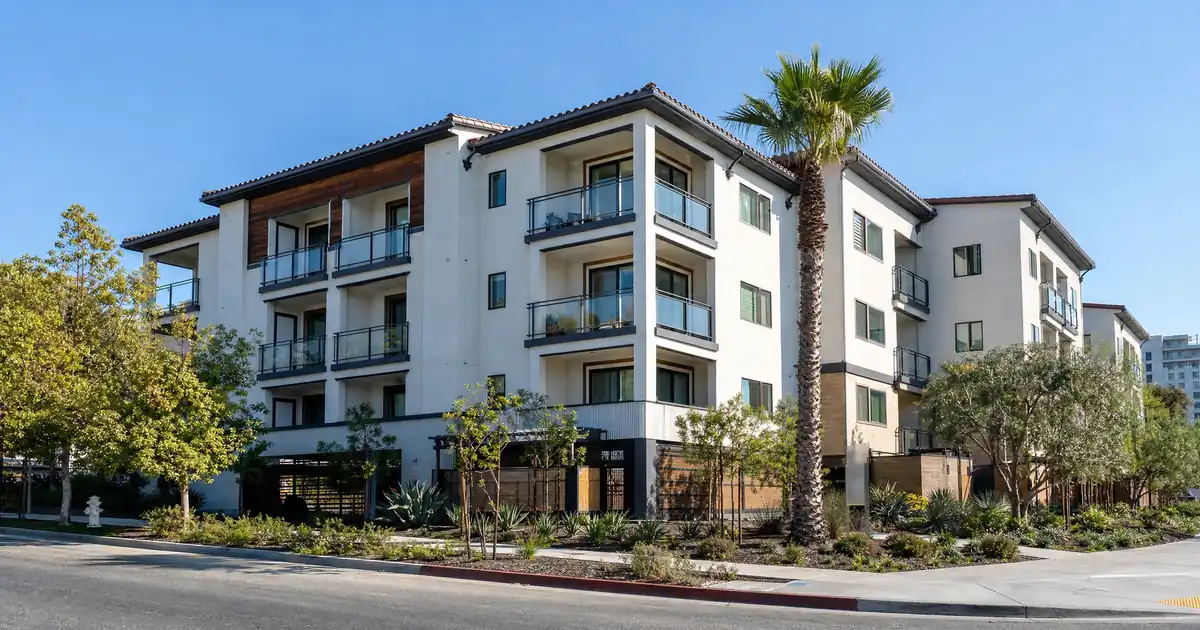
Small multifamily near Old Mammoth Road and Meridian Boulevard is where the DSCR math starts to work, because these properties historically rent to year-round local tenants rather than seasonal vacationers. That distinction — local tenant versus vacation renter — is the single biggest variable in whether a Mammoth Lakes property produces a bankable rent roll.
Consider a modeled duplex priced around $650,000 in this corridor, financed at 75 percent loan-to-value with two documented 12-month leases combining for roughly $3,900 a month (a hypothetical combined rent used purely to illustrate the math, not a sourced figure). Run that through the same modeled cost structure — 30-year amortization, standard purchase leverage, California-typical tax and insurance loading — and the coverage ratio lands just under 1.00x, at roughly 0.98x. That’s the difference multi-unit income stacking makes over a single-family purchase at the same basis: two documented leases instead of one speculative rent estimate.
The employment base backing that tenant pool is real and mostly non-seasonal. Mammoth Hospital, owned by the Southern Mono Healthcare District, runs a 17-bed critical access facility with more than 400 team members according to its staffing profile — one of the few payrolls in town that needs housing every month of the year, not just ski season. Mammoth Unified School District serves roughly 1,200 students and employs teachers and staff on a standard academic calendar, another year-round tenant source. Add the Town of Mammoth Lakes’ own municipal workforce and Mono County government jobs, and there’s a documented, non-seasonal renter base that isn’t chasing a lift ticket.
One caution worth naming directly: Mammoth Mountain itself has started competing for this tenant pool rather than just employing it. The resort purchased the Sierra Lodge and is converting the 36-room hotel into housing for up to 72 employees, per Mammoth Mtn Properties. That’s a good demand signal in the sense that it confirms real workforce housing pressure — but it also means a slice of the seasonal-employee tenant pool will land in employer-provided beds instead of a private rental. The stronger private-market target is hospital staff, school district employees and municipal workers, not resort seasonal hires who increasingly have an in-house housing option.
There’s also a public-sector precedent for exactly this property type. Access Apartments, a 13-unit adaptive reuse project converting a commercial building into workforce housing, drew more than $7 million in state funding through California’s Department of Housing and Community Development. A public agency putting real money into small-scale multifamily conversion confirms that this exact product category — modest unit counts, adaptive reuse or older construction, workforce tenants — has institutional backing behind it, not just anecdotal demand.
Skip the Resort-Core Condo Layer for This Strategy
The Village at Mammoth, Snowcreek and Sierra Star are the wrong property types for a long-term-rental DSCR purchase, full stop. These submarkets are priced for second-home buyers and short-term vacation demand, and the pricing behaves accordingly — volatile, not rent-stable.
Snowcreek’s average sale price sat at $975,000 last month, down 38.3 percent year over year according to Redfin — a swing that size tells you the buyer pool there is chasing lifestyle and amenity value, not rent coverage. Mono County’s own short-term rental housing study backs this up at the county level, finding condo product averaged $626,800 against $562,191 for detached single-family, with the premium concentrated in areas with heavier STR and second-home activity. That premium is real, but it’s not rent-driven — it’s paid for tennis courts, pool access and ski-in/ski-out convenience, and none of that shows up on a long-term lease.
Short-term rental economics in Mammoth Lakes do look stronger on paper — AirDNA puts average occupancy at 44 percent with a $467 average daily rate and roughly $45,411 in annual revenue across active listings, and Mashvisor separately shows average short-term rental income outpacing long-term at $3,721 versus $3,020 a month. That’s a real gap, and some lenders will consider documented short-term income as part of a DSCR file. But qualifying income treatment for STR varies by program, and the conservative, most bankable underwriting basis in this market remains a documented 12-month lease — which is the layer this piece focuses on.
Cerro Coso, the Housing Pipeline and the Lease-to-Locals Angle
The demand case here isn’t hypothetical — it’s government-quantified. A county housing needs assessment found a need for roughly 34 units a year in unincorporated Mono County and up to another 100 within Mammoth Lakes proper, with even the most conservative estimate showing a shortfall of 184 additional units, according to Mono County’s housing program. That’s a structural undersupply of long-term rental stock independent of whatever the sale-price cycle is doing.
Cerro Coso Community College operates its Eastern Sierra Campus in Mammoth Lakes as part of a service area spanning 18,200 square miles and roughly 85,000 people — the largest geographic footprint of any community college in California. It’s not a four-year university anchor and won’t drive the kind of dense student-rental demand a college town brings, but the on-campus South Gateway Student Apartments confirm there’s at least a small, real student-adjacent rental layer feeding into the broader workforce tenant base.
The Town of Mammoth Lakes runs one of the more aggressive municipal workforce housing pipelines of any town its size, per its Housing Now! Program page. The Sawyer’s Phase 1, an 80-unit low-income project affordable mostly to households at 60 percent of area median income, completed construction. Phase 2 adds another 146 units with initial occupancy targeted for summer. And the Lease to Locals program, run in partnership with Placemate, pays homeowners grants ranging from $2,000 to $18,000 to shift a home from short-term or vacant status into a seasonal or 12-month lease with a locally employed tenant. For an investor buying with the explicit intent to hold long-term, stacking that grant on top of purchase financing is a real, if modest, boost to cash-on-cash return during the seasoning period before any future refinance.
The Appreciation-Versus-Cash-Flow Tension, Honestly
This is a cash-flow market right now, not an appreciation market, and pretending otherwise sets an investor up for disappointment. Three separate data sources point the same direction: NeighborhoodScout puts twelve-month appreciation at just 0.41 percent, Redfin shows the citywide average sale price down 15.4 percent year over year to $739,000, and a local brokerage’s own 2026-2027 forecast projects appreciation staying in a flat 0 to 4 percent band, citing structural supply constraints from town boundaries and limited buildable land as the reason inventory — not demand — will drive pricing.
Days on market nearly doubled, running 84 days against 43 a year earlier, alongside a median list price down 7 percent year over year to $792,000, both per Movoto’s market data. That’s a softer, slower market than it was twelve months ago, and it cuts both ways for a buyer. Softer comps mean an appraiser underwriting a purchase or a future refinance will likely lean conservative on value — worth planning around rather than being surprised by. But softer comps also mean more negotiating room on entry price today, which is the lever that actually moves a DSCR coverage ratio in an investor’s favor. A property bought $30,000 to $50,000 below list in this environment does more for coverage than almost any other variable in the file.
This one’s genuinely a toss-up depending on the investor’s time horizon. A buyer underwriting purely on today’s rent coverage should like this market precisely because it’s not pricing in future appreciation — the seller isn’t demanding a growth premium. A buyer counting on equity growth to bail out a thin coverage ratio should not be here right now; the data doesn’t support that thesis at the moment.
DSCR vs. conventional financing
Two common ways to finance an investment property in Mammoth Lakes, CA. They qualify you differently — here’s how investors weigh them.
Why investors choose it
- Qualifies on the property’s rental income — no personal tax returns, W-2s, or pay stubs needed to document income.
- No personal debt-to-income ceiling to clear, so existing mortgages and obligations don’t cap your borrowing the same way.
- Can be closed in an LLC, keeping the property inside a business entity.
- Built for scaling — not held to the limit on number of financed properties that conventional financing applies.
- Underwriting centers on the deal: generally qualifies when the rent covers the payment, a 1.00x coverage ratio being a common baseline (confirmed in underwriting).
- Designed specifically for investment property, including long-term and, where the program allows, short-term rentals.
Where it’s strong
- Often the lowest ongoing financing cost for a buyer who fully qualifies on personal income — a fit for a first property or a cost-first purchase.
Trade-offs for investors
- Requires full personal income documentation and must fit within a debt-to-income limit — salary, existing debts, and other mortgages all count.
- Typically held in your personal name rather than a business entity.
- Caps how many financed properties you can carry, which can become a ceiling as a portfolio grows.
- Evaluates you as a borrower as much as the property, which usually means more paperwork.
How investors usually choose: a first or single property often optimizes for the lowest financing cost; portfolio builders often optimize for leverage, vesting in an LLC, and scaling past conventional caps. The right answer depends on your goals, the property, and current guidelines — both paths run through select lenders in Lendmire’s wholesale network, with eligibility and terms confirmed in underwriting.
Frequently Asked Questions
How do you qualify for a DSCR loan in Mammoth Lakes, California?
Qualification centers on the property’s documented rental income measured against its full monthly obligation, generally targeting a 1.00x coverage ratio or better, rather than the borrower’s personal income. In a market this seasonal, lenders lean heavily on 12-month lease documentation over projected or seasonal rent estimates, and files with a clean workforce tenant history tend to move through underwriting more smoothly than files built on assumed or STR-platform income.
What are the requirements for an investment property loan in Mammoth Lakes, California?
Standard purchase leverage generally runs in the 75 to 80 percent loan-to-value range, meaning 20 to 25 percent down on most files, with credit profiles typically reviewed against tiers around 620, 660, 680 and 700 depending on the leverage requested. Reserve requirements usually run near 6 months of PITIA, stepping up toward 9 months on loan amounts above $1,500,000.
How does DSCR lender review differ from a bank’s approach in Mammoth Lakes?
A bank underwriting a conventional mortgage in this market has to reconcile a borrower’s traditional personal-income documentation and traditional employment income against a seasonal local job market that doesn’t fit neatly into standard debt-to-income boxes. Lendmire, in arranging DSCR investor loans, structures qualification primarily around the property’s own rent roll instead, which tends to fit resort-adjacent, seasonal-income markets like this one more naturally, subject to lender program eligibility and guidelines.
Does short-term rental income count toward DSCR qualification in Mammoth Lakes?
It depends on the lender and the documentation available. AirDNA data shows short-term listings here averaging 44 percent occupancy and roughly $45,411 in annual revenue, and Mashvisor separately shows STR income outpacing long-term rent citywide — but not every DSCR program treats STR income the same way, and the more conservative, widely accepted underwriting basis remains a documented 12-month lease.
Can a duplex or small multifamily near Old Mammoth Road qualify more easily than a single-family home?
Generally yes, because two or more documented long-term leases produce a stronger combined rent roll relative to price than a single unit competing against citywide median pricing near $807,583. Multi-unit income stacking is one of the clearest levers available in a market where at-median single-family purchases often fall short of a 1.00x coverage ratio on standard leverage.
Why is appreciation so flat in Mammoth Lakes right now?
Twelve-month appreciation measured just 0.41 percent per NeighborhoodScout, and local brokerage forecasts point to a continued 0 to 4 percent range driven by limited buildable land within fixed town boundaries rather than weak demand. That makes this a market to underwrite on today’s documented rent coverage rather than projected equity growth.
The asymmetric opportunity in Mammoth Lakes right now sits with older, workforce-oriented small multifamily near Old Mammoth Road and Meridian Boulevard: priced well below the resort-condo layer, backed by a documented year-round tenant base at the hospital, school district and town government, and largely ignored by a buyer pool still chasing ski-in/ski-out condos whose pricing has nothing to do with what a 12-month lease actually pays.
Deal files coming out of resort-adjacent, seasonal-heavy markets like this one tend to share a common friction point: the rent roll needs to prove it’s a genuine long-term lease, not a seasonal or STR-platform income stream dressed up as one. The cleanest files carry twelve months of documented rent history — a signed lease, VOR paperwork, or property manager statements — because that documentation is what lets a lender extend leverage toward the higher end of the 75 to 80 percent range rather than the conservative end. Files missing that history, or leaning on projected STR income instead, tend to get underwritten more conservatively and often see reserve requirements pushed toward the higher tier, particularly on loan amounts above $1,500,000 where the 9-month reserve threshold kicks in rather than the standard 6.
About Lendmire
Lendmire, a multi-state mortgage broker carrying NMLS# 2371349, arranges DSCR investor loans across 40 states plus Washington, D.C. That national reach matters in a market like Mammoth Lakes because so few DSCR-specialist lenders target this submarket directly by name.
Investors can pull a DSCR quote or reach Lendmire directly at 828-256-2183 to walk through how a specific Mammoth Lakes property, priced below median with documented workforce leases, might structure against current DSCR guidelines. For investors weighing whether a rental-income-based loan or a standard owner-occupant-style mortgage fits better, the comparison and the DSCR investor loan platform are useful starting points, alongside DSCR loan options for California investors for state-specific program detail.
The firm has been recognized by Scotsman Guide as a 2025 Top Mortgage Workplace and a 2026 Top Mortgage Workplace.
Get Started
Ready to find the right loan for you?
In about 30 seconds you can review financing options available for your investment property. No commitment required.
Informational only. Not a Loan Estimate, approval, or commitment to lend. Program availability and eligibility are subject to lender guidelines, credit approval, property review, and underwriting.
References
1. Mashvisor
7. California’s Department of Housing and Community Development
8. Redfin
9. Mono County’s housing program
10. Cerro Coso Community College
12. Scotsman Guide 2026 Top Mortgage Workplace
This article is part of Lendmire’s DSCR loan program — full qualification details, guidelines, and scenarios live on the program page.
Related reading: Luxury Rental DSCR Loans In Mammoth Lakes: What The Rent Must Cover · DSCR Portfolio Loans In California: Several Rentals, One Note · Investment Property Loans in Put-in-Bay, OH: The 2026 DSCR Financing Guide to South Bass Island
Guides: DSCR Loans in Mammoth Lakes, CA · DSCR Loans in California
Brandon Miller
Founder & CEO, Mortgage Loan Originator, Lendmire LLC
- Mortgage Loan Originator · NMLS# 1129696 · Verify on NMLS Consumer Access
- North Carolina Real Estate Broker · License# 343312 · Verify on NCREC
- North Carolina Insurance Producer · License# 19053198 · Property, Casualty, Life, Health · Verify on NAIC SBS
- Lendmire LLC · Firm NMLS# 2371349 · Verify firm licensure
Disclosures. The information presented in this article is general market commentary, not financial, legal, or tax advice. Lendmire is a mortgage brokerage (NMLS# 2371349) — not a direct lender or depository institution — and loan placement is subject to lender underwriting. Nothing in this content represents a commitment to lend. Loan terms, pricing, and program availability vary based on borrower qualifications, property characteristics, and state of subject property, and are subject to change at any time. Lendmire complies with Equal Housing Opportunity requirements. Consumer access: nmlsconsumeraccess.org.