
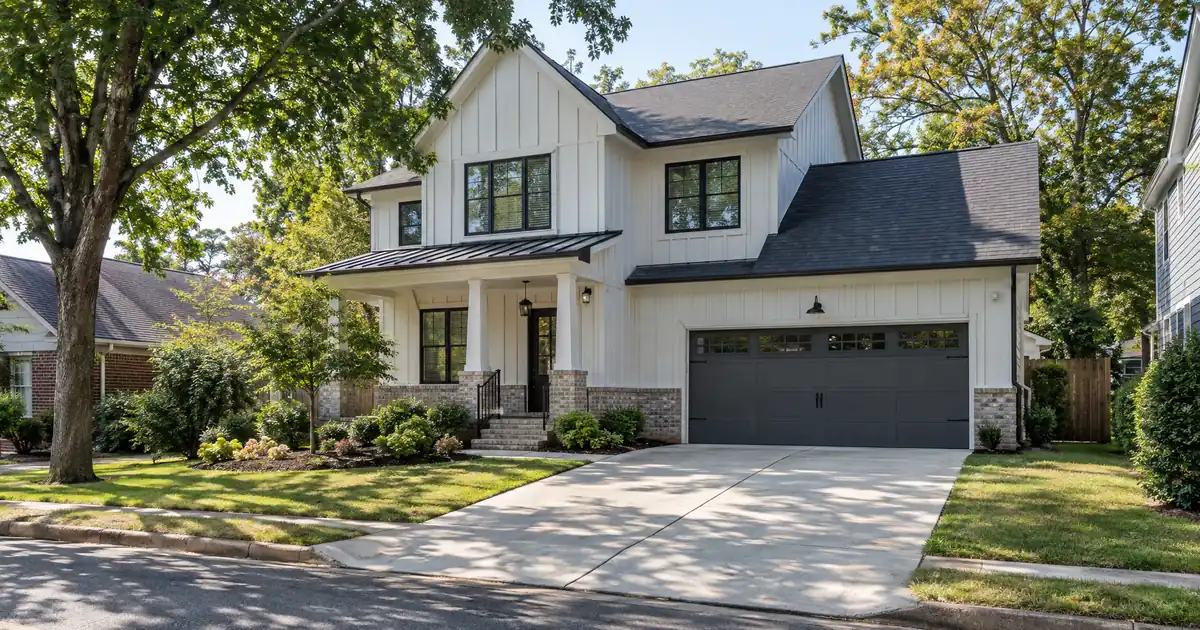
Nashville’s purchase market is shifting toward buyers, and the shift is arriving before rents have found a floor. Redfin has put the median sale price at $480K and described Nashville as one of the nation’s strongest buyer’s markets. Meanwhile Apartment List shows median rent down 4.0% year over year. Over the next 6-18 months, the investors who do well here will be the ones who buy at negotiated prices and underwrite to today’s leases, not to the rent growth of a few years ago.
The Quick Read: An investment property loan in Nashville, Tennessee is underwritten primarily on the property’s rental income measured against its full monthly obligation, including taxes and insurance, so the file is built around lease rent clearing a 1.00 coverage benchmark at the chosen leverage, subject to lender guidelines, credit review and reserves.
DSCR Calculator
Run the numbers in Nashville, TN
Rate source: Freddie Mac 30-yr average via FRED® — Federal Reserve Bank of St. Louis · effective Sep 24, 2026
Prefilled with starting assumptions — enter your own rent or nightly figures, taxes, insurance, and HOA for a more accurate picture.
Program parameters update from Lendmire’s centralized guideline source. Taxes and insurance are editable estimates.
As of Sep 24, 2026 · General Freddie Mac market benchmark, not a Lendmire loan offer. Rent, nightly rate, occupancy, taxes, and insurance are editable estimates. Short-term rental figures are estimates only and vary significantly by season, property type, management approach, and local short-term-rental rules — confirm local regulations before relying on them. Qualifying income for short-term rentals varies by program — some use appraisal market rent, others use documented STR history or projections — and is confirmed in underwriting. Not a Loan Estimate, approval, or commitment to lend. Program availability and eligibility are subject to lender guidelines, credit approval, property review, and underwriting.
- Antioch 3BR/2BA homes list between $380K and $480K, per Run Home Rentals.
- A modeled Donelson duplex at $450K and $3,100 rent lands just under 1.2x at 75% LTV.
- Downtown vacancy sits at 9.4% per NorthMarq, so skip high-rise product.
- East Nashville, Germantown and 12 South are appreciation plays, not cash-flow plays.
- Purchase leverage typically runs 75%-80% LTV with a 1.00 minimum coverage benchmark.
Investors underwriting deals in Nashville, Tennessee can use DSCR programs Lendmire (NMLS# 2371349) arranges — available across 41 markets, including D.C. As a DSCR-focused mortgage broker, the brokerage sees the same pattern in this city again and again: the loan structure is rarely the obstacle, the purchase price is. For anyone new to the mechanics, DSCR qualification comes down to rent divided by the full monthly obligation. The rest of this piece is about where that division comes out favorably.
Nashville Market Snapshot
A quick read on the Nashville investor landscape — figures come from the cited sources below. Confirm current property-level numbers before underwriting.
| Metric | Detail |
|---|---|
| Home prices | $480K median (Redfin Nashville Housing Market) |
| Typical rents | $1,358 median (Apartment List Nashville Rent) |
| Cap rates | 8.27% cap rate (Redfin East Nashville) |
| Vacancy | Overall 8.5% (NorthMarq Nashville Multifamily) |
What the Headline Numbers Hide
Nashville’s citywide figures understate how split the market is. The median sale price and median rent describe almost no actual deal, because the gap between workforce submarkets and the urban core is wide enough to flip a property from comfortable coverage to a negative-leverage hold.
The city counts roughly 721,000 residents per U.S. Census Bureau estimates, up from 689,447 at the last census. About 48% of households rent, according to RentCafe, which also puts the average apartment rent at $1,847. Apartment List’s median of $1,358 is lower because it measures a different slice of the market. Zillow’s home value index lands at $434,068, below Redfin’s median, again because of methodology. Treat $1,350-$1,850 as the realistic 1-2 bedroom range and underwrite each property on its own comps.
The buyer’s-market backdrop is the useful part. Sellers have more inventory than buyers, which gives investors room to negotiate price against achievable rent. Since the DSCR ratio is the rent against the full obligation, every price concession moves the number in your favor. A lower price helps more than any financing tweak.
Antioch and Donelson: Where Coverage Holds
Antioch and Donelson are the strongest purchase-side DSCR submarkets in Nashville, with modeled coverage running roughly 1.1x to 1.2x including taxes and insurance. Lendmire’s own modeling ranks them ahead of Madison, which clears 1.00x with a thinner cushion.
Antioch is the workable single-family story. The typical product is a 3BR/2BA home in the $380K-$480K range, and Redfin’s 37013 zip sits near a $380,000 median. That is well below the citywide median, and it keeps the rent-to-price ratio viable for straightforward long-term-rental underwriting. The catch is that single-family coverage in Antioch is a moderate number, not a wide one. At 80% LTV the cushion is thin enough that a rent miss or a soft lease-up matters. At 75% it breathes better. Final terms depend on lender guidelines, property type, leverage, and the borrower’s complete credit picture.
Donelson is where duplexes do the work. Stacked rents on a small multifamily asset clear the obligation with more margin than a comparable single-family home, because you carry one loan against two income streams. Nashville’s 2-4 unit stock sits squarely in the eligible property types for DSCR programs. Skip Downtown and Gulch condos for the same exercise. Condos are eligible in principle, but the price per unit kills the ratio.
A Donelson Duplex, Run Through the Math
A $450,000 fully leased duplex at $3,100 gross monthly rent models just under 1.2x at 75% LTV, including taxes and insurance. Step down to 80% LTV and the same property drops into the low 1.1s. These specifics are subject to lender guidelines and a full review of property, leverage, and credit.
These are modeled assumptions built on a listed Donelson duplex at that price and rent ($1,550 per side). The gross cap rate works out to about 8.27% and the gross rent multiplier to 12.1. The coverage figure uses full PITIA (principal, interest, taxes and insurance) under typical Tennessee tax and insurance loads and an assumed 30-year amortization. Coverage figures computed on principal and interest alone look better and mean nothing to a lender.
Here is the tradeoff. Going from 75% to 80% LTV cuts the required down payment, but it costs about six points of coverage and shrinks the buffer against vacancy. Investors with strong reserves and a long hold might take the extra leverage. Investors buying their first Nashville rental usually should not.
DSCR files in markets like this one typically look like a clean lease, a modest gap between the quoted and actual insurance cost, and a borrower who underestimated reserves. The brokerage sees files stall less on the ratio than on the paperwork around it: LLC documentation, insurance binders that arrive late and seasoning questions on prior rentals. Get the insurance quote in before the contract is ratified, because it is the one line item that moves the ratio between offer and closing table.
Value-add math exists here too, with one caution. A four-unit package in East Nashville’s Inglewood pocket currently performs around a 5% cap rate, with three units under market and a potential path to 7% after light updates. The bull case is seasoning the asset and re-leasing to market. The bear case is that the day-one DSCR has to work on the in-place rents, because the lender will underwrite the leases you have, not the ones you plan to sign. Buy only if the in-place number clears.
East Nashville, Germantown and 12 South (Appreciation, Not Cash Flow)
The urban-core neighborhoods deliver equity growth, not coverage. At current prices, East Nashville, Germantown and 12 South run below the 1.00x baseline on long-term rent alone, and the gap is meaningful.
East Nashville’s median sale price sits around $567K and has slipped year over year. That softening is the interesting part, because a falling price against a stable rent improves the ratio, and the neighborhood has real duplex and fourplex stock. Pair that with its creative-class tenant base and the case for East Nashville duplexes is more reasonable than for single-family there. Single-family homes in East Nashville need significant down payments to make the ratio work.
Germantown and 12 South are a harder call. Rents are high, but prices are higher, and the ratio stays well under 1.00x. A sub-1.00 file is not dead, but it gets harder: reduced leverage, stronger credit and more lender review. Options a lender may review include a sub-1.00 program, an interest-only structure or blended income, and all of it is subject to lender guidelines, credit approval and property review. An investor buying there is paying for appreciation, and should say so honestly in the underwriting memo.
Wedgewood-Houston is the clearest example. It is described as roughly 60-70% through its gentrification arc, and the 18-acre Wedgewood Village project is a real catalyst. But new one-bedroom rents run from $1,800 to over $2,500, and rents have not caught up to purchase prices. Buy there for equity growth and underwrite the DSCR as a carry cost.
Downtown is the skip. Deliveries there still outpace absorption, with vacancy at 9.4%, and entry prices are the highest in the city. No amount of financing structure fixes that.
Who Rents Here (Hospitals, Campuses and a Corporate Headquarters)
Nashville’s rental demand is anchored by healthcare and higher education, which keeps tenant turnover manageable in the neighborhoods around those anchors. This is the durable part of the thesis, and it matters more than any single month’s rent print.
Vanderbilt University Medical Center and Vanderbilt University together employ roughly 50,000 people, and VUMC is the only Level 1 Trauma Center in Middle Tennessee. HCA Healthcare is headquartered in the Gulch and operates 186 hospitals nationally, layering a Fortune 500 corporate base on top of clinical employment. Nissan’s North American headquarters and Smyrna plant add about 10,000 jobs, and state government and Metro Nashville Public Schools fill out the public-sector base. Note that the Chamber’s employer rankings are dated, so use them for direction and not for headcount precision.
On the campus side, the Nashville Area Chamber of Commerce lists Vanderbilt at 13,575 students, Belmont at 8,803 and Tennessee State University at 8,198. Belmont drives demand around 12 South and Edgehill, Vanderbilt around Midtown and West End, and TSU and Fisk near Jefferson Street. The catch is that those are the pricier submarkets. The same anchors that make renting reliable also make buying expensive, which is why the coverage math favors Antioch and Donelson despite thinner institutional demand.
Should You Buy Into a Softening Rent Market?
Yes, if the purchase price reflects the softness and the file clears on in-place rents. Rents fell modestly for the second straight quarter metro-wide, with weakness in Class B and Class C assets, while Class A held.
After two years of peak completions, absorption reached 8,700 units over the trailing 12 months, nearly matching new supply, and overall vacancy sits around 8.5% per NorthMarq. That is closer to equilibrium than the headlines suggest, but it is uneven. Workforce Class B and C areas such as Antioch, Donelson and Madison are nearer to balance, while the urban core carries the lease-up risk.
This one is a genuine toss-up for some buyers. Softer rents argue for waiting, but a buyer’s market argues for negotiating now, and the stronger play is usually to buy in workforce submarkets at a discount and hold through the soft patch. The flip condition is leverage: if the file only works at 80% LTV or above, a further rent decline turns a 1.1x deal into a sub-1.00 hold, and waiting makes more sense.
On program terms, purchase leverage typically runs 75%-80% LTV, about 20%-25% down, with up to 85% on the strongest files when guidelines allow. A 1.00 coverage benchmark is common, credit tiers generally start at a 620 floor, and reserves of about six months of PITIA are typical, more on larger balances. Loan amounts can reach $3,000,000 on standard programs. All of it is subject to lender review and program guidelines. For the statewide picture, DSCR loan options for Tennessee investors covers the broader program set. Verify current local rules, taxes and insurance with qualified Nashville professionals before underwriting, and look at refinancing options only after the property has seasoned.
DSCR vs. conventional financing
Two common ways to finance an investment property in Nashville, TN. They qualify you differently — here’s how investors weigh them.
Why investors choose it
- Qualifies on the property’s rental income — no personal tax returns, W-2s, or pay stubs needed to document income.
- No personal debt-to-income ceiling to clear, so existing mortgages and obligations don’t cap your borrowing the same way.
- Can be closed in an LLC, keeping the property inside a business entity.
- Built for scaling — not held to the limit on number of financed properties that conventional financing applies.
- Underwriting centers on the deal: generally qualifies when the rent covers the payment, a 1.00x coverage ratio being a common baseline (confirmed in underwriting).
- Designed specifically for investment property, including long-term and, where the program allows, short-term rentals.
Where it’s strong
- Often the lowest ongoing financing cost for a buyer who fully qualifies on personal income — a fit for a first property or a cost-first purchase.
Trade-offs for investors
- Requires full personal income documentation and must fit within a debt-to-income limit — salary, existing debts, and other mortgages all count.
- Typically held in your personal name rather than a business entity.
- Caps how many financed properties you can carry, which can become a ceiling as a portfolio grows.
- Evaluates you as a borrower as much as the property, which usually means more paperwork.
How investors usually choose: a first or single property often optimizes for the lowest financing cost; portfolio builders often optimize for leverage, vesting in an LLC, and scaling past conventional caps. The right answer depends on your goals, the property, and current guidelines — both paths run through select lenders in Lendmire’s wholesale network, with eligibility and terms confirmed in underwriting.
Where the Deals Actually Are
Put the pieces together and the purchase-side hierarchy is simple. Coverage-first buyers should look at Antioch single-family and Donelson duplexes, with Madison as a thinner third. Buyers with equity appetite and spare cash can look at East Nashville duplexes and Wedgewood-Houston. Everyone else should skip Downtown, Gulch condos, Germantown and 12 South for cash flow.
Interested investors can connect with Lendmire or call 828-256-2183 to map a specific Nashville purchase against available programs.
Frequently Asked Questions
How do you qualify for a DSCR loan in Nashville?
Qualification centers on the property, not the borrower’s pay stubs. The lender divides the rent by the full monthly obligation (principal, interest, taxes, insurance and any HOA dues) and looks for a ratio at or above the typical 1.00 benchmark. Credit, reserves and leverage still matter, and exact eligibility depends on lender guidelines.
What are the requirements for an investment property loan in Nashville, Tennessee?
Typical guidance includes 20%-25% down on a purchase, a credit floor around 620, and reserves of about six months of PITIA. Eligible properties include single-family homes, 2-4 unit residential, condos and PUDs. Manufactured homes, log homes and barndominiums fall outside these programs. Everything remains subject to lender review.
What credit score ranges may DSCR lenders review for a Nashville rental property?
Credit tiers commonly start at a 620 floor and step up through 660, 680 and 700, with stronger credit supporting higher leverage. Lendmire arranges DSCR investor loans and the file is reviewed around the property’s rental income. Final eligibility rests with the lender.
Which Nashville neighborhoods pencil best for a first DSCR purchase?
Antioch single-family and Donelson duplexes carry the strongest modeled coverage, in the 1.1x to 1.2x range including taxes and insurance. Madison clears the baseline more narrowly. East Nashville duplexes can work at lower leverage, but Germantown, 12 South and Downtown are better suited to equity-growth buyers.
Does Nashville’s softening rent market make a DSCR purchase riskier?
It raises the bar on underwriting, not the odds of a bad outcome. Class B and C rents have eased while Class A has held, so underwrite to in-place leases and keep leverage toward the lower end. A buyer’s market also means more room to negotiate price, which helps the coverage ratio directly.
For current guidelines and terms, see Lendmire’s DSCR loan programs page.
About Lendmire
Lendmire, NMLS# 2371349, is a non-QM mortgage broker serving real estate investors in 41 markets, including Washington, D.C., through DSCR investor loan programs. Qualification is generally reviewed around the subject property’s rental income, not the borrower’s W-2 history, which is a practical fit for LLC-titled portfolios (subject to lender program eligibility) and self-employed investors. All scenarios remain subject to program review and program guidelines. Two consecutive Scotsman Guide Top Mortgage Workplace recognitions: recognized by Scotsman Guide in 2025 and a top-ranked workplace in 2026, with details in the 2026 Top Workplace recognition announcement.
Get Started
Ready to find the right loan for you?
In about 30 seconds you can review financing options available for your investment property. No commitment required.
Informational only. Not a Loan Estimate, approval, or commitment to lend. Program availability and eligibility are subject to lender guidelines, credit approval, property review, and underwriting.
References
1. Redfin: Nashville Housing Market
2. Apartment List: Nashville Rent Report
4. NorthMarq: Nashville Multifamily Report
5. Redfin — East Nashville Multi Family Homes for Sale
6. U.S. Census Bureau QuickFacts: Nashville-Davidson
7. RentCafe: Average Rent in Nashville
10. oakstreetrealestategroup.com — Wedgewood Houston Weho Nashville
11. Nashville Area Chamber of Commerce: Colleges and Universities
12. recognized by Scotsman Guide in 2025
13. Scotsman Guide — Top Workplaces 2026
14. the 2026 Top Workplace recognition announcement
This article is part of Lendmire’s DSCR loan program — full qualification details, guidelines, and scenarios live on the program page.
Related reading: DSCR Cash Out Refinance in Nashville, Tennessee: East Nashville Equity After the Run-Up · DSCR Loans Nashville: Investor Financing for Nashville Rental Properties, Airbnb, and Real Estate Investors · DSCR Investment Property Loans in Nashville, IN: The 2026 DSCR Guide to Brown County State Park
Guides: DSCR Loans in Nashville, TN · DSCR Loans in Tennessee
Brandon Miller
Founder & CEO, Mortgage Loan Originator, Lendmire LLC
- Mortgage Loan Originator · NMLS# 1129696 · Verify on NMLS Consumer Access
- North Carolina Real Estate Broker · License# 343312 · Verify on NCREC
- North Carolina Insurance Producer · License# 19053198 · Property, Casualty, Life, Health · Verify on NAIC SBS
- Lendmire LLC · Firm NMLS# 2371349 · Verify firm licensure
Required disclosures. Lendmire (NMLS# 2371349) operates as a licensed mortgage broker, not a direct lender or depository. The discussion in this article is general in nature and should not be relied upon as financial, legal, or tax advice — every investment scenario is unique and should be reviewed by a qualified professional. Any loan inquiry is subject to lender underwriting, and this article is not a commitment to lend or a guarantee of approval. Mortgage rates, loan terms, and program guidelines vary by borrower, property, and state, and may change without notice. Equal Housing Opportunity. Verify licensure at NMLS Consumer Access.