
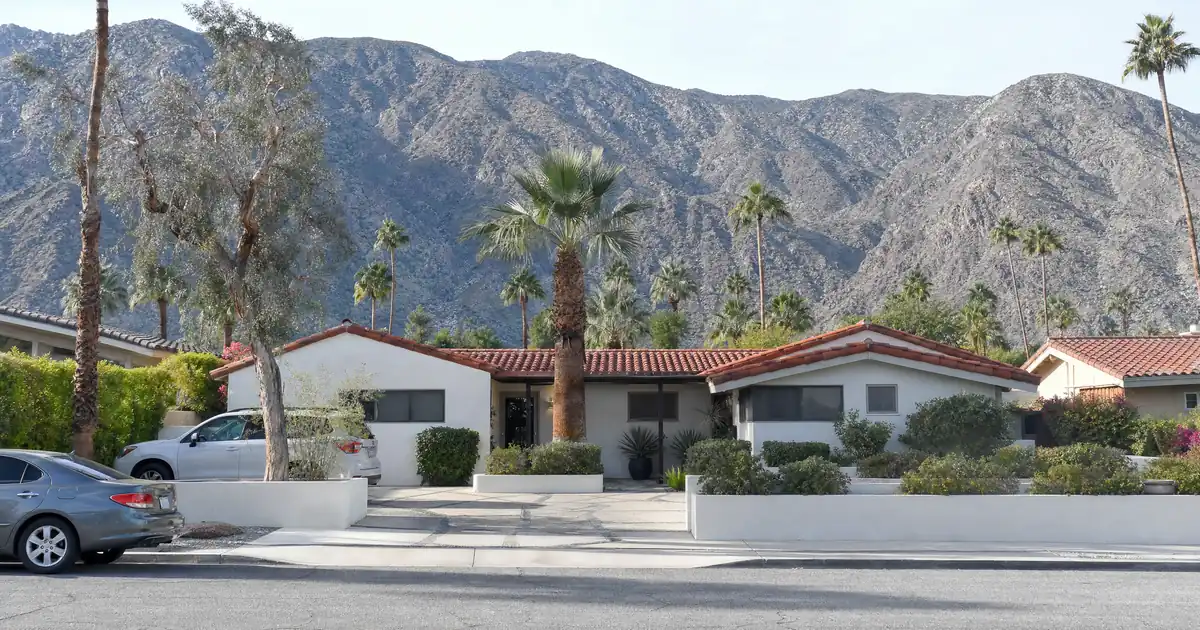
When you’re evaluating investment property loans in Palm Springs, the neighborhood you choose will determine almost everything about whether the deal cash flows or just appreciates. That’s not true in every city. Here, it’s the whole ballgame — because Palm Springs runs two entirely different real estate markets under one zip code: a mid-century luxury enclave built for equity plays, and a workforce housing corridor built for rent-to-debt math. Confusing the two is a common mistake an out-of-state investor makes before ever talking to a lender.
At a Glance: A Palm Springs investment purchase is underwritten primarily on the property’s monthly rental income measured against its full monthly obligation, rather than a buyer’s W-2 or tax-return income, with the strongest coverage numbers concentrated in the workforce corridor south and east of downtown.
DSCR Calculator
Run the numbers in your market
Rate source: Freddie Mac 30-yr average via FRED® — Federal Reserve Bank of St. Louis · effective Jul 30, 2026
Prefilled with starting assumptions — enter your own rent or nightly figures, taxes, insurance, and HOA for a more accurate picture.
Program parameters update from Lendmire’s centralized guideline source. Taxes and insurance are editable estimates.
As of Jul 30, 2026 · General Freddie Mac market benchmark, not a Lendmire loan offer. Rent, nightly rate, occupancy, taxes, and insurance are editable estimates. Short-term rental figures are estimates only and vary significantly by season, property type, management approach, and local short-term-rental rules — confirm local regulations before relying on them. Qualifying income for short-term rentals varies by program — some use appraisal market rent, others use documented STR history or projections — and is confirmed in underwriting. Not a Loan Estimate, approval, or commitment to lend. Program availability and eligibility are subject to lender guidelines, credit approval, property review, and underwriting.
- Citywide rents sit at a moderate level relative to coastal California markets, per RentCafe/Yardi Matrix data.
- Baristo and Demuth Park one-bedroom rents run below the citywide one-bedroom average.
- Small multifamily assets trade across a wide price spread, with pricing concentrated well below the city’s luxury single-family core.
- Renter-occupied households make up a clear minority of the city’s housing stock.
- Tribal lease-land parcels require fee-versus-lease verification before any DSCR file moves forward.
Palm Springs Market Snapshot
A quick read on the Palm Springs investor landscape — figures come from the cited sources below. Confirm current property-level numbers before underwriting.
| Metric | Detail |
|---|---|
| Home prices | $620,302 average home value (Zillow Home Values) |
| Typical rents | $2,750 median (Zumper Rent Research) |
| University enrollment | ~12,500 students (College of the Desert) |
| Population | 45,070 population (Census Reporter) |
| Employment | Healthcare sector 30,000+ workers (Visit Greater Palm Springs) |
The Workforce Corridor Is Where the Rent Actually Covers the Note
The strongest DSCR math in Palm Springs sits in the flatter, less glamorous neighborhoods south and east of downtown — not the mid-century postcard streets tourists photograph. Demuth Park, Baristo, Historic Tennis Club, and Desert Highland-Gateway Estates all post one-bedroom rents below the citywide average tracked by Rent.com, with Desert Highland-Gateway Estates, Baristo, and Demuth Park all sitting toward the lower end of that range. Lower rents sound like a negative until you pair them with correspondingly lower acquisition costs relative to the city’s luxury core, where values sit well above the rest of the market.
This is the corridor where a straightforward single-family DSCR purchase — not a golf-course estate — actually pencils against workforce-tier tenant demand. Skip the estate neighborhoods if cash flow is the goal, since those higher-end streets tend to serve a different kind of buyer entirely.
One structural feature specific to Palm Springs sweetens this corridor further: the city runs an active Accessory Dwelling Unit program, available to any residential lot zoned R-1-A, R-1-B, or R-1-C — which describes most of the housing stock in these workforce neighborhoods. That gives an investor a codified path to convert an ordinary single-family purchase into a two-income property, main house plus ADU, without hunting for an already-built duplex in a market where small multifamily inventory is thin. It’s a meaningful lever for stacking rent rolls on otherwise standard R-1 lots, and it’s worth asking a local contractor about before writing an offer, since permitting timelines and construction costs vary by lot.
Given how many Palm Springs buyers are out-of-state investors chasing the desert’s tenant base rather than local move-up buyers, DSCR financing structured around a property’s rental income — rather than the buyer’s personal income documentation — is often the more relevant path here than a conventional purchase loan.
What’s the Catch With Deepwell and the Golf-Course Estates?
The catch is simple: rent will never carry the note in Deepwell Estates at today’s basis. This is an appreciation neighborhood, not a coverage-ratio neighborhood, and treating it like the latter is how a DSCR file gets declined on the numbers alone.
| Metric | Deepwell Estates | Racquet Club Estates |
|---|---|---|
| Recent price trend | Strong upward movement | Flat to slightly softer |
| Pace of sales | Faster-moving | Slower, longer marketing time |
| Investment thesis | Equity/appreciation | Cash-flow candidate |
The gap here, per Redfin, tells a clean story. Deepwell’s pricing has climbed sharply over the past year — a run that has nothing to do with rent and everything to do with buyer demand for that address. Racquet Club Estates, by contrast, has sat flat to slightly softer and taken noticeably longer to sell, which is exactly the kind of softer, less-competed-for market where a rent-covers-debt DSCR purchase has room to work. The comparatively modest basis and longer marketing time both cut in the buyer’s favor at the negotiating table.
This is the kind of tension worth sitting with before writing an offer: an investor chasing appreciation is making a completely different bet than an investor chasing a coverage ratio, and Palm Springs currently has distinct neighborhoods for each strategy. Trying to make Deepwell do both jobs is where the math falls apart.
Small Multifamily Is the Real DSCR Unlock
Palm Springs doesn’t have much small multifamily stock compared to larger California metros — the city’s built form skews heavily toward detached single-family and Alexander-era condo product — but where 2-to-8-unit buildings do exist, they price at a wide enough spread to make DSCR math work in ways a comparably priced single-family home in the same neighborhood can’t. A modest number of multifamily listings were on the market recently, per Redfin and Homes.com, spanning a wide range from smaller, more affordable buildings up to large luxury complexes. The lower end of that range sits well below the citywide single-family median, and it’s where a combined rent roll from two or three units can clear a coverage test that one unit at the same price point simply can’t.
Two pockets carry most of this inventory: Warm Sands and the Vista Las Palmas/Chino Canyon corridor, where six-to-eight-unit walk-up buildings with individually metered utilities occasionally trade — not the golf-course estate streets. That’s the realistic hunting ground for an investor trying to stack multiple units of income under one loan rather than assembling scattered single-family rentals one closing at a time.
Cap rates back this up. Small apartment assets in Palm Springs have listed at cap rates running well above typical national multifamily benchmarks, according to LoopNet data, at a time when national multifamily cap rates have stayed among the tightest of any major property type, per industry data compiled by Rentana citing CBRE. That’s a meaningfully wider spread than coastal California gateway markets typically offer, which signals a market priced by local cash flow rather than institutional appetite — useful leverage when a lender’s automated valuation model wants to apply a compressed metro-wide cap rate to a Palm Springs subject property.
DSCR files in markets with this kind of thin, fragmented small-multifamily inventory tend to follow a pattern: the deal often comes together as an entity purchase rather than a personal one, since many investors buying 4-to-8-unit courtyard buildings hold them in an LLC for liability separation, and the coverage math frequently improves once individually metered utility bills are pulled out of the borrower’s carrying costs and put back on tenants. LLC-titled purchases are workable through DSCR channels, subject to program terms, and the property review typically weighs actual in-place leases over pro forma projections on these older courtyard-style buildings.
Old Las Palmas and Movie Colony: Not a Cash-Flow Play
Old Las Palmas is the city’s oldest and most prestigious enclave, sometimes called the Beverly Hills of Palm Springs, with sprawling lots and homes by significant 20th-century architects. One widely used local buyer’s guide places recent median values there firmly among the highest in the city. Movie Colony, the adjacent neighborhood where the Golden Age studio system built its desert retreat, runs a slightly lower but still lofty range by the same source.
Neither is a DSCR acquisition play in any conventional sense. No long-term rent in this market covers a note at this price tier. These are legacy holds, second homes, and — for the investors who do rent them — high-end furnished stays rather than workforce leases. If the thesis is architectural provenance and long-term appreciation, this is the right zip code. If the thesis is monthly coverage, look elsewhere in the city.
Who Actually Rents in Palm Springs
Palm Springs has a structurally smaller renter pool than most rental-focused metros, and the tenant demographic skews far older than the region around it. Only a minority of households in the city are renter-occupied, per RentCafe, with owner-occupancy holding the clear majority — a much smaller renter base than headline population figures suggest. The median age citywide runs well above the broader Riverside-San Bernardino-Ontario metro’s median, per Census Reporter data drawn from the U.S. Census Bureau. Median household income in the city trails the wider metro’s figure as well.
Translation: this is not a young-family rental market. Tenant demand skews toward retirees, seasonal residents, and workers tied to a handful of durable institutional anchors rather than a broad, growing renter demographic. That makes it more important to underwrite occupancy risk against those specific anchors than against generic population growth.
Healthcare is the largest one. Eisenhower Health, based just outside the city in Rancho Mirage but serving the entire labor market, is one of the region’s largest healthcare employers and holds a five-star CMS rating — the only hospital in Riverside County to hold that rating three years running. Across the region, healthcare is one of the largest employment sectors overall, according to the Greater Palm Springs Chamber’s economic development office, with Desert Oasis Healthcare serving a substantial patient base on its own. Government and transportation employment run through Palm Springs International Airport, which generates significant regional economic output and supports a substantial number of local jobs, per the City of Palm Springs, while carrying a large and growing volume of annual passengers. Education is building toward another anchor: College of the Desert, which already enrolls a sizable student population and holds federal Hispanic-Serving Institution status, has a large new Palm Springs campus in the pipeline that will add both students and staff directly to the city’s rental demand base in the coming years.
An investor underwriting occupancy risk here should weight those four anchors — hospital system, airport, tribal enterprise, and the coming community college campus — well above the city’s modest population growth story.
Why Does the Checkerboard Reservation Matter to a DSCR File?
Because a meaningful share of Palm Springs housing sits on 99-year tribal leasehold land rather than fee-simple land, and that status changes appraisal, title insurance, and loan eligibility in ways no other comparably sized California city encounters. This has to be verified property by property before any offer goes in, not after.
The Agua Caliente Band of Cahuilla Indians is the city’s single largest collective landowner, with 6,700 acres of its reservation located inside Palm Springs proper, organized in a checkerboard pattern of tribal and non-tribal parcels dating back to 19th-century federal land grants. A mid-20th-century federal law, signed by President Eisenhower, authorized 99-year leases on tribal land, which is what made those parcels economically viable to build on and sell in the first place. An agreement between the City of Palm Springs and the tribe still governs how development projects on reservation land are jointly reviewed today, and the tribe recently stood up its own tribal court with civil jurisdiction over residents on reservation land, Indian and non-Indian alike.
None of this makes a lease-land property unfinanceable outright. It does mean the lease terms, remaining term length, and title structure have to be confirmed with a title company and reviewed by the lender before a DSCR file can move forward — a step that simply doesn’t exist for a fee-simple purchase in almost any other California market. A broker working actively in a market like this one should be flagging lease-versus-fee status on day one of the file, not after an appraisal comes back with a surprise.
Running the Numbers on a Workforce Duplex
Consider a hypothetical two-unit purchase in the Baristo/Demuth Park corridor — a modeled scenario, not a specific listing. At a leverage point around 75 percent loan-to-value, or roughly 25 percent down, combined monthly rent from two units priced in line with the submarket comps cited above lands close to the property’s full monthly obligation, including principal, interest, taxes, and insurance at typical California cost assumptions. The resulting coverage ratio comes out thin — hovering just above the entry-level floor some select DSCR programs use as a baseline — leaving little room for a vacancy month or an insurance renewal that comes in higher than modeled.
A stronger structure on the same asset might mean putting down a larger share, which raises the coverage ratio by shrinking the loan balance, or targeting a corridor listing priced below this modeled scenario. Most DSCR programs on a purchase like this look for credit profiles in the 620 to 700 range and roughly six months of reserves in PITIA, with higher reserve requirements — closer to nine months — kicking in above a higher loan tier, all subject to the lender’s specific guidelines and property review. Terms vary by lender guidelines, property type, leverage, credit profile, and full file review.
DSCR files in desert markets like this one tend to share a pattern: the coverage ratio on paper looks tighter than in flatter, larger-inventory metros, because the workforce rent base is thin and the acquisition costs, even in the “affordable” neighborhoods, still run well above national workforce-housing norms. The stronger files usually pull actual signed leases or a recent rent roll rather than leaning on citywide averages, and they budget conservatively for insurance given how much that line item can move year to year in this part of Southern California.
For a deal-specific look at how a DSCR loan applies to a particular Palm Springs address, a call to 828-256-2183 or a request through the online quote form gets a Palm Springs file in front of someone who underwrites these regularly. An investor weighing whether conventional financing makes more sense than a DSCR structure — which is often the right call for a W-2 borrower buying one rental with clean traditional personal-income documentation — can review the key differences before deciding.
DSCR vs. conventional financing
Two common ways to finance an investment property in this market. They qualify you differently — here’s how investors weigh them.
Why investors choose it
- Qualifies on the property’s rental income — no personal tax returns, W-2s, or pay stubs needed to document income.
- No personal debt-to-income ceiling to clear, so existing mortgages and obligations don’t cap your borrowing the same way.
- Can be closed in an LLC, keeping the property inside a business entity.
- Built for scaling — not held to the limit on number of financed properties that conventional financing applies.
- Underwriting centers on the deal: generally qualifies when the rent covers the payment, a 1.00x coverage ratio being a common baseline (confirmed in underwriting).
- Designed specifically for investment property, including long-term and, where the program allows, short-term rentals.
Where it’s strong
- Often the lowest ongoing financing cost for a buyer who fully qualifies on personal income — a fit for a first property or a cost-first purchase.
Trade-offs for investors
- Requires full personal income documentation and must fit within a debt-to-income limit — salary, existing debts, and other mortgages all count.
- Typically held in your personal name rather than a business entity.
- Caps how many financed properties you can carry, which can become a ceiling as a portfolio grows.
- Evaluates you as a borrower as much as the property, which usually means more paperwork.
How investors usually choose: a first or single property often optimizes for the lowest financing cost; portfolio builders often optimize for leverage, vesting in an LLC, and scaling past conventional caps. The right answer depends on your goals, the property, and current guidelines — both paths run through select lenders in Lendmire’s wholesale network, with eligibility and terms confirmed in underwriting.
Frequently Asked Questions
Why do Zillow and Redfin show such different average home values for Palm Springs?
Different methodology. Zillow’s home value index recently trended lower year over year, while Redfin’s MLS-based median sale price moved slightly higher over the same period. Zillow’s figure is a modeled estimate across the entire housing stock; Redfin’s is a transaction-based median from actual closed sales. Neither is wrong — they’re measuring different things, which is why pulling both before setting an offer price matters.
Does Palm Springs’ small renter pool make it a risky DSCR market?
It makes tenant selection more important than in a rental-dense city, but it doesn’t kill the thesis. With renter households making up a clear minority of the city, the pool is thinner than in most rental metros, but demand concentrates around durable anchors — the hospital system, the airport, and tribal enterprise employment — that tend to hold up regardless of broader population swings.
Can an ADU actually help a Palm Springs property qualify for DSCR financing?
Potentially, subject to lender guidelines and property review. Palm Springs’ ADU program applies to lots zoned R-1-A, R-1-B, and R-1-C, and an existing, permitted ADU with its own rental history can sometimes be counted toward the property’s total rent used for lender review, strengthening the coverage ratio on an otherwise single-family purchase.
Is a Palm Springs property on tribal lease land automatically ineligible for a DSCR loan?
Not automatically, but it requires extra verification before a file can move forward. Lease-land parcels need the remaining lease term, renewal terms, and title structure reviewed by both a title company and the lender before underwriting can proceed — a step fee-simple purchases don’t require.
Why do small multifamily buildings in Palm Springs list at such a wide price range?
Because inventory is thin and inconsistent. Multifamily listings recently spanned an unusually wide range, reflecting everything from small courtyard-apartment conversions to large luxury complexes — there isn’t enough volume in any one price band to create the tight, predictable pricing seen in bigger metros.
How do you qualify for a DSCR loan in Palm Springs?
Qualification centers on the property’s projected or in-place rental income measured against its full monthly obligation, rather than the borrower’s personal income documentation. Lenders typically weigh credit profile, reserves, and the specific coverage ratio the loan program requires, and for a Palm Springs file that also means confirming upfront whether the parcel sits on fee-simple or tribal lease land, since that status affects title and appraisal work before underwriting can move forward.
What credit score does a DSCR loan on a Palm Springs rental typically require?
Guidelines vary by lender and file strength, but many DSCR purchase programs look for credit scores somewhere in the 620 to 700 range depending on leverage and coverage ratio, with stronger credit generally opening up higher loan-to-value options. Exact eligibility depends on the borrower’s full profile, reserves, and the lender’s specific overlays.
Investors comparing financing paths for a Palm Springs purchase can review rental income–based financing or explore California DSCR financing options suited to both single-family workforce purchases and small multifamily acquisitions.
Before making an offer on anything in Palm Springs, the single most useful step is pulling a preliminary title report on the specific parcel to confirm whether it sits on fee-simple or tribal lease land — that one document reshapes the entire financing timeline and should happen before, not after, an offer is written.
About Lendmire
As a non-QM mortgage broker (NMLS# 2371349), Lendmire facilitates DSCR investor loans across 41 markets, including Washington, D.C. DSCR eligibility is generally reviewed around property-level rental income instead of personal income documentation, subject to lender guidelines, serving LLC-structured portfolios and self-employed borrowers who don’t fit conventional boxes. Lendmire has been recognized by Scotsman Guide as a 2026 Top Workplace and named a 2025 Scotsman Guide Top Mortgage Workplace as well.
Get Started
Ready to find the right loan for you?
In about 30 seconds you can review financing options available for your investment property. No commitment required.
Informational only. Not a Loan Estimate, approval, or commitment to lend. Program availability and eligibility are subject to lender guidelines, credit approval, property review, and underwriting.
References
6. Visit Greater Palm Springs — Economic Development
7. Rent.com
8. City of Palm Springs — Accessory Dwelling Units
9. Redfin — Deepwell Estates Housing Market
10. Redfin — Racquet Club Estates Housing Market
11. Redfin
12. Homes.com
13. LoopNet
16. City of Palm Springs — PSP Economic Impact
17. Agua Caliente Band of Cahuilla Indians
18. City of Palm Springs — Tribal Information
19. Indian and non-Indian alike
20. recognized by Scotsman Guide as a 2026 Top Workplace
21. a 2025 Scotsman Guide Top Mortgage Workplace
This article is part of Lendmire’s DSCR loan program — full qualification details, guidelines, and scenarios live on the program page.
Related reading: DSCR Cash Out Refinance in Sunrise, Florida: Sawgrass Corridor Equity Math · DSCR Cash Out Refinance in Palm Beach Gardens, Florida: The 2026 DSCR Refi Guide to PGA Blvd · DSCR Cash Out Refinance in West Palm Beach, Florida: How DSCR Coverage Works on a West Palm Beach Refi
Guides: DSCR Loans in Palm Springs, CA · DSCR Loans in California
Brandon Miller
Founder & CEO, Mortgage Loan Originator, Lendmire LLC
- Mortgage Loan Originator · NMLS# 1129696 · Verify on NMLS Consumer Access
- North Carolina Real Estate Broker · License# 343312 · Verify on NCREC
- North Carolina Insurance Producer · License# 19053198 · Property, Casualty, Life, Health · Verify on NAIC SBS
- Lendmire LLC · Firm NMLS# 2371349 · Verify firm licensure
Disclosure information. Lendmire is a state-licensed mortgage brokerage under NMLS# 2371349. Lendmire is not a depository institution, direct lender, or financial advisor — all loans referenced are placed through wholesale lender partners and are subject to each lender's underwriting standards. This article is provided for general informational purposes and is not a commitment to lend, nor does it constitute financial, legal, or tax advice. Loan programs, terms, rates, and qualification standards change without notice and depend on borrower profile, property type, and the state in which the subject property is located. Equal Housing Opportunity provider. NMLS Consumer Access: nmlsconsumeraccess.org.