
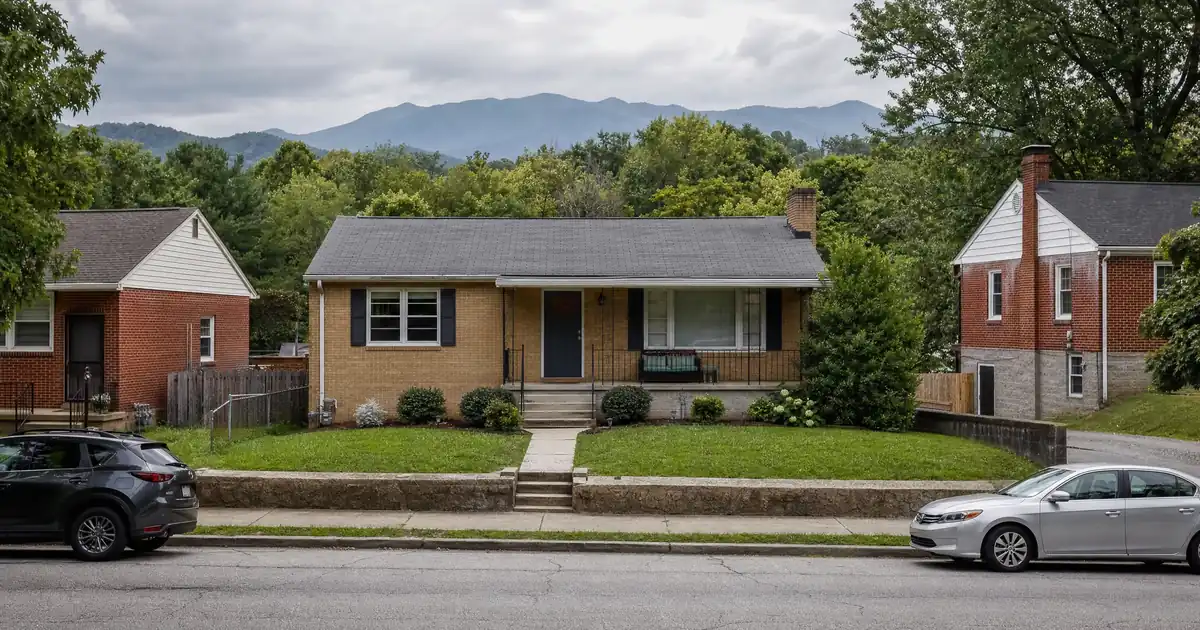
Two investors could walk into the same closing table in Pigeon Forge with loans structured on wildly different rental income outcomes. One buys a standalone cabin off the Parkway at the city’s current median, banking on long-term lease income to cover the note. The other buys a similar-sized cabin built with two separate living suites and rents both units to hospitality and hospital workers who can’t find housing anywhere else in Sevier County. Run the numbers on both, and the math isn’t close. The dual-suite structure clears a workable coverage ratio. The standalone single-family play, priced at market and leased at market, does not — at least not on long-term rent alone.
That gap is the story of this market right now, and it’s the one most competing lenders miss because nearly all of them are selling Airbnb income, not long-term lease coverage.
DSCR Calculator
Run the numbers in your market
Rate source: Freddie Mac 30-yr average via FRED® — Federal Reserve Bank of St. Louis · effective Jul 30, 2026
Prefilled with starting assumptions — enter your own rent or nightly figures, taxes, insurance, and HOA for a more accurate picture.
Program parameters update from Lendmire’s centralized guideline source. Taxes and insurance are editable estimates.
As of Jul 30, 2026 · General Freddie Mac market benchmark, not a Lendmire loan offer. Rent, nightly rate, occupancy, taxes, and insurance are editable estimates. Short-term rental figures are estimates only and vary significantly by season, property type, management approach, and local short-term-rental rules — confirm local regulations before relying on them. Qualifying income for short-term rentals varies by program — some use appraisal market rent, others use documented STR history or projections — and is confirmed in underwriting. Not a Loan Estimate, approval, or commitment to lend. Program availability and eligibility are subject to lender guidelines, credit approval, property review, and underwriting.
The Short Version: In Pigeon Forge, Tennessee, a DSCR loan is underwritten mainly on the property’s long-term rental income measured against its full monthly obligation, not traditional personal-income documentation — which matters here because Sevier County’s documented shortfall of 1,500 to 2,000 workforce rental units makes conventional-lease income a legitimate qualifying path, not just an afterthought to short-term rental projections.
- Dual-suite cabin conversions near the Parkway can stack two lease incomes on one purchase.
- Standalone single-family long-term rentals often run thin against Pigeon Forge’s $550,000 median sale price.
- Sevierville’s market-rate Hickory Hill and River Valley townhome projects signal real small-multifamily demand nearby.
- County apartment rents run roughly $1,400 to $1,800 by bedroom count, per Rentometer.
- Wears Valley cabins price below comparable Pigeon Forge product for similar acreage and views.
Lendmire, a non-QM DSCR mortgage broker (NMLS# 2371349), operates across 41 markets total — and works this exact type of file: rental-income-first underwriting on cabin and small-residential product where personal income documentation isn’t the driver.
Pigeon Forge Market Snapshot
A quick read on the Pigeon Forge investor landscape — figures come from the cited sources below. Confirm current property-level numbers before underwriting.
| Metric | Detail |
|---|---|
| Home prices | $550K median (Redfin Pigeon Forge Housing) |
| School district enrollment | ~15,000 students (Sevier County School System) |
| Population | 6,375 population (Census Reporter (ACS Profile)) |
| Employment | Dollywood 4,500 employees (Knoxville Chamber of Commerce) |
| Vacancy | ~1% (Sevier County Housing Study) |
The Cabin Everyone Buys vs. the Cabin That Cash Flows
Pigeon Forge’s housing stock is overwhelmingly single-family. Point2Homes counts 4,981 total housing units citywide, with 46.6% detached single-family homes and just 0.5% classified as attached duplex or townhouse product. That scarcity of true multi-unit stock inside city limits is the reason the dual-suite cabin format — marketed by local listings as “two separate living areas with private entrances” — functions as the closest thing to a duplex this market has.
Here’s how that plays out on paper. Model a dual-suite cabin financed at a typical leverage point for this property type. Renting the two suites separately at county-comparable rates — using Rentometer’s Sevier County apartment bands as a conservative proxy — produces combined monthly rent that, against a fully loaded payment (principal, interest, taxes, and insurance), lands coverage in the low-1.0x range, improving toward the low-1.1x range at a lower loan-to-value point instead of a higher one. Not a blowout number, but workable. Terms vary by lender guidelines, property type, leverage, credit profile, and full file review.
Now model the alternative: a standalone single-family cabin in Pigeon Forge, financed the same way but leased to one long-term tenant at a comparable three-bedroom rate. That property’s rent-to-obligation ratio lands well under 1.0x — nowhere close to covering the note on long-term lease income alone. This isn’t a hypothetical quirk; it tracks directly with the underlying rent-to-value math in this county, where two-bedroom rents against typical home values work out to a monthly rent-to-price ratio well under the roughly 1% benchmark many DSCR investors use as a sanity check. A file like that would need a lower-leverage structure, a sub-1.00 coverage program (available on select programs, not the standard), interest-only restructuring, or blended short-term rental income to get a lender’s attention — each an option a lender would review on its own merits, not a guarantee.
Working DSCR brokers see a recurring pattern in resort-adjacent tourism markets like this one: files built purely on peak-season short-term rental income look strong on paper but thin out fast once a lender stresses the numbers to a conservative long-term lease comp. The stronger files pair a defensible long-term lease scenario — dual-suite conversion, workforce tenant, hospital or school-district employee — with STR income as upside, not the load-bearing assumption.
Zip code 37863 tells a related story about timing. Over the three months ending in May, home prices there were down 20.3% year-over-year to a median of $510,000, per Redfin — a market correcting off recent highs. That correction is exactly what makes the dual-suite math work better today than it likely did a year ago at higher acquisition prices.
Sevier County Schools employs teachers, aides, and support staff across 31 schools serving nearly 15,000 students, including Pigeon Forge’s own primary, intermediate, junior high, and high schools sitting directly inside this submarket. That’s a durable, non-seasonal tenant category worth underwriting alongside hospitality workers.
Sevierville’s Workforce Corridor Is Where the Units Actually Are
The multi-unit story simply isn’t in Pigeon Forge. It’s a few miles north.
Nearly all of the recent purpose-built multifamily workforce housing in Sevier County has landed in Sevierville: Watson Glade, Gateview Ridge, Douglas Greene, Forest Cove, Riverside Village, and Pickens Way Apartments were all built there with Tennessee Housing Development Agency tax-credit support. Woda Group’s 80-unit Douglas Greene project on Snyder Road is one example. That’s where zoned multi-unit parcels actually exist — investors chasing duplex, triplex, or fourplex DSCR purchases should look at Sevierville and the county’s unincorporated fringe before Pigeon Forge proper.
More telling: private capital is now building unrestricted, market-rate multifamily alongside the tax-credit projects. Hickory Hill Townhomes (44 market-rate units) and River Valley Townhomes (32 market-rate units) are both under construction, according to the Sevier County Housing Study commissioned through the Sevier County Economic Development Council. Developers don’t put private capital into unrestricted multifamily unless the rent math already pencils — that’s a real comp set for investors modeling an acquisition-and-hold small-multifamily strategy rather than leaning on single-family comps alone.
There’s a rent ceiling worth knowing about here, too. Tax-credit-restricted units cap rent for a one-person household at 60% of area median income — $24,600 annually, producing a capped two-bedroom rent of just $790 and a three-bedroom rent of $912. Unrestricted market rent for comparable units runs $1,600 to $1,800. A private small-multifamily owner competes for the same workforce tenant base as the subsidized stock — hospital staff, retail employees, restaurant workers — without a rent ceiling. That’s a meaningful edge on DSCR purchase math that most competing cabin-focused lenders never mention because they’re not looking at this segment at all.
The county’s own 2021 appraisal-grade housing study found the multifamily market running at roughly 1% vacancy with strong absorption on new assets — a tight enough number that padding vacancy assumptions much above single digits on a Sevierville workforce purchase looks conservative to the point of overly cautious, though current-year figures should be confirmed against closed leases given new supply since that study’s publication.
Covenant Health’s LeConte Medical Center in Sevierville carries 594 employees on the Knoxville Chamber of Commerce’s major-employer directory and sits inside a system employing more than 11,000 people region-wide — a tenant pool whose employment doesn’t ride the same wave as Parkway visitor traffic. That’s the kind of anchor a lender likes to see behind a long-term lease assumption.
Wears Valley: The Quieter, Cheaper Entry Point
Wears Valley, just outside Pigeon Forge, offers a genuinely different acquisition proposition: lower cabin pricing than comparable product inside Pigeon Forge or Gatlinburg, paired with the same mountain-view demand base. It’s a quieter, less-trafficked setting than the Parkway strip — appealing to buyers less interested in tourist foot traffic and more interested in acquisition cost relative to rent potential.
No independently verified median price or rent figure exists specifically for Wears Valley in the available data, so this one gets described qualitatively rather than modeled with invented numbers: a lower entry point than the resort core, with the tradeoff being distance from Dollywood and the Parkway commercial spine. Investors comparing Wears Valley against in-town Pigeon Forge product should run their own comps against recent closed sales rather than lean on citywide medians, since a $550,000 city median tells you little about a specific Wears Valley parcel.
What the Appreciation Numbers Actually Say
This is where investors need to slow down. Sevierville’s home prices were down year-over-year as of November, according to Redfin’s city-level data — while Sevier County overall showed the opposite trend, up year-over-year over the same broad window, per Redfin’s county-level data.
That divergence matters for anyone building an acquisition thesis on “the whole Smokies market is appreciating.” It isn’t, uniformly. A comp mix-shift or city-level softening inside Sevierville is masked by county-wide averages pulled up by higher-end product elsewhere. Appraisals and purchase offers should anchor to recent closed comps inside the specific city or zip code being targeted, not a county blend.
Program Fit for Pigeon Forge Purchases
Most standard DSCR purchase programs run 75% to 80% loan-to-value, roughly 20% to 25% down, with a minimum qualifying coverage ratio of 1.00 on most files — meaning rent needs to at least match the full monthly obligation, though the strongest files clear that with meaningful room to spare. Credit tiers on Lendmire’s DSCR network typically start around 620 and step up through 660, 680, and 700, with the higher end required for the most aggressive leverage. Reserve requirements generally run around six months of PITIA, moving toward nine months on loans above $1,500,000. These are program guidelines reviewed case by case, not guarantees, and they’re worth confirming directly before making an offer.
For a full breakdown of how that coverage math works, the guide “What Is a DSCR Loan” covers the mechanics, and the conventional-vs-DSCR tradeoffs page walks through when a conventional loan still makes more sense than a DSCR structure. Investors working specifically in Tennessee can also review Lendmire’s Tennessee DSCR loan programs for state-level program details.
Investors who buy today and want to pull equity out later, once a dual-suite conversion is leased and stabilized, can review refinance details separately — that’s a different underwriting conversation from the purchase-side math covered here.
Frequently Asked Questions
How do you qualify for an investment property loan in Pigeon Forge, Tennessee?
Qualification centers on the property’s projected long-term rental income compared to its full monthly obligation, not the borrower’s personal income documents. Lenders typically want a coverage ratio at or above 1.00, reasonable reserves, and a credit profile clearing the program’s minimum tier, subject to lender guidelines and property review.
DSCR vs. conventional financing
Two common ways to finance an investment property in Pigeon Forge, TN. They qualify you differently — here’s how investors weigh them.
Why investors choose it
- Qualifies on the property’s rental income — no personal tax returns, W-2s, or pay stubs needed to document income.
- No personal debt-to-income ceiling to clear, so existing mortgages and obligations don’t cap your borrowing the same way.
- Can be closed in an LLC, keeping the property inside a business entity.
- Built for scaling — not held to the limit on number of financed properties that conventional financing applies.
- Underwriting centers on the deal: generally qualifies when the rent covers the payment, a 1.00x coverage ratio being a common baseline (confirmed in underwriting).
- Designed specifically for investment property, including long-term and, where the program allows, short-term rentals.
Where it’s strong
- Often the lowest ongoing financing cost for a buyer who fully qualifies on personal income — a fit for a first property or a cost-first purchase.
Trade-offs for investors
- Requires full personal income documentation and must fit within a debt-to-income limit — salary, existing debts, and other mortgages all count.
- Typically held in your personal name rather than a business entity.
- Caps how many financed properties you can carry, which can become a ceiling as a portfolio grows.
- Evaluates you as a borrower as much as the property, which usually means more paperwork.
How investors usually choose: a first or single property often optimizes for the lowest financing cost; portfolio builders often optimize for leverage, vesting in an LLC, and scaling past conventional caps. The right answer depends on your goals, the property, and current guidelines — both paths run through select lenders in Lendmire’s wholesale network, with eligibility and terms confirmed in underwriting.
What are the requirements for a DSCR loan on a Pigeon Forge cabin?
Requirements generally include a purchase LTV in the 75% to 80% range, a minimum coverage ratio around 1.00, roughly six months of reserves, and a credit score clearing program minimums that typically start near 620. Dual-suite or multi-unit cabins often qualify more easily than standalone single-family cabins because two lease incomes stack against one loan.
Why is Pigeon Forge harder to underwrite on rent alone than Sevierville?
Pigeon Forge’s housing stock is weighted toward single-family cabins, with almost no zoned duplex or small multifamily product, while Sevierville has actual purpose-built multi-unit stock including tax-credit and market-rate townhome projects. That gives Sevierville a real comp set for small multifamily DSCR purchases that Pigeon Forge simply doesn’t have inside city limits.
Does the countywide housing shortage actually help a long-term rental investor here?
It does, structurally. Sevier County’s housing study estimated a net demand of 1,500 to 2,000 additional workforce and conventional rental units, and roughly 43.9% of county workers commute in from outside because they can’t find housing near their jobs — a durable tenant base for long-term lease product that isn’t dependent on tourist visitation.
What property types work best for DSCR purchases in Pigeon Forge?
Dual-suite cabin conversions and small multifamily near the Sevierville corridor tend to work best, since they can show two rent rolls against one loan rather than a single thin lease. Lendmire arranges DSCR investor loans and reviews these files on rental income first, with LLC-titled ownership accommodated subject to program guidelines.
Questions about a specific address or scenario can go straight to Lendmire at 828-256-2183, or investors can request a quote to get a file moving.
About Lendmire
Lendmire is a non-QM DSCR mortgage broker (NMLS# 2371349) operating across 41 markets, with eligibility generally reviewed around property-level rental income rather than personal income documentation, subject to lender guidelines — a structure built for LLC portfolios and self-employed borrowers who don’t fit a conventional box. The firm has been recognized as a 2026 Scotsman Guide Top Mortgage Workplace, its second consecutive year on that list.
The asymmetry in this market sits in one specific place: dual-suite cabin conversions priced in the mid-$400,000s, positioned to lease to hospital, school, and hospitality workers rather than tourists. Every competing lender in this corridor is pricing cabins on Airbnb projections while a documented shortage of 1,500 to 2,000 workforce rental units sits mostly unaddressed a few miles from the Parkway — that gap, not the next STR listing, is where the rent-to-price math still has room to run.
Get Started
Ready to find the right loan for you?
In about 30 seconds you can review financing options available for your investment property. No commitment required.
Informational only. Not a Loan Estimate, approval, or commitment to lend. Program availability and eligibility are subject to lender guidelines, credit approval, property review, and underwriting.
References
1. Sevier County Housing Study 2021 (SCEDC)
2. Redfin Pigeon Forge Housing
3. Sevier County School System
4. Census Reporter (ACS Profile)
5. Knoxville Chamber of Commerce
6. Rentometer — Sevier County, TN Average Rent
7. Redfin
8. eteda.org — Sevier County Affordable Housing Incentives
9. Covenant Health — LeConte Medical Center
11. Redfin’s county-level data
12. a 2026 Scotsman Guide Top Mortgage Workplace
This article is part of Lendmire’s DSCR loan program — full qualification details, guidelines, and scenarios live on the program page.
Related reading: DSCR Cash Out Refinance Pigeon Forge Tennessee · Cash Out Refinance Investment Property in Pigeon Forge TN · DSCR Loans in Murfreesboro, Tennessee: Investor Financing for Midtown, Northwest Murfreesboro, and the Gateway District — Rapid Growth Market & Real Estate Investors
Guides: DSCR Loans in Pigeon Forge, TN · DSCR Loans in Tennessee
Brandon Miller
Founder & CEO, Mortgage Loan Originator, Lendmire LLC
- Mortgage Loan Originator · NMLS# 1129696 · Verify on NMLS Consumer Access
- North Carolina Real Estate Broker · License# 343312 · Verify on NCREC
- North Carolina Insurance Producer · License# 19053198 · Property, Casualty, Life, Health · Verify on NAIC SBS
- Lendmire LLC · Firm NMLS# 2371349 · Verify firm licensure
Disclosure information. Lendmire is a state-licensed mortgage brokerage under NMLS# 2371349. Lendmire is not a depository institution, direct lender, or financial advisor — all loans referenced are placed through wholesale lender partners and are subject to each lender's underwriting standards. This article is provided for general informational purposes and is not a commitment to lend, nor does it constitute financial, legal, or tax advice. Loan programs, terms, rates, and qualification standards change without notice and depend on borrower profile, property type, and the state in which the subject property is located. Equal Housing Opportunity provider. NMLS Consumer Access: nmlsconsumeraccess.org.