
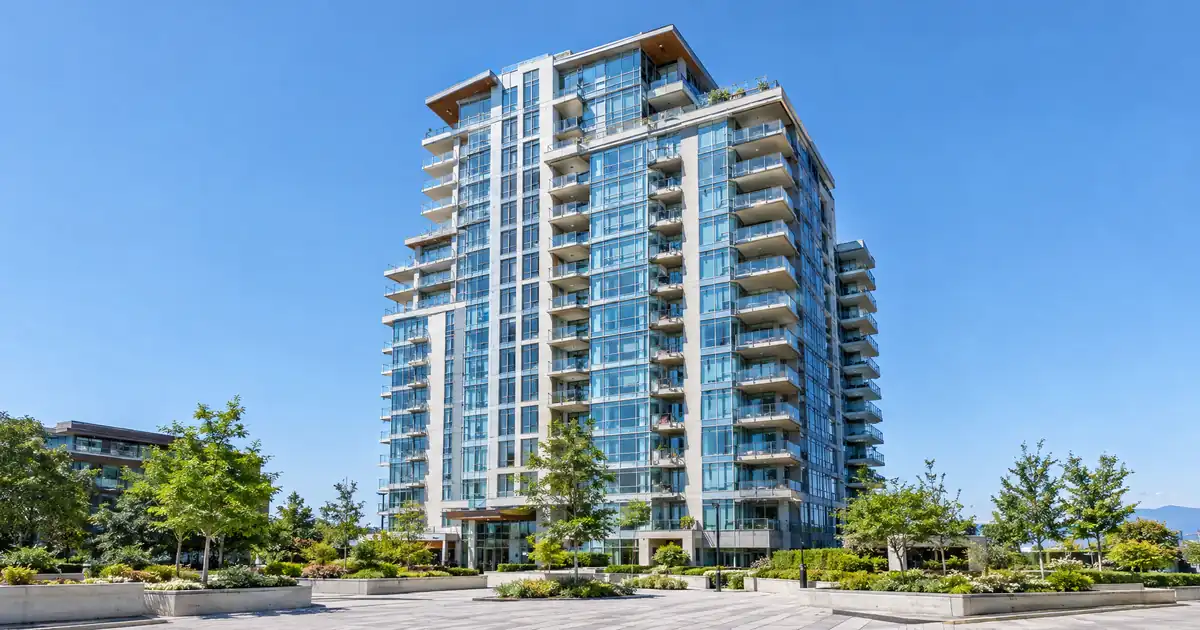
The Quick Read: A super jumbo bank statement loan can close on a non-warrantable tower, but only when two separate reviews both pass: the building and the borrower. Through select wholesale programs, subject to full underwriting, the loan is reviewed on documented deposits instead of traditional personal-income documentation, and the tower is reviewed as its own file. The lower of the stacked ceilings sets the loan.
- Non-warrantable is a label on the building, not a verdict on you.
- Income comes from 12 or 24 months of deposits after an expense ratio.
- Loan size and occupancy often set a lower ceiling than the condo type does.
- Above $4,000,000, every file is reviewed case by case before submission.
- Clean HOA documents, ordered early, prevent most mid-file surprises.
Brokers see this file type often enough to know where it breaks. The income side is usually the easy part. The tower is where files stall.
What Does Non-Warrantable Actually Mean?
It means the building fails agency project standards. It says nothing about your credit or income. Fannie Mae’s Selling Guide lists the traits that make a condo project ineligible for agency purchase: hotel or motel operation, split ownership, non-incidental business arrangements, commercial space, litigation, single-entity ownership, critical repairs needed, and projects in insolvency.
Agency rules do not govern a bank statement loan. They are a contrast point only. A building that fails them can still be financed by non-agency lenders, which is the whole reason this product exists.
Severity matters more than the label. One defect, such as investor concentration, is a very different file from structural litigation or unfunded critical repairs. Fannie Mae’s condo project FAQ says a project that fails a state or local structural, safety or habitability inspection is ineligible, and that primarily transient use is itself a disqualifier. Hotel-style towers face the narrowest lender pool, and some lenders decline them outright.
Key Terms Defined
Super jumbo: a loan size well above conforming limits. There is no official line. Within Lendmire’s network, programs treat $3,000,000 to $3,500,000 and up as the point where extra overlays begin.
Bank statement loan: a mortgage that is reviewed on documented deposits from personal or business accounts instead of traditional personal-income documentation.
Expense ratio: the share of business deposits treated as operating costs before income is counted.
Non-warrantable: a condo project that fails agency eligibility standards.
Condo questionnaire: the form the HOA manager completes about finances, litigation, insurance, ownership concentration and commercial space.
Reserves: verified liquid funds left after closing, separate from cash to close.
Two Gates: The Borrower File and the Tower File
Every file here runs through two approvals. Neither one rescues the other.
| Factor | Borrower file | Tower file |
|---|---|---|
| What is reviewed | Deposits, credit, DTI, reserves | Budget, reserves, insurance, litigation |
| Who supplies it | You and your accountant | HOA manager, management company |
| Typical failure | Dirty deposits, thin reserves | Litigation, critical repairs, hotel use |
| Can it be cured | Often, with documents | Only if the HOA cures it |
A strong borrower cannot fix a building problem. That is the part first-time super jumbo buyers miss.
Step 1: Classify the Tower Before You Offer
Order the HOA package before you spend on an appraisal. Ask for the budget, financial statements, reserve study, master insurance certificate, meeting minutes and any litigation disclosure. These are the same documents lenders and agencies use to judge critical repairs and litigation.
Then list every reason the building is non-warrantable. Investor concentration alone is manageable. Heavily investor-owned buildings, though, often carry other problems, so confirm concentration is the only issue before you commit.
| Trigger | Where to find it | Curable? |
|---|---|---|
| Investor concentration | Questionnaire, owner roster | Slowly, as units sell |
| Commercial podium share | Recorded condo documents | No |
| Pending litigation | Questionnaire, minutes | If it settles |
| Critical repairs | Reserve study, engineer report | When repairs finish |
| Hotel-style operation | Rental program, declarations | Rarely |
| Thin reserves or late dues | Budget, delinquency report | If the HOA funds up |
Pull the commercial share from recorded documents. Do not take a sales broker’s word for it.
Step 2: Build the Deposit-Based Income File
Qualifying income is eligible deposits divided by the statement months, after an expense ratio. Through select wholesale programs, subject to full underwriting, you can document 12 or 24 consecutive months of personal or business statements. The bank portfolio program uses 12.
Business statements need at least 25% ownership. Fixed expense ratios run 20% for a service business with no employees, 40% for one to five employees, and 50% for six or more employees or any product business. An accountant-provided ratio or a profit-and-loss method, capped at 80%, are alternatives. Transfers from your own business into a personal account count at 100% on personal statements.
Statements must be consecutive. Transaction histories do not substitute. Transfers between your own accounts, loan proceeds and refunds come out. Large unexplained deposits get excluded unless you document them.
Consider a physician-owner whose practice deposits clear cleanly but who moves money between three accounts monthly. The transfers need a paper trail, or they shrink the income. Label them before the file goes in.
Asset paths exist too. An asset allowance divides liquid assets by 36, 60 or 84 months. Assets-only qualifies with no DTI when U.S. liquid assets equal the loan plus closing costs plus sixty months of any net loss on other residential property. Business funds, gifts and cryptocurrency never count.
A bank statement file is reviewed around personal income. Your other debts and the new housing obligation still count, including HOA dues. On a tower unit, dues eat into the DTI cushion fast. DTI can run to 50%. For an investor whose rent is the stronger story, Lendmire’s comparison of DSCR and bank statement loans shows which path fits.
Step 3: Size the Loan Against Stacked Ceilings
Several ceilings stack and the lowest one binds: property type, loan size, occupancy and transaction type. At super jumbo size, the size and occupancy ladder usually binds before the condo cap does.
Non-warrantable condos reach 80% through select wholesale programs. Warrantable condos reach 85%. Condotels sit at 75% on a purchase and 65% on a cash-out, and 50% cash-out on the bank program. Those are property-type caps. The loan-size ladder is usually tighter.
The table shows purchase ceilings on a primary residence, by loan band, through select wholesale programs, subject to full underwriting.
| Loan band | Program | Purchase ceiling |
|---|---|---|
| $2M–$2.5M | Portfolio program | 80% |
| $3M–$3.5M | Portfolio program | 75% |
| $4M–$5M | Bank portfolio program | 65%, on review |
Credit works differently from leverage. The score in a band is what that band’s top leverage needs, not a floor. On the portfolio program, the floor is 660 up to the super-jumbo line and 700 above it. The bank portfolio program keeps its own 680 floor at every size. A lower score takes a lower leverage cell in the same band.
Run the numbers on a primary residence purchase at $3,200,000 in a non-warrantable tower. The condo cap says 80%. The size ladder says 75%. The ladder wins. Now take an investment property purchase at that price. The bank portfolio program’s investment bands begin above $3,000,000, and that band reads 60%. That means a very different down payment. Occupancy sets the ladder, so never read a primary-residence figure onto an investment unit.
On the portfolio program, super jumbo overlays apply above $3,500,000 on a primary residence and above $3,000,000 on a second home or investment property: 700 credit floor, 0x30x24 housing history, 48-month seasoning on credit events, U.S. citizens and permanent residents, no rural property, and cash-out proceeds cannot satisfy reserves.
The portfolio non-QM program carries files to $6,000,000. The bank portfolio program takes twelve-month-statement files to $30,000,000. Its bands begin at $4,000,001 on a primary residence, $5,000,001 on a second home and $3,000,001 on investment property, and it overlaps the portfolio program to $6,000,000. Its primary-residence ladder is 65% to $5,000,000, 60% to $10,000,000 and 55% to $30,000,000. Everything above $4,000,000 is reviewed case by case before submission.
Reserves run 3 months to $500,000, 6 months to $1,500,000 and 9 months above, plus 2 months per additional financed property to a 12-month maximum. First-time investors need 12.
Step 4: Appraisal and Project Review
Value drives every ceiling. A low appraisal shrinks the loan, and the percentage applies to the lower of price or value. On towers, unit-specific drivers matter: floor, view and in-building sales. Thin comps at large sizes can invite extra review, so expect questions.
The project gets its own review at the same time. This is where files fail after income is already solid. The questionnaire, the master policy and the reserve study all get read again.
Step 5: Handling an Adverse Questionnaire
A bad questionnaire is not always the end. You have three choices: wait for the HOA to cure it, switch to a program with different project tolerance, or renegotiate price and terms.
Thin reserve study? Ask the manager whether a funding plan is approved. Pending litigation? Ask whether it is routine liability or structural, and whether a dollar figure exists. Routine suits are treated differently.
Critical repairs are the hard stop. A project stays ineligible until critical repairs are done, and a safe rating from a jurisdiction does not cure unfinished work. Towers in states that added post-collapse inspection and reserve laws get extra review. Agency drift also cuts both ways: a tower once rejected may now be agency-eligible, while a non-agency lender can keep its own overlays.
Where the Rule Breaks
Status flips mid-file. A building can gain warrantability when the HOA cures a defect. It can lose it too. Protect your earnest money with contingencies tied to project approval, not just the loan.
Hotel or short-term-rental features. Transient use narrows the pool sharply. Short-term rental rules can vary by city, county, HOA, and property type, so investors should confirm local rules before relying on projected rental income.
Owner-occupied versus investment. The right answer depends on why the building is non-warrantable and what the purchase is for. Programs treat primary, second and rental differently, and the ladders differ by occupancy. For an LLC borrower, the vesting and business-purpose attestation get confirmed at closing, subject to program terms.
Cash-out. Cash-out is unlimited at or below 60% LTV. Above 60%, the portfolio program caps cash in hand at $1,500,000. The bank program publishes no cap. Cash-out ladders run lower than purchase ladders in each band. Lendmire’s piece on super jumbo cash-out on a non-warrantable condo covers that side. Exact terms depend on the lender’s guidelines, property type, leverage, and a full review of the borrower’s file.
Pre-completion projects. Presale, developer control and builder concessions are separate review items.
Cash to Close Versus Reserves
These are different pots. Down payment and closing costs are due at the table. Reserves are what remains afterward, verified. On super jumbo files, cash-out proceeds cannot satisfy reserves. Retirement accounts count at 70%, or 80% at age 59.5 and up. Document source and seasoning of every large balance before the file goes in.
What the Decision Looks Like in Practice
Resale is the quiet cost. Agency buyers cannot finance a non-warrantable tower, so your exit depends on non-agency lenders. That narrows the buyer pool, and it can affect the price you accept at purchase.
The practical sequence: order HOA documents, classify every defect, clean up deposits, size against the lowest ceiling, then submit. Mistakes to avoid include treating non-QM as skipping the building review, reading non-warrantable as a judgment on you, and assuming bank statements mean no underwriting. The file is fully underwritten, with deposit screening and expense factors.
The program pages in Lendmire’s complete DSCR loans guide are worth reading if the property’s rent is a stronger income story than your deposits. Tax treatment varies; consult a qualified professional.
If you are financing a high-balance property on business or personal bank statements and want to see how the numbers work, Lendmire can help you compare super jumbo bank statement loan options based on your deposits, the property, credit profile, leverage, and your goals.
Frequently Asked Questions
Can a bank statement loan close on any non-warrantable tower?
No. Investor concentration or commercial space is usually workable. Hotel-style operation, structural litigation and unfinished critical repairs narrow the pool sharply or end the file. Through select wholesale programs, subject to full underwriting, the building is reviewed separately from your income.
Does a non-warrantable building lower my maximum leverage?
Sometimes. Non-warrantable condos reach 80% through select programs, but the loan-size and occupancy ladder is usually lower at super jumbo size. The lowest ceiling binds. Above $4,000,000, leverage is set case by case.
What happens if the tower’s status changes during the file?
The file can stall or need a different program. A cured defect can help, and a new one can hurt. Tie your contract contingencies to project approval so earnest money is protected.
Do I need 24 months of statements?
Not always. Twelve or 24 consecutive months are accepted, and the bank portfolio program uses 12. Statements must be consecutive. Business accounts need at least 25% ownership.
Can I use rent instead of deposits?
For an investment unit, a DSCR path may fit better. It qualifies primarily on property-level rental income covering the payment, subject to lender guidelines. Select lenders in the network offer programs below 1.00 coverage, though leverage and terms adjust.
Lendmire’s self-employed mortgages page presents both super jumbo programs, bank statement and DSCR, side by side.
About Lendmire
As a mortgage broker (NMLS# 2371349), Lendmire helps self-employed and high-net-worth borrowers in 16 states qualify on bank statements, a profit-and-loss statement, 1099s or liquid assets instead of traditional personal-income documentation, through wholesale lenders. Lendmire is never the lender; program terms are set by the lender and its guidelines. Scotsman Guide named Lendmire a Top Mortgage Workplace in both 2025 and 2026.
Get Started
Ready to find the right loan for you?
In about 30 seconds you can review financing options available for your home or investment property. No commitment required.
Informational only. Not a Loan Estimate, approval, or commitment to lend. Program availability and eligibility are subject to lender guidelines, credit approval, property review, and underwriting.
References
1. Fannie Mae Selling Guide B4-2.1-03
2. Fannie Mae condo project FAQ
This article is part of Lendmire’s super jumbo bank statement loan program — full qualification details, guidelines, and scenarios live on the program page.
Related reading: How to Close a Non-Warrantable Luxury Condo With a Super Jumbo Loan · How to Qualify for a Super Jumbo Bank Statement Loan in Montana · How to Vest a Super Jumbo Bank Statement Loan in a Trust or LLC
Brandon Miller
Founder & CEO, Mortgage Loan Originator, Lendmire LLC
- Mortgage Loan Originator · NMLS# 1129696 · Verify on NMLS Consumer Access
- North Carolina Real Estate Broker · License# 343312 · Verify on NCREC
- North Carolina Insurance Producer · License# 19053198 · Property, Casualty, Life, Health · Verify on NAIC SBS
- Lendmire LLC · Firm NMLS# 2371349 · Verify firm licensure
Important disclosures. Lendmire (NMLS# 2371349) is a licensed mortgage brokerage. Lendmire is not a direct lender, depository institution, or financial advisor. All loan inquiries are subject to lender underwriting; this article does not constitute a commitment to lend. Rates, terms, and program guidelines are subject to change without notice and vary by borrower profile, property type, and state. Information in this article is general in nature and is not financial, legal, or tax advice. Equal Housing Opportunity. NMLS Consumer Access: nmlsconsumeraccess.org.