
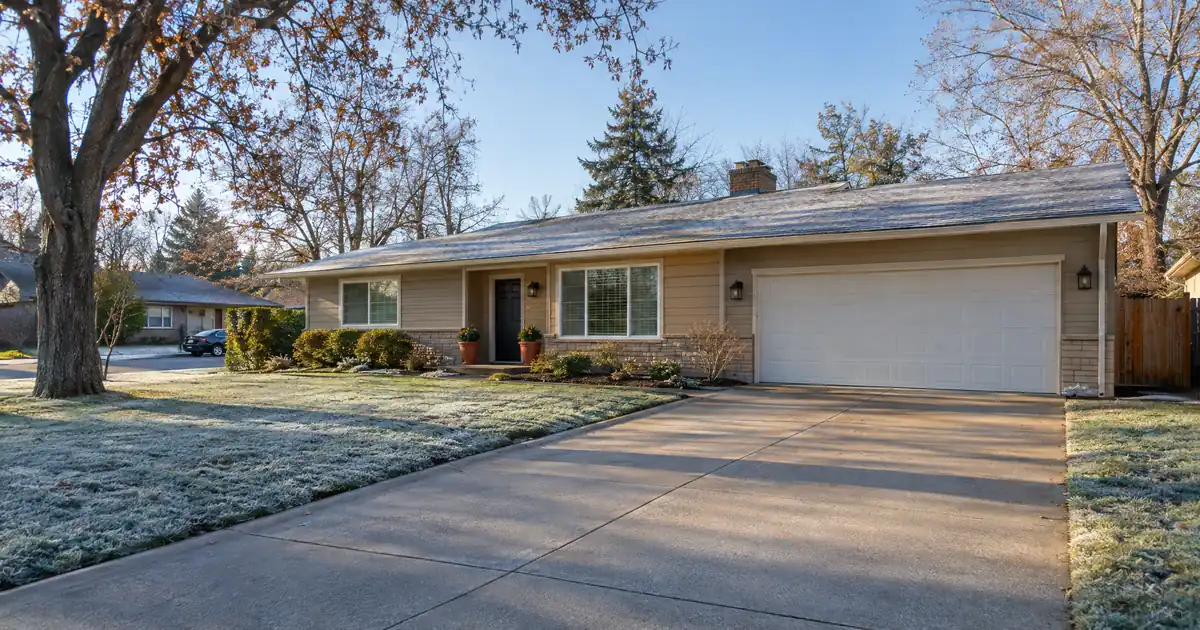
The Quick Read: On a home equity line, a brand-new lease is supporting evidence at most, because the lender underwrites the borrower’s credit, debts and equity first and the rent a distant second. Any rent credit tends to be a discounted share of the lease, and a lease with no payment history behind it carries the least weight. A DSCR cash-out refinance counts the same lease differently, because there the property’s rent is the main test.
- A home equity line is underwritten mainly on you, not on the tenant.
- A new lease with no payment history is the weakest rental evidence you can bring.
- Once you move out, the home is an investment property, and the leverage ceiling drops with that change.
- On a DSCR refinance, the counted rent is typically the lower of the signed lease and the appraiser’s market rent.
- A lease above market rent adds nothing, and a lease below market becomes the number used.
What Does a Lender Look at on a Rental HELOC?
A lender looks at the borrower first. Credit, debt-to-income, existing liens and available equity decide the file. Rent is a supporting factor, and on many files it is not counted at all.
How large a line the equity supports.
An equity line is sized by combined loan-to-value, occupancy, and credit — not by rental coverage. Switch the occupancy or the credit band and the ceiling moves with it.
Investment-property lines require a 700 minimum credit score; second-home lines start at a 640 minimum and primary-residence lines at 600, and the combined-LTV ceiling steps down as the credit band drops on primary-residence and second-home lines and holds on investment-property lines; the line cap steps down on primary-residence lines and holds at every tier on investment-property and second-home lines.
A debt-to-income ratio above 45% requires 680+ credit. Profiles under 640 are limited to single-family homes. At least 75% of the approved line is drawn at closing. Ceilings, floors, and caps update from Lendmire’s centralized guideline source.
Line estimate
Illustrative estimate only — not a quote, Loan Estimate, approval, or commitment to lend. The rate is an editable assumption; equity-line pricing is variable through both the draw and repayment periods and never converts to fixed. Occupancy and credit drive the ceiling together: an investment property tops out at 70% combined LTV (minimum credit 700, line cap $500,000); a second home tops out at 90% combined LTV (minimum credit 640, line cap $500,000), with the ceiling stepping down as the credit band drops (the cap holds at every tier); a primary residence tops out at 90% combined LTV (minimum credit 600), and its $750,000 maximum line is available only at 75% combined LTV or below with a 700-or-better credit profile (720 on the longer-runway program) and a full appraisal. Lines above $500,000 require a full appraisal. Credit, debt-to-income, property type, and full underwriting review all affect the final line.
Across the wholesale network Lendmire places files with, the investment-property line works like this. The ceiling is 70% combined loan-to-value (CLTV), which is the first mortgage plus the new line divided by the home’s value. Credit starts at 700, and a 720 score buys no extra leverage on an investment line. The line tops out at $500,000. Debt-to-income can run to 50%, calculated on the interest-only payment at the maximum draw. All figures are subject to lender guidelines and full file review.
Those numbers describe the investment lane only. A primary-residence line can reach 90% CLTV, but only at a 720-or-better credit profile. The moment you move out, the investment ceiling is the one that applies to the old home.
Rent enters the picture only if a lender chooses to add it to income. When one does, it usually counts a discounted share of gross rent, and it may want a documented rental track record first. A signed lease on day one has no track record. For a line on an investment property, that makes the lease the weakest evidence in the file.
How Does the New Lease Move Through the File, Step by Step?
The lease enters late in the process, and it rarely decides the outcome. Here is the order in which most lenders handle it.
1. Identify the loan. One play is a line secured by the old home. The other is a line on your new primary home, used to fund a rental or the next purchase. They carry different ceilings and different credit floors.
2. Set occupancy. The collateral decides this, not the lease. After you move out, the old home is an investment property for pricing and eligibility.
3. Size the equity. The lender adds the first mortgage and the requested line, then divides by the property value. An investment line at or below $500,000 ordinarily runs on an automated valuation, with no traditional appraisal.
4. Underwrite the borrower. The lender reviews credit, debts, liens and housing history across your financed properties.
5. Treat the lease. If the lender credits rent at all, the credit is discounted, and it may wait for seasoned rent.
6. Gather documents. A signed lease and a deposit record are typical. Payment proof follows once rent starts arriving.
7. Decide. Credit, debt-to-income and equity carry the decision. The lease mostly confirms the story.
Timing matters on the other play. A line on your primary home has to exist before you go under contract on the next property, because a lender cannot open a line against a home you have not bought yet. The occupancy you state must also be true when you sign. Applying while you already plan to move out the following week is a conversation to have openly with the lender.
What Changes From Move-Out to Month Twelve?
The lease gains weight as the paper trail grows. This table shows how most lenders read each stage.
| Stage | What the lender sees | Rent credit on a HELOC |
|---|---|---|
| Before move-out | Primary residence | Not applicable |
| Move-out, no tenant | Investment property, vacant | None |
| Lease signed | Evidence of intent | Little or none |
| First rent received | Deposits start | Possibly discounted |
| Twelve months in | Seasoned rent | Best case, still discounted |
A lease alone shows intent. Deposits show that rent is real. A year of deposits, or a tax return with a rental line, is what turns the rent into something a lender can rely on.
Key Terms Defined
CLTV: Combined loan-to-value is the first mortgage plus the new line, divided by the property value.
DTI: Debt-to-income is your monthly debts divided by your monthly income, measured by the lender’s own method.
DSCR: Debt service coverage ratio is monthly rent divided by the monthly PITIA (principal, interest, taxes, insurance and any association dues).
Form 1007: This is an appraisal form that reports the monthly market rent for a single-family investment property.
Seasoning: This is the time a lease, a deposit pattern or a loan has been in place before a lender relies on it.
Rent roll: This is a list of units, tenants, lease terms and rents for a property.
How Does a DSCR Cash-Out Count the Same Lease?
A DSCR cash-out refinance counts rent as the main test, but it still limits how much of the lease it trusts. Across most of the network, the lender takes the lower of the signed lease and the appraiser’s market rent. A vacant home runs on the appraised figure alone. This is a lender convention, not a law.
The 1007 itself is an appraisal form. Fannie Mae’s appraiser update describes it as documenting monthly market rent for a single-family investment property. The form’s own instructions say the lender uses it to get the appraiser’s market rent. DSCR lenders adopted the form from the conventional world. Its use does not mean conventional rules apply to the loan. For two-to-four-unit properties, the equivalent is Form 1025, and Form 216 may report actual income and expenses on leased units.
Here is how the lower-of test plays out. Say a signed lease supports about 1.35x coverage, and the appraiser’s rent supports about 1.15x. The lender counts roughly 1.15x. The extra lease income earns nothing. Reverse the numbers, and the lower lease becomes the counted figure.
On the coverage floor, 1.00 is where many select programs start. A separate select-lender path takes coverage below 1.00, with leverage and terms adjusted, and eligibility on any file stays subject to lender guidelines and credit approval. Most standard rental cash-outs top out around 75% LTV, with about six months of seasoning as the common expectation. Credit typically needs to sit near 660, and 700 or better opens the strongest leverage tiers.
Clearing 1.00 is not the same as positive cash flow. DSCR compares rent to PITIA only. Repairs, vacancy, management, utilities and capital expenses all sit outside the ratio, so run those separately before you rely on the coverage number.
The complete DSCR loans guide covers the full mechanics of rent counting.
Where Does the General Rule Break?
The rule bends in a handful of named situations.
- Vacant between tenants. The home leans on the appraiser’s rent alone. A HELOC lender sees no rental income to credit.
- Above-market lease. It acts as a ceiling, not a boost. Pricing the new tenant above comparable rentals does not raise the counted rent.
- Related-party tenant. The lease party generally needs to be arm’s length, and treatment can vary by program. A lease to a relative may be set aside in favor of the appraiser’s figure.
- LLC title. An LLC cannot hold title on a home equity line, because the borrower must be an individual or a revocable living trust. A home already deeded to an LLC needs a vesting change or a DSCR cash-out instead. Where the DSCR route applies, entity vesting is subject to lender program eligibility.
- Short-term rental conversion. Form 1007 captures monthly rent, not nightly rates. McKissock’s appraisal guidance explains that appraisers are not meant to multiply a nightly rate by 30. Short-term rental files are documented another way, usually through platform history or deposits. On the DSCR side, short-term rental cash-out tops out at 70% LTV, with about 12 months of hosting history and a 640-or-better score typical.
- Conventional loans. Conventional lenders now handle leases on a departing residence under their own rules, and those rules do not govern DSCR files. Do not carry assumptions from one lane into the other.
- Property type. Manufactured homes, log homes, barndominiums, co-ops, condotels and mixed-use properties are not offered through these programs.
Tax treatment can depend on how the funds are used and how the property is held; borrowers should keep clear records and speak with a qualified tax professional before relying on any deduction.
Which Product Fits Your Situation?
The right choice depends on what carries your file. A rental home equity line fits the investor whose personal credit, income and equity are strong and who needs flexible access to cash. A DSCR cash-out fits the investor who wants the property’s rent to carry the qualification, or whose title sits in an LLC.
| Factor | Rental HELOC | DSCR cash-out |
|---|---|---|
| Main test | Borrower credit and DTI | Property rent vs. PITIA |
| New lease weight | Little, discounted | Capped by market rent |
| Title | Individual or revocable trust | LLC possible, per program |
| Investment ceiling | 70% CLTV | About 75% LTV, standard rental |
The flip point is simple. If your income is strong and the equity is deep, the line can cost less to set up and stay flexible. If your personal debt-to-income is tight, or you own several financed properties, DSCR often fits better, because it qualifies primarily on property-level rental income covering the payment, subject to lender guidelines. A borrower is also limited to three lines, and anyone owning more than 15 financed properties is not eligible for the equity line at all.
Remember that investment lines are limited to the 5-year draw and 25-year repayment structure, with at least 75% of the line drawn at closing. Pricing floats and never converts to fixed. That structure suits some investors and rules out others.
If a low valuation is the sticking point, Lendmire’s guide How to Move Forward on a Rental HELOC After a Low Appraisal covers the next steps.
What Should You Document Before You Apply?
A clean file helps both products. Gather these items before applying.
- A signed lease with start date, term, rent and tenant names.
- Proof of the security deposit and the first rent payment.
- A mortgage statement and a homeowners insurance declaration for the old home.
- Evidence the lease is arm’s length, such as a normal application and screening.
- A recent credit report and a debt list.
- For a DSCR file, the appraisal’s rent schedule will be ordered by the lender.
Keep payment records organized as the months pass. A year of consistent deposits is what makes the lease count for more on a later application.
Frequently Asked Questions
Can a rental HELOC lender ignore my new lease entirely?
Yes. A home equity line is underwritten mainly on your credit, debts and equity, so many lenders count no rent until it has a history. When rent is credited, it is typically a discounted share of the lease and only after documentation.
Does a higher lease raise my DSCR?
No. On most DSCR files the counted rent is the lower of the lease and the appraiser’s market rent, so a lease above market adds nothing. A lease below market becomes the figure used.
What happens if the home sits vacant after I move out?
A HELOC lender sees no rental income, and the file depends on your personal profile. A DSCR file runs on the appraiser’s market rent alone, which makes vacancy far less damaging there.
Can an LLC hold the title on an equity line?
No. The borrower must be an individual or a revocable living trust. If the home is already in an LLC, a vesting change or a DSCR cash-out is the practical path, subject to program terms.
Is the 1007 a required DSCR rule?
No. It is an appraisal form that DSCR lenders adopted, and the lower-of test is a lender convention.
Next Step
If you are considering a home equity line and want to see how the numbers work, Lendmire can help you compare HELOC options based on the property, the equity available, credit profile, combined leverage, and your goals. Lendmire arranges equity lines through select wholesale partners in its 16 full-service states and is not a lender. Everything here is subject to lender guidelines and is not a commitment to lend. An editable calculator on the site can give an illustrative estimate of the line size based on value, balance, occupancy, credit and combined loan-to-value, but it is not a quote.
About Lendmire
Lendmire (NMLS# 2371349) is a mortgage brokerage serving homeowners and real estate investors in its 16 full-service states. Home equity lines of credit are arranged through wholesale lending channels; Lendmire brokers the line and the lender underwrites each application under its occupancy-based guidelines. Scotsman Guide named Lendmire a Top Mortgage Workplace in both 2025 and 2026.
Get Started
Ready to find the right loan for you?
In about 30 seconds you can review financing options available for your investment property. No commitment required.
Informational only. Not a Loan Estimate, approval, or commitment to lend. Program availability and eligibility are subject to lender guidelines, credit approval, property review, and underwriting.
References
1. Fannie Mae Appraiser Update
2. Freddie Mac Form 1000 (Form 1007 instructions)
3. McKissock: Form 1007 and short-term rental appraisals
This article is part of Lendmire’s investment property HELOC program — full qualification details, guidelines, and scenarios live on the program page.
Related reading: How Much Equity a Lender Needs to Lift a Frozen HELOC · How to Restore a Reduced HELOC Limit Through Appeal or a New Line · Can You Replace a Frozen HELOC With a New Line From Another Lender?
Brandon Miller
Founder & CEO, Mortgage Loan Originator, Lendmire LLC
- Mortgage Loan Originator · NMLS# 1129696 · Verify on NMLS Consumer Access
- North Carolina Real Estate Broker · License# 343312 · Verify on NCREC
- North Carolina Insurance Producer · License# 19053198 · Property, Casualty, Life, Health · Verify on NAIC SBS
- Lendmire LLC · Firm NMLS# 2371349 · Verify firm licensure
Compliance and disclosures. Lendmire (NMLS# 2371349) is a licensed mortgage broker and is not a direct lender, depository institution, financial advisor, or tax professional. Content in this article is general market analysis and educational information — not financial, legal, or tax advice for any specific situation. Lendmire does not guarantee loan approval; every transaction is subject to underwriting by the funding lender. Mortgage pricing and loan program guidelines are subject to change at any time without notice and vary by borrower characteristics, property type, and state regulations. Lendmire complies with Equal Housing Opportunity. Licensure verification: NMLS Consumer Access.