
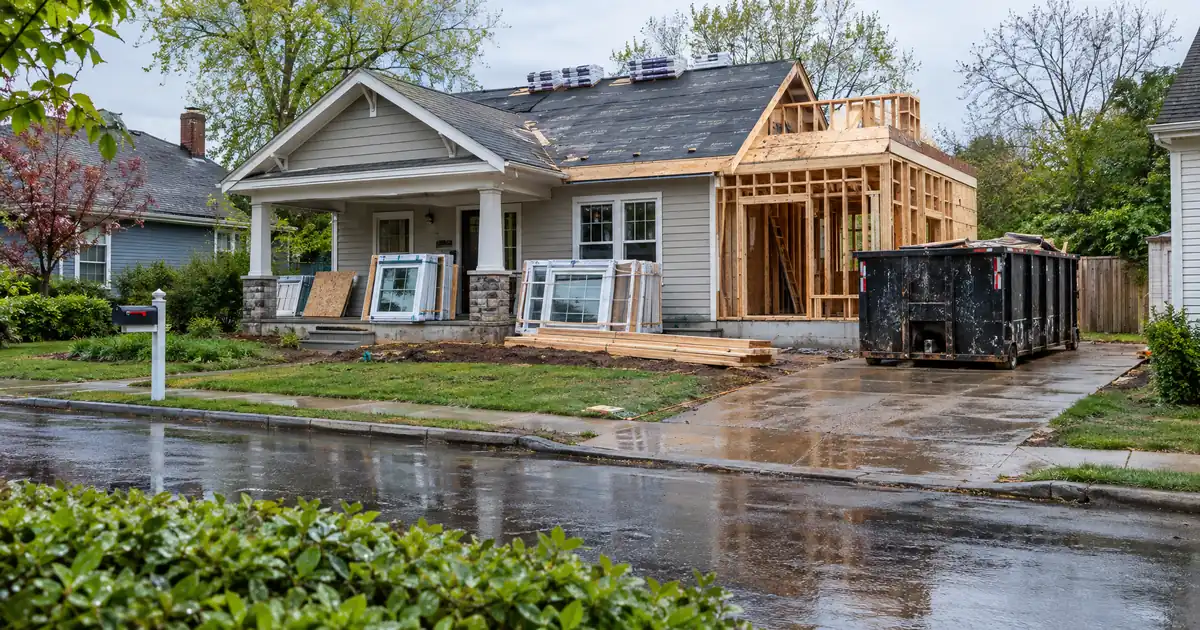
The Quick Read: A long-term rental lender sizes the new loan on the lesser of two tests, a value test and a rent test, then subtracts your full bridge payoff and closing costs, so the cash you receive is usually smaller than the after-repair number you used to buy the deal. DSCR, short for debt service coverage ratio, compares the monthly rent to the full monthly payment. Your own estimate of the finished value never sets the loan.
- The new lender’s appraisal sets the value, not your after-repair estimate.
- On standard rentals, cash-out refinances top out around 75% LTV across most of our network, and about 6 months of seasoning is the common expectation.
- The rent test can cap the loan below the value cap.
- Cash to you is the new loan minus the bridge payoff, minus closing costs. It can be zero, or negative.
- The bridge payoff grows each month the exit slips, so the plan starts before you buy.
Key Terms Defined
Bridge loan: a short-term, interest-only loan used to buy and renovate a rental before refinancing into long-term financing.
Takeout lender: the lender that pays off the bridge and becomes your long-term loan.
Cost basis: what you paid plus the documented rehab spend.
Appraised value: the value the takeout lender’s own appraiser reaches, based on comparable sales. After-repair value (ARV) is your projection of that number before the work is done.
Seasoning: the waiting period a lender wants before it will lend against appraised value instead of cost.
PITIA: principal, interest, taxes, insurance, and any association dues. It is the full monthly payment that rent has to cover.
Payoff-only refinance: a refinance that only retires the old debt. A cash-out refinance also returns money to you.
Why Does the Exit Lender, Not the Bridge Lender, Set the Number?
The takeout lender sizes the loan because it is the one taking the long-term risk. A bridge lender prices off your project: the purchase, the rehab budget, and your plan. A long-term rental lender prices off a finished, rented asset. Those are two different questions, and the second one has its own answer.
AirDNA’s BRRRR explainer describes the standard pattern. Investors use short-term loans to buy and renovate, then refinance into a long-term mortgage. It also names the main risks: unexpected repair costs, refinancing challenges, and market changes. Each of those lands on this step.
The cash from the refinance is also what many investors use as the down payment on the next deal. A thin refinance slows that next purchase.
Step by Step: How the New Loan Gets Sized
The sizing runs in a fixed order. Value basis first, then the leverage cap, then the rent test, then the subtraction. Here is the sequence our network’s lenders generally follow.
1. The seasoning clock is checked. Most lenders count from the date title was recorded in your name. Rehab completion and lease signing generally do not start the clock. Programs differ, so confirm the counting rule before you plan around it.
2. The value basis is chosen. Before the clock clears, many programs size on the lower of appraised value or cost basis. After it clears, they size on appraised value.
3. The appraisal comes back. The lender orders its own. For two-to-four unit rentals, appraisers typically use a small residential income property report, Form 1025. A single-family appraisal usually comes with a Form 1007 rent schedule. Fannie Mae’s appraiser resources list Form 1025. DSCR loans are not agency loans, so the form names are only a convenient reference.
4. The leverage cap is applied. Cash-out refinances on standard rentals top out around 75% LTV across most of the network. LTV, or loan-to-value, is the loan as a percentage of the value the lender uses. Short-term-rental collateral is lower: cash-out tops out at 70%.
5. The rent test is applied. The lender divides monthly rent by the full monthly payment on the proposed loan. Where the coverage number falls short of the program’s floor, the loan shrinks until it fits.
6. The lower result governs. If the value test says one number and the rent test says a smaller one, the smaller one is your loan.
7. Payoff and costs come out. The bridge payoff, closing costs, and any required escrows are subtracted. Reserves are tested separately, not subtracted.
Four things decide the outcome: the appraisal, the value basis, the LTV cap, and the rent coverage. The appraisal is the biggest swing factor, because it moves the first two tests at once.
A Worked Example in Index Points
The table below runs one modeled deal. These are assumptions for illustration, not market data and not a quote. To keep the focus on mechanics, the figures are index points, with the purchase price set at 100.
Modeled assumptions: purchase price 100, documented rehab 25, bridge principal 105, accrued interest and extension fees 5, closing costs on the new loan 3, appraised value 160 once the property is rented.
| Step | Seasoned exit | Early exit (cost basis) |
|---|---|---|
| Value used | 160 (appraisal) | 125 (cost basis) |
| 75% LTV cap | 120 | about 94 |
| Bridge payoff | 110 | 110 |
| Closing costs | 3 | 3 |
| Cash to you | about +7 | about −19 |
The seasoned exit returns a small amount. The early exit leaves you short, which means you would bring cash to closing to retire the bridge. Same property, same rehab, same appraiser. The only difference is the value basis.
Notice what the cash-out actually is. You did not get paid back for 125 of spend. You got 75% of a 160 appraisal, less what you still owe. That is a much thinner number than the pitch behind the strategy suggests, and it is why the underwriting has to be run before the purchase.
What Happens When the Appraisal Misses?
When the appraisal comes in low, the cash shrinks faster than the value does. Every dollar of missed value reduces the loan by less than a dollar, but the payoff stays fixed, so the cash to you drops with it. Using the same modeled deal:
| Appraised value | 75% of value | Cash to you |
|---|---|---|
| 160 | 120 | about +7 |
| 155 | about 116 | about +3 |
| 151 | about 113 | about 0 |
| 145 | about 109 | about −4 |
| 140 | 105 | about −8 |
The break-even appraisal is the bridge payoff plus closing costs, divided by 0.75. Here that is 113 divided by 0.75, or roughly 151. Below that, you bring cash to the table. A miss of about 6% from the modeled 160 erases the entire cash-out.
This is why the appraisal is the make-or-break event. If the rehab moved value less than you projected, less capital comes back. A comparable-sales set that does not support your finished value is the usual cause.
A low appraisal still leaves options. You can bring cash to closing, challenge the appraisal with better comparable sales, wait out the seasoning clock for a reappraisal, or restructure the loan. The right path depends on how much runway the bridge still has.
When Rent, Not Value, Sets the Ceiling
Rent can cap the loan below the value cap, and a high appraisal cannot fix that. The 75% limit tells you the most the lender will lend against the property. The rent test tells you the most the property can carry.
Take the same modeled deal. Say the value test supports a loan of 120, but at that size the rent covers only about 0.92x of the full monthly payment. On a program that wants 1.00, the loan has to shrink until coverage clears. It shrinks by more than 8%, because taxes and insurance do not fall as the loan balance falls. Suppose that lands near 105. Against a payoff of 113 including costs, you are now about 8 points short, even with a strong appraisal.
Here is the tension to understand. A larger cash-out raises the payment, and a higher payment lowers coverage. The more you pull, the harder the rent test bites.
Two points on coverage:
- 1.00 is where many select programs start, a floor for specific programs rather than a universal standard. A separate select-lender path takes coverage below 1.00, with leverage and terms adjusted. Stronger ratios open better pricing and leverage.
- Clearing 1.00 does not mean positive cash flow. DSCR counts rent against PITIA only. Repairs, vacancy, management, utilities, and capital expenses sit outside it.
For the broader picture of how the loan is built, see Lendmire’s complete DSCR loans guide. For the rent-versus-value ceiling in more depth, Lendmire has a piece, How a DSCR Lender Sizes the Maximum Cash-Out on a Rental, that covers the details. Final terms depend on the lender’s guidelines, the property type, and the borrower’s complete credit picture.
Where the General Rule Breaks
The sequence above holds on most files. These are the cases where it bends.
The exit lands inside the seasoning window. Some programs will close an early refinance but size it on cost, as in the right-hand column of the table. Others want you to wait. Ask which value basis applies at your exact ownership length. A program advertised as having no seasoning may still size on cost until the clock clears.
The bridge matures before seasoning does. You have four options: negotiate an extension, refinance on payoff only, refinance on cost basis and bring cash, or sell. Each has a price. Extensions add fees to the payoff. A payoff-only refinance returns no cash.
Payoff-only versus cash-out. Many lenders treat a refinance that only retires the bridge more leniently than one that returns cash. Cash-out seasoning tends to be the stricter of the two. If your maturity is close, a payoff-only loan can be the escape route, and you can pursue the cash-out later once the clock clears. That trades cash now for flexibility, and it means closing costs twice.
Agency delayed financing rarely rescues a bridge deal. Agency conventional rules are a different system, and they do not govern DSCR files. For contrast only: the Fannie Mae Selling Guide generally requires at least a six-month wait on title before a cash-out refinance. It also requires any first mortgage being paid off to be at least 12 months old. Its delayed financing exception waives the wait only for purchases made without mortgage financing. A bridge loan is mortgage financing, so that exception generally does not fit. This is why a DSCR loan is the usual takeout.
Property type. Short-term-rental collateral is sized lower, with cash-out at 70%, and programs commonly want about 12 months of hosting history. Some property types are not offered at all in the network, including manufactured homes, log homes, and barndominiums.
What the Lender Asks For
Expect the file to be built around proof of ownership, proof of the payoff, and proof of rent. DSCR loans are designed for non-owner-occupied investment properties. Because they are business-purpose investor loans, they are reviewed differently from a standard owner-occupied mortgage.
The usual documents:
- The recorded deed and settlement statement from the purchase
- A current bridge payoff statement showing principal, accrued interest, extension fees, and any exit fee
- A signed lease or rent support, plus the appraisal’s rent schedule
- Entity documents if the property sits in an LLC, subject to lender program eligibility
- Proof of reserves
Credit and reserves gate the loan. A 620 score floor exists in parts of the network, most programs want around 660, and 700 or higher unlocks the strongest leverage tiers. Reserves vary by lender, leverage, loan size, and transaction type. Around 6 months of PITIA is common on cash-out files, and larger loans typically step up to about 9 months. Loan sizes reach up to $3,000,000 on standard programs, with smaller balances available through select lenders, and above $2,500,000 the network generally holds to 30-year fixed structures.
Reserves are the piece borrowers forget. The cash you pull out does not count toward them in the way you might hope. Lendmire’s article How a DSCR Cash-Out Lender Sizes the Reserve Requirement After Closing covers that in detail. Leverage, reserves, and pricing vary by lender and program; the final terms follow the full file review.
Equity strength helps, but it does not replace the rest. A larger down payment on the original purchase lowers the monthly payment and can lift coverage. It never erases leverage caps, credit floors, reserve rules, or property eligibility. The strongest files clear both tests: enough equity and enough rental coverage.
Plan the Exit Before You Buy
Work backward from the exit lender’s limits. Start with the value and rent the property must support, then set the purchase price, the rehab budget, and the bridge size.
Bridge terms in the network typically run 6 to 18 months, interest-only, and they vary by lender, property, and experience. That term has to outlast the rehab, the lease-up, the seasoning period, the appraisal, and underwriting. Build in margin, because every extension adds to the payoff.
In DSCR deals shaped like this one, the file usually looks fine on paper and tight in practice. The pro-forma ARV, the one the bridge was sized on, tends to sit above what the takeout appraisal supports. The investors who come out well are the ones who modeled the exit at a low-appraisal case, not the hoped-for one. Many investors refinance out of hard money into long-term DSCR financing once the property is stabilized, and Lendmire brokers that path.
A planning checklist, by checkpoint:
| Checkpoint | What must be true |
|---|---|
| Before buying | Exit math works at a low appraisal |
| During rehab | Lease-up starts so rent is documented |
| Seasoning window | Clock start date confirmed in writing |
| Before maturity | Payoff statement and extension terms in hand |
| Appraisal | Comps support the finished value |
| Underwriting | Reserves and coverage clear the program’s tests |
The Motley Fool’s BRRRR overview makes a similar point. The refinance lender needs a lease and an updated appraisal, so leasing belongs inside the rehab schedule, not after it.
Frequently Asked Questions
How much cash will I actually get back after a bridge loan?
Whatever is left after the new loan covers the bridge payoff and closing costs. On a standard rental, the loan tops out around 75% of appraised value, or 70% on short-term-rental collateral for a cash-out, and rent coverage can cap it lower. The result can be zero or negative.
Does the lender use my after-repair value estimate?
No. The takeout lender’s own appraisal sets value, built on comparable sales and the property’s condition at the time. Your projection helped size the bridge, but it does not carry over. Before seasoning clears, many programs size on cost basis instead.
Do I have to wait for seasoning before cashing out?
On cash-out files, about 6 months of seasoning is the common expectation across the network, though policy varies by program. Some programs will close earlier but size on cost basis. A payoff-only refinance is often treated more leniently if your bridge matures first.
Does a higher DSCR or bigger down payment shorten the seasoning clock?
Not as a rule. Stronger coverage opens better pricing and leverage, and a larger down payment can lift the ratio. Neither erases leverage caps, credit floors, reserve rules, or property eligibility. Whether the wait itself shortens depends on the lender.
Can I refinance out of a bridge if coverage is below 1.00?
Possibly. 1.00 is where many select programs start, and a separate select-lender path takes coverage below 1.00 with leverage and terms adjusted. Qualification is subject to lender guidelines, credit approval, and property review.
Running Your Own Numbers
If you are buying, rehabbing or refinancing an investment property and want to see how the numbers work, Lendmire can help you compare financing options based on the project, the exit plan, leverage, and your goals. As a broker, Lendmire arranges DSCR investor loans through select lenders in its wholesale network across 41 markets, including Washington, D.C. Programs change and every file is underwritten individually. Nothing here is a commitment to lend.
A bridge loan is only as good as the exit behind it, and the exit lender’s appraisal has the last word on both.
About Lendmire
Lendmire (NMLS# 2371349) is a mortgage brokerage focused on DSCR investor financing, helping arrange programs through wholesale and investor-lending channels in 41 markets, including Washington, D.C. DSCR loans are evaluated by the lender on property cash flow rather than personal income, subject to lender guidelines, supporting LLC closings and accommodating investors with four or more financed properties. Scotsman Guide Top Mortgage Workplace in both 2025 and 2026.
Get Started
Ready to find the right loan for you?
In about 30 seconds you can review financing options available for your investment property. No commitment required.
Informational only. Not a Loan Estimate, approval, or commitment to lend. Program availability and eligibility are subject to lender guidelines, credit approval, property review, and underwriting.
References
2. Fannie Mae, appraisers and property underwriting
3. Fannie Mae Selling Guide, cash-out refinance transactions
4. The Motley Fool, BRRRR method
This article is part of Lendmire’s hard money loan program — full qualification details, guidelines, and scenarios live on the program page.
Related reading: Condotel Vacation Rental Financing Requirements With a DSCR Loan · Is a Rental Cash-Out Refinance Still Worth It After Closing Costs? · Can an Investor Get a Bridge Loan Without Verifying Personal Income?
Brandon Miller
Founder & CEO, Mortgage Loan Originator, Lendmire LLC
- Mortgage Loan Originator · NMLS# 1129696 · Verify on NMLS Consumer Access
- North Carolina Real Estate Broker · License# 343312 · Verify on NCREC
- North Carolina Insurance Producer · License# 19053198 · Property, Casualty, Life, Health · Verify on NAIC SBS
- Lendmire LLC · Firm NMLS# 2371349 · Verify firm licensure
Legal disclosures. Lendmire (NMLS# 2371349) is a state-licensed mortgage brokerage that arranges financing through wholesale lender relationships. Lendmire is not a direct lender, depository institution, or registered financial advisor. The discussion above is general informational content about real estate financing — it is not financial, legal, or tax advice, and readers should consult licensed professionals for guidance on their individual circumstances. Loan inquiries are subject to lender underwriting; this article does not represent a commitment to lend. Loan terms, rates, and qualification standards vary by borrower, property, and state, and are subject to change at any time. Equal Housing Opportunity. NMLS Consumer Access: nmlsconsumeraccess.org.